
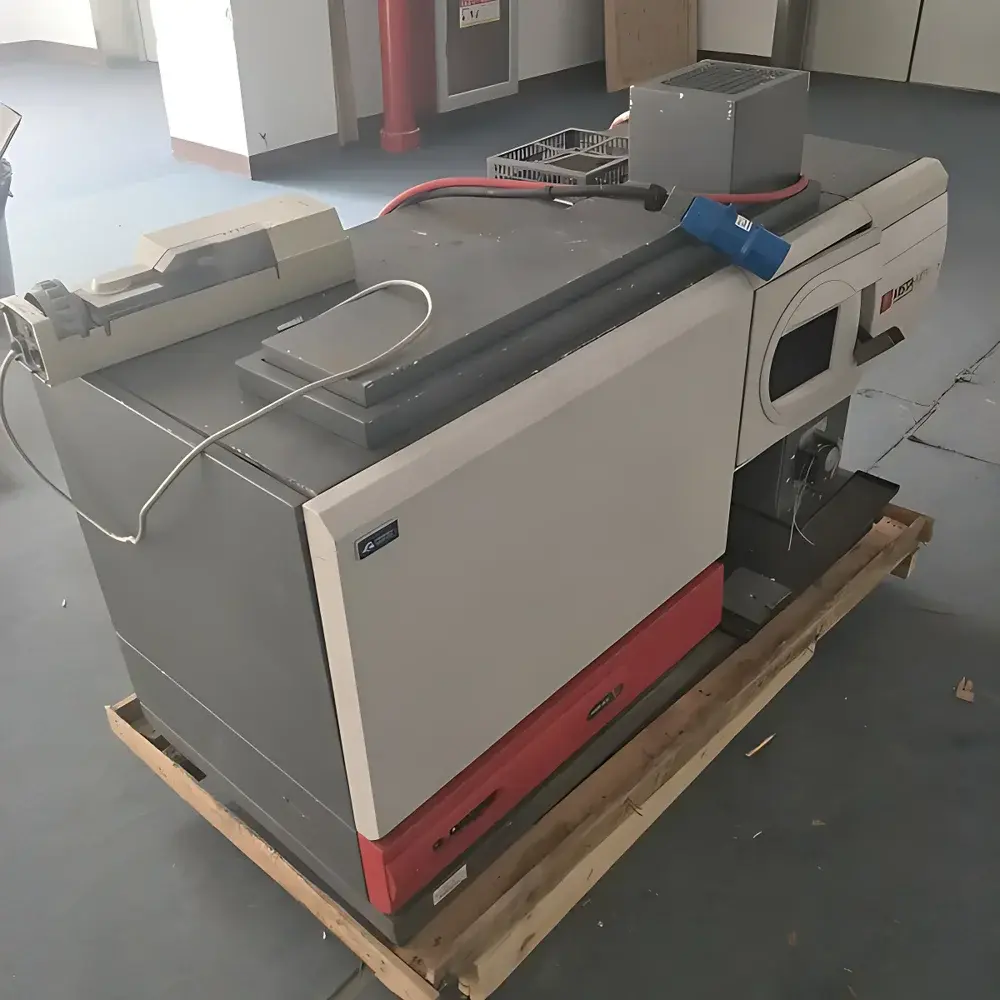
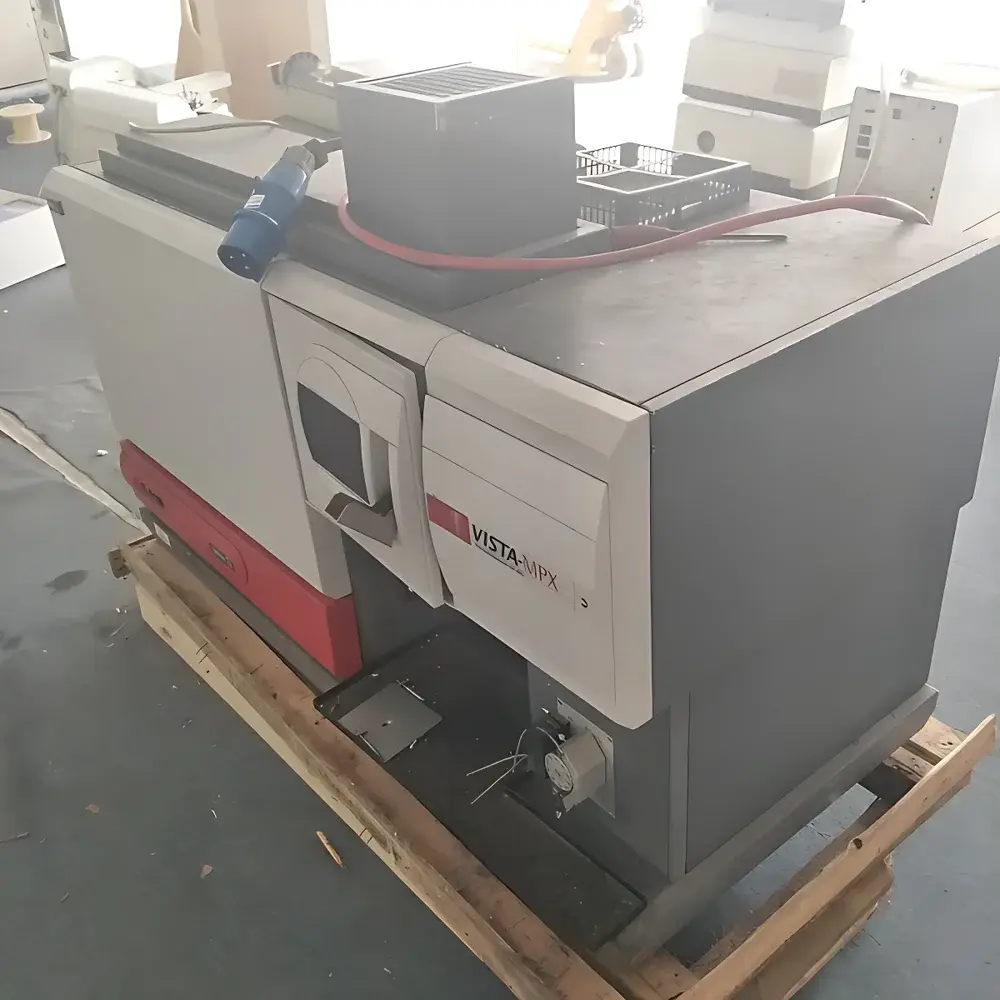

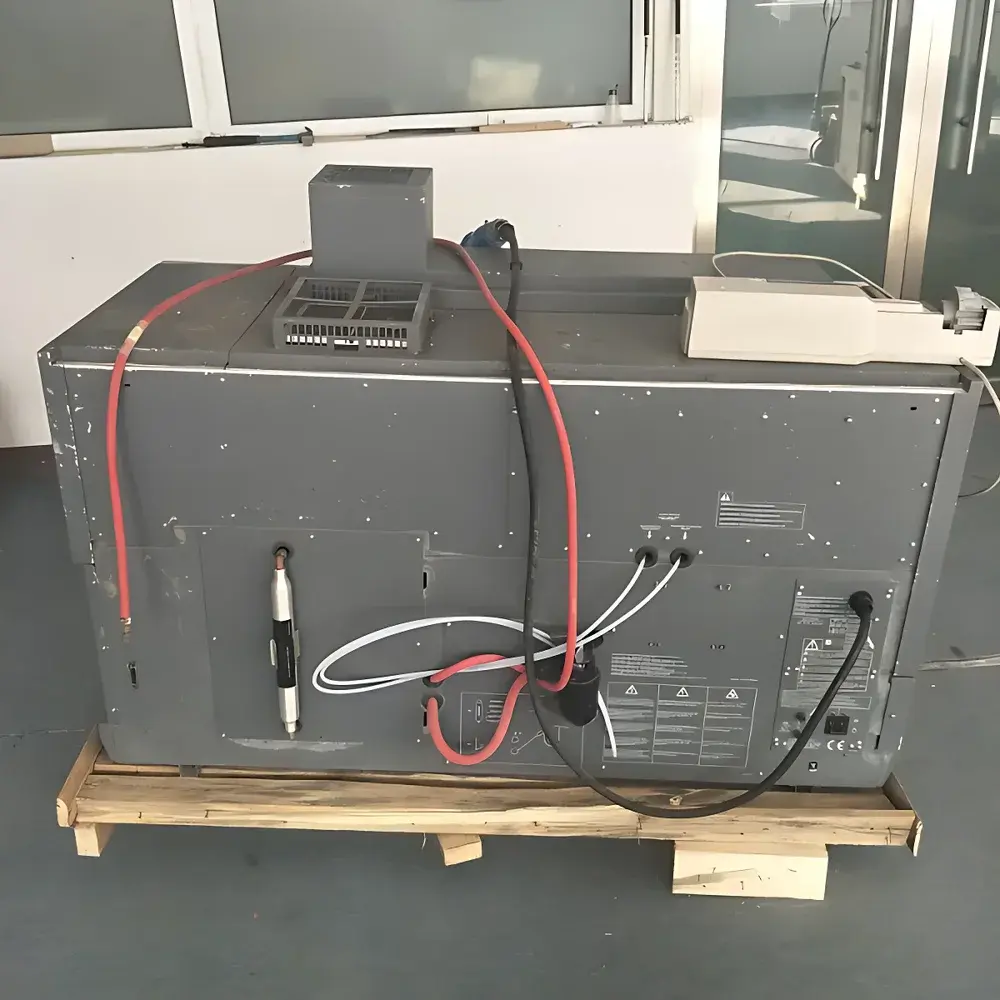
Varian Vista MPX Inductively Coupled Plasma Optical Emission Spectrometer (Refurbished)
| Origin | USA |
|---|---|
| Manufacturer Type | Authorized Distributor |
| Origin Category | Imported |
| Model | Vista MPX |
| Instrument Type | Full-Spectrum Direct-Reading ICP-OES |
| Stability | ≤1% RSD |
| Wavelength Range | 175–785 nm |
Overview
The Varian Vista MPX is a full-spectrum direct-reading inductively coupled plasma optical emission spectrometer (ICP-OES) engineered for high-throughput, multi-element trace and major elemental analysis in environmental, geological, metallurgical, and regulatory compliance laboratories. Based on robust inductively coupled plasma excitation and high-fidelity optical detection, the system utilizes a radiofrequency (RF) generator operating at 40.68 MHz to sustain a stable argon plasma at ~6,000–10,000 K, enabling efficient atomization, ionization, and excitation of analytes across the periodic table. Emitted radiation is dispersed via a high-resolution echelle grating with cross-dispersion optics, delivering continuous spectral coverage from 175 nm to 785 nm—free of wavelength gaps or mechanical repositioning delays. This architecture supports true simultaneous acquisition of all elements within a single exposure, eliminating sequential scanning artifacts and maximizing analytical precision.
Key Features
- Full-spectrum CCD detector with over one million active pixels, enabling high quantum efficiency, low read noise, and built-in anti-blooming circuitry to prevent electron overflow during intense emission events.
- Echelle optical design with cross-dispersed configuration, providing resolving power sufficient to separate adjacent emission lines (e.g., As 193.696 nm and Al 193.696 nm) without spectral overlap under standard viewing conditions.
- Cold cone interface technology, which thermally isolates the plasma torch exit from the spectrometer entrance, suppressing secondary low-temperature afterglow and improving background stability—particularly critical for volatile element analysis (e.g., As, Se, Hg).
- Stable RF generator with automatic impedance matching and real-time power regulation, ensuring consistent plasma loading and minimizing drift-induced signal variation (≤1% RSD over 4-hour operation under controlled lab conditions).
- Optimized optical path with fused silica and MgF₂-coated components for extended UV throughput down to 175 nm, supporting reliable detection of key elements including P, S, As, and Cl.
Sample Compatibility & Compliance
The Vista MPX accommodates liquid samples introduced via concentric nebulizers (e.g., Meinhard® or SeaSpray™), with optional integration of ultrasonic nebulization, hydride generation, or laser ablation modules for solid sampling. It meets performance criteria outlined in EPA Methods 200.7, 200.8, and 6010D for multi-element wastewater and soil digestate analysis. System validation protocols support GLP and GMP environments; audit trails, user access controls, and electronic signature capabilities align with FDA 21 CFR Part 11 requirements when operated with compliant software configurations. All optical and RF subsystems comply with IEC 61000-6-3 (EMC) and IEC 61010-1 (safety) standards.
Software & Data Management
The instrument is operated using Varian’s ICP Expert software suite, featuring intuitive method setup wizards, automated calibration curve generation (linear, quadratic, or weighted least-squares), and real-time spectral preview. Multi-tasking functionality allows concurrent data acquisition, background correction, inter-element correction (IEC), and QC reporting—including spike recovery, duplicate analysis, and control charting per ASTM D5173. Raw spectral data are stored in vendor-neutral formats (e.g., .csv, .txt) alongside metadata-rich .vda files for long-term archival. Software supports LIMS integration via ASTM E1384-compliant interfaces and includes customizable report templates compliant with ISO/IEC 17025 documentation requirements.
Applications
- Environmental monitoring: Quantification of regulated metals (Pb, Cd, Cr, Ni, Cu, Zn, As, Se) in drinking water, wastewater, and leachates per EPA and ISO 17294-2 protocols.
- Geochemical analysis: Major oxide (SiO₂, Al₂O₃, Fe₂O₃) and trace element (REE, U, Th, Nb) profiling in acid-digested rock and soil samples.
- Metallurgical QA/QC: Rapid alloy verification (e.g., stainless steels, superalloys) and inclusion analysis via slurry nebulization.
- Pharmaceutical excipient testing: Detection of catalyst residues (Pd, Pt, Rh) and elemental impurities per ICH Q3D guidelines.
- Food safety screening: Multi-element profiling in fortified foods and infant formula to verify label claims and detect contaminants.
FAQ
Is the Vista MPX compatible with modern Windows OS platforms?
Yes—the refurbished unit includes validated software builds certified for Windows 10 (64-bit) and Windows 11, with driver-level compatibility confirmed for USB-to-serial and Ethernet communication interfaces.
What maintenance documentation is included with the refurbished system?
Each unit ships with a full service history log, post-refurbishment performance verification report (including wavelength calibration, resolution test, and stability assessment), and original Varian technical manuals in English.
Can the Vista MPX be upgraded to support newer regulatory workflows?
While hardware upgrades are limited due to end-of-life component availability, firmware patches and software updates released prior to Agilent’s acquisition of Varian (2009) remain installable; method migration tools facilitate alignment with current EPA and ISO reporting templates.
Does the system include plasma gas control instrumentation?
Yes—refurbished units are supplied with integrated mass flow controllers for argon plasma, auxiliary, and nebulizer gases, calibrated to ±1% full scale per NIST-traceable procedures.
What is the typical warm-up and stabilization time before routine analysis?
Plasma ignition and thermal equilibrium are achieved within 15 minutes; optimal long-term stability (≤1% RSD) is attained after 30 minutes of continuous operation under ambient lab conditions (20–25°C, <60% RH).





