
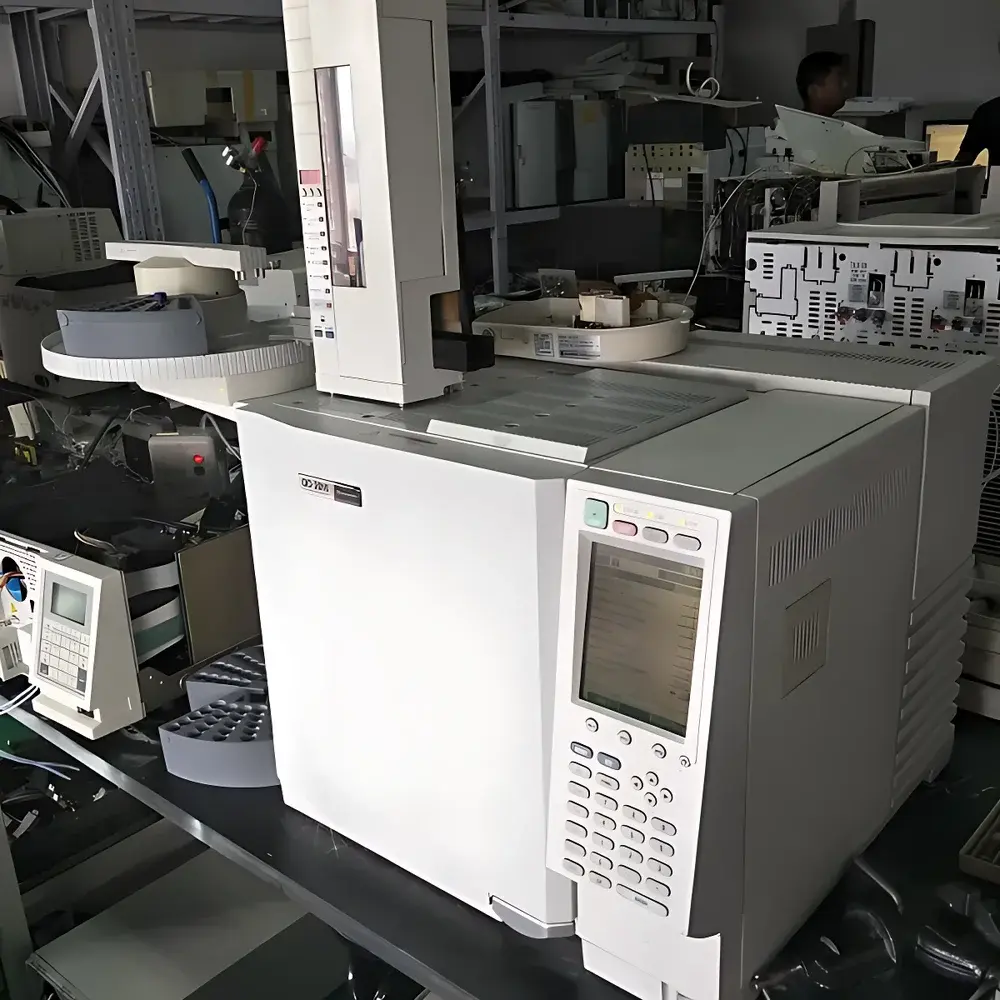
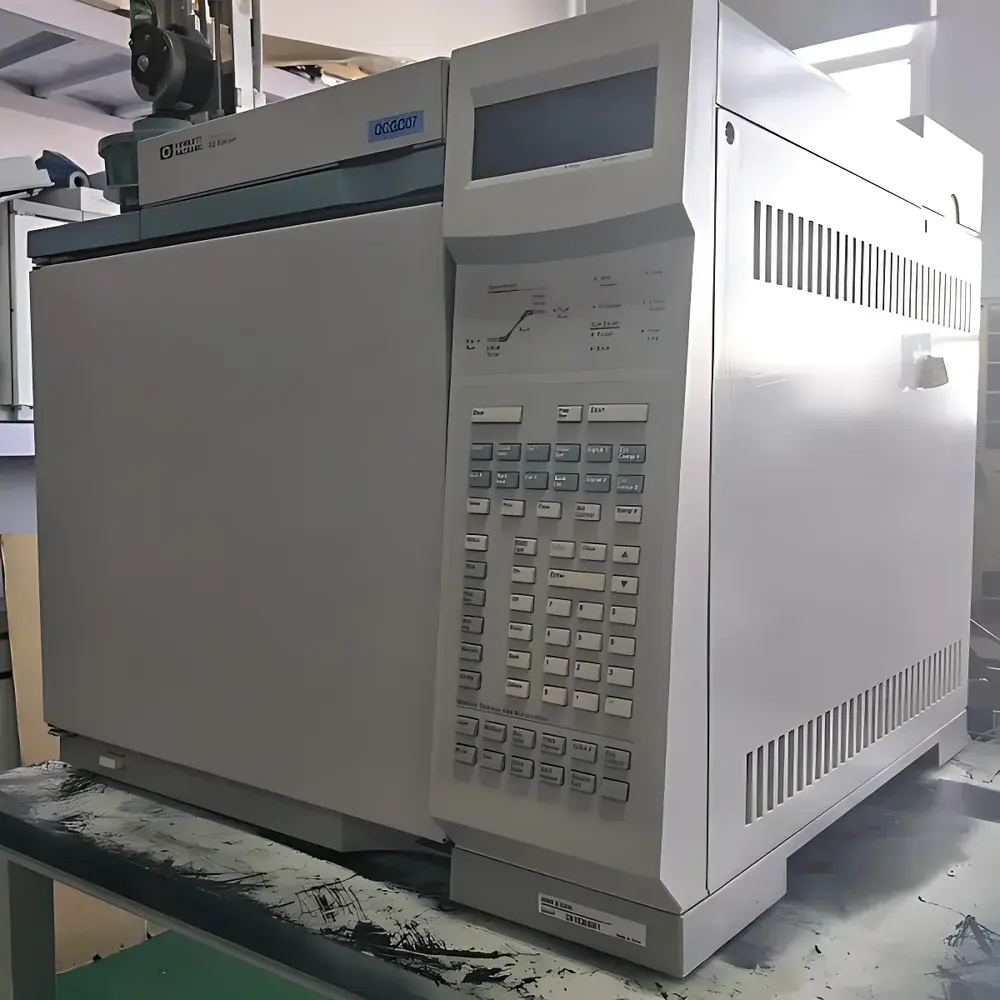
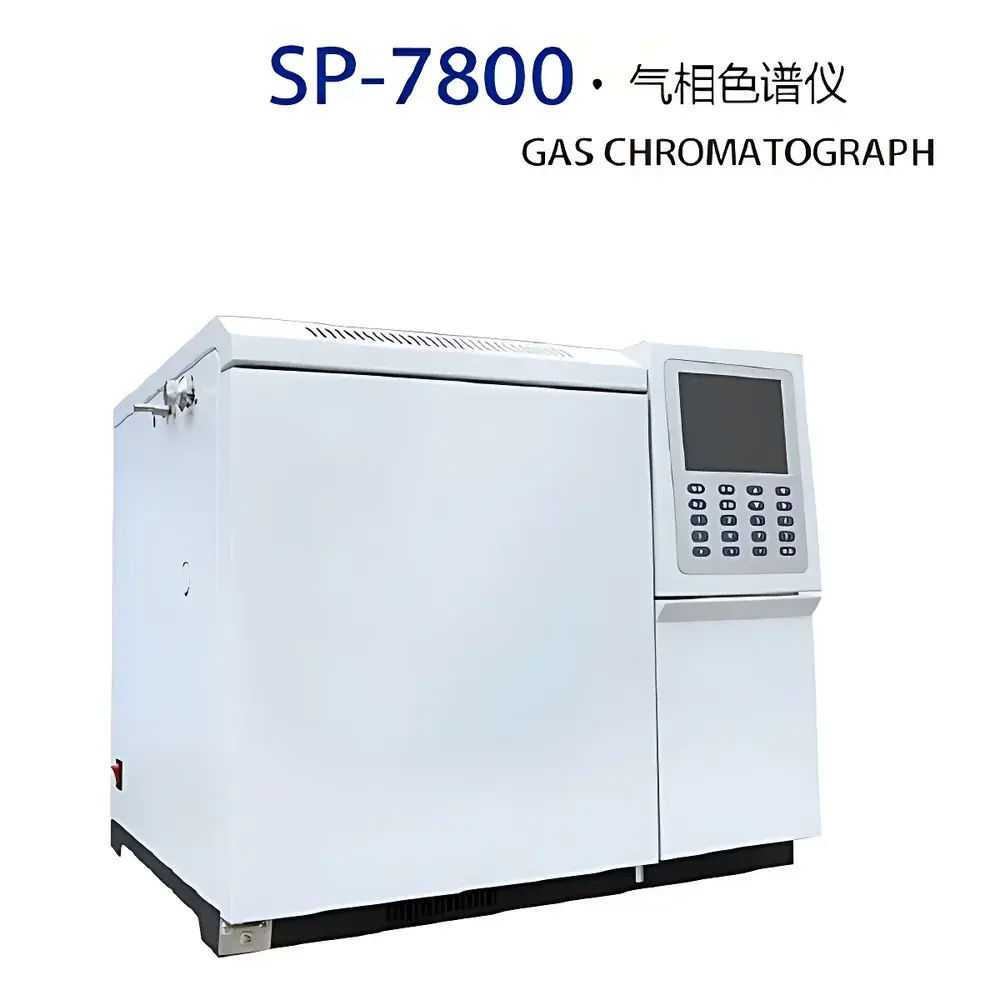
Agilent 6890 Gas Chromatograph for Trans Fatty Acid Analysis in Oils and Fats
| Key | Brand: Agilent Technologies |
|---|---|
| Origin | USA |
| Instrument Type | Laboratory Gas Chromatograph |
| Application Domain | Food Industry |
| Carrier Gas Flow Range & Control | 0–1200 mL/min |
| Carrier Gas Pressure Range & Control | 0–970 kPa |
| Injector Maximum Temperature | 450 °C |
| Injector Pressure Setting Range | 0–970 kPa |
| Injector Total Flow Setting Range | 0–1200 mL/min |
| Detector | Flame Ionization Detector (FID) |
| Column Compatibility | Capillary columns up to 100 m length, 250 µm ID, 0.2 µm film thickness |
| Regulatory Compliance | Designed for methods compliant with GB/T 22110–2008 and GB/T 22507–2008 |
| Software | Native Agilent ChemStation or OpenLab CDS (FDA 21 CFR Part 11–ready configuration available) |
Overview
The Agilent 6890 Gas Chromatograph is a robust, laboratory-grade analytical platform engineered for precise quantification of trans fatty acids (TFAs) in edible oils, margarines, fried foods, and other lipid-rich matrices. This system implements gas chromatography coupled with flame ionization detection (GC-FID), a reference method endorsed by national standards including GB/T 22110–2008 and GB/T 22507–2008 for TFA analysis in food products. The measurement principle relies on separation of methyl ester derivatives of fatty acids—generated via base-catalyzed transesterification (using KOH/methanol) followed by BF3/methanol derivatization—on high-resolution capillary columns. Retention time alignment, peak integration, and internal standard calibration (e.g., C18:1-9t, C18:1-11t, C18:2-9t,12t, C22:1-13t) ensure trace-level accuracy and inter-laboratory reproducibility.
Key Features
- Fourth-generation Electronic Pneumatic Control (EPC) architecture delivering ±0.01 psi pressure stability and ±0.1 mL/min flow precision across multiple runs and operators.
- Programmable split/splitless injector with temperature range up to 450 °C, enabling rapid vaporization of high-boiling-point fatty acid methyl esters (FAMEs) without thermal degradation.
- Column oven with programmable ramp rates (up to 120 °C/min) and cooling capability optimized for extended polarity gradients required for TFA isomer resolution (e.g., distinguishing 9t-C18:1 from 11t-C18:1).
- FID detector featuring low-noise amplification, linear dynamic range >107, and response factor consistency across C14–C24 FAME standards.
- Modular design supporting dual-column configurations, backflushing, and valve-based heart-cutting—critical for eliminating co-eluting triglyceride interferences in crude oil extracts.
- Integrated hardware diagnostics and real-time status monitoring via front-panel LCD and remote Ethernet interface.
Sample Compatibility & Compliance
This GC system is validated for use with sample preparation workflows aligned with ISO 15884:2002 (Animal and vegetable fats and oils — Determination of trans fatty acid isomers by capillary gas chromatography) and AOAC Official Method 996.06. It accommodates derivatized samples prepared from solid, semi-solid, and liquid lipid matrices—including palm oil, soybean oil, butter, shortening, and processed snacks—following standardized methylation protocols. All operational parameters (temperature programs, carrier gas settings, detector gains) are fully configurable to meet method transfer requirements under GLP and GMP environments. When paired with Agilent OpenLab CDS software, the system supports full audit trails, electronic signatures, and 21 CFR Part 11 compliance for regulated food safety laboratories.
Software & Data Management
Data acquisition and processing are performed using Agilent ChemStation (legacy) or OpenLab CDS v2.x, both offering automated peak identification, retention time locking (RTL), and multi-point internal standard calibration curves. Quantitative reports include peak area ratios, relative standard deviations (RSD 0.05 min), peak symmetry (asymmetry factor 0.8–1.5), and signal-to-noise ratio (>100:1 for lowest calibration level).
Applications
- Quantitative profiling of individual trans isomers (e.g., elaidic acid, vaccenic acid, linoelaidic acid) in refined and unrefined vegetable oils.
- Monitoring TFA formation during partial hydrogenation, deodorization, and frying processes.
- Verification of label claims for “trans fat-free” or “0 g trans fat” declarations per FDA and EFSA regulatory thresholds.
- Method development and validation for accreditation to CNAS (China National Accreditation Service) or UKAS standards.
- Supporting research into TFA metabolic pathways and epidemiological correlation studies in nutritional science labs.
FAQ
Is this unit supplied with a certified calibration certificate?
Yes—each refurbished Agilent 6890 undergoes full functional verification including leak testing, temperature calibration (oven, injector, detector), EPC linearity assessment, and FID sensitivity verification against n-decane. A traceable calibration report is provided.
Can the system be upgraded to support mass spectrometric detection?
The 6890 chassis is compatible with Agilent 5973N or 5975 Series MSD interfaces; however, this configuration requires additional vacuum pumps, interface hardware, and software licensing—not included in the base TFA analysis package.
What column specifications are recommended for optimal TFA isomer separation?
A 100 m × 0.25 mm ID × 0.2 µm polyethylene glycol (PEG)-based capillary column (e.g., DB-23, SP-2560, or CP-Sil 88) is specified in GB/T 22507–2008 and delivers baseline resolution of critical pairs such as C18:1-9t/C18:1-11t and C18:2-9t,12t/C18:2-10t,13t.
Does the instrument include original Agilent consumables and spare parts?
The system ships with one set of inlet septa, gold-plated ferrules, liner O-rings, and a quartz FID jet. Additional consumables and OEM-certified replacement parts are available through authorized Agilent distributors.
Is remote diagnostic support available post-installation?
Yes—Agilent Remote Assist (via secure TLS tunnel) enables real-time troubleshooting by certified field application scientists, subject to customer network policy approval and annual support contract enrollment.




