
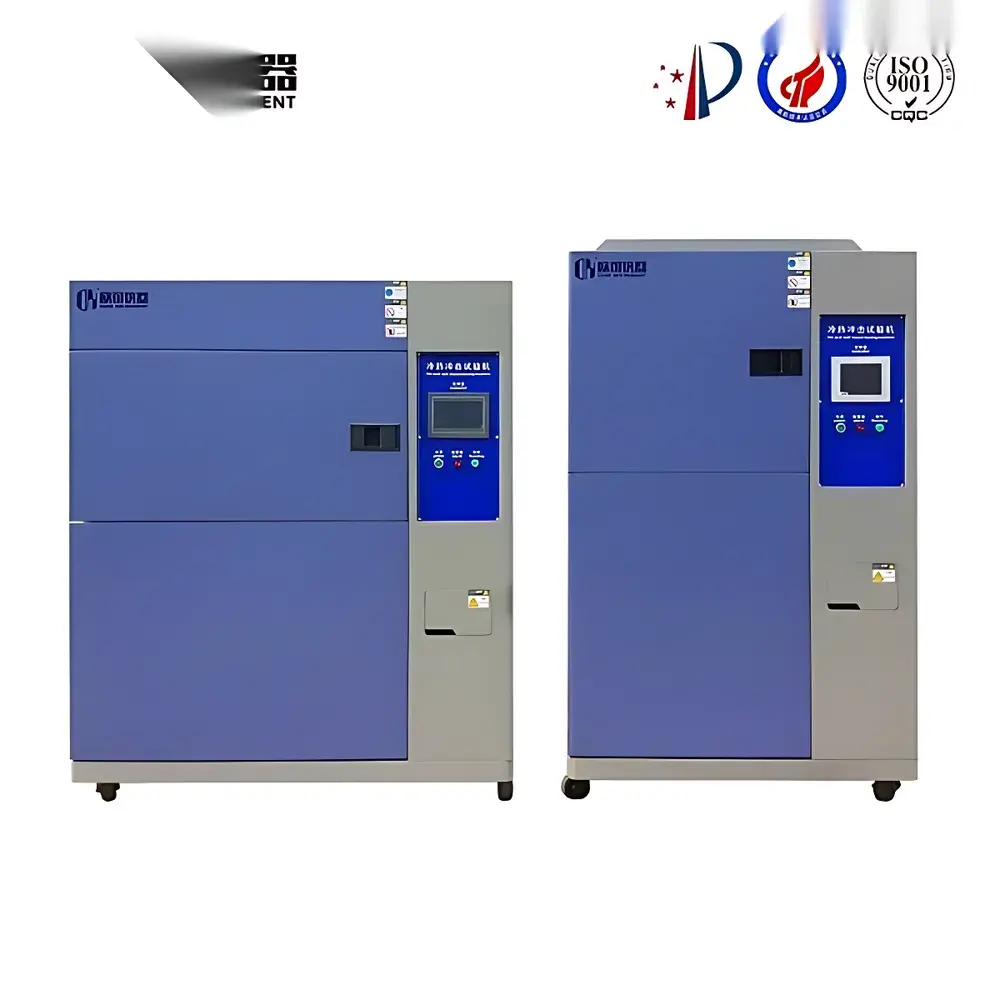
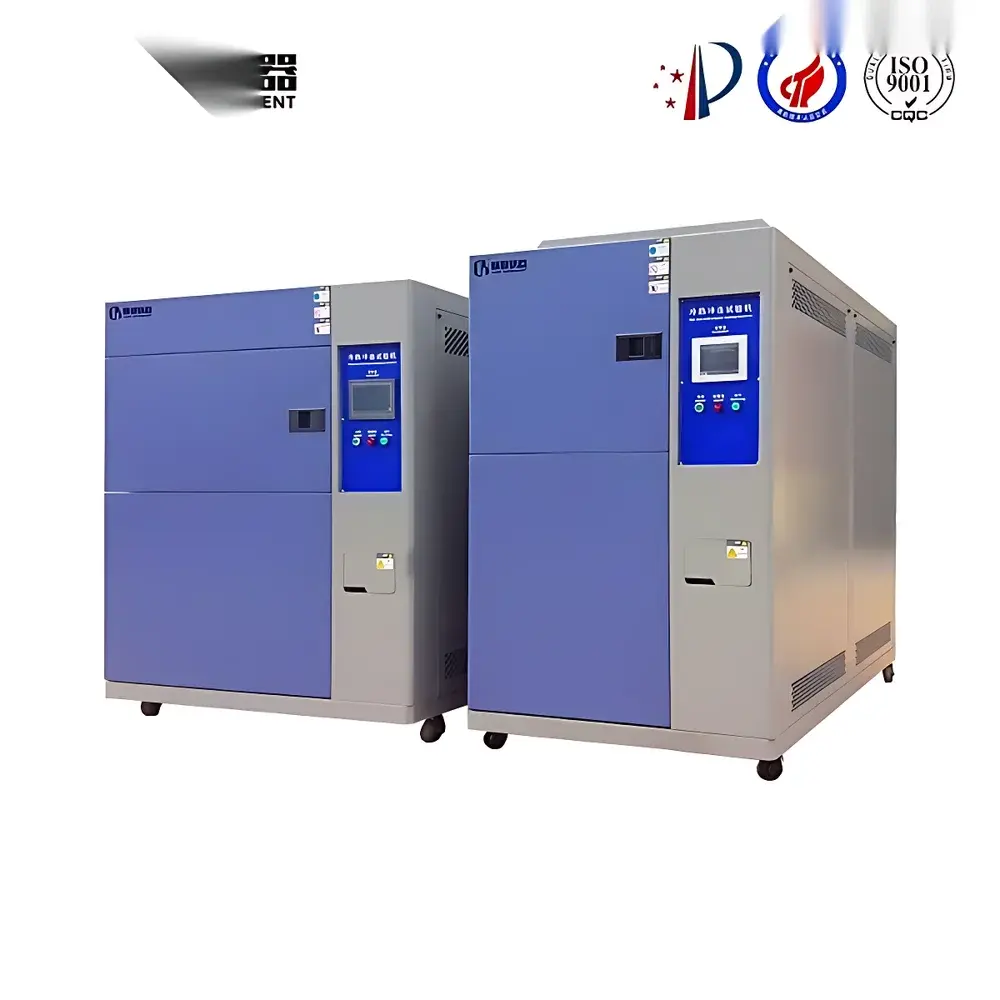
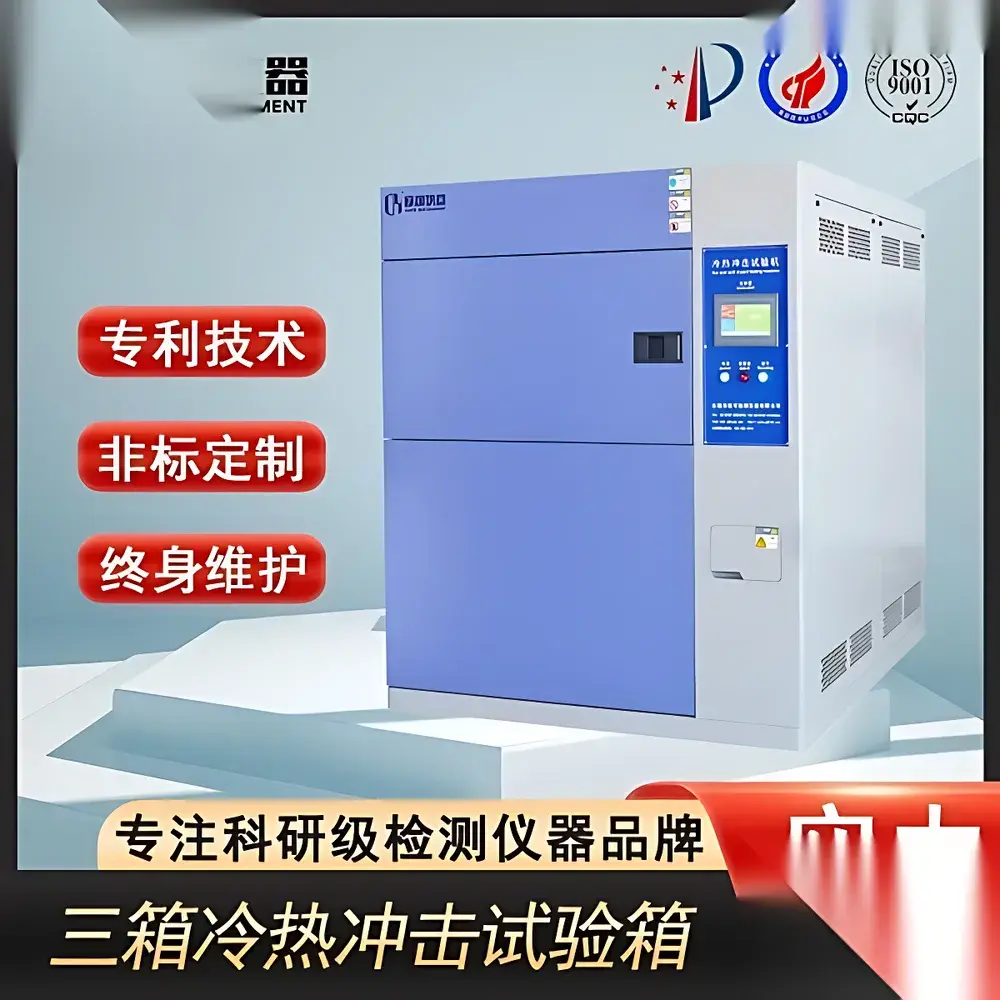
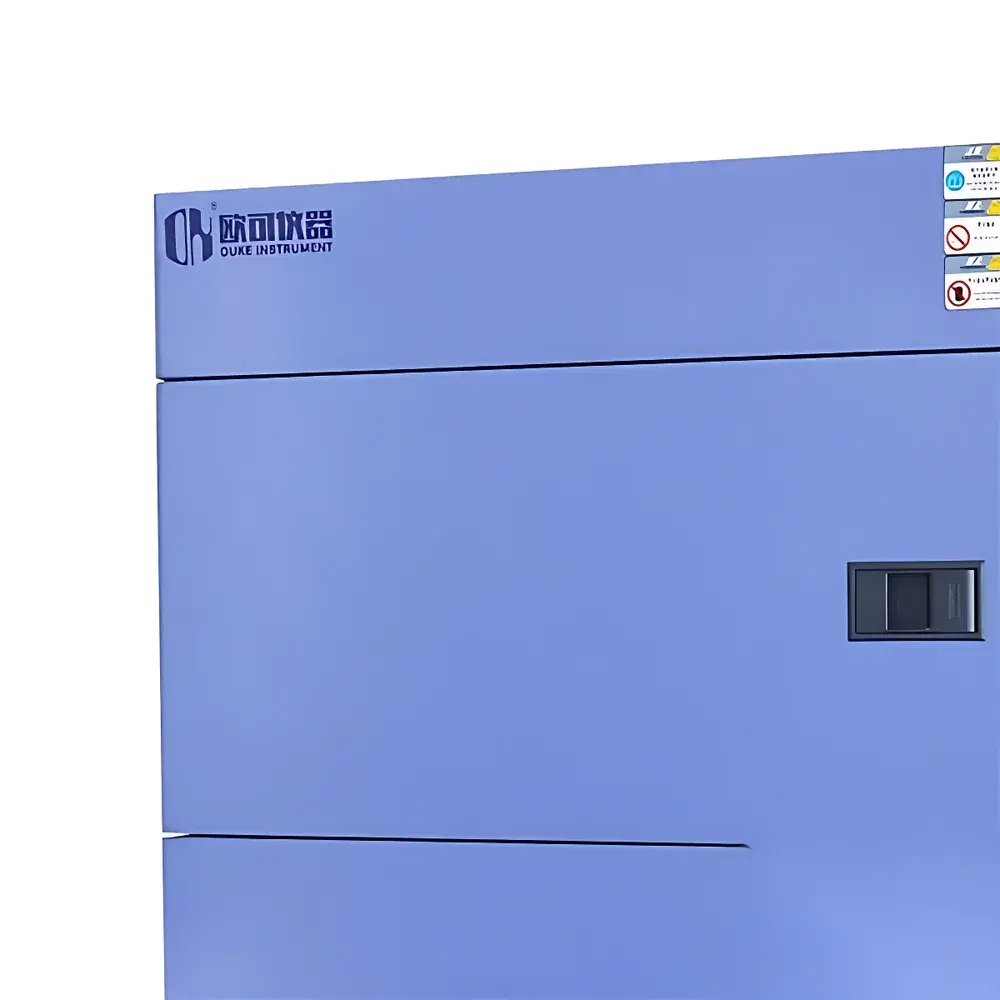
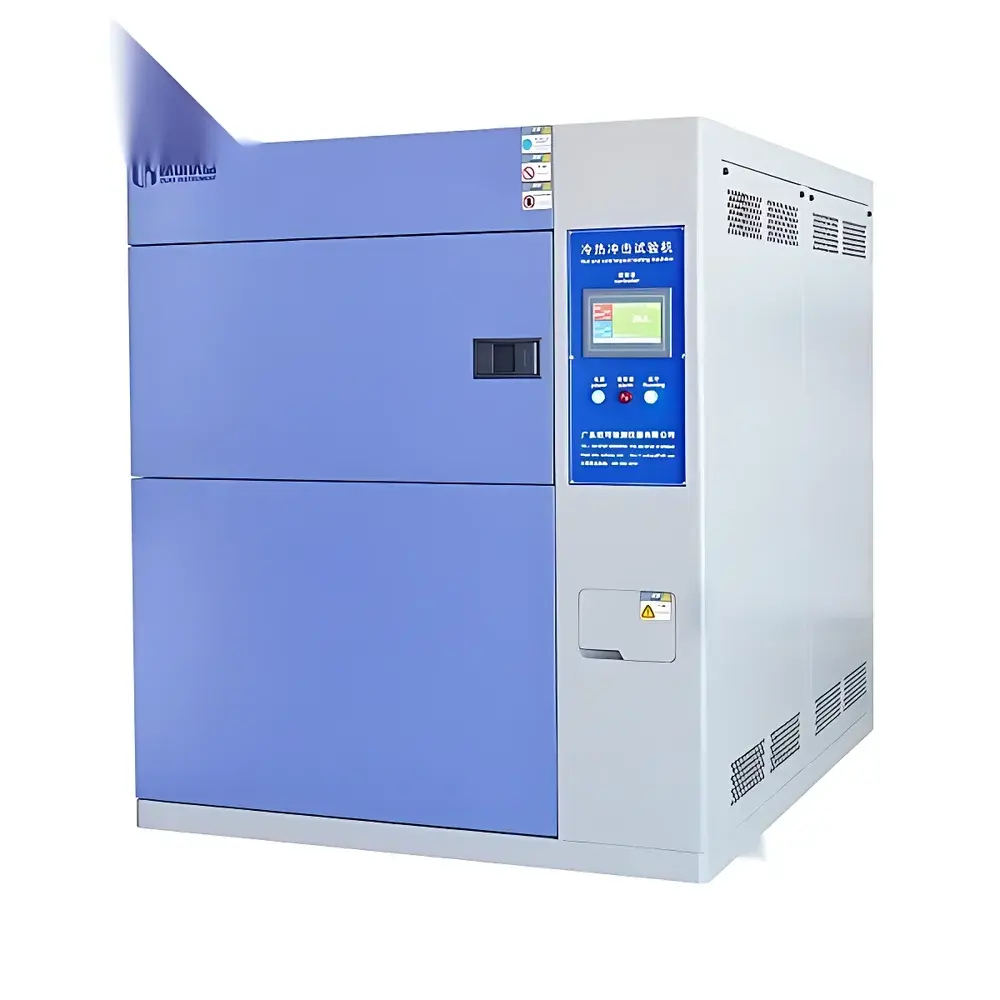
Tri-Chamber Thermal Shock Test Chamber
| Brand | Other Brands |
|---|---|
| Origin | Imported |
| Manufacturer Type | Authorized Distributor |
| Price | USD 11,200 (FOB) |
| Compliance | GB/T 2423.1–2022, GB/T 2423.2–2022, GB/T 2423.22–2022, GJB 150.3–2009, GJB 150.4–2009, GJB 150.5–2009, IEC 60068-2-14 (Test N), QC/T 17–1992, EIA-364-32 |
Overview
The Tri-Chamber Thermal Shock Test Chamber is an engineered environmental test system designed to evaluate material and component resilience under rapid, extreme temperature transitions. Unlike single- or dual-chamber configurations, this tri-chamber architecture physically isolates the high-temperature zone (typically +150 °C to +200 °C), low-temperature zone (–70 °C to –40 °C), and test chamber (ambient to +150 °C / –70 °C) — enabling near-instantaneous thermal transfer via pneumatic or servo-driven specimen transfer mechanisms. The system operates on the principle of accelerated thermal stress induction: by subjecting specimens to repeated, controlled transitions between extreme thermal extremes (e.g., +125 °C ↔ –55 °C within ≤15 seconds), it accelerates failure modes linked to coefficient-of-thermal-expansion (CTE) mismatch, interfacial delamination, solder joint fatigue, and microcrack propagation. This methodology is essential for qualification testing in aerospace, automotive electronics, semiconductor packaging, and high-reliability PCB manufacturing where field life must be predicted under cyclic thermal loading per MIL-STD-883, JEDEC JESD22-A106, and AEC-Q200 requirements.
Key Features
- Tri-chamber physical separation ensures zero cross-contamination of thermal zones and eliminates residual heat/cold carryover during transition cycles
- Dual-stage cascade refrigeration system using imported semi-hermetic compressors (Germany-sourced), configured as high-temperature (R404A) and low-temperature (R23) circuits with evaporative condenser coupling
- Water-cooled condensing unit requiring external cooling tower (10 m³/h flow rate, 32 °C inlet max) — optimized for stable sub–60 °C operation and consistent ramp rates
- Energy modulation control: variable-speed compressor drives and electronic expansion valves dynamically adjust refrigerant mass flow to match thermal load, reducing power consumption by up to 30% during partial-load operation
- Stainless-steel interior with reinforced insulation (≥150 mm polyurethane foam, 0.022 W/m·K thermal conductivity) and double-glazed observation window with anti-fog heating
- Programmable controller with 32-bit ARM CPU, 7-inch TFT touchscreen, USB data export, and real-time logging at 1-second intervals
Sample Compatibility & Compliance
The chamber accommodates test specimens up to 500 mm × 500 mm × 500 mm (W×D×H) with maximum payload of 30 kg. It supports rigid and semi-rigid samples including printed circuit assemblies (PCBAs), molded plastic housings, metal alloy coupons, elastomeric seals, and hybrid microelectronic modules. All operational parameters and cycle definitions comply with internationally recognized qualification standards: GB/T 2423.22–2022 (Temperature Change), IEC 60068-2-14 (Test N), GJB 150.5–2009 (Military Equipment Temperature Shock), and EIA-364-32 (Connector Thermal Shock). The system architecture supports GLP/GMP-aligned validation protocols, including IQ/OQ documentation templates, calibration traceability to NIST-certified references, and optional 21 CFR Part 11-compliant audit trail functionality when integrated with validated software packages.
Software & Data Management
Embedded firmware enables creation of multi-step thermal shock profiles (e.g., dwell time, transition time, cycle count, soak duration) with user-defined pass/fail criteria. Raw temperature data from three independent PT100 sensors (±0.15 °C accuracy, Class A) are timestamped and stored internally (≥100,000 records) or exported via USB/RS485 to third-party analysis platforms (MATLAB, Python Pandas, JMP). Optional PC-based software provides remote monitoring, alarm escalation (email/SMS), statistical process control (SPC) charting, and automated report generation compliant with ISO/IEC 17025 reporting requirements. All data logs include operator ID, environmental conditions, and instrument calibration status metadata.
Applications
This chamber is routinely deployed in R&D labs and quality assurance departments for: accelerated life testing of automotive ECUs under ISO 16750-4; solder joint reliability assessment per IPC-9701; validation of conformal coating integrity on military-grade avionics; evaluation of MEMS device hysteresis after 500+ thermal cycles; and screening of battery module thermal interface materials (TIMs) for EV traction packs. Its tri-chamber design delivers superior repeatability (±0.5 °C zone stability, ±1.0 °C transition accuracy) versus two-box systems — critical when testing devices with tight CTE tolerances or low thermal mass.
FAQ
What is the typical transition time between extreme temperatures?
Standard transition (–55 °C → +125 °C or vice versa) is ≤15 seconds for a 500 g aluminum reference mass, measured from chamber wall sensor readings per IEC 60068-2-14 Annex B.
Does the system support custom thermal profiles beyond standard test methods?
Yes — users may define up to 99 segments per profile, including variable dwell times, non-linear ramps, and conditional branching based on real-time sensor feedback.
Is external cooling water mandatory?
Yes. A dedicated closed-loop cooling tower delivering 10 m³/h at ≤32 °C inlet temperature is required for sustained operation below –60 °C and to maintain compressor longevity.
Can the chamber be validated for ISO/IEC 17025 accredited testing?
Yes — full validation support includes factory-assembled IQ/OQ protocols, as-found/as-left calibration certificates, and uncertainty budgets traceable to national metrology institutes.
What maintenance intervals are recommended for the refrigeration system?
Compressor oil analysis every 2,000 operating hours; refrigerant purity verification annually; desiccant filter replacement every 18 months; full system leak check per ASHRAE 15 guidelines biannually.



