
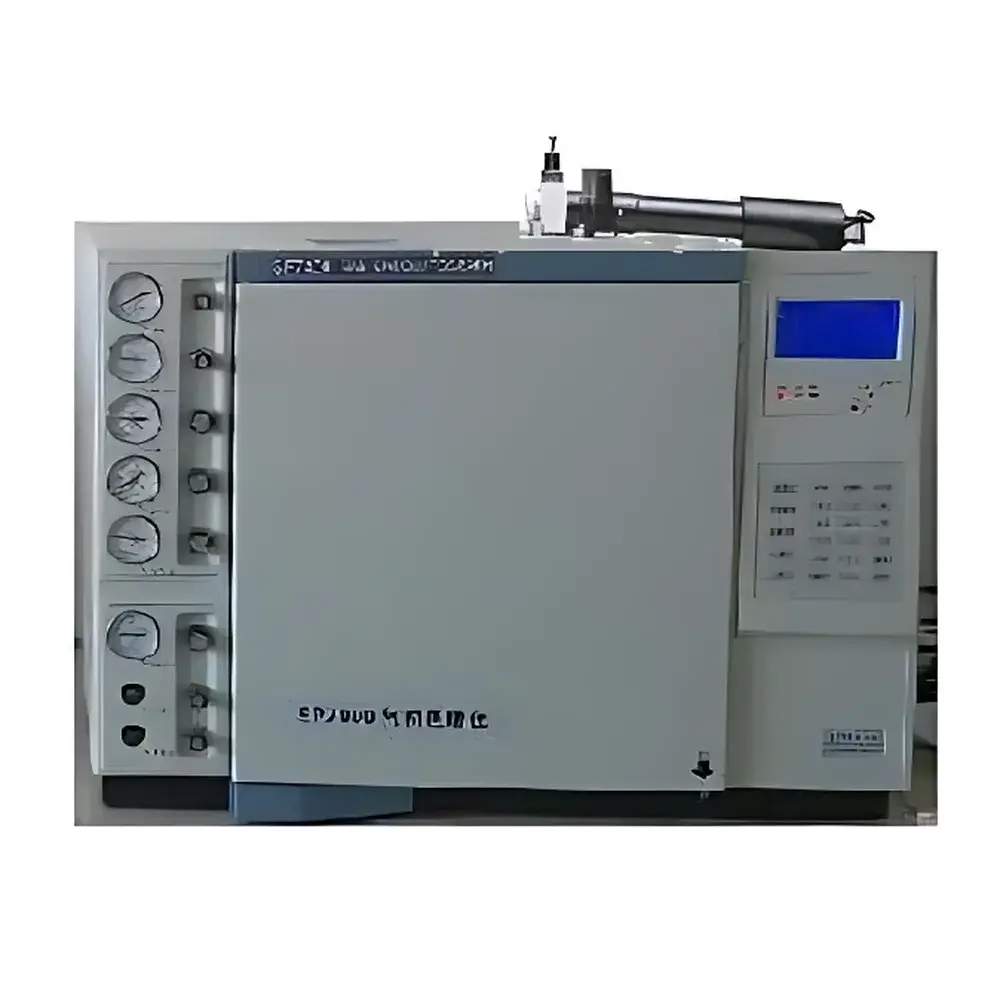
JK-8000 Micro-Sulfur Analyzer
| Origin | Beijing, China |
|---|---|
| Manufacturer Type | Authorized Distributor |
| Origin Category | Domestic (PRC) |
| Model | JK-8000 |
| Price Range | USD 7,000–14,000 (FOB) |
| Application Field | Petrochemical Industry-Specific |
| Detection Principle | Gas Chromatography with Flame Photometric Detection (GC-FPD) |
| Column Configuration | Dual Capillary Columns |
| Oven Temperature Control Range | Ambient +3°C to 420°C |
| Temperature Accuracy | ±0.1°C |
| Ramp Rate | 0.1–40°C/min |
| Programmed Hold Time | Up to 600 min |
| Sulfur Sensitivity (as S) | ≤0.02 ppm |
| Baseline Drift | <0.1 mV/h |
| Baseline Noise | ≤0.5 mV/h |
| Target Analytes | H₂S, COS, RSH, R–S–R, SO₂, SF₆, Thiophene, etc. |
| Detection Range | 0.01–0.05 ppm (S) |
Overview
The JK-8000 Micro-Sulfur Analyzer is a dedicated gas chromatographic system engineered for ultra-trace sulfur speciation in complex gaseous matrices. It integrates high-resolution capillary GC separation with a flame photometric detector (FPD) optimized for sulfur-selective luminescence at 394 nm. Unlike generic sulfur analyzers, the JK-8000 employs a proprietary FPD combustion chamber geometry—originally developed and refined in U.S.-based instrumentation labs—to suppress hydrocarbon-induced background emission, thereby achieving exceptional selectivity for sulfur-containing compounds without compromising sensitivity. The instrument operates on the principle that sulfur species, when combusted in a hydrogen-rich flame, emit characteristic excited-state S₂* radicals; these photons are collected via an optical focusing assembly and converted into proportional analog voltage signals (mV), digitized via high-fidelity 16-bit ADC circuitry, and processed in real time using embedded chromatographic software. Designed specifically for petrochemical process monitoring, the JK-8000 meets routine compliance requirements for sulfur quantification in natural gas, syngas, coke oven gas, refinery off-gases, and high-purity industrial gases—including applications governed by ISO 8573-6 (compressed air purity), ASTM D6299 (precision and bias in hydrocarbon analysis), and GB/T 11060.8–2021 (Chinese standard for trace sulfur in natural gas).
Key Features
- Dual independent capillary column configuration with two thermostatically controlled ovens—each equipped with digital temperature display and precision PID regulation (±0.1°C stability over 24 h)
- U.S.-sourced flame photometric detector featuring optimized burner geometry and hydrocarbon interference suppression, enabling reliable detection of sulfur compounds in hydrocarbon-rich streams
- Focused optical collection path enhancing photon capture efficiency and delivering ≥3× signal-to-noise ratio improvement versus conventional FPD designs
- Heated detector base (adjustable up to 120°C) to prevent water condensation and eliminate baseline artifacts caused by moisture accumulation
- High-integrity stainless-steel and fused-silica flow path construction with metal-sealed fittings, ensuring long-term leak integrity and minimal memory effects
- Integrated ambient +3°C to 420°C programmable oven with ramp rates from 0.1 to 40°C/min and hold times up to 600 minutes for method flexibility
- Real-time analog output (0–1 V or 4–20 mA optional), RS-232/USB interface, and compatibility with third-party LIMS and SCADA systems
Sample Compatibility & Compliance
The JK-8000 accepts gaseous samples delivered via pressurized cylinders, loop injectors (0.25–1.0 mL), or online sampling interfaces (e.g., NPT 1/8″ Swagelok). It is validated for quantitative analysis of H₂S, carbonyl sulfide (COS), mercaptans (RSH), sulfides (R–S–R), sulfur dioxide (SO₂), sulfur hexafluoride (SF₆), and heterocyclic thiophenes—including critical trace-level measurement in benzene purification units where thiophene must be controlled below 1 ppb per ASTM D4738. Instrument performance complies with GLP data integrity expectations: all acquisition parameters (injection time, oven program, detector gain, integration thresholds) are logged with timestamps and user ID. Audit trail functionality supports FDA 21 CFR Part 11 readiness when paired with compliant workstation software.
Software & Data Management
The analyzer ships with Windows-based chromatography data system (CDS) software supporting method development, peak integration (tangent skim, valley-to-valley, exponential curve fit), calibration curve generation (linear, quadratic, weighted), and report export (PDF, CSV, XML). Raw data files include full detector voltage traces, temperature profiles, and event logs. Software enforces electronic signature workflows for method validation and result approval. All raw and processed data are stored in a relational database with configurable backup intervals and role-based access control (RBAC). Optional OPC UA server module enables seamless integration into enterprise MES environments.
Applications
- Trace sulfur monitoring in natural gas custody transfer per ISO 14111 and EN 15470
- Thiophene quantification in refined benzene streams for pharmaceutical-grade solvent certification
- SO₂ and H₂S speciation in FCC unit flue gas for environmental reporting (EPA Method 15/16)
- Quality control of food-grade CO₂ (ISO 8573-1 Class 2) and semiconductor-grade N₂/Ar
- Process troubleshooting in amine sweetening units and Claus tail gas treatment systems
- Validation of sulfur removal catalysts during pilot-scale testing
FAQ
What sulfur species can the JK-8000 reliably separate and quantify?
H₂S, COS, low-molecular-weight mercaptans (e.g., CH₃SH), dialkyl sulfides, SO₂, SF₆, and thiophenic compounds—including substituted thiophenes—using dual-column temperature-programmed elution.
Is the instrument compatible with automated unattended operation?
Yes—equipped with TTL-triggered autosampler interface support and scheduled run capability for up to 99 sequences per batch.
Does the system meet regulatory requirements for audit-ready data handling?
When configured with enabled audit trail, electronic signatures, and secure user authentication, it satisfies core elements of FDA 21 CFR Part 11 and EU Annex 11 for regulated laboratories.
What maintenance intervals are recommended for optimal FPD performance?
Detector alignment verification every 3 months; ceramic igniter replacement annually; optical window cleaning quarterly; GC column trimming every 6 months depending on sample matrix cleanliness.
Can the JK-8000 be integrated into a central DCS or plant historian?
Yes—via Modbus TCP or OPC UA protocols; analog outputs support direct connection to PLC analog input modules for real-time sulfur concentration trending.



