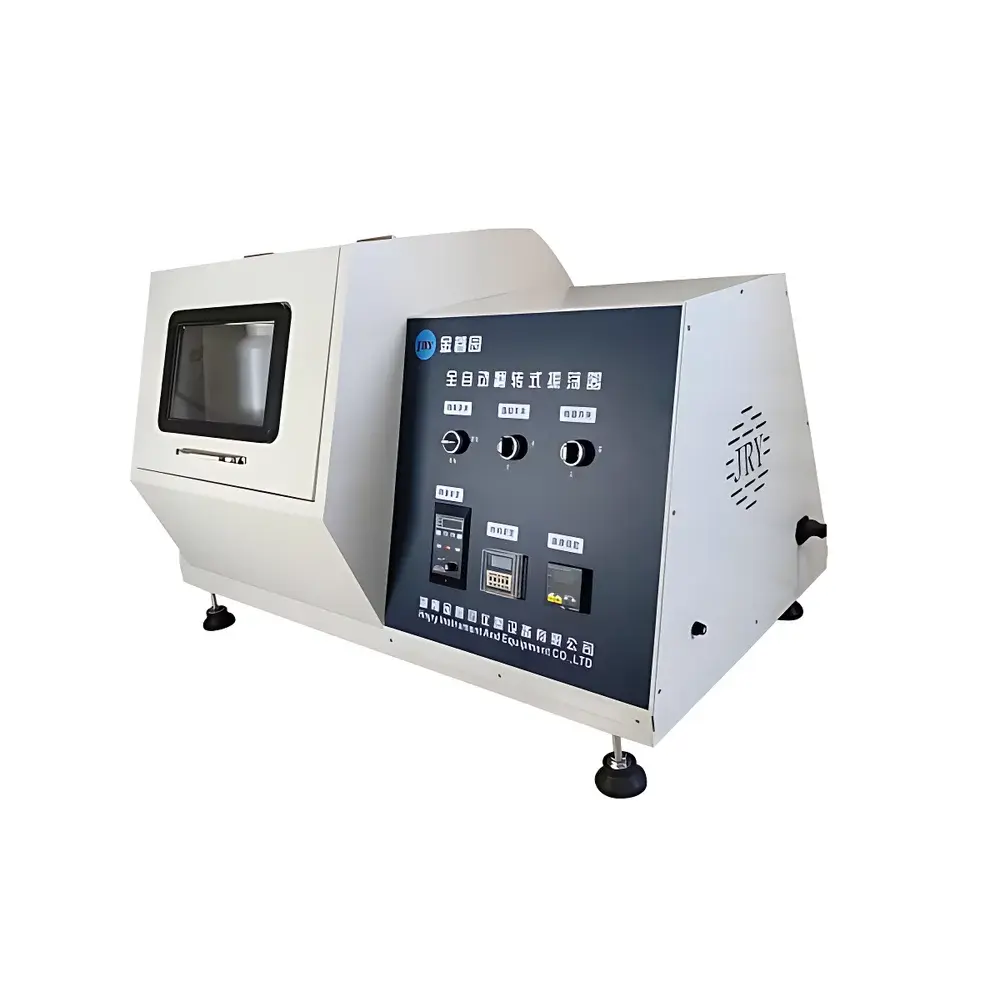
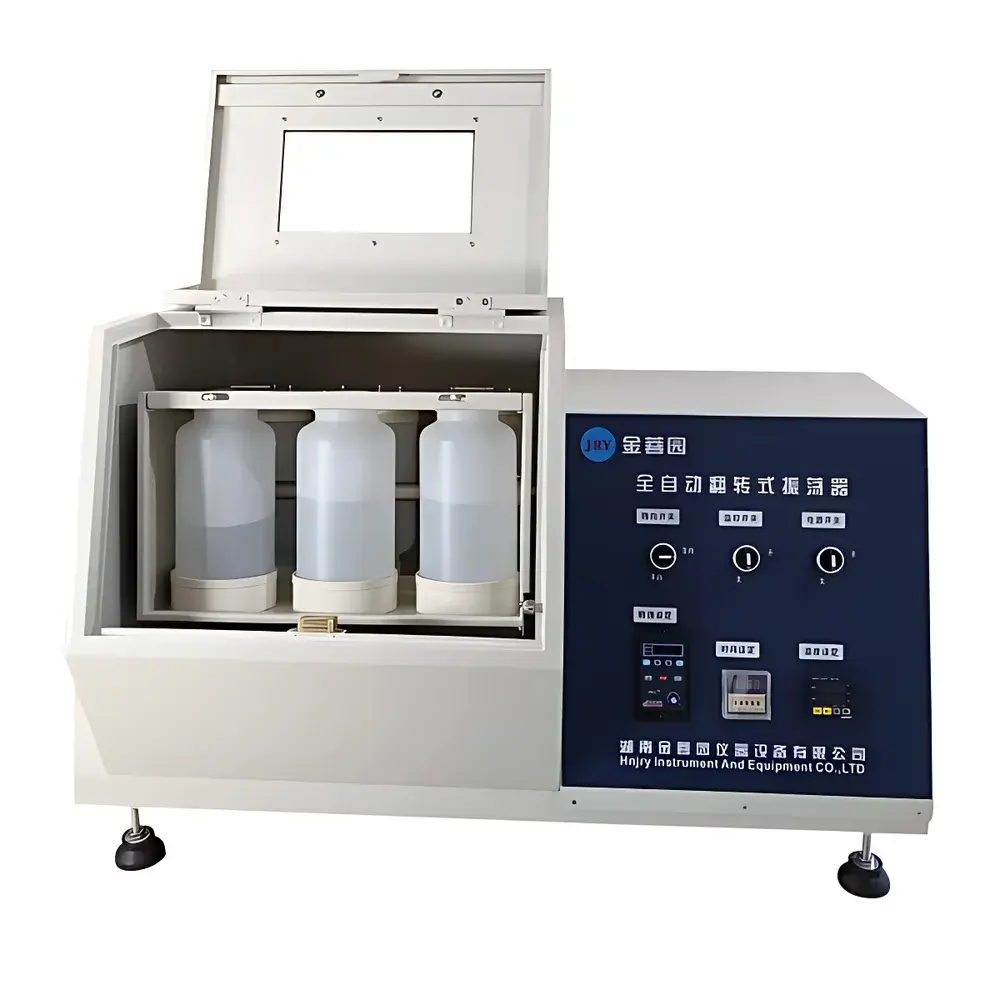
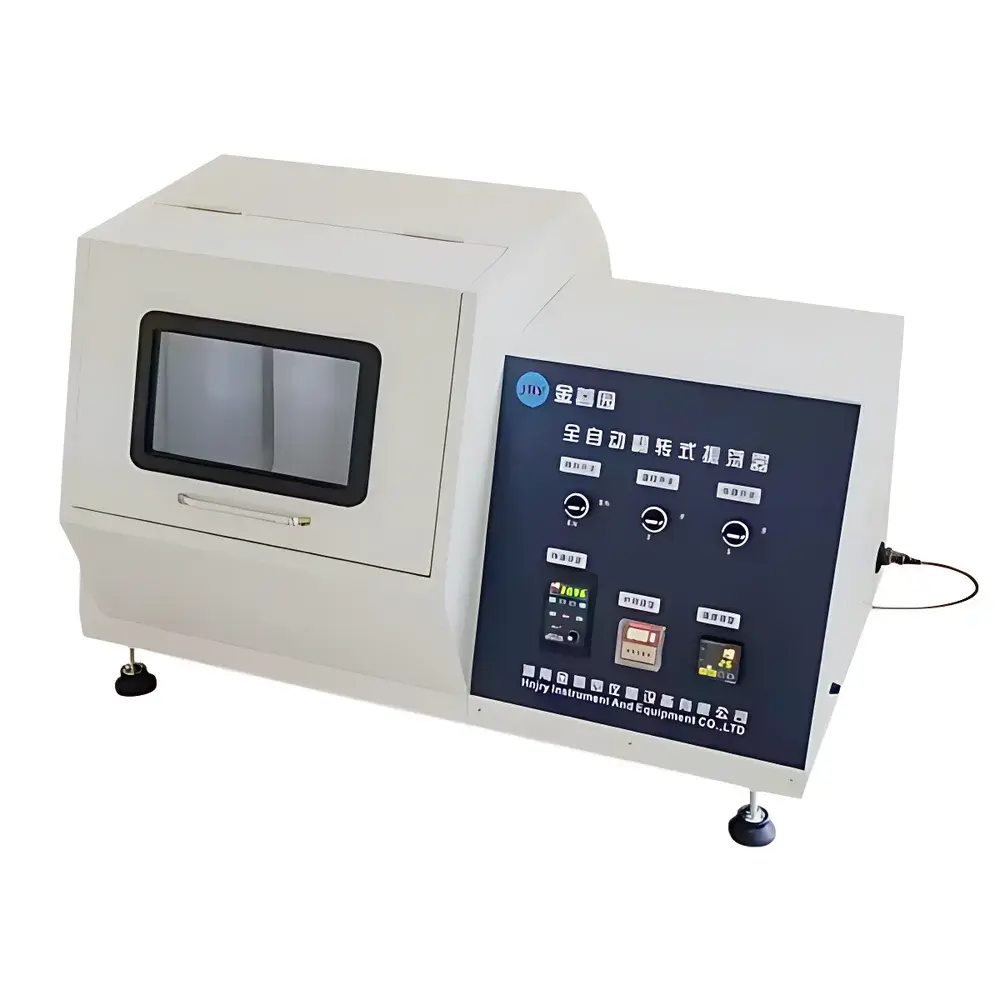
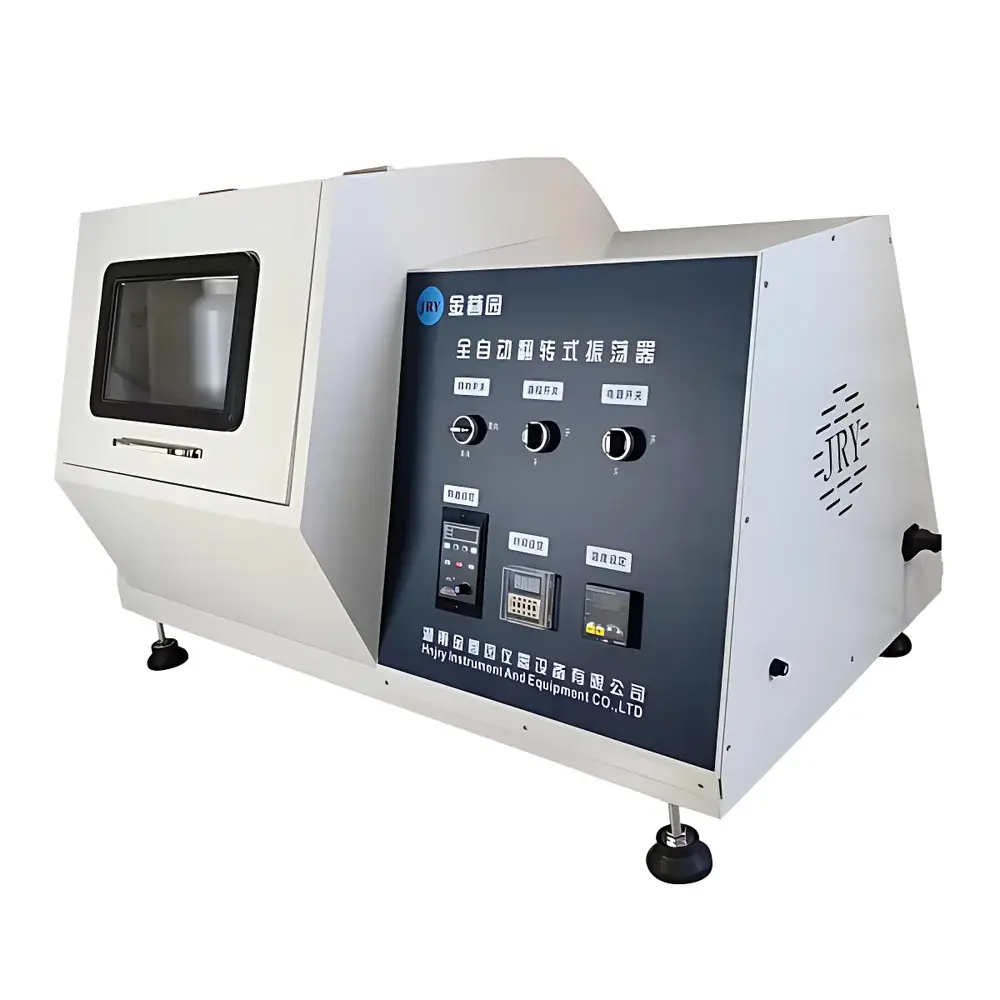
JRY JRY-06N Tumbling Shaker for Toxicity Characteristic Leaching Procedure (TCLP) and Solid Waste Extraction
| Key | Brand: JRY |
|---|---|
| Origin | Hunan, China |
| Manufacturer Type | Direct Manufacturer |
| Instrument Type | Tumbling Shaker |
| Model | JRY-06N |
| Timer Range | 0–99 h |
| Oscillation Speed | 30 rpm |
| Motion Mode | End-over-end tumbling |
| Temperature Range | Ambient to 60 °C |
| Platform Quantity | 1 |
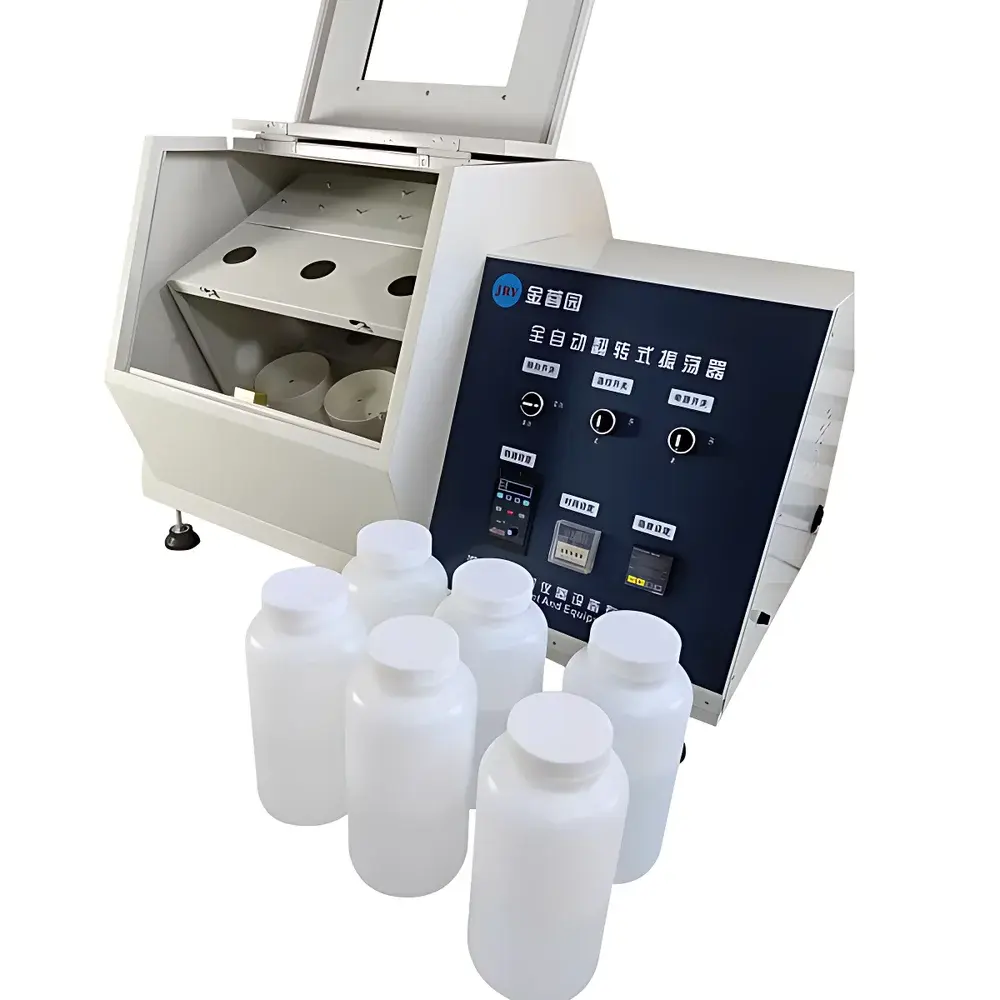
| Sample Capacity | 6 × 2 L bottles |
| Voltage | 220 V AC |
| Motor Power | 90 W |
| Control Precision | ±1 °C temperature, digital speed adjustment |
| Safety Features | Lid-interlocked power cutoff, overload protection, leakage protection |
| Compatible Vessels | 2 L wide-mouth glass, HDPE, PTFE, and Zero-Head-Space Extraction (ZHE) containers |
Overview
The JRY JRY-06N Tumbling Shaker is an engineered solution designed specifically for regulatory-compliant toxicity characteristic leaching procedure (TCLP) and synthetic precipitation leaching procedure (SPLP) testing of solid waste matrices. It operates on the principle of end-over-end tumbling motion—standardized under U.S. EPA Method 1311 and harmonized with Chinese environmental standards HJ 299–2007 (Sulfuric-Nitric Acid Leaching Method) and HJ 300–2007 (Acetic Acid Buffer Extraction Method). This motion ensures uniform, low-shear mechanical agitation that replicates field-relevant leaching kinetics while minimizing particle attrition and preferential channeling. Unlike orbital or reciprocating shakers, the tumbling configuration provides consistent 360° sample reorientation at controlled angular velocity, enabling reproducible solid–liquid contact dynamics essential for regulatory leachate analysis in environmental laboratories, waste treatment facilities, and accredited testing centers.
Key Features
- End-over-end tumbling mechanism with programmable bidirectional rotation (forward/reverse/alternating), ensuring homogenous suspension of heterogeneous solid waste samples without sediment stratification.
- Integrated PID-controlled heating system maintaining temperature stability within ±1 °C across the full 20–60 °C operating range—critical for pH-dependent leaching protocols requiring thermal consistency.
- Robust stainless steel spray-coated chassis with reinforced structural frame, supporting long-duration unattended operation (up to 99 hours) with minimal vibration transmission and acoustic noise <55 dB(A).
- Interlocked transparent polycarbonate viewing lid with safety cutoff: power disengages instantly upon lid opening, complying with IEC 61010-1 electrical safety requirements for laboratory equipment.
- Digital microprocessor controller with real-time display of elapsed time, set temperature, and rotational speed (adjustable 0–60 rpm in 1-rpm increments).
- Patented modular bottle-holding tray accommodating six standardized 2 L wide-mouth containers—compatible with borosilicate glass, HDPE, PTFE, and zero-head-space extraction (ZHE) vessels per ASTM D5887–19 specifications.
- Integrated anti-spill recessed base with sloped drainage channels and sealed gasket interface, preventing cross-contamination and facilitating rapid decontamination between sample batches.
Sample Compatibility & Compliance
The JRY-06N accommodates standard 2 L extraction vessels used in TCLP, SPLP, and HJ-series protocols—including EPA-certified glass jars, acid-washed HDPE containers, fluoropolymer-lined bottles, and pressurized ZHE units rated for ≥50 psi (316 stainless steel construction, SLO/FLO-coated piston, oil-damped pressure gauge). Its mechanical design conforms to ISO/IEC 17025:2017 requirements for method validation infrastructure, and its operational parameters align with QA/QC criteria outlined in USP , EPA SW-846 Chapter 1, and GLP audit trails for leaching data integrity. Temperature and timing calibration certificates are traceable to NIM (National Institute of Metrology, China) standards.
Software & Data Management
While the JRY-06N operates via embedded hardware controls (no PC dependency), it supports external data logging through optional RS-232/USB interface modules compliant with FDA 21 CFR Part 11 Annex 11 requirements. Audit-trail-enabled firmware records timestamped event logs—including start/stop cycles, temperature deviations >±0.5 °C, lid-open interruptions, and motor current anomalies—for integration into LIMS environments. All parameter settings are password-protected and retain configuration after power loss, satisfying ISO 15197:2013 data persistence benchmarks.
Applications
- Regulatory leaching tests for hazardous waste classification (RCRA, China’s GB 5085.x series).
- Leachate generation for subsequent analysis by ICP-MS, AAS, IC, or TOC instrumentation.
- Soil–water partition coefficient (Kd) determination under controlled redox conditions.
- Extraction efficiency studies for emerging contaminants (PFAS, pharmaceuticals, microplastics) from landfill leachate matrices.
- Method development and inter-laboratory comparison trials under ISO 5725-2 precision guidelines.
- Academic research in environmental geochemistry, remediation engineering, and circular economy material flow analysis.
FAQ
Does the JRY-06N meet U.S. EPA Method 1311 requirements for TCLP testing?
Yes—the tumbling motion, 30 rpm default speed, 18-h duration capability, and temperature control range fully satisfy EPA Method 1311 mechanical specifications when operated with certified 2 L extraction vessels.
Can it be validated for ISO/IEC 17025 accreditation?
Yes—its traceable temperature calibration, digital parameter logging, and mechanical repeatability (RSD <1.2% across six replicate runs per ASTM D5887 Annex A3) support formal method validation documentation.
Is the unit compatible with zero-head-space extraction (ZHE) vessels?
Yes—it accepts standard 550 mL ZHE units (316 SS body, 90 mm diameter) with integrated pressure monitoring; the tray geometry prevents lateral displacement during tumbling.
What maintenance intervals are recommended for continuous operation?
Motor and bearing inspection every 1,000 operating hours; silicone door seal replacement every 24 months; annual verification of thermal sensor accuracy against NIST-traceable reference.
Does it support GLP-compliant electronic record retention?
With optional RS-232 data export module and third-party LIMS integration, yes—full audit trail capture meets ALCOA+ principles for raw instrument data archiving.