
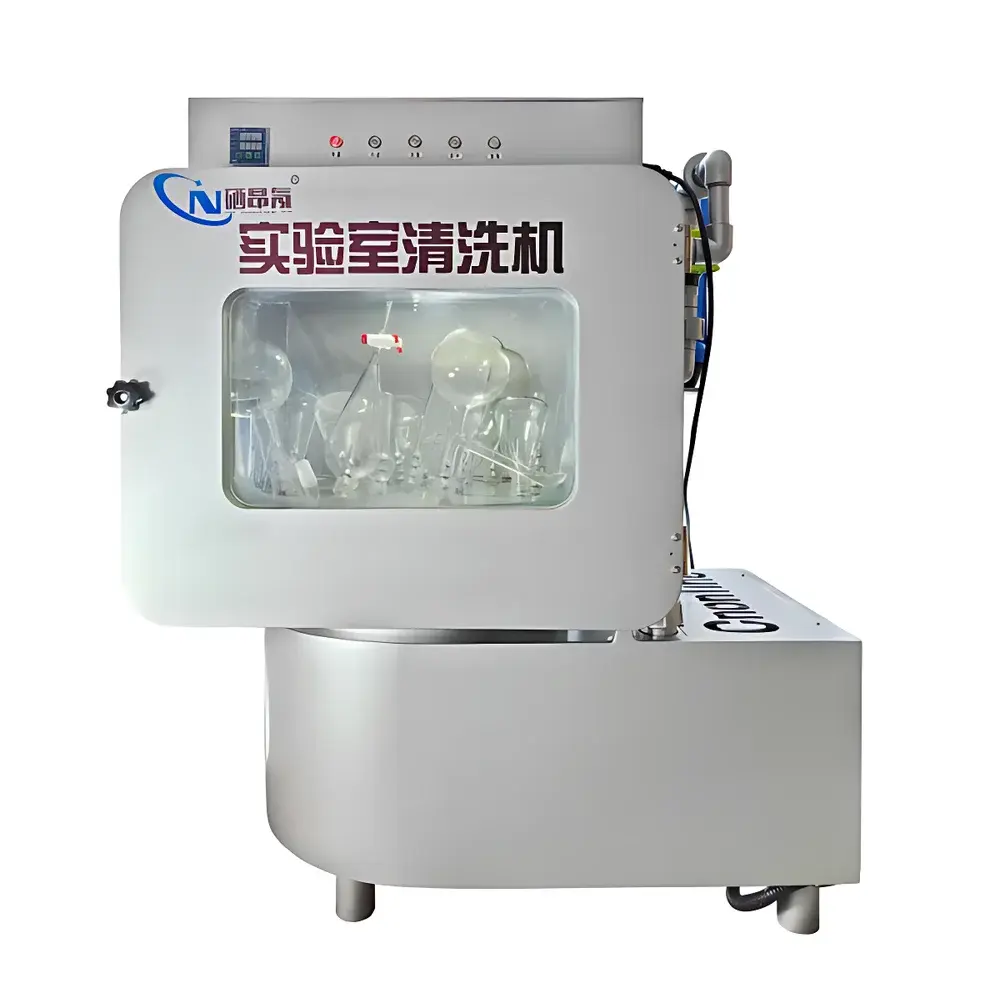
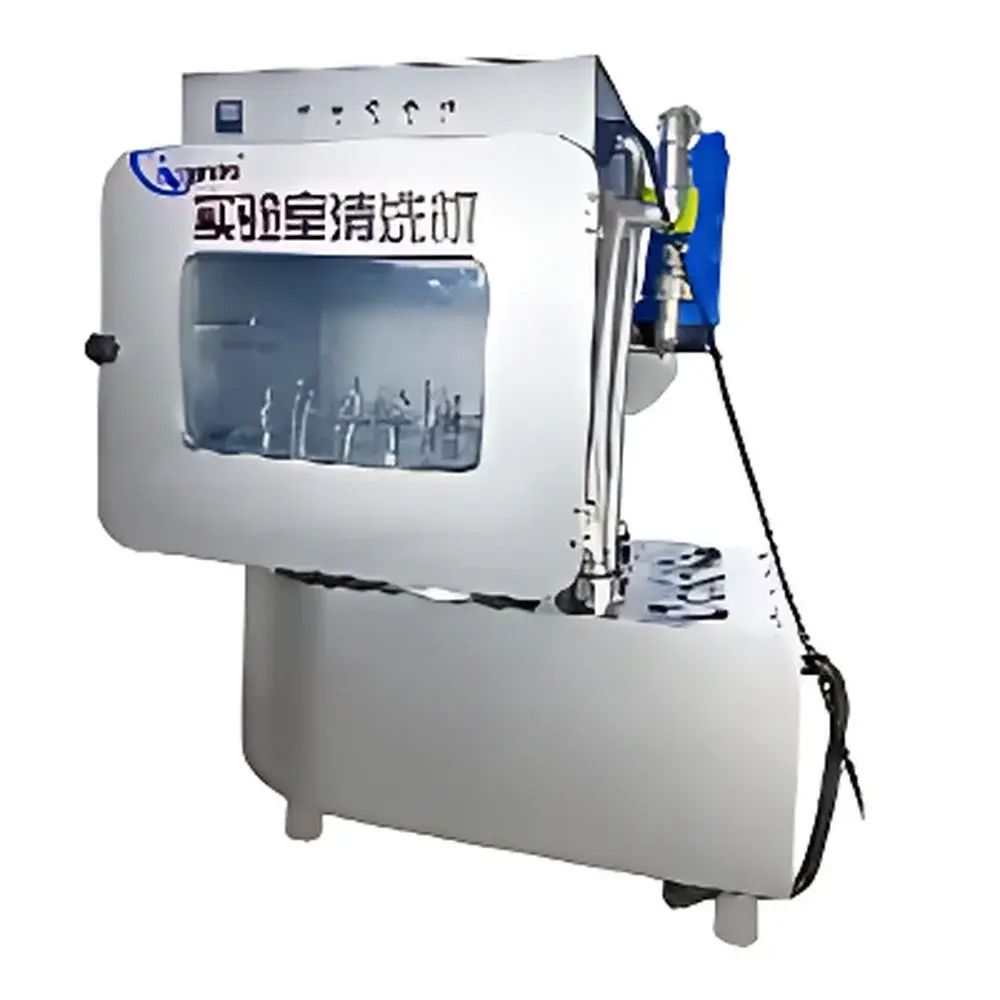
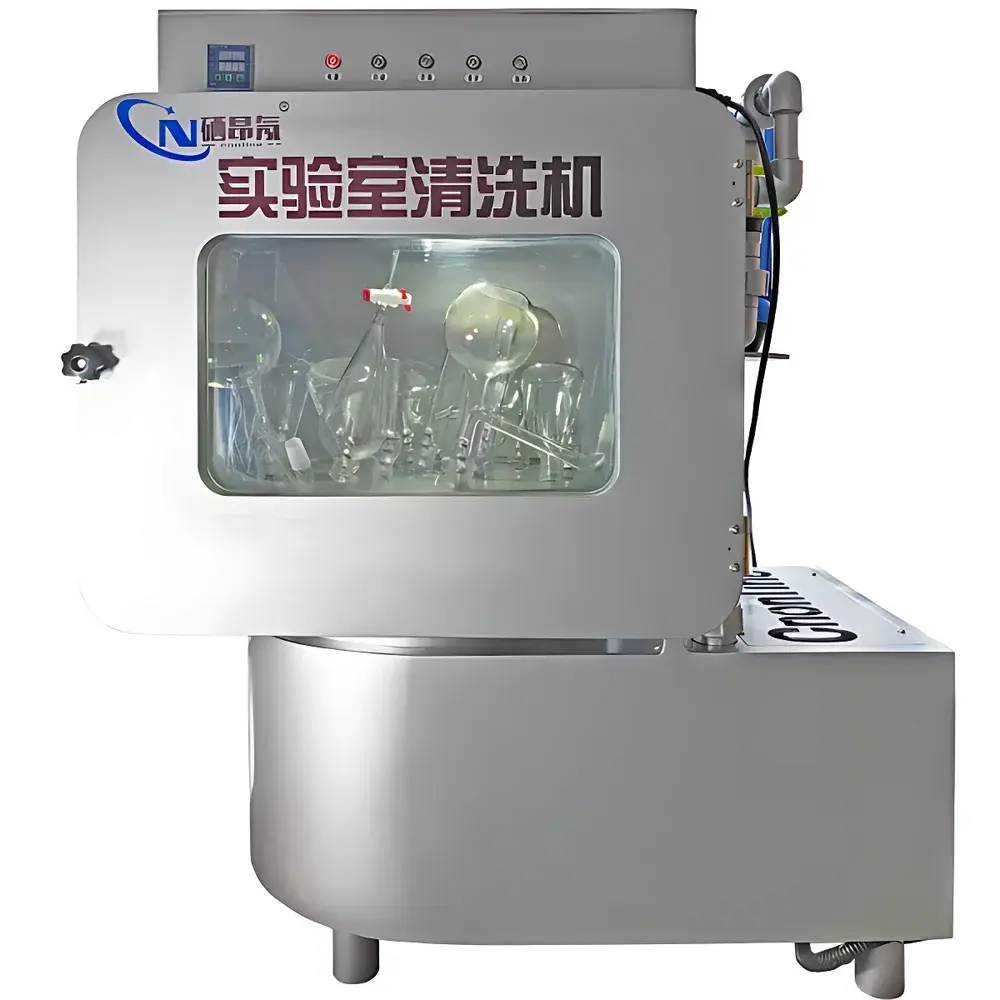
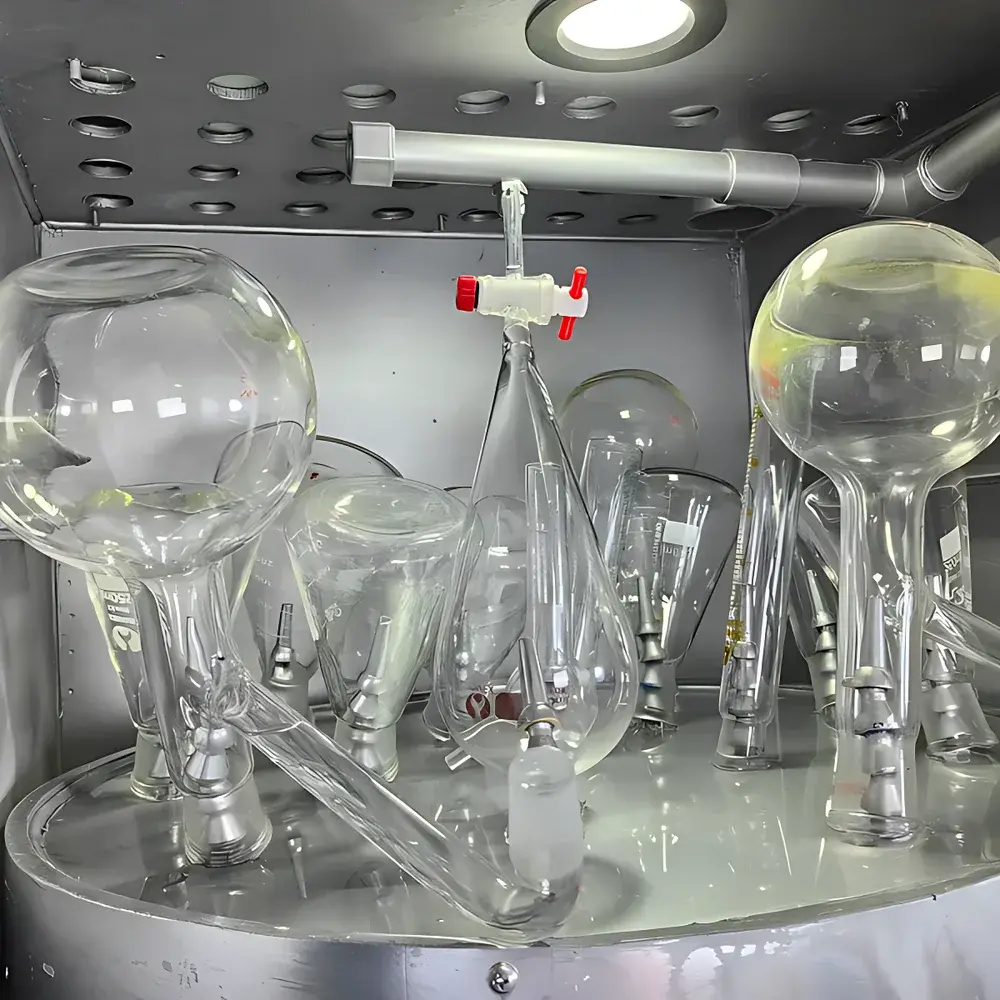
Cnonline CC-III Benchtop Bottle Washer
| Brand | Cnonline |
|---|---|
| Model | CC-III |
| Type | Benchtop Laboratory Bottle Washer |
| Construction Materials | Stainless Steel (316L) or Polypropylene (PP) |
| Water Consumption | ≤2.5 L/cycle (typical for standard glassware load) |
| Power Supply | 220 V, 50 Hz |
| Cycle Time | 25–45 min (programmable) |
| Chamber Volume | 38 L |
| Max. Temperature | 93 °C |
| Compliance | ISO 15883-1, EN 13060, GLP-compliant data logging capability |
| Software | Embedded microprocessor controller with 8 pre-programmed cycles and user-defined protocol storage |
| Filtration System | Dual-stage (5 µm + activated carbon) recirculating water filter |
| Noise Level | ≤52 dB(A) at 1 m |
| Dimensions (W×D×H) | 580 × 520 × 620 mm |
| Weight | 48 kg |
Overview
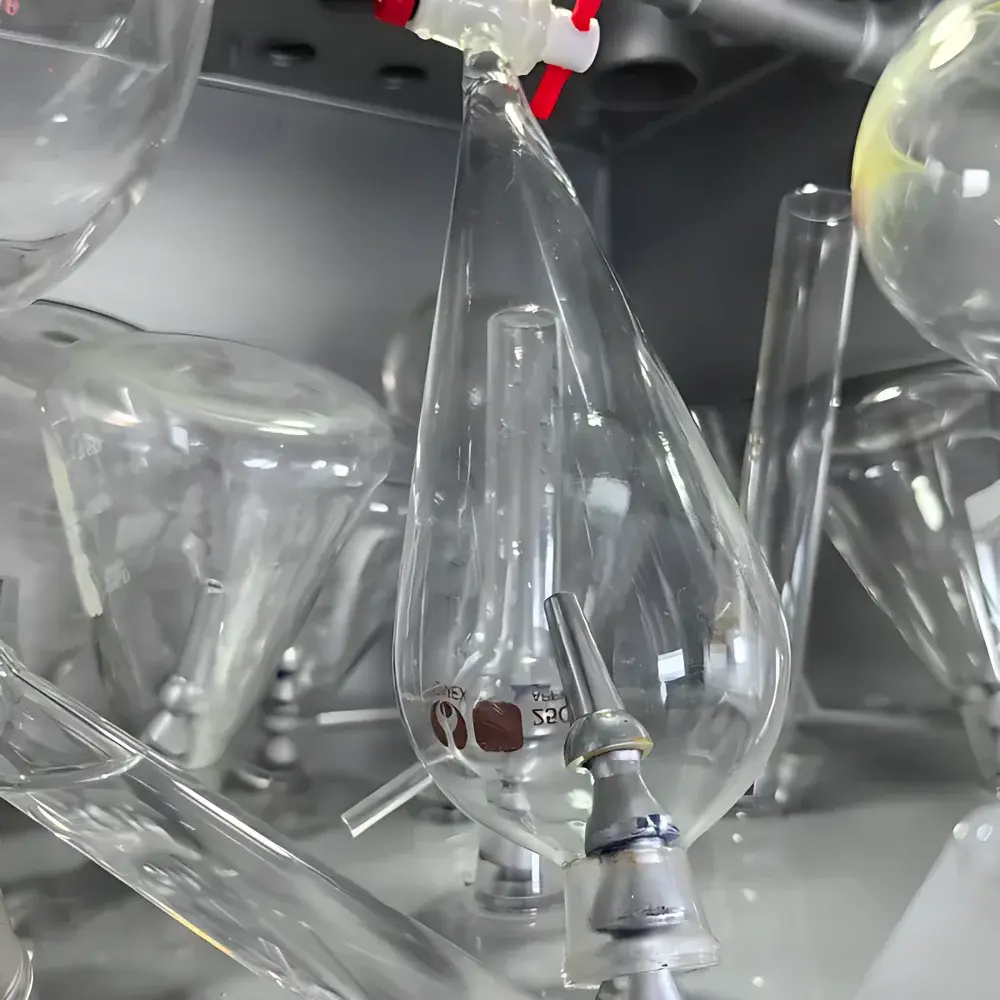
The Cnonline CC-III is a benchtop laboratory bottle washer engineered for precision cleaning of reusable glassware and plastic labware in regulated research, quality control, and clinical testing environments. It operates on the principle of thermally assisted, high-velocity spray impingement combined with programmable detergent dosing and multi-stage hot-water rinsing. Unlike conventional clamp-based washers, the CC-III employs a fixture-free chamber design with dynamically rotating, elastomeric nozzles that adjust orientation to ensure consistent spray coverage across irregular geometries—including volumetric flasks, distillation flasks, conical flasks, absorption tubes, and Liebig condensers. Its closed-loop water circulation system integrates thermal management: the submersible corrosion-resistant pump simultaneously drives cleaning fluid and dissipates motor heat via direct water contact, improving energy efficiency and extending component service life. Designed for ISO 15883-1 and EN 13060 compliance, the CC-III supports validation-ready operation in GxP settings when paired with optional temperature mapping and cycle documentation modules.
Key Features
- Fixture-free washing architecture eliminates manual loading constraints and reduces mechanical stress on delicate or non-standard labware.
- Elastomeric rotary spray nozzles deliver omnidirectional, pressure-stable jet patterns—optimized for turbulent flow dynamics to dislodge particulate residue and organic film without abrasion.
- Dual-material chamber options: electropolished 316L stainless steel for high-temperature sterilization compatibility and low metal leaching; medical-grade polypropylene for ultra-low trace-metal background in ICP-MS, AA, and trace elemental analysis workflows.
- Energy-integrated thermal design: recirculated rinse water absorbs motor heat, reducing auxiliary cooling demand and lowering total kWh/cycle by up to 18% versus fixed-pump equivalents.
- Acoustically damped enclosure and low-RPM pump operation maintain sound pressure levels ≤52 dB(A), meeting WHO-recommended ambient noise thresholds for continuous laboratory occupancy.
- Modular filtration system includes 5 µm particulate pre-filter and activated carbon post-filter—retaining >95% of surfactant residues and volatile organic compounds from recycled wash water.
Sample Compatibility & Compliance
The CC-III accommodates common borosilicate glassware (e.g., Pyrex®, Duran®) and autoclavable polymers (PP, PTFE-lined tubes, polycarbonate funnels) up to 1 L volume. It is validated for cleaning efficacy per ASTM E2573-22 (Standard Practice for Validation of Cleaning Processes for Reusable Medical Devices) and supports residue testing protocols aligned with USP and ICH Q5C. The device meets essential requirements of the EU Medical Device Regulation (MDR 2017/745) Annex I for Class IIa cleaning equipment when deployed in diagnostic or bioprocessing support roles. Optional thermal mapping kits enable IQ/OQ documentation for FDA 21 CFR Part 11–compliant environments, including full audit trail generation for cycle parameters, temperature logs, and user authentication events.
Software & Data Management
The embedded controller features an industrial-grade ARM Cortex-M7 processor running a real-time OS with deterministic I/O response. Eight factory-loaded cleaning programs cover routine applications—from light organic soiling (low-temperature alkaline wash) to heavy proteinaceous residue (high-temperature enzymatic cycle). Users may store up to 16 custom protocols with adjustable parameters: fill volume, wash/rinse duration, temperature ramp rate, detergent concentration (0.1–2.0% v/v), and final dry-air purge timing. All cycle data—including timestamps, setpoints, actual sensor readings (NTC thermistors ±0.3 °C accuracy), and alarm history—are timestamped and exportable via USB 2.0 as CSV or PDF reports compliant with ALCOA+ data integrity principles.
Applications
- QC/QA laboratories performing method validation under ISO/IEC 17025, where consistent removal of calibration standard carryover is critical.
- Pharmaceutical R&D units requiring residue-free preparation of HPLC vials and autosampler trays prior to chromatographic analysis.
- Environmental testing labs processing EPA Method 1664B samples, where PP-chamber configuration prevents cross-contamination from hydrocarbon standards.
- Academic core facilities serving multidisciplinary users—enabling shared instrumentation access without dedicated technician oversight.
- Hospital central sterile supply departments (CSSD) supporting low-volume, high-mix instrument reprocessing in CLIA-certified molecular pathology workflows.
FAQ
Does the CC-III support validation documentation for FDA-regulated environments?
Yes—when equipped with the optional Data Logger Module, it generates 21 CFR Part 11–compliant electronic records with digital signatures, user-level access control, and immutable audit trails.
Can I use non-Cnonline detergents?
The system is compatible with any low-foaming, phosphate-free alkaline or neutral-pH laboratory detergents certified for automated washer use; however, Cnonline’s proprietary formulations are optimized for filter longevity and thermal stability.
What maintenance intervals are recommended?
Daily: empty and inspect the primary filter basket; weekly: clean the secondary carbon filter housing and verify nozzle rotation; annually: calibrate temperature sensors and replace pump seals per OEM service bulletin.
Is remote monitoring available?
Not natively—but Ethernet-enabled gateway modules (sold separately) allow integration into LabVantage or STARLIMS via Modbus TCP for centralized fleet management.
How does the CC-III handle heavily soiled condensers or coiled tubing?
Its variable-pressure spray system delivers up to 2.8 bar at the nozzle tip during peak wash phases, coupled with oscillating rotation to penetrate narrow lumens ≥2 mm ID without requiring internal brushes or ultrasonic assist.



