
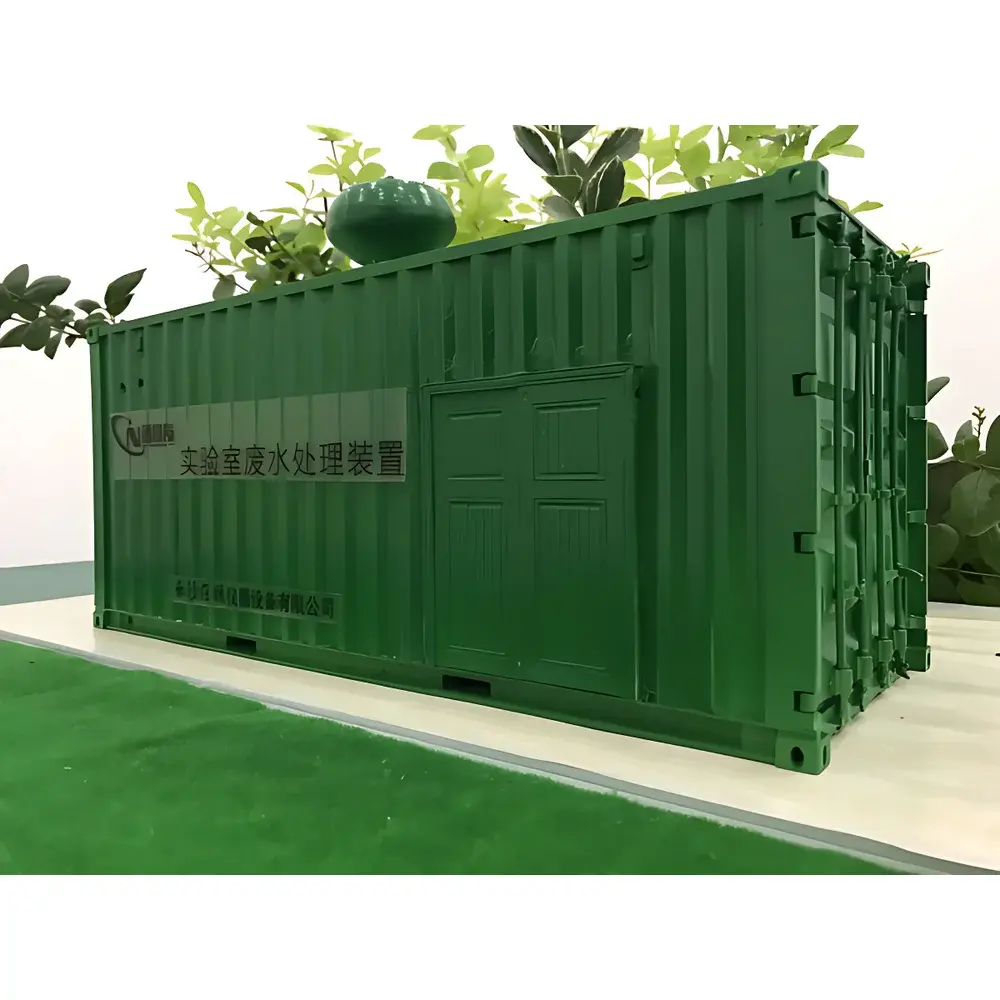
Cnonline FS-II Containerized Integrated Laboratory Wastewater Treatment System
| Brand | Cnonline |
|---|---|
| Origin | Hunan, China |
| Model | FS-II |
| Application | Hazardous Laboratory Wastewater Treatment |
| Compliance Standards | GB 8978, GB 18466-2005, GB 18918-2002, GB 21907-2008 |
| Core Processes | pH-adjusted chemical dosing, Fenton oxidation, coagulation-flocculation, sedimentation, micro-electrolysis, membrane filtration (MF/UF/RO), chlorination disinfection |
| Target Contaminants | Heavy metals (Cu²⁺, Cr⁶⁺, Cd²⁺, Pb²⁺, As³⁺/⁵⁺), phenols, cyanides, organic acids, suspended solids, colloids |
Overview
The Cnonline FS-II Containerized Integrated Laboratory Wastewater Treatment System is an engineered, skid-mounted solution designed specifically for the decentralized, intermittent, and highly variable discharge profiles typical of research laboratories, universities, and biomedical facilities. Unlike continuous municipal or industrial wastewater streams, laboratory effluents exhibit wide fluctuations in flow rate, pH, conductivity, and contaminant composition—including heavy metals (e.g., Cu, Cr, Cd, Pb, As), toxic organics (phenol, cyanide), oxidizable compounds, and suspended solids. The FS-II system employs a multi-stage, chemically and physically integrated treatment architecture grounded in proven unit operations: automated pH-driven reagent dosing, Fenton-based advanced oxidation, coagulation-flocculation, gravity sedimentation, micro-electrolysis redox treatment, pressure-driven membrane separation (microfiltration, ultrafiltration, and optional reverse osmosis), and final chlorine-based disinfection. This modular configuration ensures compliance with Chinese national discharge standards—including GB 8978 (Comprehensive Wastewater Discharge Standard), GB 18466-2005 (Medical Institution Wastewater), GB 18918-2002 (Municipal Wastewater Treatment Plant), and GB 21907-2008 (Bioengineering Pharmaceutical Effluent)—while maintaining operational flexibility for site-specific influent variability.
Key Features
- Containerized design (standard 20-ft or 40-ft ISO frame) enabling rapid deployment, mobility, and minimal civil works—ideal for retrofitting existing lab buildings or temporary research sites.
- Programmable logic controller (PLC)-based automation with real-time monitoring of pH, ORP, turbidity, and flow; automatic acid/base and coagulant/flocculant dosing triggered by sensor feedback loops.
- Dedicated treatment modules for priority hazardous streams: sulfate-copper recovery pathway, chromium(VI) reduction to Cr(III) followed by precipitation, cadmium/lead/arsenic hydroxide coprecipitation, phenol degradation via Fenton oxidation, and cyanide oxidation to cyanate.
- Integrated micro-electrolysis cell using Fe/C bimetallic fillers to enhance redox-driven decomplexation and COD reduction prior to membrane polishing.
- Multi-barrier membrane train configurable with MF (0.1–10 µm), UF (1–100 kDa), or RO (<100 Da) elements—selected based on target contaminants and required effluent quality (discharge vs. reuse).
- Onboard chlorine generation or sodium hypochlorite dosing system with residual Cl₂ monitoring to ensure pathogen inactivation per WHO and GB 18466 requirements.
- Fail-safe overflow protection, leak detection sensors, and emergency shutdown protocols aligned with IEC 61508 functional safety principles.
Sample Compatibility & Compliance
The FS-II system accommodates heterogeneous influent matrices typical of analytical chemistry, molecular biology, pharmacology, and materials science labs—including acidic digestates, alkaline cleaning solutions, solvent-contaminated rinsates, and mixed heavy metal plating baths. It is validated for influent pH range 2–12, TSS ≤ 500 mg/L, COD ≤ 2000 mg/L, and heavy metal concentrations up to 100 mg/L (as individual elements). All chemical storage tanks, piping, and wetted components comply with ASTM A240 316L stainless steel or EN 13480-3 certified FRP construction. The system supports full audit trails and electronic logbooks compatible with GLP/GMP documentation requirements. While not pre-certified to ISO 9001 or ISO 14001, its process control architecture enables straightforward integration into facility-level QMS frameworks and facilitates third-party verification against GB/T 24001 environmental management standards.
Software & Data Management
The embedded HMI interface provides local visualization of real-time process parameters, alarm history, and maintenance schedules. Remote access is supported via secure HTTPS-enabled web server (TLS 1.2+) with role-based user permissions (operator, engineer, administrator). All critical events—including reagent low-level alerts, pump fault logs, membrane fouling index trends, and batch-wise effluent test records—are timestamped and stored locally for ≥18 months. Data export conforms to CSV and XML formats compatible with LIMS platforms. Optional integration with Modbus TCP or OPC UA enables centralized SCADA aggregation across multi-lab campuses. Audit trail functionality satisfies traceability requirements under GB/T 19001-2016 Clause 8.5.2 and aligns with FDA 21 CFR Part 11 principles for electronic records where electronic signatures are implemented.
Applications
- Centralized treatment of combined effluents from university teaching labs, graduate research facilities, and core instrumentation centers.
- On-site pretreatment for laboratories discharging to municipal sewer systems where local authorities enforce stringent pre-treatment ordinances.
- Zero-liquid-discharge (ZLD) pilot implementation when paired with evaporative crystallizers for salt recovery.
- Emergency response units for containment and stabilization of accidental chemical spills or decommissioned lab waste inventories.
- Supporting LEED EBOM v4.1 Water Efficiency credits through verified reduction of total suspended solids, heavy metals, and organic load prior to municipal discharge.
FAQ
What types of laboratory wastewater can the FS-II treat?
It handles complex, low-flow, high-variability streams containing heavy metals, cyanides, phenols, halogenated organics, acids/bases, and suspended solids—common in chemistry, biology, and pharmaceutical R&D labs.
Is membrane selection fixed or customizable?
Membrane type (MF, UF, or RO) and flux rating are specified during engineering design based on influent characterization and discharge/reuse objectives; no field-swappable cartridges are provided.
Does the system include validation documentation for regulatory submission?
Yes—factory acceptance test (FAT) reports, material certificates (EN 10204 3.1), and performance test data against GB standards are supplied; site-specific commissioning and DQ/IQ/OQ support available upon request.
Can the FS-II be integrated with existing building management systems (BMS)?
Yes—via Modbus RTU over RS-485 or Modbus TCP/IP; BACnet/IP and Profibus DP gateways are available as optional add-ons.
What maintenance intervals are recommended?
Coagulant dosing pumps require quarterly calibration; membrane integrity tests every 6 months; micro-electrolysis media replacement every 12–18 months depending on redox load; full PLC firmware updates annually.



