
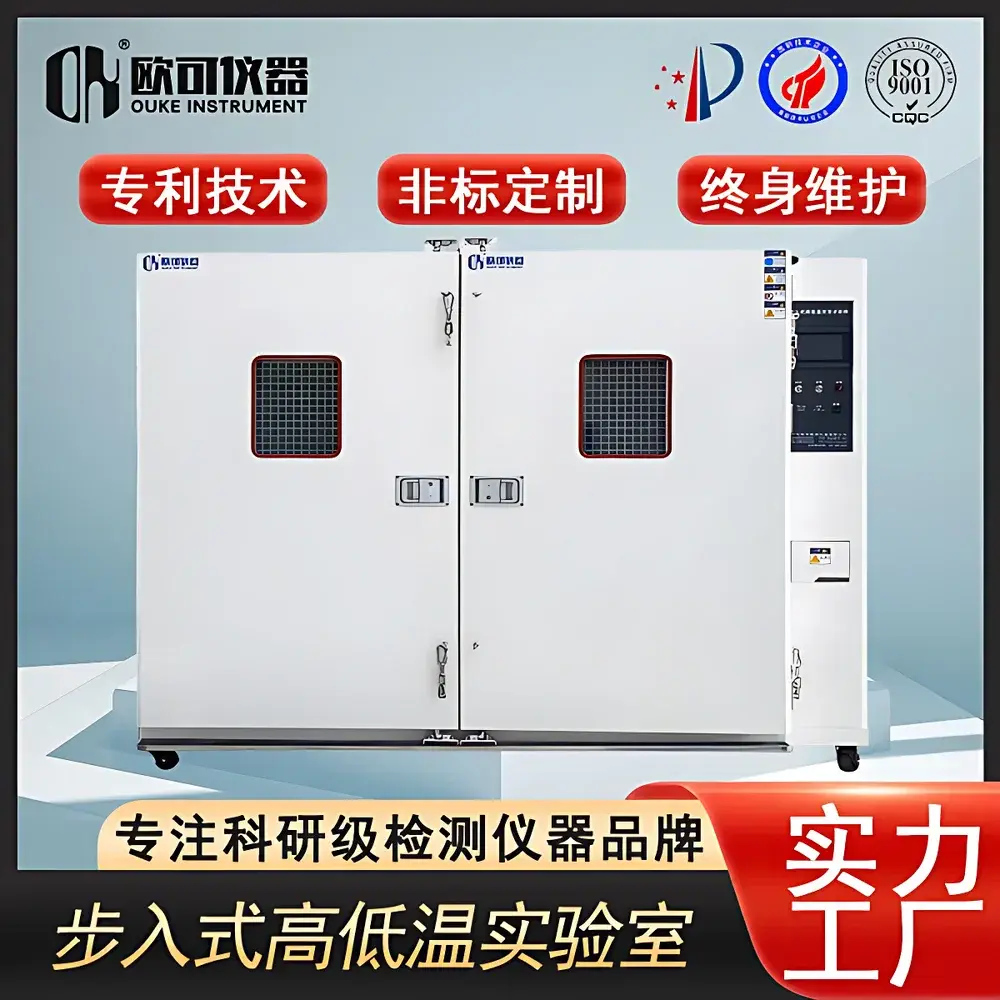
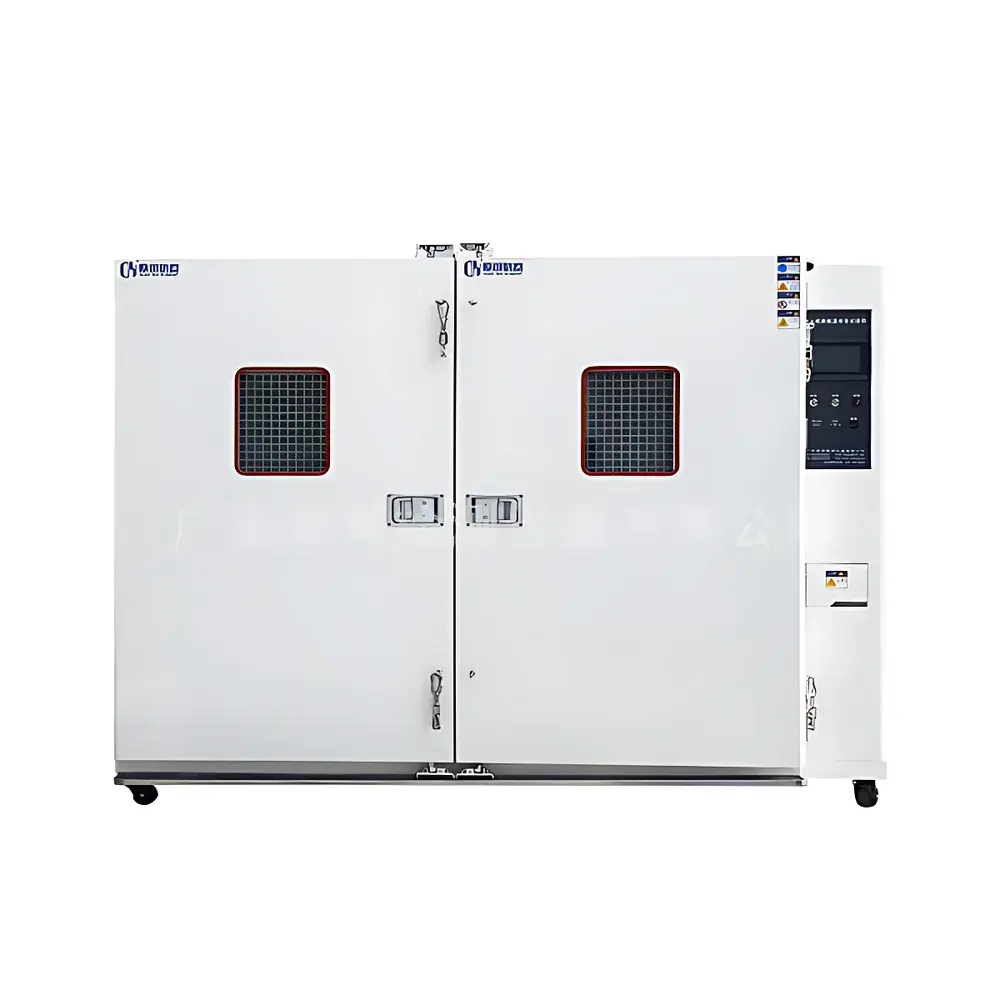
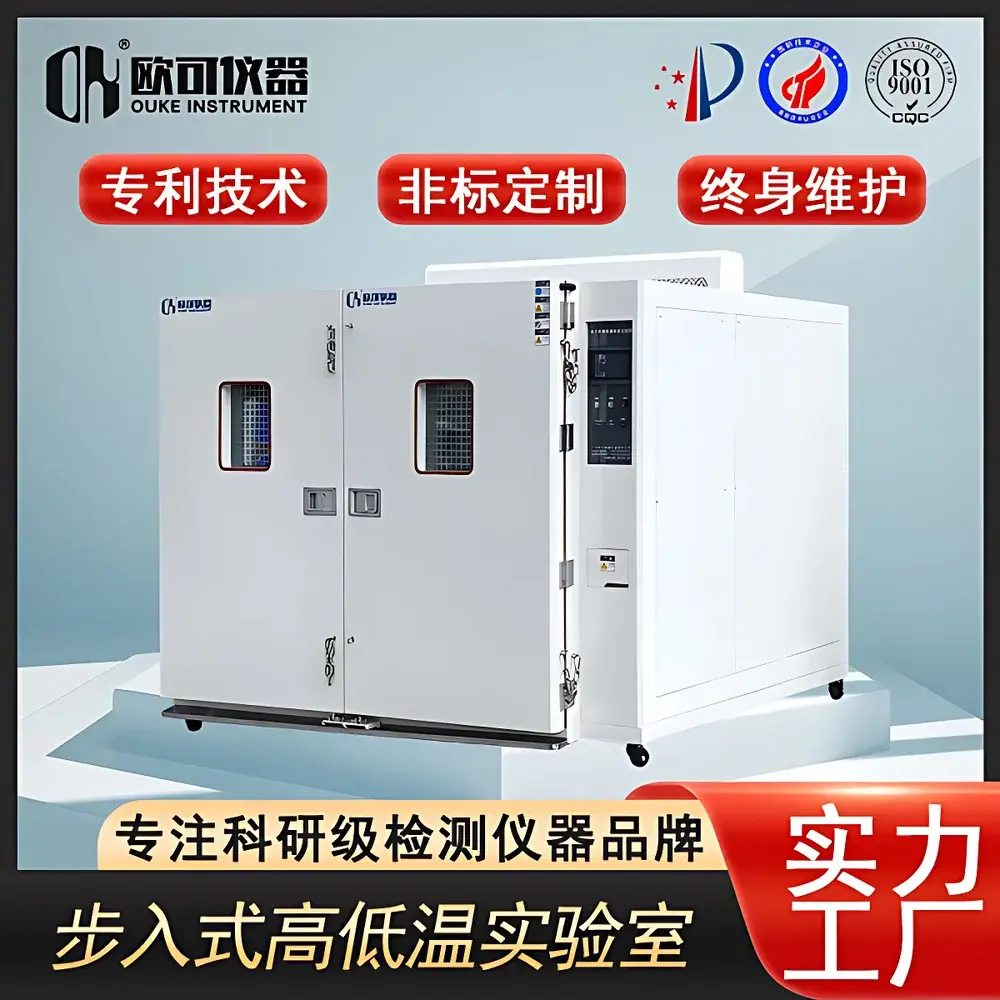
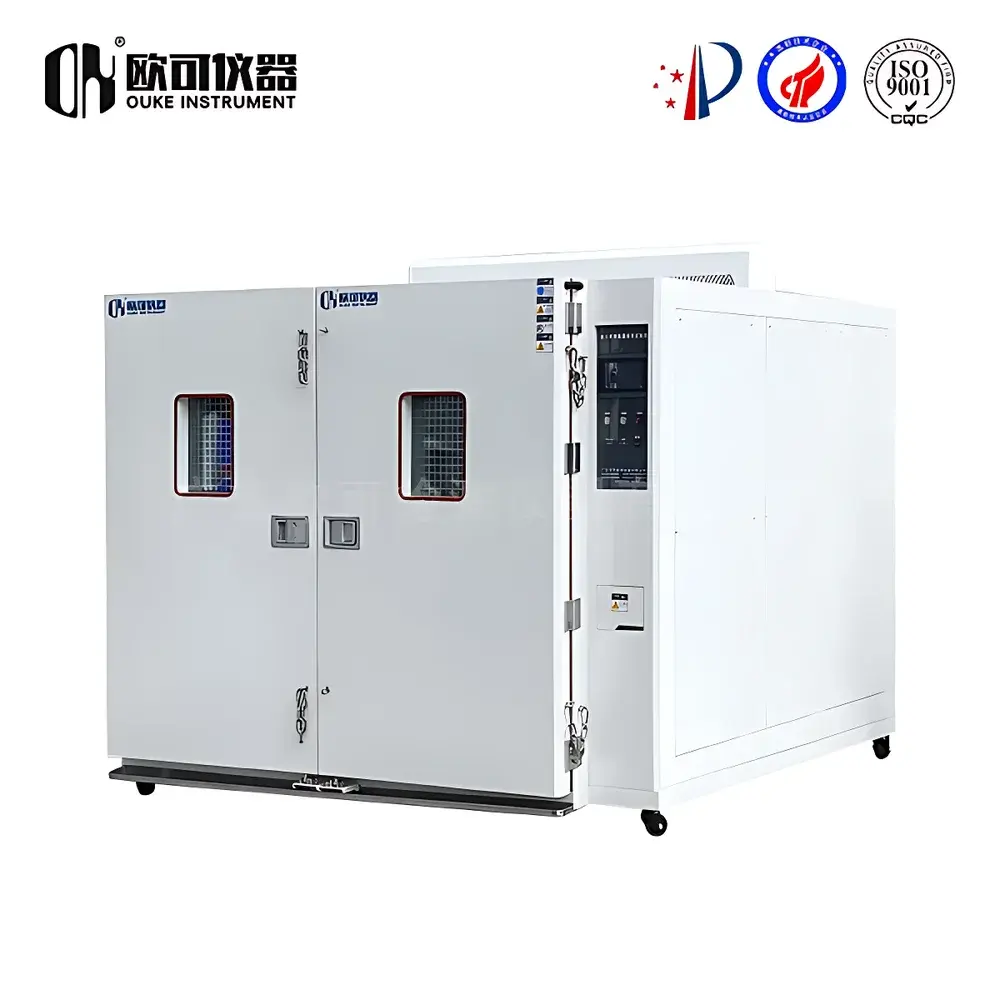
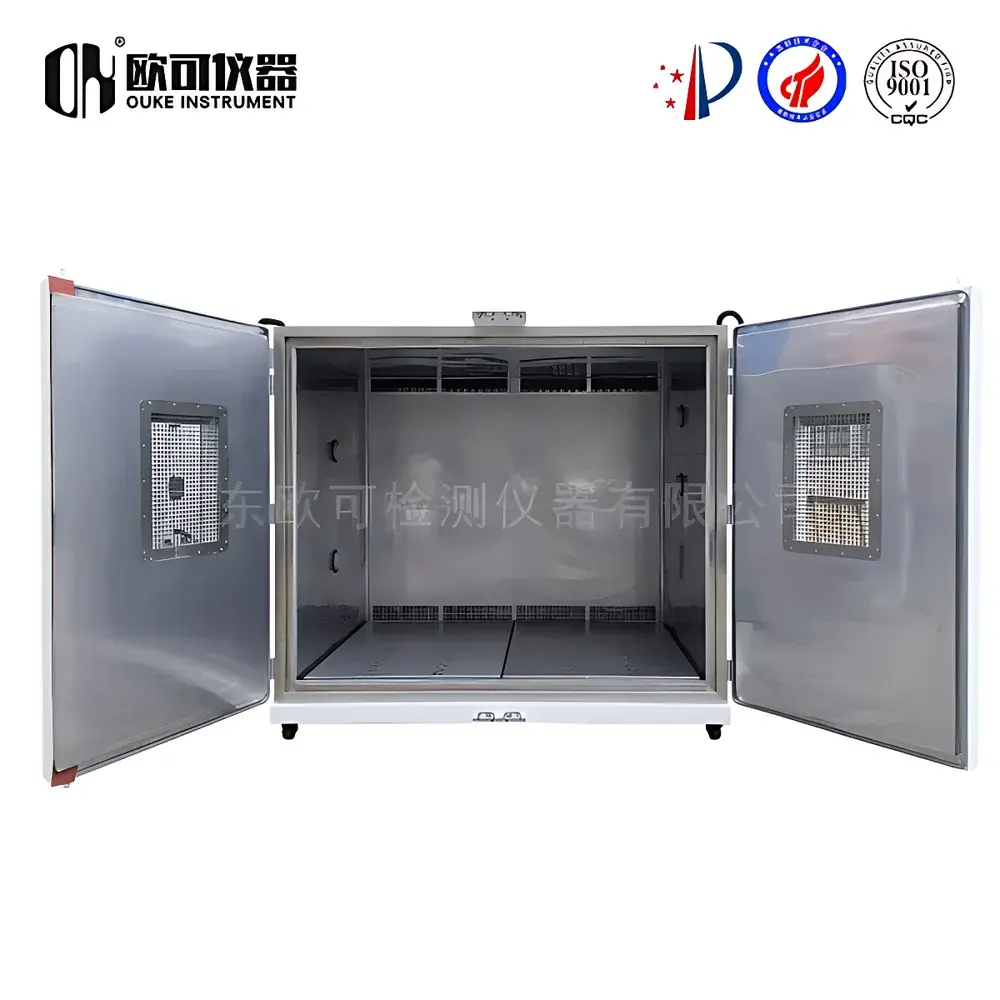
OK Automotive Seat Walk-in Environmental Test Chamber OK-STH-0001
| Brand | OK Instruments |
|---|---|
| Origin | Guangdong, China |
| Manufacturer Type | Direct Manufacturer |
| Country of Origin | China |
| Model | OK-STH-0001 |
| Internal Dimensions | Custom-engineered per client specification (D×W×H) |
| Temperature Range | Selectable options — A: 0°C to +85°C |
| B | −20°C to +85°C |
| C | −40°C to +85°C |
| D | −60°C to +85°C |
| E | −70°C to +85°C |
| Temperature Uniformity | ±3°C |
| Temperature Control Accuracy | ±1°C |
| Heating Rate | 1.0–4.0°C/min |
Overview
The OK Automotive Seat Walk-in Environmental Test Chamber OK-STH-0001 is a purpose-built, large-volume environmental simulation system engineered specifically for the functional, durability, and material validation testing of complete automotive seats and their subsystems—including seat frames, adjustment mechanisms, heating/ventilation/massage modules, foam cores, and surface materials (leather, fabric, thermoplastics). Unlike generic walk-in chambers, this system integrates structural, thermal, electrical, and safety engineering principles aligned with OEM-grade automotive testing requirements. It operates on forced-air convection with dual-stage refrigeration and high-capacity electric heating, enabling precise, repeatable temperature cycling across extreme ranges (−70°C to +85°C). The chamber’s core function is to replicate real-world in-vehicle thermal environments—such as summer cabin soak, winter cold-start exposure, and rapid diurnal transitions—to assess performance degradation, dimensional stability, functional reliability, and outgassing behavior under controlled, auditable conditions.
Key Features
- Structurally reinforced walk-in enclosure with load-rated floor (≥1,500 kg/m²), designed to accommodate full-size automotive seats with headrests, integrated test fixtures, and dynamic actuation hardware.
- Customizable internal dimensions (depth × width × height) optimized for seat envelope, travel clearance, and ergonomic access—configured during engineering design phase.
- Dual-access door configuration: heavy-duty double-swing or vertical lift door with anti-condensation heating and magnetic seal, facilitating forklift or rail-based seat loading.
- Integrated high-current DC power distribution system (up to 48 V / 100 A per channel) and vehicle-grade signal interface panel (CAN 2.0B, LIN 2.2, analog I/O) for synchronized functional testing during thermal exposure.
- Multi-zone temperature monitoring capability: supports up to 32 calibrated PT100 sensors mounted directly on seat surfaces, motor housings, foam layers, and air ducts—data logged synchronously with chamber control parameters.
- Active exhaust management: high-flow axial fan with variable-frequency drive, coupled with activated carbon filtration and optional VOC sensor feedback loop to comply with indoor air quality and occupational health requirements.
- Robust safety architecture: includes combustible gas detection (LEL), emergency purge ventilation, redundant overtemperature cutoff, and fail-safe door interlock logic per ISO 13857 and IEC 60204-1.
Sample Compatibility & Compliance
The OK-STH-0001 accommodates full-assembly automotive seats (including adaptive and multi-motor variants), seat subassemblies (e.g., lumbar modules, seat heaters), and material coupons. Its operational envelope satisfies the thermal stress profiles defined in ISO 16750-4 (Environmental conditions and testing for electrical and electronic equipment — Part 4: Climatic loads), IEC 60068-2-1 (Cold), IEC 60068-2-2 (Dry heat), and IEC 60068-2-14 (Change of temperature). System firmware and control logic are pre-configured with test sequences compliant with Volkswagen VW 80101, General Motors GMW 3172, Ford FLTM BU 101-01, and Daimler DBL 82200. All calibration records, alarm logs, and cycle execution data support GLP/GMP traceability and are exportable in CSV or XML format for audit readiness.
Software & Data Management
The embedded OK-EnviroControl™ software provides ISO/IEC 17025-aligned test sequence programming with multi-step ramp/soak profiles, conditional branching (e.g., “initiate seat heating only if internal surface temperature reaches −40°C”), and real-time parameter overlay. It supports 21 CFR Part 11-compliant user authentication, electronic signatures, and immutable audit trails—including operator ID, timestamp, setpoint deviations, and sensor fault events. Data synchronization with external test benches (e.g., MTS or Instron systems) is achieved via TCP/IP or OPC UA. Raw thermal and functional data are stored locally on an industrial SSD and optionally mirrored to network-attached storage (NAS) or cloud-based LIMS platforms.
Applications
- Functional verification of seat electronics (memory recall, position sensing, HOD integration) across thermal extremes.
- Cyclic fatigue assessment of mechanical linkages, gear trains, and slider rails under simultaneous thermal and dynamic load.
- Material aging studies: quantifying color shift (ΔE), tensile strength loss, compression set, and volatile organic compound (VOC) emission rates per DIN 75201 and VDA 278.
- Thermal management validation of seat climate control systems—including airflow uniformity, surface temperature gradient, and condensation resistance.
- OEM homologation testing per proprietary specifications from BYD, Geely, Great Wall, and other Tier-1 suppliers requiring full-system environmental qualification.
FAQ
Does the chamber support dynamic actuation during temperature cycling?
Yes—optional integrated servo-driven seat motion systems (fore-aft, recline, height) can be installed within the chamber footprint, with motion profiles synchronized to thermal steps via OK-EnviroControl™.
Can the system be validated against ISO 17025 requirements?
All temperature sensors are NIST-traceable; chamber uniformity and stability validation reports are provided per ISO 17025 Annex A.3 upon commissioning.
Is remote monitoring and control supported?
Standard Ethernet connectivity enables secure web-based supervision, alarm notification via SMTP/SMS, and real-time dashboard visualization through OK-CloudLink™.
What electrical infrastructure is required for installation?
Three-phase 380–415 VAC ±10%, 50/60 Hz supply with dedicated grounding (≤5 Ω) and minimum 125 A circuit breaker; cooling water connection (if water-cooled condenser option selected).
How is compliance with automotive OEM standards verified?
Pre-delivery FAT (Factory Acceptance Test) includes execution of a representative VW 80101 or GMW 3172 test cycle, with full data package reviewed and signed off by client QA representatives.



