
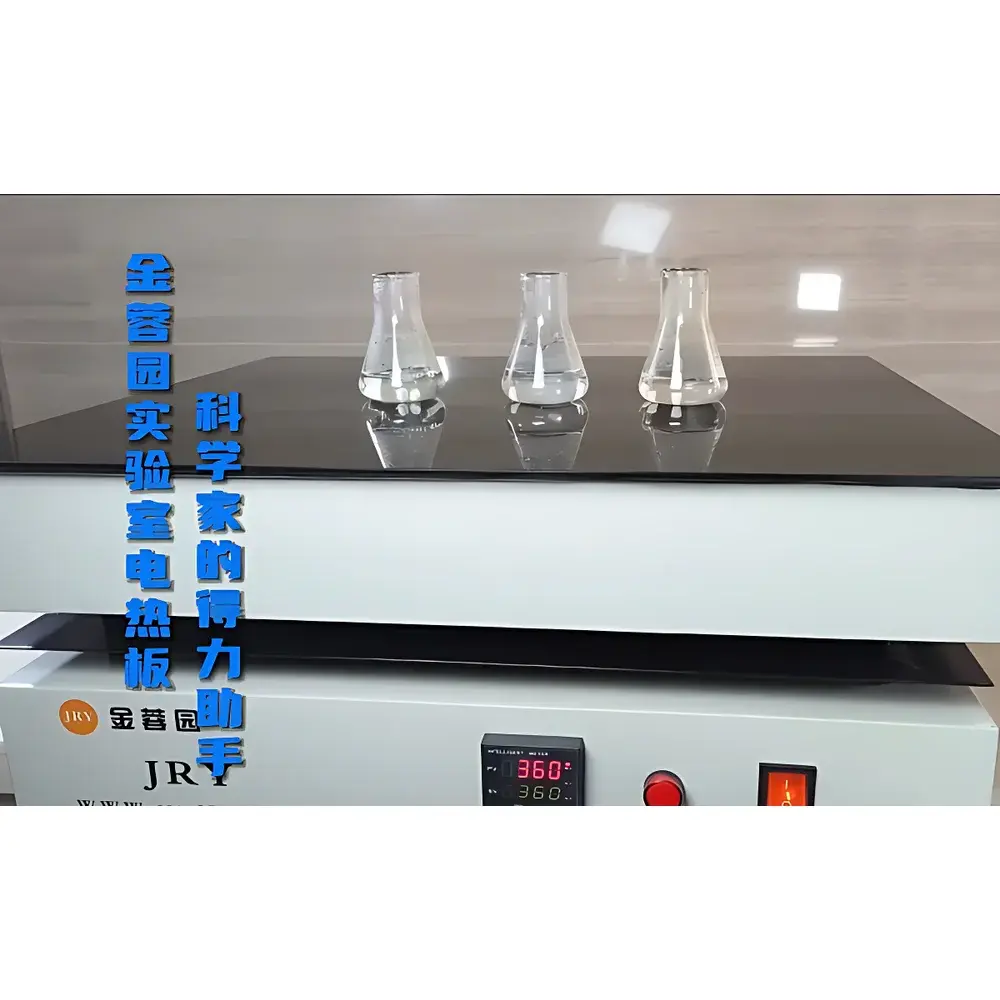
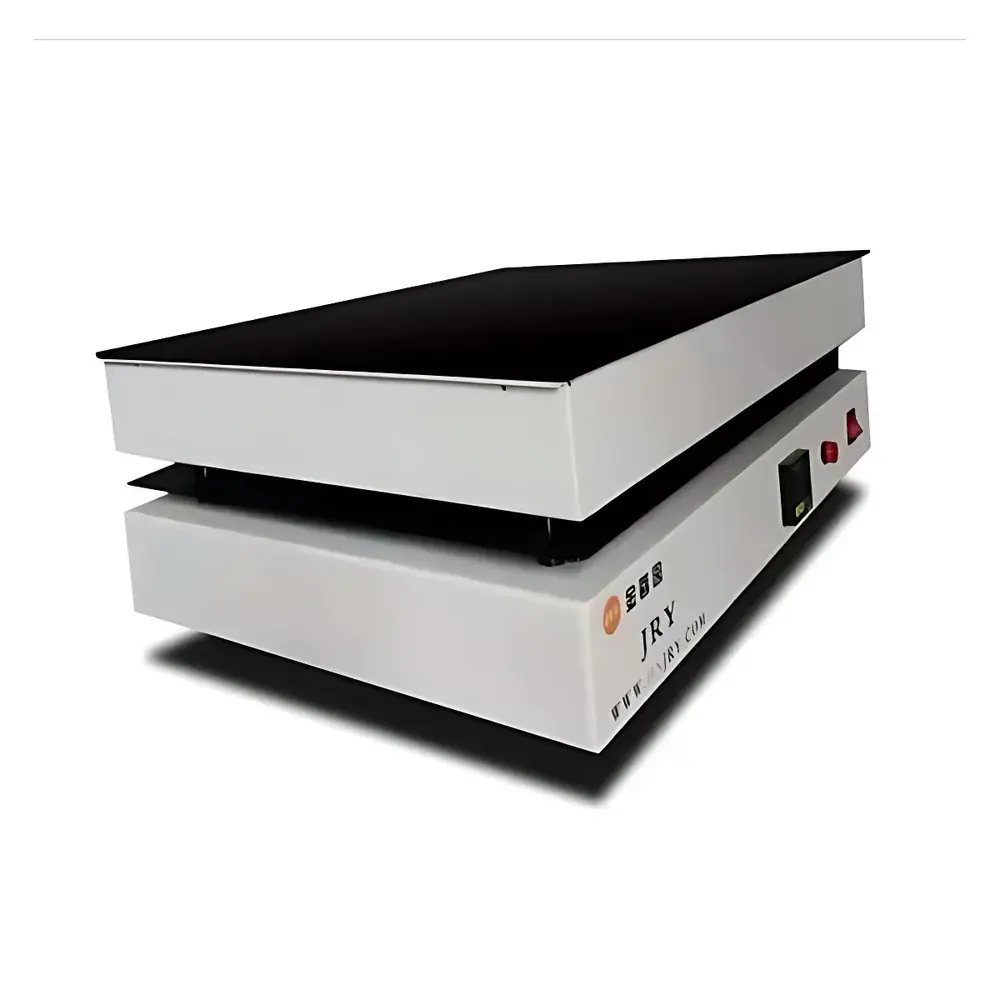
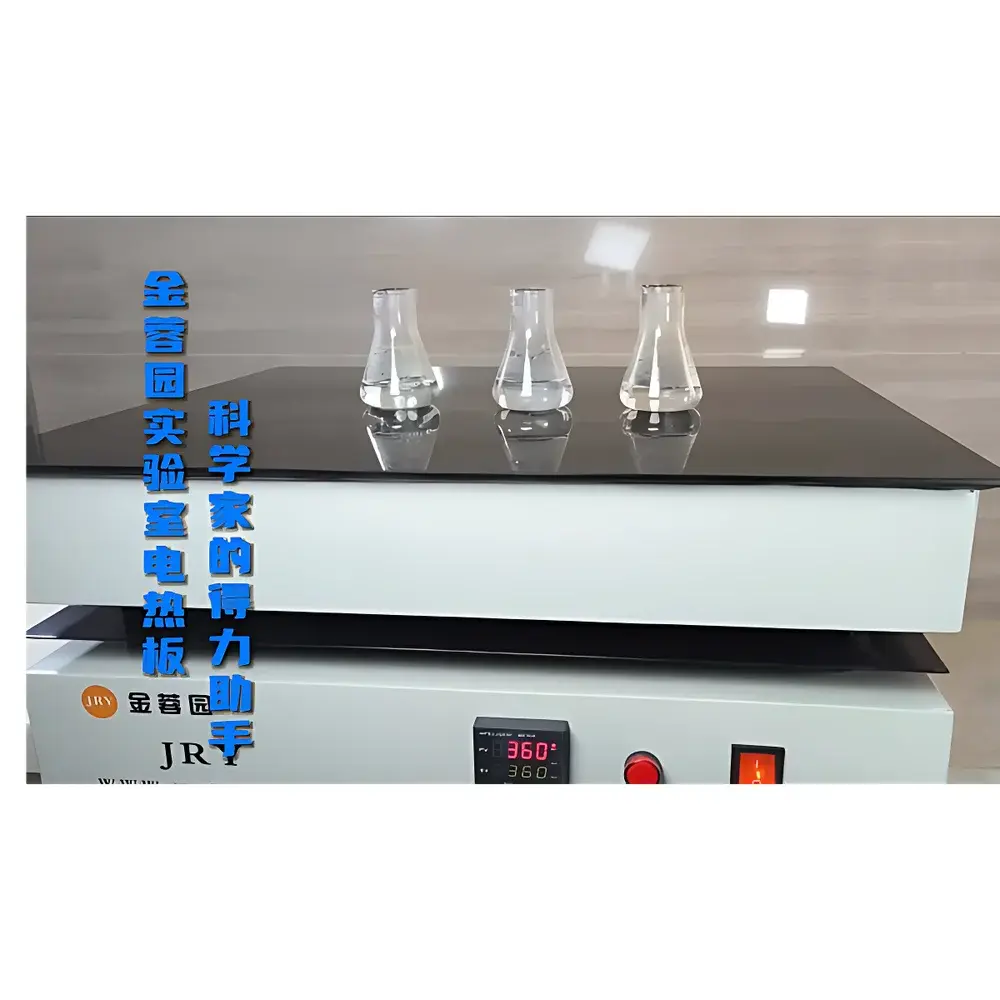

JRY-HJ Black Crystal Electric Heating Plate
| Brand | JRY |
|---|---|
| Origin | Hunan, China |
| Manufacturer Type | Direct Manufacturer |
| Heating Power | 3000 W |
| Controller | PID Digital Display |
| Max. Operating Temperature | 450 °C |
| Temperature Uniformity | ±1 °C |
| Surface Dimensions | 600 × 400 mm |
| Heating Zone Dimensions | 600 × 400 mm |
| Display | Intelligent Digital LCD |
Overview
The JRY-HJ Black Crystal Electric Heating Plate is an engineered solution for high-precision, high-stability sample preparation and digestion in analytical laboratories. Designed around a monolithic black crystal ceramic heating surface—chemically inert, thermally robust, and resistant to strong acids (e.g., HNO₃, HCl, HF), alkalis, and organic solvents—the unit eliminates common failure modes associated with traditional enamel or stainless-steel plates. Its resistive coil heating architecture is embedded beneath the ceramic layer, enabling uniform thermal distribution across the full 600 × 400 mm active zone. The system operates on a constant-power principle at 3000 W, supporting rapid ramp-up to 450 °C while maintaining long-term thermal stability under continuous operation (>48 h). This design meets core requirements for open-vessel digestion, evaporation, concentration, and solvent removal protocols used in environmental, geochemical, food safety, and pharmaceutical QC labs.
Key Features
- Black crystal ceramic surface: Non-porous, corrosion-resistant, and thermally stable up to 450 °C; withstands repeated exposure to aggressive reagents without degradation or micro-cracking.
- PID digital temperature control: Real-time feedback loop with adjustable ramp rate, hold time, and setpoint accuracy of ±1 °C across the entire heating zone.
- Full-surface heating architecture: Uniform thermal profile verified by ISO/IEC 17025-compliant calibration mapping—no hot/cold spots within ±1 °C deviation.
- Intelligent digital LCD interface: Displays real-time temperature, setpoint, elapsed time, and operational status; supports password-protected parameter locking for GLP compliance.
- Robust mechanical construction: Aluminum alloy housing with reinforced mounting frame; IP22-rated enclosure for protection against accidental splashes and particulate ingress.
- Safety-integrated design: Over-temperature cut-off (OTC) at 470 °C, auto-shutdown on sensor failure, and ground-fault circuit interrupter (GFCI) compatibility.
Sample Compatibility & Compliance
The JRY-HJ accommodates standard laboratory vessels—including borosilicate glass beakers (50–2000 mL), quartz crucibles, PTFE digestion cups, and ceramic evaporating dishes—without risk of surface adhesion or chemical leaching. Its flat, non-reactive surface enables reproducible heating of multiple samples simultaneously, supporting parallel digestion workflows per EPA Method 3050B, ASTM D5179, and ISO 11466. The instrument conforms to IEC 61010-1:2010 for electrical safety in laboratory equipment and includes documentation traceable to national metrology standards (CNAS-accredited calibration certificate available upon request). It supports audit-ready operation under GLP and GMP environments when paired with validated SOPs and electronic logbook integration.
Software & Data Management
While the JRY-HJ operates as a standalone analog-digital hybrid controller, its RS-485 communication port (optional accessory) enables integration into centralized lab management systems via Modbus RTU protocol. Temperature logs can be exported in CSV format for traceability, and time-stamped setpoint changes are recorded internally for up to 30 days. When deployed in regulated settings, the unit supports 21 CFR Part 11-compliant data integrity practices through external SCADA or LIMS interfaces—ensuring electronic records are attributable, legible, contemporaneous, original, and accurate (ALCOA+ principles).
Applications
- Open-beaker acid digestion of soils, sediments, and biological tissues prior to ICP-OES/MS analysis.
- Controlled evaporation of aqueous extracts in pesticide residue testing (AOAC 2007.01).
- Pre-concentration of trace metals from large-volume water samples (EPA 200.8).
- Thermal conditioning of reference materials and calibration standards.
- Heating baths for viscosity measurements, dissolution testing, and reaction kinetics studies.
- Pre-drying of filter papers and gravimetric precipitates in inorganic analysis.
FAQ
What materials are compatible with the black crystal ceramic surface?
Borosilicate glass, quartz, PTFE, polypropylene, and ceramic ware—avoid direct contact with molten metals or strongly oxidizing agents above 400 °C.
Is the temperature uniformity verified across the entire 600 × 400 mm zone?
Yes—uniformity of ±1 °C is confirmed using calibrated PT100 probes at nine standardized grid points per ISO/IEC 17025 validation protocol.
Can the JRY-HJ be used in fume hoods without performance loss?
Yes—the unit is rated for ambient airflow up to 0.5 m/s; no derating required under typical hood face velocities (0.4–0.6 m/s).
Does the PID controller support programmable multi-step temperature profiles?
No—this model features single-setpoint PID control; multi-ramp functionality requires optional firmware upgrade or external programmable controller integration.
What maintenance is required to ensure long-term calibration stability?
Annual verification using NIST-traceable reference thermometer; cleaning with deionized water and lint-free cloth—no solvents or abrasives recommended.



