
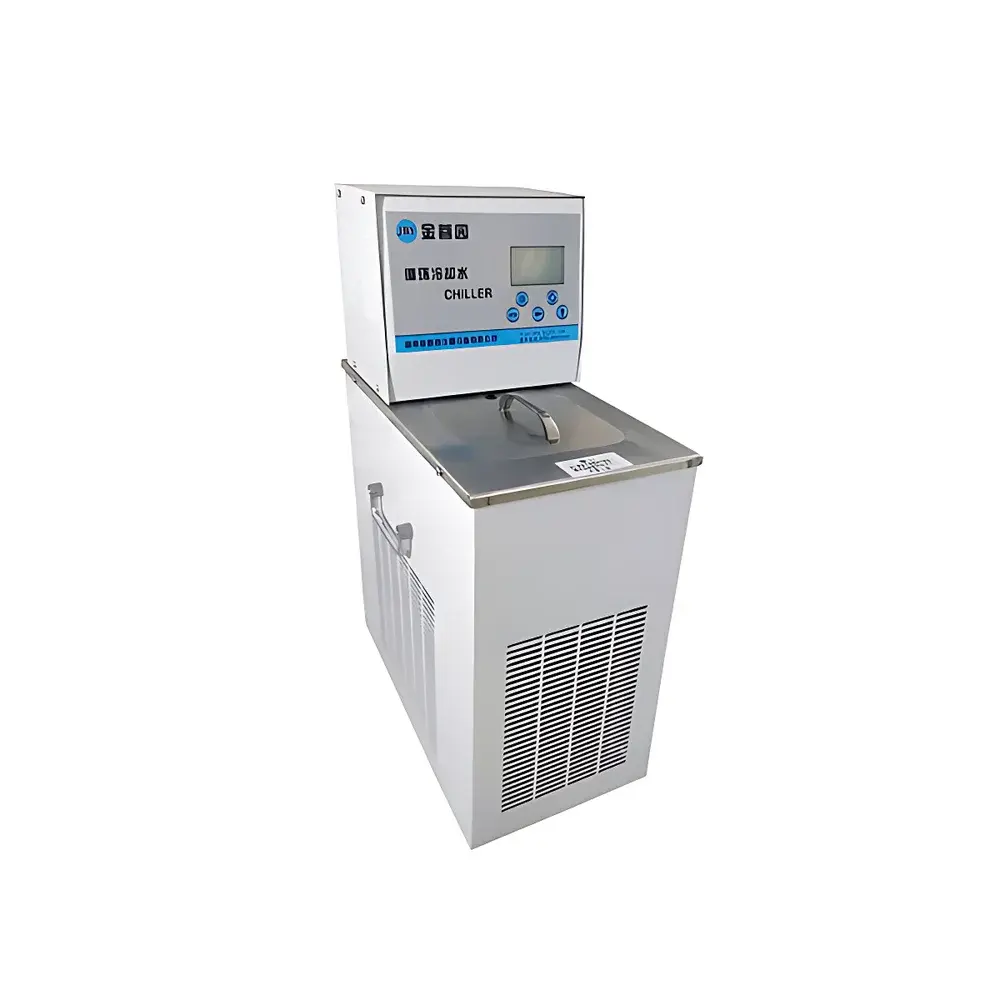
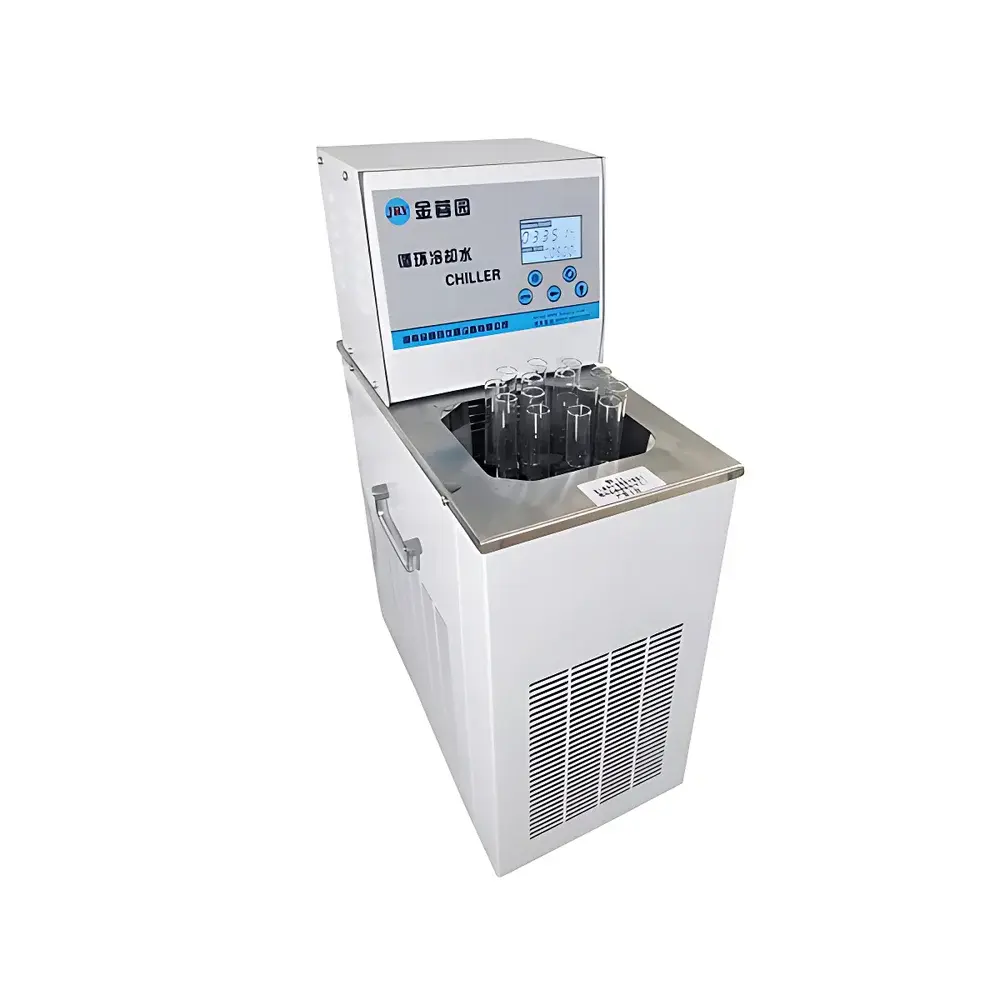
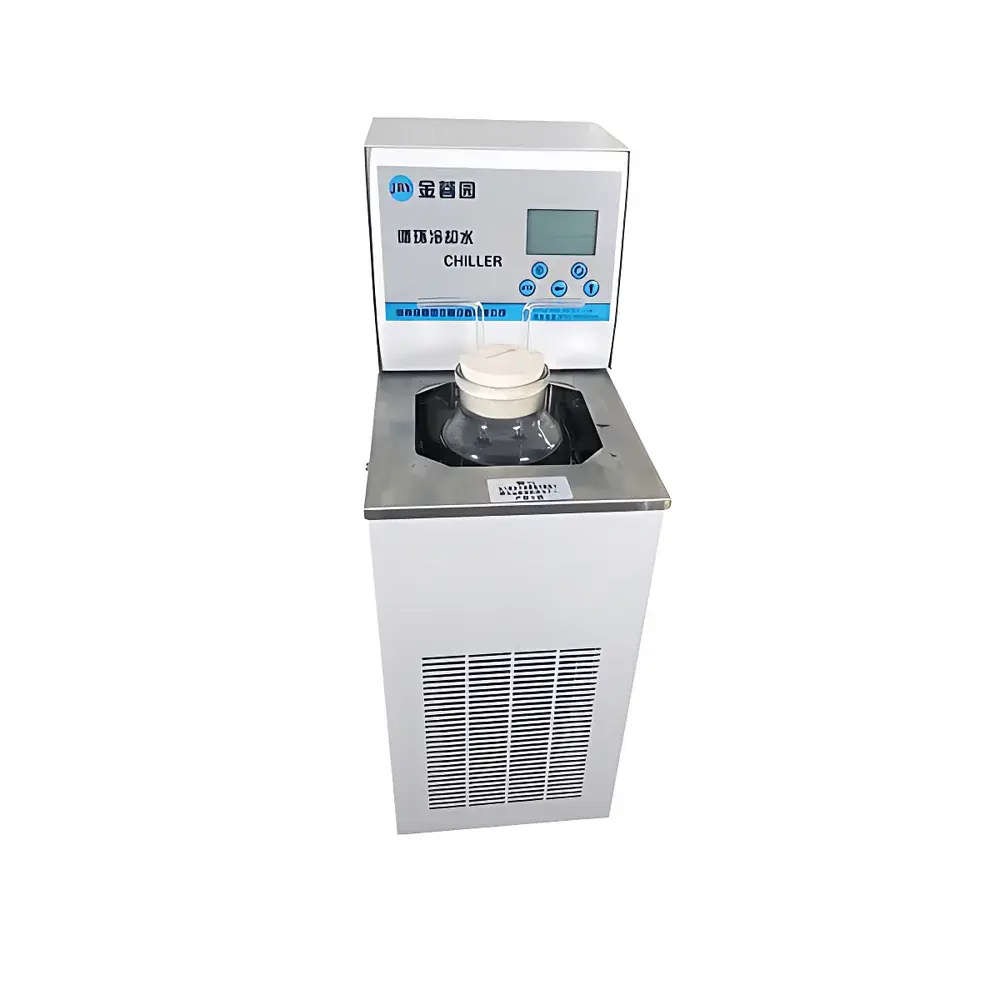
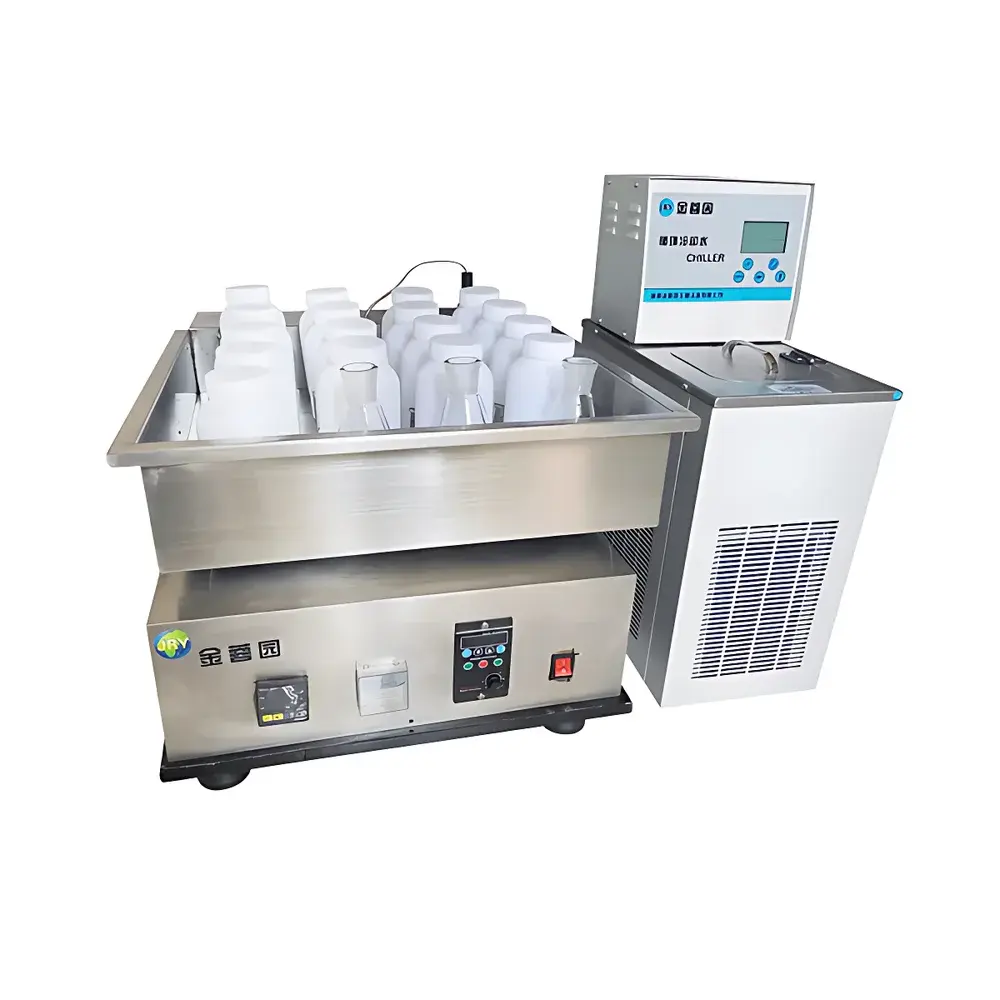
JRY JRY-05-B Precision Circulating Chiller
| Brand | JRY |
|---|---|
| Origin | Hunan, China |
| Manufacturer Type | Direct Manufacturer |
| Region Category | Domestic (China) |
| Model | JRY-05-B |
| Instrument Type | Integrated Unit |
| Cooling Method | Water-Cooled |
| Temperature Control Range | 0–99.99 °C |
| Cooling Capacity | ≥1000 W |
| Temperature Stability | ±0.1 °C |
| Circulation Pump Pressure | 1.0 bar |
| Circulation Flow Rate | 6 L/min |
| Reservoir Volume | 6 L |
| Operating Mode | Continuous |
Overview
The JRY JRY-05-B Precision Circulating Chiller is an integrated temperature control system engineered for laboratory and industrial applications requiring stable, programmable thermal management of external equipment. It operates on a closed-loop liquid circulation principle, utilizing a water-cooled refrigeration circuit combined with a high-efficiency centrifugal pump and PID-driven digital temperature regulation. Unlike ambient-air-cooled chillers, the JRY-05-B employs a secondary water-cooling loop—typically connected to facility tap water or a dedicated cooling tower—to dissipate condenser heat, enabling sustained operation under continuous load without performance degradation. Its operational range spans from sub-ambient (0 °C) to near-boiling (99.99 °C), making it suitable not only for active cooling but also for precise heating and isothermal maintenance. This dual-mode capability supports instruments demanding both cryogenic stabilization and elevated bath temperatures—such as laser sources requiring thermal drift suppression or digestion blocks needing uniform heating profiles.
Key Features
- PID-controlled temperature regulation with real-time feedback loop, achieving ±0.1 °C stability across the full 0–99.99 °C range—validated per ASTM E2234 (Standard Practice for Calibration and Verification of Thermal Analysis Instruments)
- Integrated 6 L corrosion-resistant reservoir with sealed lid design to minimize evaporation, contamination, and coolant degradation; compatible with water, water-glycol mixtures, and low-conductivity organic solvents (e.g., ethanol, isopropanol)
- High-flow circulation system delivering 6 L/min at 1.0 bar pressure, ensuring adequate heat transfer coefficient (HTC) even when driving long tubing runs or multiple parallel loads
- Water-cooled condenser architecture eliminates reliance on ambient air quality or room HVAC capacity—critical for cleanrooms, ISO Class 5–7 environments, and facilities with limited ventilation
- Continuous-duty compressor and brushless DC pump motor rated for >20,000 hours MTBF, supporting unattended 24/7 operation in QC labs and pilot-scale manufacturing lines
- Tactile LCD interface with password-protected parameter locking, data logging (timestamped setpoint/actual temp), and configurable alarm thresholds (over-temp, low-flow, dry-run, sensor fault)
Sample Compatibility & Compliance
The JRY-05-B interfaces with a broad spectrum of analytical, preparative, and process equipment via standardized 1/4″–3/8″ compression or barbed fittings. It is routinely deployed with ICP-OES and AAS spectrometers (per ISO/IEC 17025 calibration requirements), rotary evaporators (meeting USP guidelines for analytical instrument qualification), laser systems (requiring thermal stability per IEC 60825-1), and bioreactors operating under cGMP conditions. Its firmware architecture supports audit trail generation and user access levels—aligning with FDA 21 CFR Part 11 expectations for electronic records when paired with validated data export protocols. All wetted materials (reservoir, pump head, tubing manifold) comply with USP Class VI and REACH SVHC criteria.
Software & Data Management
While the JRY-05-B operates autonomously via its embedded controller, optional RS485/Modbus RTU or USB-to-serial interface enables integration into centralized lab infrastructure. Third-party SCADA platforms (e.g., LabVIEW, Ignition, DeltaV) can poll real-time temperature, flow status, and fault codes at configurable intervals (1–60 s). Logged data exports as CSV files include column headers compliant with MIQE and CLSI EP23-A validation frameworks. Firmware updates are performed offline via SD card to maintain regulatory integrity during GxP audits.
Applications
- Analytical Instrument Cooling: Maintains detector and source block temperatures in atomic spectroscopy systems; stabilizes plasma torch coolant loops in ICP instruments to prevent spectral drift
- Rotary Evaporation Support: Supplies consistent coolant to condenser jackets at 0–10 °C while accommodating variable solvent boiling points (e.g., dichloromethane vs. ethyl acetate)
- Biochemical Processing: Controls jacket temperature in stirred-tank reactors during fed-batch fermentation, supporting DOE-based optimization of enzyme kinetics
- Laser System Thermal Management: Removes waste heat from DPSS and fiber lasers with minimal thermal lensing—critical for alignment stability in interferometry and lithography setups
- Materials Testing: Provides regulated coolant to environmental chambers, tensile testers, and DSC autosamplers per ISO 11357 and ASTM D3418 test protocols
FAQ
What is the maximum allowable inlet coolant temperature for the water-cooled condenser?
The unit requires facility-supplied cooling water at ≤32 °C inlet temperature and ≥2 bar static pressure. Higher inlet temperatures reduce achievable chiller setpoints and may trigger thermal overload protection.
Can the JRY-05-B operate with deionized water only?
Yes—provided conductivity remains above 5 µS/cm to ensure proper flow sensor operation; however, corrosion inhibitors are recommended for extended use beyond 6 months.
Is remote monitoring supported out-of-the-box?
No—remote connectivity requires optional communication module installation and configuration by qualified technical personnel per site-specific network security policies.
How often should the reservoir coolant be replaced?
Under continuous operation with glycol-water mixture (30:70 v/v), replacement is recommended every 12 months or after 3000 operating hours, whichever occurs first.
Does the unit meet CE or UL safety certification?
It complies with GB 4793.1–2019 (Chinese national standard equivalent to IEC 61010-1) and carries CCC mark; CE/UL listing is available upon request for OEM integration projects.



