
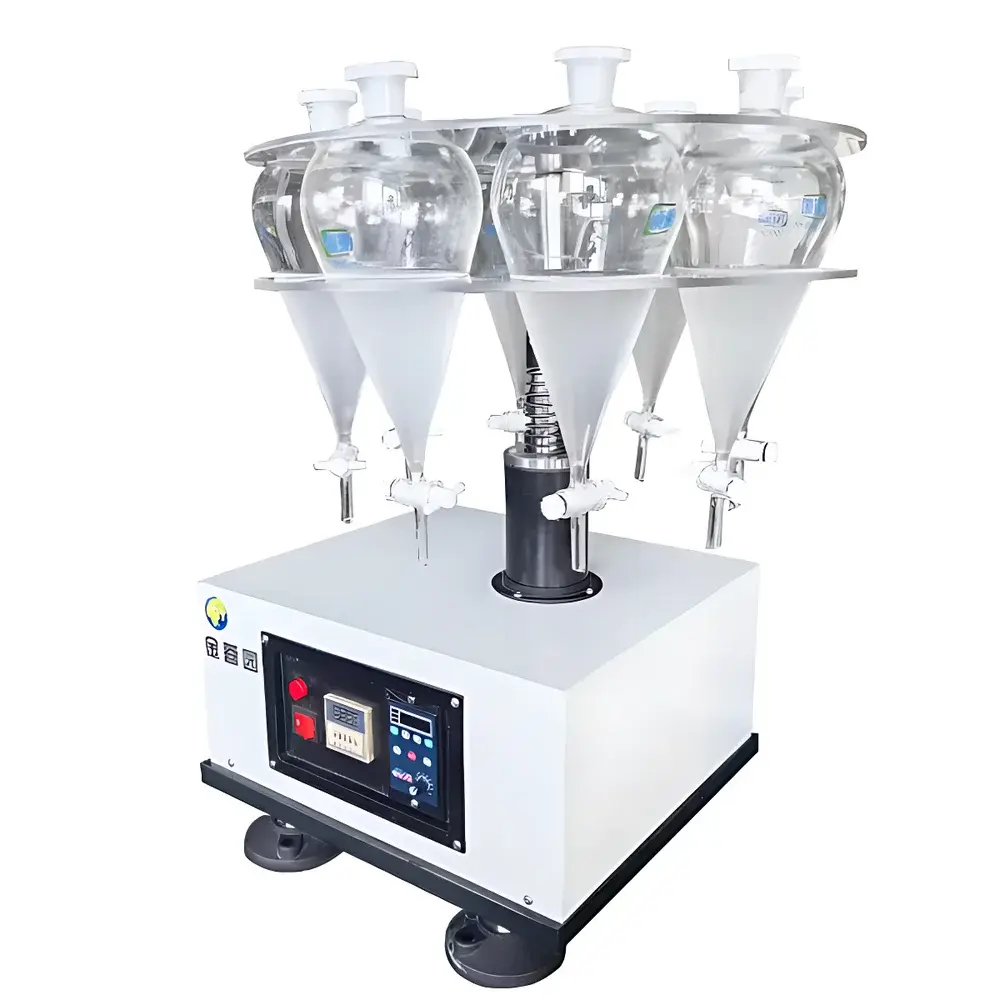
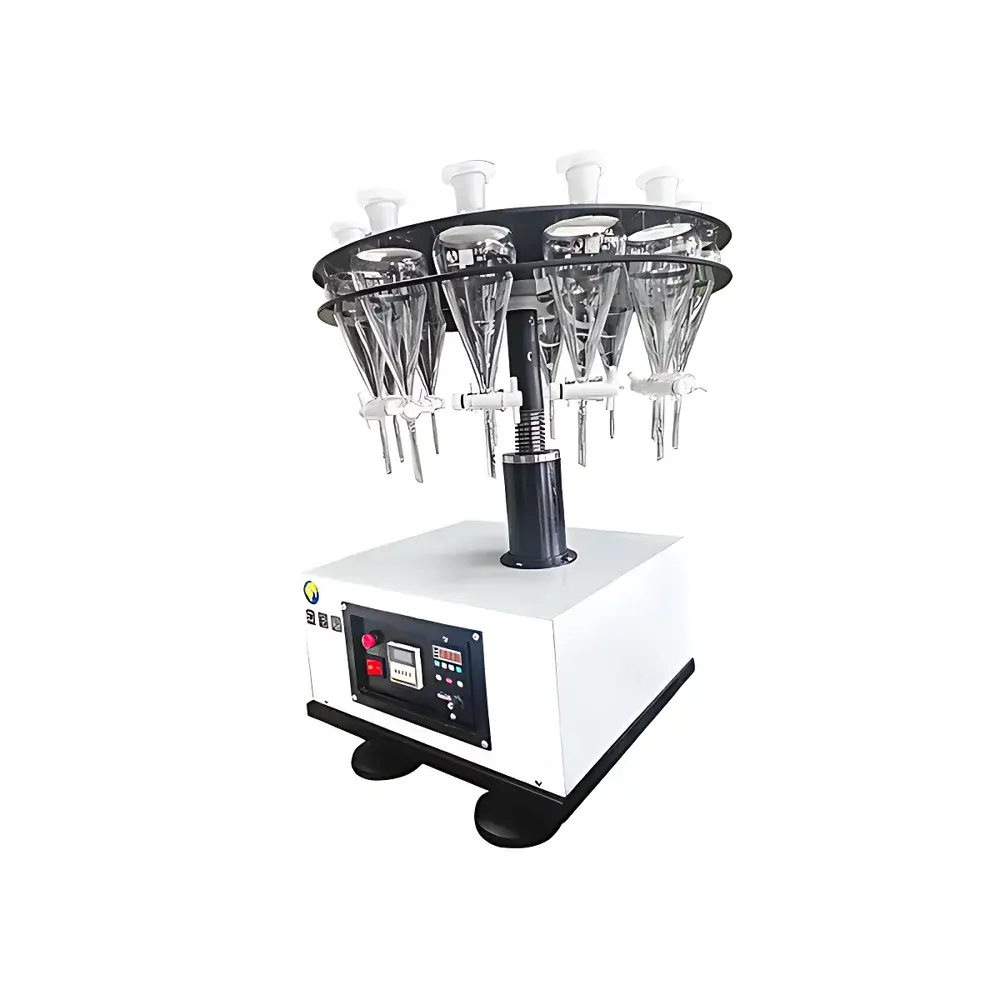
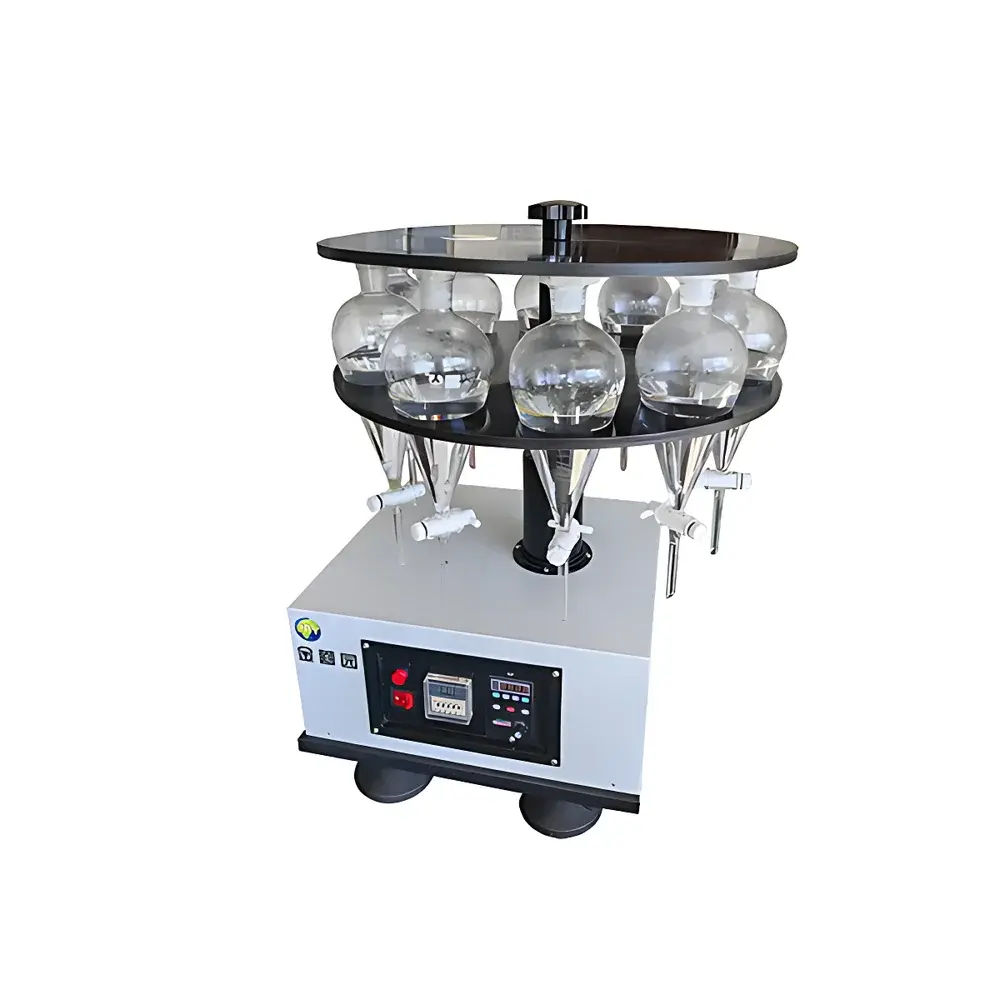
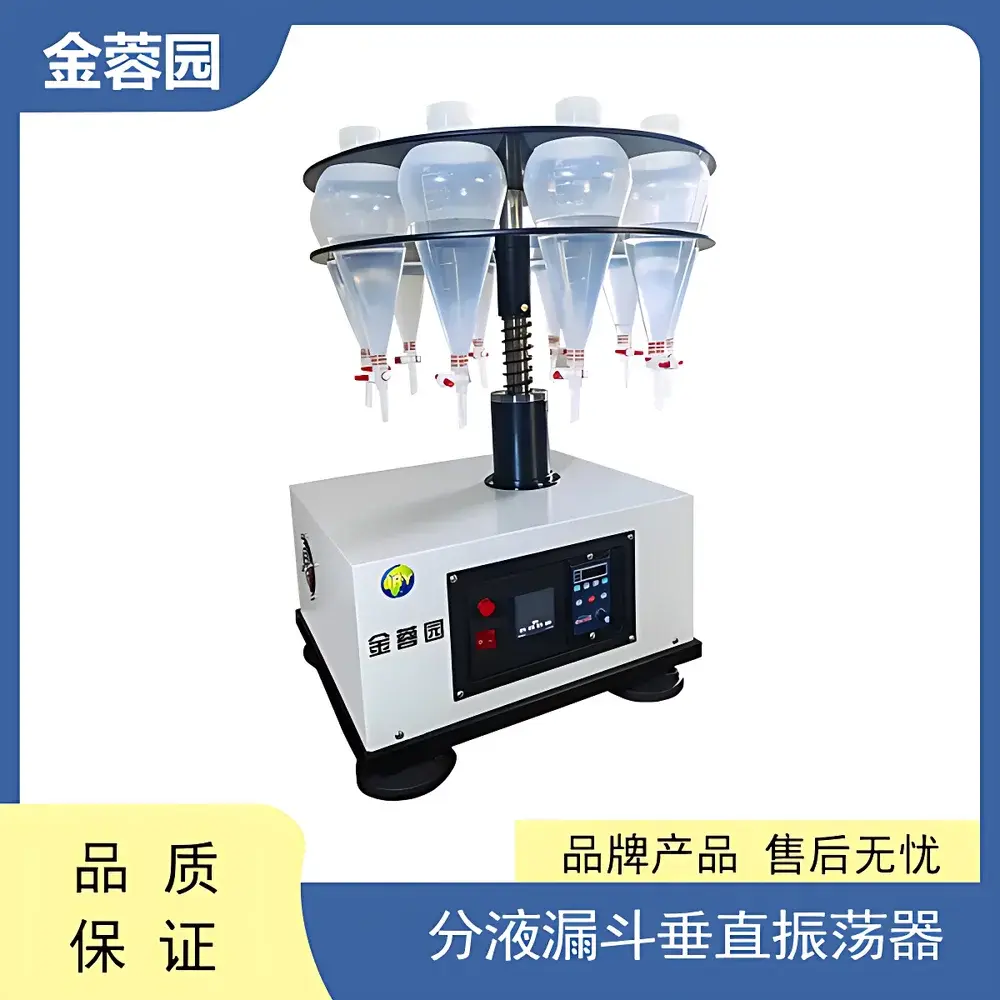
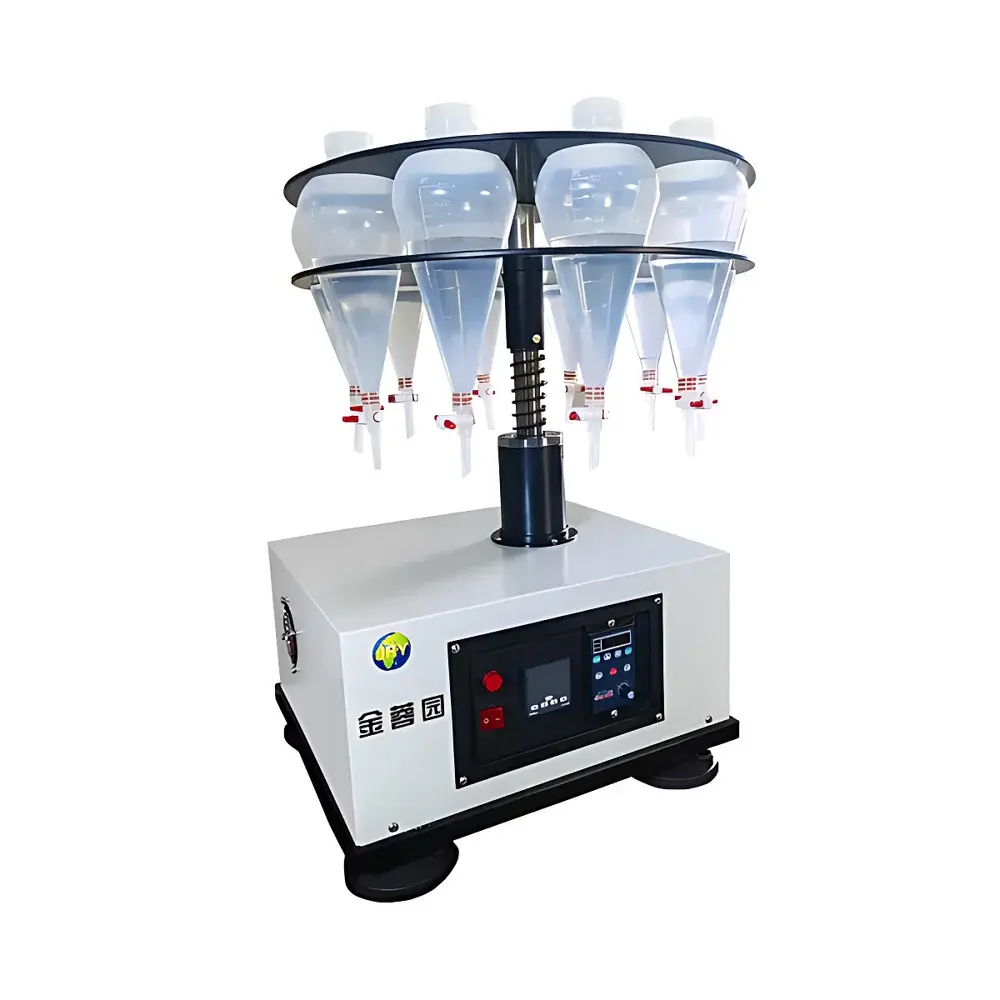
JRY CZ08 Vertical Oscillating Extractor for Liquid-Liquid Extraction
| Brand | JRY |
|---|---|
| Model | CZ08 |
| Type | Vertical/Tilt Dual-Mode Liquid-Liquid Extraction Oscillator |
| Oscillation Frequency | 0–300 rpm (infinitely adjustable) |
| Oscillation Amplitude | 50 mm |
| Tilt Angle | ≤20° |
| Timer Range | 0–999 min |
| Sample Capacity | 8 positions |
| Compatible Vessel Size | 125–3000 mL separatory funnels or test tubes |
| Power Supply | 220 V, 50 Hz |
| Motor Power | 180 W |
| Operating Mode | Ambient-temperature operation only |
| Rack Type | Rotatable universal sample holder with interchangeable clamps |
Overview
The JRY CZ08 Vertical Oscillating Extractor is an engineered solution for reproducible, high-efficiency liquid-liquid extraction (LLE) in analytical and environmental laboratories. Designed around a dual-mode oscillation principle—vertical reciprocation and controlled tilt oscillation (≤20°)—the instrument ensures thorough phase mixing while minimizing emulsion formation and phase separation time. Unlike conventional horizontal shakers, the vertical motion generates strong shear forces along the interface between immiscible solvents, promoting rapid mass transfer without excessive foaming or vortex-induced splashing. Its ambient-temperature operation makes it ideal for solvent systems sensitive to thermal degradation (e.g., chlorinated hydrocarbons, ethyl acetate, hexane), while its robust brushless motor and precision-machined cam drive deliver consistent frequency stability over extended run times (>8 h continuous operation). The system complies with core method requirements outlined in EPA Method 3510C, ISO 11348-3, and ASTM D3764 for manual and semi-automated LLE workflows.
Key Features
- Dual oscillation modes: switchable between vertical reciprocating motion and gentle tilt oscillation (adjustable up to 20°) to optimize extraction efficiency for diverse solvent pairs and matrix viscosities.
- Infinitely variable speed control (0–300 rpm) with digital feedback loop ensures ±1 rpm repeatability across full range—critical for method transfer and inter-laboratory consistency.
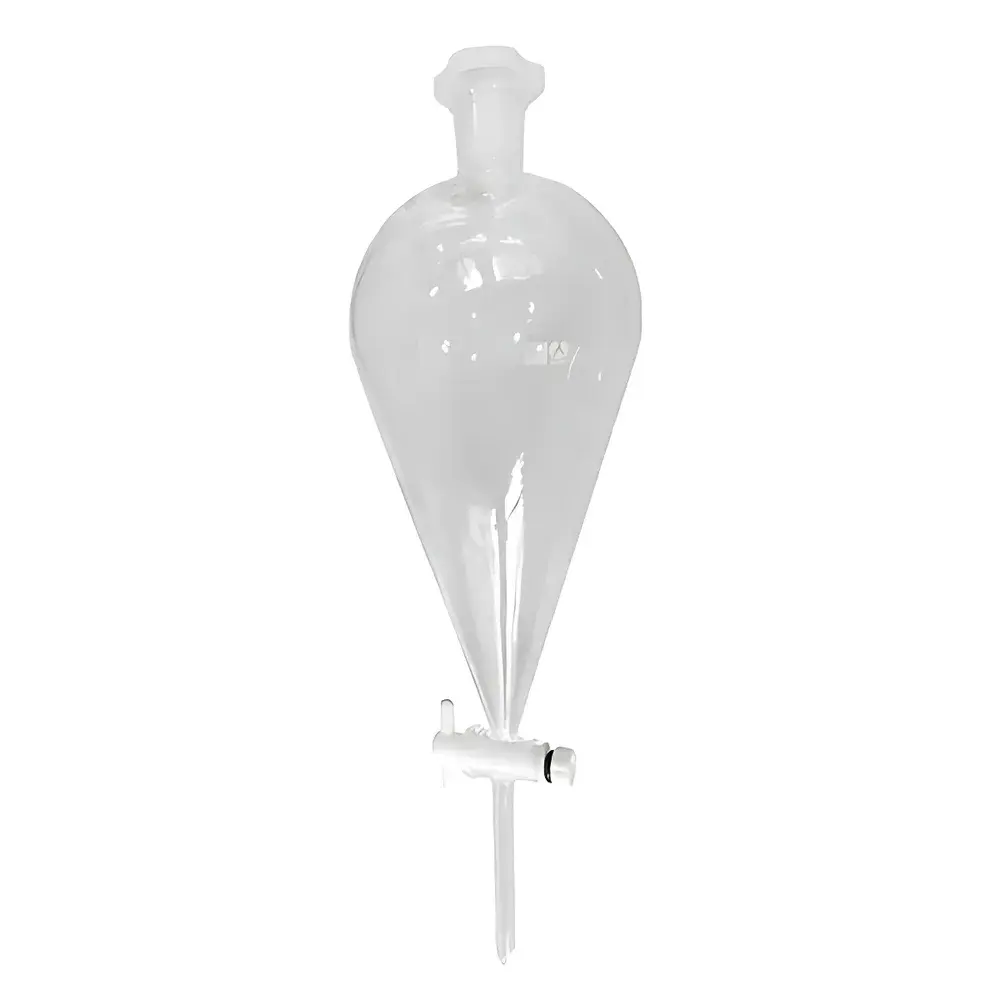
- Rotatable universal sample platform accommodates eight standard separatory funnels (125–3000 mL) or custom vessels; quick-release clamp system enables tool-free installation and removal of glassware.
- Low-noise operation (<52 dB(A) at 1 m) achieved via vibration-damped chassis, rubber-isolated motor mount, and balanced counterweight assembly—suitable for shared lab spaces and QC environments.
- Programmable timer (0–999 min) with auto-shutdown and audible alert; non-volatile memory retains last-used settings after power interruption.
- Modular accessory ecosystem: optional funnel-specific holders (PTFE-coated stainless steel), centrifuge-tube adapters, and low-profile racks for micro-extraction vials (1–15 mL).
Sample Compatibility & Compliance
The CZ08 supports all common LLE vessel formats—including Class A borosilicate separatory funnels (ASTM E288, ISO 385), screw-cap extraction tubes, and wide-mouth NMR-compatible vials. Its 50 mm stroke amplitude and tilt geometry are validated for efficient mixing of high-density solvent pairs (e.g., dichloromethane/water, MTBE/water) and viscous samples (e.g., soil extracts, lipid-rich botanical matrices). The unit meets CE safety directives (2014/30/EU EMC, 2014/35/EU LVD) and conforms to IEC 61010-1:2010 for laboratory electrical equipment. While not a regulated GMP instrument per se, its deterministic timing, mechanical reproducibility, and absence of software-based data logging make it suitable for GLP-compliant workflows where manual recordkeeping is standard practice.
Software & Data Management
The CZ08 operates as a stand-alone electromechanical device with no embedded firmware, network interface, or proprietary software—eliminating cybersecurity risks and validation overhead associated with connected instruments. All operational parameters (speed, duration, mode) are set via front-panel rotary encoder and LCD display. For traceability, users may document run conditions manually in bound lab notebooks or integrate with LIMS via external barcode-scanned SOP templates. No FDA 21 CFR Part 11 compliance is required or provided, consistent with its classification as a general-purpose sample preparation tool rather than a data-generating analytical instrument.
Applications
- Environmental analysis: extraction of PAHs, PCBs, organochlorine pesticides, and phenolic compounds from water, soil, and sediment per EPA SW-846 Methods 3510C, 3520C, and 3540C.
- Food and agricultural testing: recovery of multi-residue pesticides (e.g., neonicotinoids, triazoles) from fruits, vegetables, and grains using QuEChERS-compatible LLE protocols.
- Clinical and forensic toxicology: isolation of drugs of abuse (benzodiazepines, opioids, amphetamines) from biological fluids prior to GC-MS or LC-MS/MS analysis.
- Natural product research: partitioning of alkaloids, flavonoids, and terpenoids between aqueous and organic phases during phytochemical fractionation.
- Method development labs: comparative evaluation of extraction kinetics across solvent systems, phase ratios, and agitation profiles under controlled ambient conditions.
FAQ
Is the CZ08 compatible with glass separatory funnels larger than 2 L?
Yes—the universal clamp design accommodates standard 3 L funnels when used with the optional heavy-duty support bracket (JRY-BSK-3L), which reinforces lateral stability during high-frequency tilt oscillation.
Can the instrument maintain constant speed when loaded with eight 3000 mL funnels?
Yes—the 180 W brushless motor delivers full torque across the entire 0–300 rpm range, verified under maximum load (eight 3 L funnels filled to 80 % capacity) per internal JRY Engineering Test Report #CZ08-2023-047.
Does the tilt angle affect phase separation time post-extraction?
Empirical studies show that tilt oscillation (≤20°) reduces average phase separation time by 18–22 % compared to vertical-only mode for water–dichloromethane systems, due to enhanced interfacial surface renewal without disrupting density gradients.
Is routine calibration required?
No formal calibration is mandated; however, users should verify speed accuracy annually using a handheld tachometer traceable to NIST standards, as recommended in ISO/IEC 17025:2017 Clause 6.5.2 for ancillary equipment.
What maintenance is recommended for long-term reliability?
Biannual inspection of cam follower lubrication, belt tension (if applicable), and clamp jaw integrity; replacement of rubber isolation feet every 36 months or upon visible compression deformation.




