
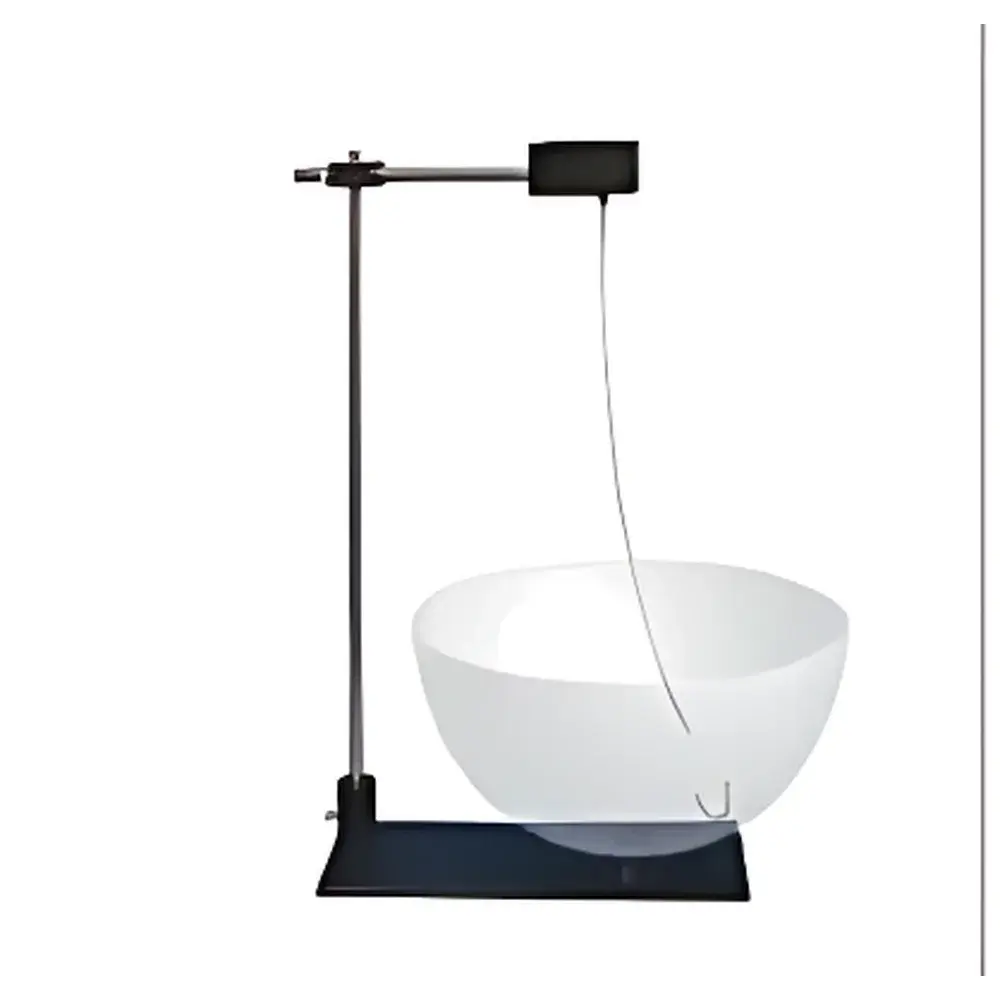
COULBOURN Rotation Monitor Animal Circling Behavior System
| Brand | COULBOURN |
|---|---|
| Origin | USA |
| Manufacturer Type | Authorized Distributor |
| Product Origin | Imported |
| Model | Rotation Monitor |
| Cage Dimensions | 4" (D) × 3" (W) × 2" (H), 18" ramped cylinder |
| Material | Aluminum, Polypropylene |
| Max. Simultaneous Monitoring Capacity | 64 cages |
| Resolution | 0.01 rad (3.6°) |
| Detection Method | Triple Infrared Transceiver per Station |
| Cable Length | 12 ft |
| Certification | CE compliant |
Overview
The COULBOURN Rotation Monitor Animal Circling Behavior System is a purpose-built, high-resolution behavioral assessment platform engineered for quantitative measurement of rotational locomotor asymmetry in rodent models. Designed specifically for preclinical neuroscience and pharmacological research, the system operates on the principle of optical interruption detection using three synchronized infrared transceivers per monitoring station—enabling precise angular displacement tracking with 0.01 radian (3.6°) resolution. This level of angular fidelity supports rigorous quantification of unidirectional (clockwise or counterclockwise) circling behavior, a well-established endophenotype associated with unilateral dopaminergic dysfunction, striatal lesion models (e.g., 6-OHDA), vestibular perturbations, and antipsychotic drug screening. The system accommodates both cylindrical and bowl-shaped enclosures, allowing experimental flexibility while maintaining consistent kinematic constraints across test conditions.
Key Features
- Triple-infrared transceiver architecture per cage ensures robust detection of rotational direction and magnitude, minimizing false positives from non-rotational movement artifacts.
- Modular station design supports scalable deployment—from single-cage validation studies to parallelized multi-cage experiments (up to 64 cages simultaneously).
- Independent toggle switches and real-time diagnostic display per station enable rapid hardware verification prior to data acquisition, reducing setup time and improving experimental reproducibility.
- Ramped 18-inch aluminum-and-polypropylene cages provide standardized geometry and surface consistency; optional lightweight adjustable harnesses facilitate controlled restraint when required for specific paradigms.
- Menu-driven software interface eliminates command-line dependency, supporting intuitive protocol configuration, session initiation (simultaneous or staggered), and real-time visual feedback during active monitoring.
- CE-compliant electrical architecture ensures safe operation under standard laboratory environmental conditions and aligns with general safety requirements for Class I medical/research equipment.
Sample Compatibility & Compliance
The system is validated for use with adult mice and rats (typically 20–300 g). Cage dimensions (4″ diameter × 3″ width × 2″ height) are optimized to constrain lateral translation while permitting unrestricted axial rotation, thereby isolating circling as the primary measurable output. All materials—including food-grade polypropylene components and anodized aluminum structural elements—are chemically inert and autoclavable, supporting GLP-aligned hygiene protocols. While the device itself does not fall under FDA-regulated instrumentation categories, its data outputs are compatible with audit-trail-enabled software environments that support 21 CFR Part 11 compliance when integrated with validated LIMS or electronic lab notebook (ELN) platforms. Experimental protocols utilizing this system routinely reference ASTM E1752-22 (Standard Guide for Behavioral Assessment in Rodents) and NIH-defined standards for translational neurobehavioral phenotyping.
Software & Data Management
The embedded menu-based software provides native acquisition, visualization, and export functionality without third-party dependencies. Raw angular displacement data is logged at user-configurable intervals and presented in two complementary formats: time-series line plots (with directional polarity annotation) and tabular ASCII output (.txt). Exported files conform to ANSI/ISO standard text encoding, ensuring seamless ingestion into statistical packages including R, Python (pandas), GraphPad Prism, and SAS. Each data file includes embedded metadata headers specifying cage ID, start timestamp, calibration status, and operator ID—facilitating traceability in multi-user core facilities. Diagnostic software modules perform automated signal integrity checks, flagging stations exhibiting inconsistent beam interruption patterns or ambient IR noise exceeding predefined thresholds.
Applications
- Quantitative evaluation of rotational bias in unilateral 6-hydroxydopamine (6-OHDA) or MPTP-lesioned rat/mouse models of Parkinson’s disease.
- Pharmacodynamic profiling of D1/D2 receptor agonists, antagonists, and modulators via dose-dependent circling response curves.
- Vestibular function assessment following labyrinthectomy or ototoxic drug administration.
- Validation of genetic knockouts or transgenic lines exhibiting spontaneous motor asymmetry (e.g., Shaker, Reeler, or Grid2 mutants).
- Longitudinal monitoring of behavioral recovery post-surgical intervention or stem cell transplantation.
- High-throughput screening of novel neuroactive compounds where rotational behavior serves as a surrogate biomarker for central dopaminergic engagement.
FAQ
What is the minimum detectable angular displacement?
The system resolves rotation increments of 0.01 radian (equivalent to 3.6°), enabling detection of sub-degree directional shifts.
Can the system distinguish between full 360° rotations and partial turns?
Yes—cumulative angular displacement is tracked continuously, allowing differentiation between discrete partial turns and complete revolutions based on user-defined thresholds.
Is remote monitoring supported?
The system does not include built-in network connectivity; however, exported ASCII datasets are fully compatible with centralized data aggregation servers and cloud-based analysis pipelines.
How is calibration performed?
Calibration is conducted via the diagnostic display module, which validates infrared beam alignment and signal-to-noise ratio for each transceiver pair prior to session initiation.
Are replacement cages or harnesses available as consumables?
Yes—COULBOURN offers certified replacement cages (cylindrical and bowl configurations), sterilizable harness assemblies, and IR transceiver maintenance kits through authorized distribution channels.



