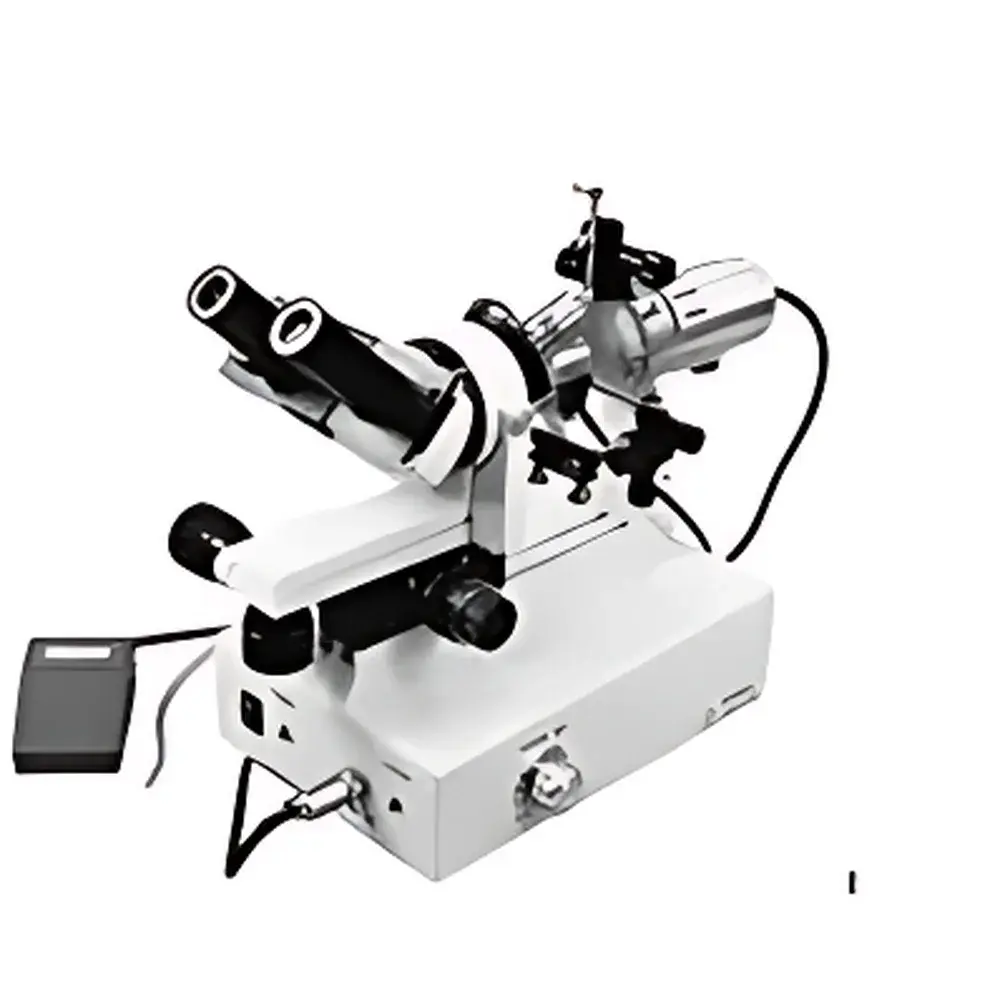
Sutter MF-900 Microelectrode Puller
| Brand | Sutter |
|---|---|
| Origin | USA |
| Model | MF-900 |
| Heating Stage Travel (X/Y/Z) | 14 mm / 14 mm / 14 mm |
| Micropipette Manipulator Travel (X/Z) | 12 mm / 28 mm |
| Microscope Stage Travel (X/Y/Z) | ~7 mm / 30 mm / ~8 mm |
| Microscope Magnification | 50× / 100× (10× eyepiece, 5× & 10× objectives) |
| Capillary Outer Diameter | 1.0 mm |
Overview
The Sutter MF-900 Microelectrode Puller is a precision-engineered instrument designed for the reproducible fabrication of glass micropipettes used in intracellular and extracellular electrophysiology, patch-clamp recording, microinjection, and single-cell manipulation. Unlike conventional horizontal or vertical pullers relying solely on gravity or fixed-stage heating, the MF-900 employs a dual-stage programmable heating mechanism combined with independent X-, Y-, and Z-axis micro-positioning of both the capillary and the heating filament. This architecture enables precise control over tip geometry—including tip opening diameter, taper angle, shank length, and wall thickness—by modulating heat profile, pull velocity, acceleration, and filament position relative to the capillary axis. The system is optimized for borosilicate (e.g., BF150-86-10) and quartz capillaries with 1.0 mm outer diameter, supporting both single- and double-pull protocols to generate symmetric or asymmetric pipettes with sub-micron tip consistency.
Key Features
- Dual-axis programmable heating zone with adjustable filament positioning (X/Y/Z), enabling fine-tuned thermal gradient control across the capillary midsection.
- Independent high-resolution micromanipulators for capillary handling: heating stage (14 mm travel in X/Y/Z), micropipette manipulator (12 mm X, 28 mm Z), and microscope stage (~7 mm X, 30 mm Y, ~8 mm Z).
- Integrated stereo microscope with 50×/100× total magnification (10× wide-field eyepieces, 5× and 10× achromatic objectives) for real-time visual monitoring of capillary deformation and tip formation.
- Optional footswitch interface for hands-free initiation of pull cycles—critical for maintaining sterility and ergonomic workflow during prolonged fabrication sessions.
- Capable of fabricating pipettes with customizable tip geometries: sharp-pointed electrodes for intracellular penetration, blunt-tipped pipettes for whole-cell patch clamping, bent or hooked tips for targeted microinjection into specific subcellular compartments, and beveled tips for improved mechanical stability.
- Surface polishing, controlled cutting, bending, and hook formation functions integrated into a single platform—eliminating the need for secondary post-pull processing tools.
Sample Compatibility & Compliance
The MF-900 accommodates standard thin-walled and thick-walled borosilicate glass capillaries (1.0 mm OD, 0.58–0.78 mm ID), including those with internal filament coatings (e.g., FHC or World Precision Instruments types). Quartz capillaries up to 1.0 mm OD may also be processed under adjusted thermal parameters. All mechanical and optical components comply with ISO 13485 design controls for medical device manufacturing environments. While the instrument itself is not classified as an IVD device under FDA 21 CFR Part 809, its output—micropipettes used in GLP-compliant electrophysiology studies—must meet traceability requirements per ISO/IEC 17025 when deployed in regulated preclinical research settings. The system supports audit-ready documentation of pull parameters (temperature ramp rate, dwell time, pull speed, filament offset) for laboratory quality assurance records.
Software & Data Management
The MF-900 operates via front-panel tactile controls with LED-based parameter feedback; no external computer or proprietary software is required for routine operation. However, all pull protocols—including heat profile (ramp/hold/cool), motor displacement profiles, and filament positioning coordinates—are fully user-definable and storable in non-volatile memory (up to 99 protocols). Parameter logs are retained across power cycles and can be manually transcribed for inclusion in electronic lab notebooks (ELNs) compliant with 21 CFR Part 11 when paired with validated timestamping and user authentication workflows. Optional RS-232 serial output enables integration with custom LabVIEW or Python-based automation scripts for high-throughput pipette batch production.
Applications
- Intracellular sharp-electrode recordings in neuronal, cardiac, and muscle tissues.
- Whole-cell and perforated-patch clamp configurations requiring low-resistance, fire-polished tips.
- Microinjection of DNA, RNA, dyes, or CRISPR-Cas9 ribonucleoproteins into oocytes, embryos, or cultured cells.
- Fabrication of bent-angle pipettes for stereotactic delivery into deep brain structures under visual guidance.
- Production of hooked or angled microneedles for targeted cytoplasmic aspiration or organelle isolation.
- Calibration-grade pipettes for capacitance compensation and series resistance correction in high-fidelity voltage-clamp experiments.
FAQ
What capillary types and dimensions are supported by the MF-900?
The instrument is calibrated for 1.0 mm outer diameter glass capillaries; compatibility with 0.75 mm or 1.5 mm OD variants requires manual recalibration of filament alignment and thermal profiles.
Can the MF-900 produce patch pipettes with fire-polished tips?
Yes—integrated surface polishing functionality allows post-pull tip annealing using controlled radiant heating, yielding smooth, contamination-free openings essential for gigaseal formation.
Is the microscope parfocal and equipped with reticles for angular measurement?
The 50×/100× microscope includes interchangeable reticle eyepieces (0.1 mm division) and is factory-aligned for parfocality across objective changes, enabling direct measurement of bend angles and tip offsets.
Does the system support GMP documentation requirements?
While the MF-900 lacks built-in electronic signature or audit trail features, its deterministic parameter storage and repeatability (>98% tip geometry consistency across 50 consecutive pulls under identical settings) support validation under Annex 11 and ISO 13485 Annex C frameworks when operated within a documented QMS.
What maintenance is required for long-term thermal accuracy?
Annual calibration of the thermocouple-based heating sensor and visual inspection of filament integrity are recommended; Sutter provides NIST-traceable calibration certificates upon request.