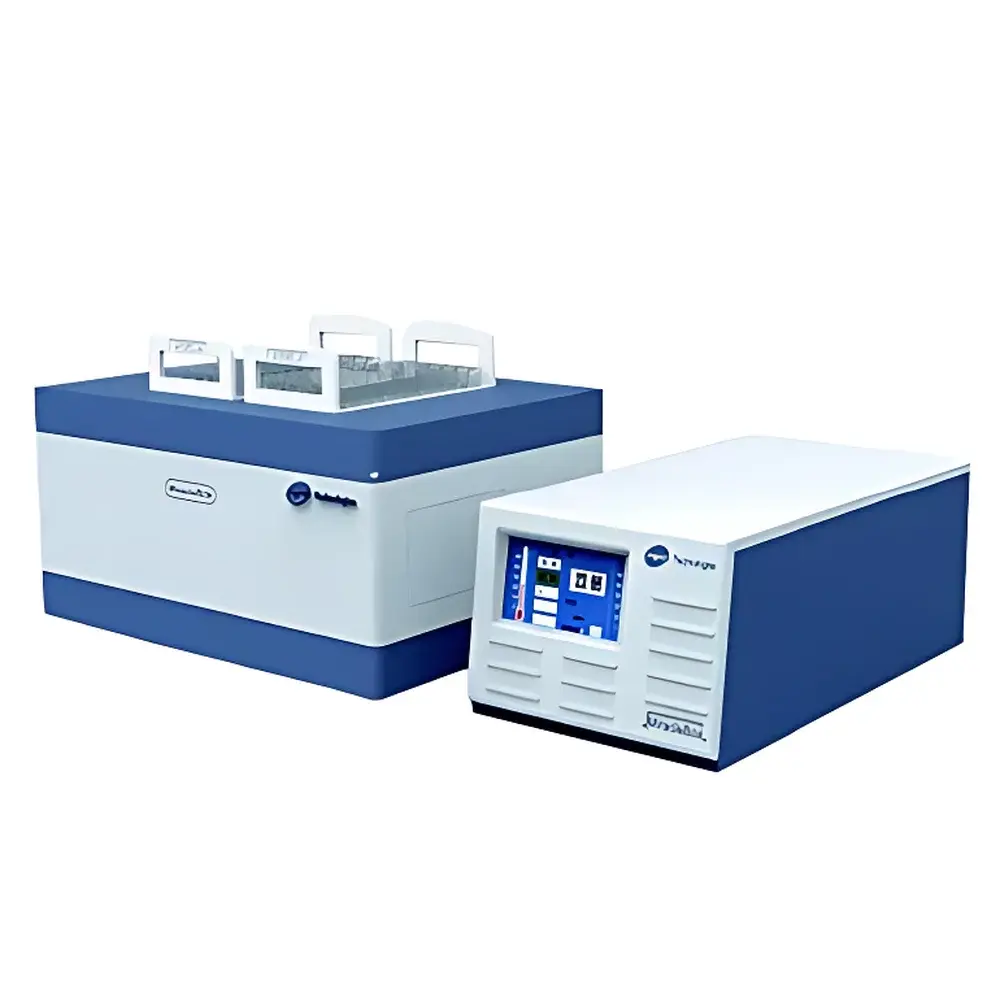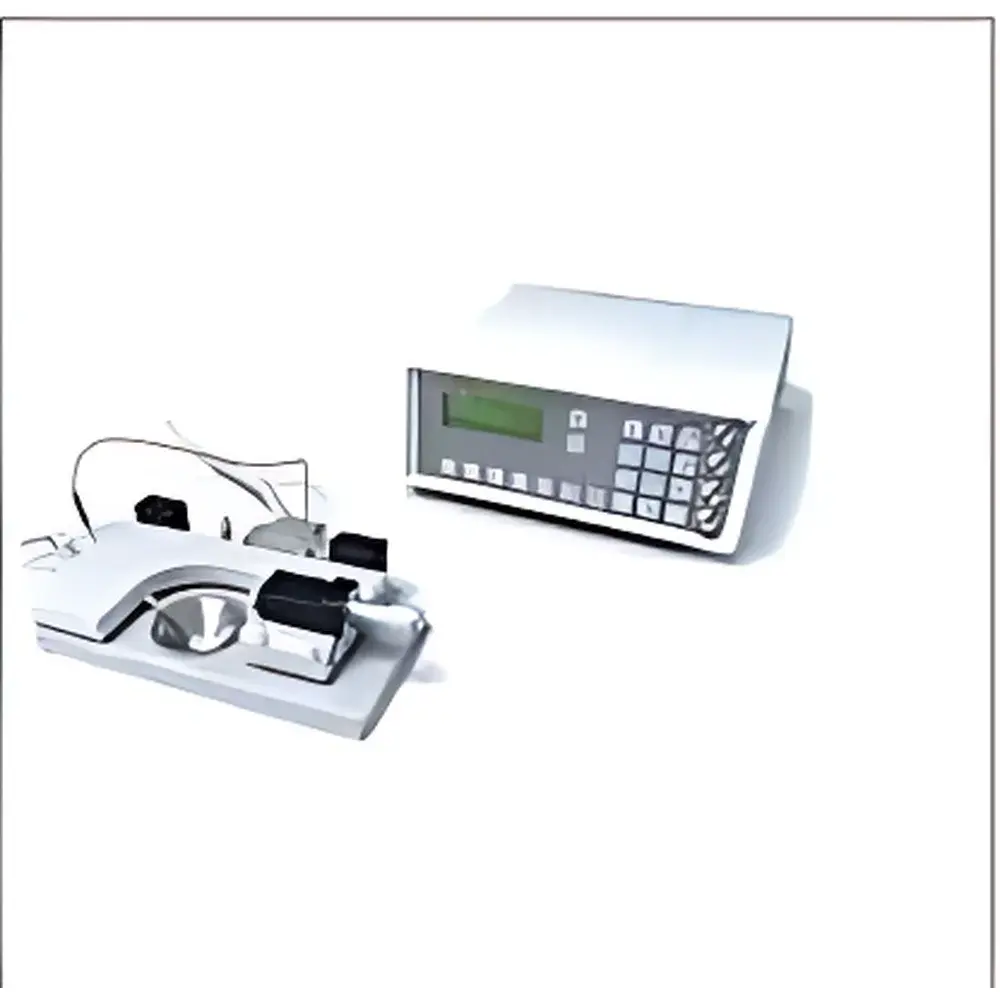
Laser Confocal Microvascular Tension Measurement System 120CW
| Origin | USA |
|---|---|
| Manufacturer Type | Authorized Distributor |
| Origin Category | Imported |
| Model | 120CW |
| Pricing | Upon Request |
Overview
The Laser Confocal Microvascular Tension Measurement System 120CW is a precision-engineered physiological signal acquisition platform designed for real-time, high-resolution functional assessment of isolated microvessels under laser confocal microscopy. It operates on the principle of isometric or isotonic force transduction—capturing minute contractile and relaxant responses (typically in the range of 0.1–50 mN) from arterioles, venules, and small resistance vessels while simultaneously enabling concurrent fluorescent imaging. The system integrates seamlessly with standard inverted or upright confocal laser scanning microscopes (CLSM), supporting dual-modality experiments where mechanical output (tension) is temporally and spatially correlated with intracellular Ca²⁺ dynamics, NO signaling, membrane potential shifts, or receptor localization via fluorescent probes (e.g., Fluo-4 AM, DAF-FM, Di-8-ANEPPS). Its optical-mechanical architecture maintains a minimal working distance of 250 µm between the vessel segment and objective lens—critical for high-numerical-aperture (NA ≥ 1.2) water-immersion or silicone-oil objectives used in deep-tissue confocal imaging.
Key Features
- Optimized conical bath chamber design ensures universal compatibility with major confocal microscope platforms (Zeiss LSM, Nikon A1R, Olympus FV3000, Leica SP8), accommodating both upright and inverted configurations without optical path obstruction.
- Adjustable dual-glass micropipette holders enable precise axial alignment and tension calibration across vessel diameters from 60 µm to 3 mm—covering cerebral pial arterioles, mesenteric resistance arteries, coronary microvessels, and pulmonary arterioles.
- Integrated Peltier-based temperature control (range: 25–42 °C, ±0.1 °C stability) with digital PID regulation and real-time feedback monitoring, eliminating external water-jacketed baths that compromise optical access.
- Open circular bath geometry minimizes fluid volume (typical working volume: 150–300 µL), reducing reagent consumption and enhancing temporal resolution during pharmacological challenge protocols (e.g., dose-response curves to phenylephrine, acetylcholine, or endothelin-1).
- Low-noise, high-sensitivity force transducer (resolution: 2 hr) required in endothelial dysfunction or vascular remodeling studies.
Sample Compatibility & Compliance
The 120CW supports native, pressurized, or cannulated microvessel preparations from human surgical biopsies (e.g., omental, adipose, or mammary artery rings), rodent models (mouse, rat, guinea pig), and porcine tissue. Vessels are mounted in physiological salt solution (PSS) buffered with HEPES or bicarbonate, and maintained under controlled pH (7.35–7.45), PO₂ (>150 mmHg), and PCO₂ (37–40 mmHg) when interfaced with gas-permeable tubing. The system conforms to ISO 13485:2016 requirements for medical device accessories and supports GLP-compliant experimental workflows. All analog signal outputs meet IEC 61000-4-3 electromagnetic immunity standards; digital interfaces (USB 3.0, TTL sync) comply with FDA 21 CFR Part 11 for electronic records and signatures when paired with validated acquisition software.
Software & Data Management
Acquisition and analysis are performed using proprietary LabView-based software (v4.2+), which provides synchronized multi-channel recording (tension, fluorescence intensity, temperature, perfusion pressure), automated zero-drift correction, and export to HDF5, MAT, or CSV formats. The software includes preconfigured modules for myogenic tone quantification, stress-strain curve derivation, and dynamic compliance modeling. Audit trails log user actions, parameter changes, and calibration events—fully traceable for regulatory submissions. Optional integration with MATLAB or Python (via DLL API) enables custom algorithm development for machine learning–driven phenotype classification (e.g., hypertensive vs. normotensive microvascular signatures).
Applications
- Investigation of endothelium-dependent and -independent vasoreactivity in hypertension, diabetes mellitus, and chronic kidney disease.
- Pharmacological profiling of novel vasoactive compounds targeting TRP channels, Rho-kinase, or soluble guanylate cyclase.
- Functional validation of CRISPR-edited vascular smooth muscle cells in engineered microvessels.
- Correlative structure-function analysis: combining α-SMA immunofluorescence, elastin autofluorescence, and real-time diameter/tension kinetics.
- Teaching laboratories for advanced cardiovascular physiology—supporting student-led hypothesis testing on autonomic modulation or metabolic coupling.
FAQ
Can the 120CW be used with two-photon microscopy systems?
Yes—the conical bath and low-profile mounting frame are compatible with standard two-photon setups, provided the objective working distance exceeds 250 µm and excitation wavelengths fall within 700–1050 nm.
Is calibration traceable to NIST standards?
Force transducer calibration is performed using certified dead-weight standards (NIST-traceable, Class E2), with full documentation supplied per unit.
Does the system support pressure myography in addition to tension measurement?
No—the 120CW is dedicated to wire-myograph–style isometric/isotonic tension recording; for intraluminal pressure-based assays, the companion 130CP Pressure Myography Module is recommended.
What maintenance is required for long-term reliability?
Annual transducer recalibration and Peltier module performance verification are advised; no consumables beyond standard glass micropipettes and O-rings are required.