
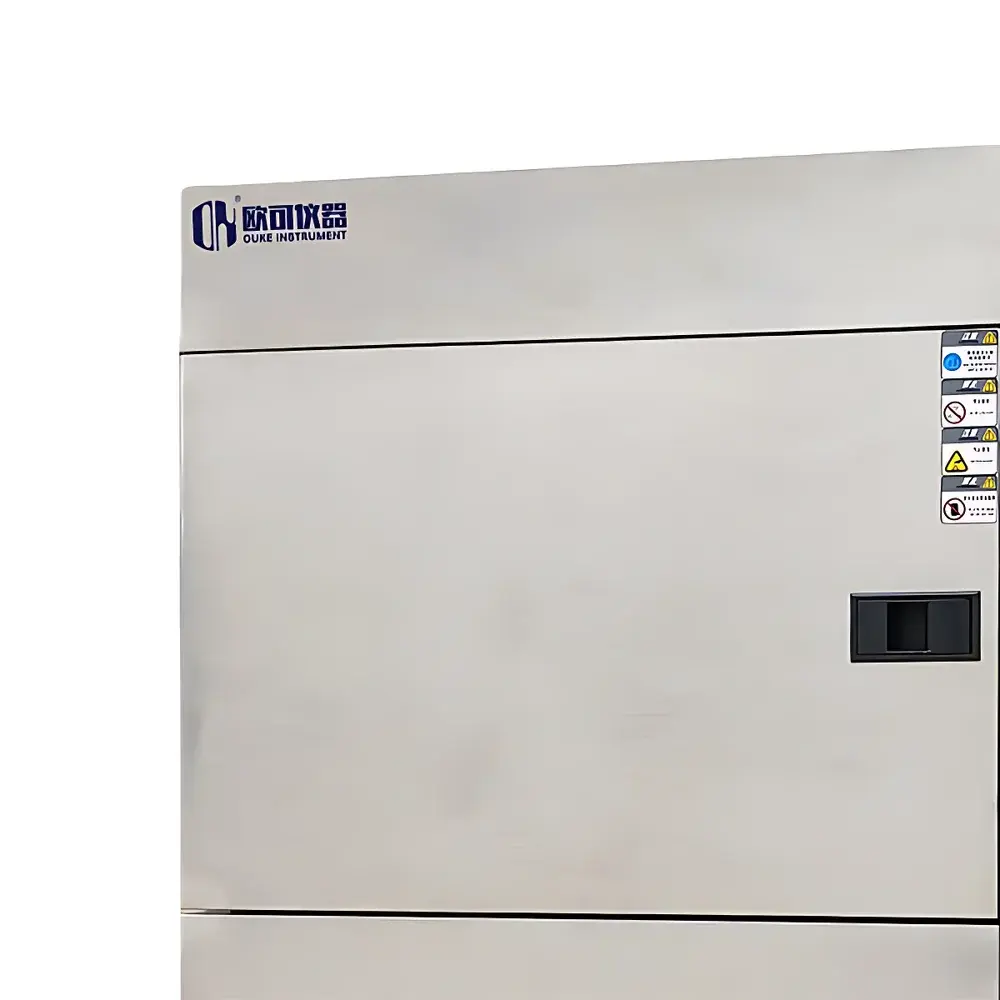
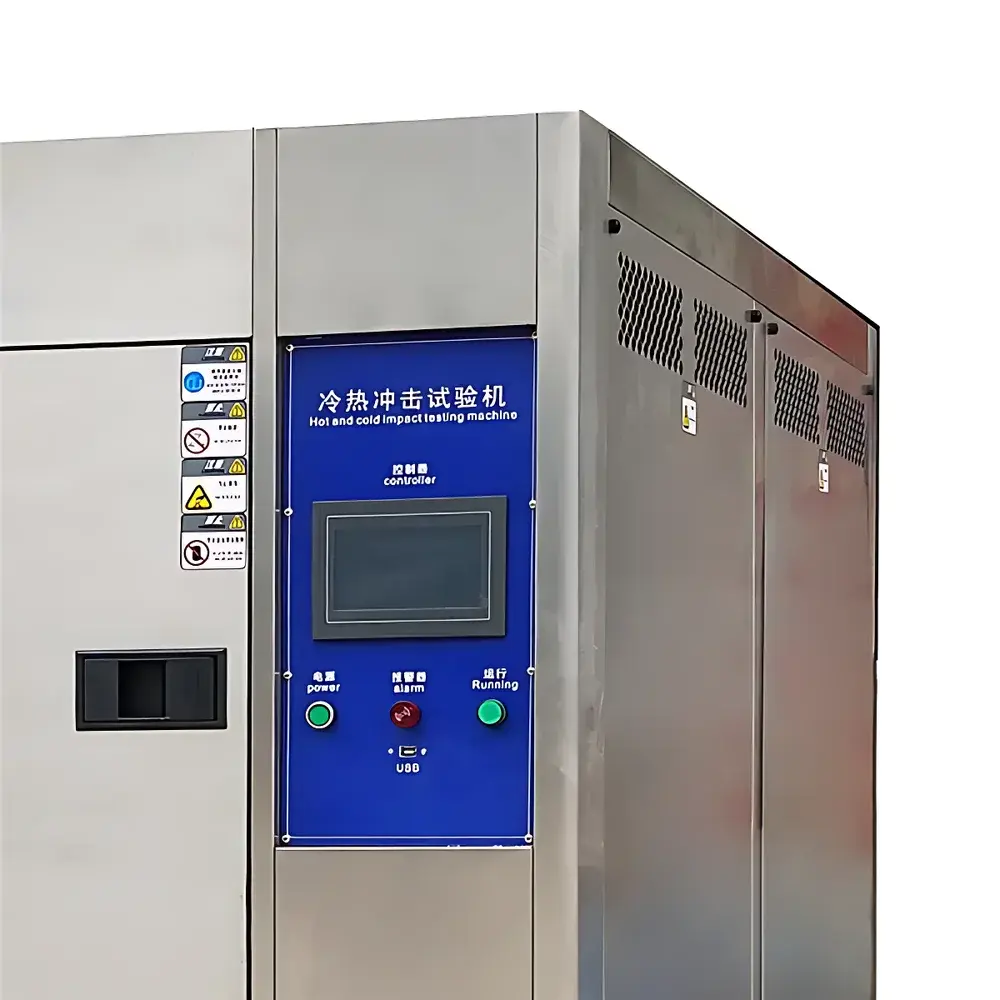
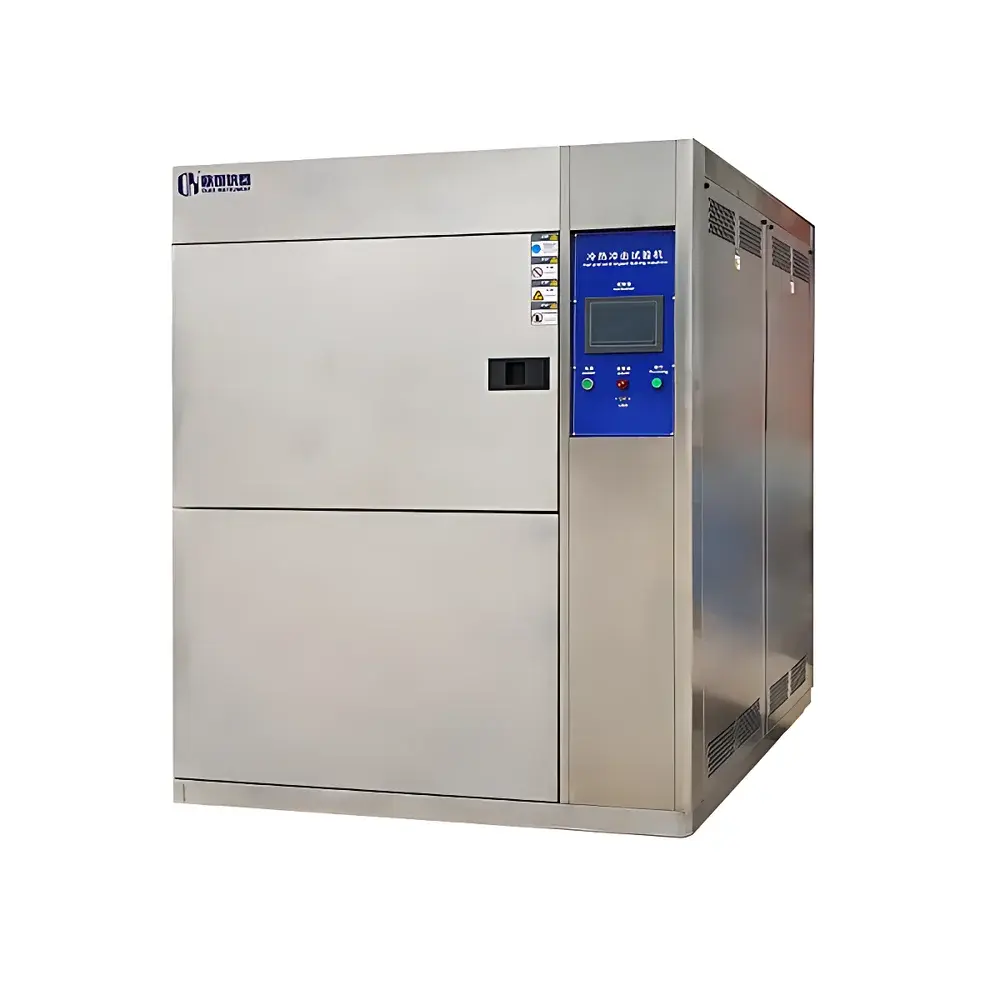
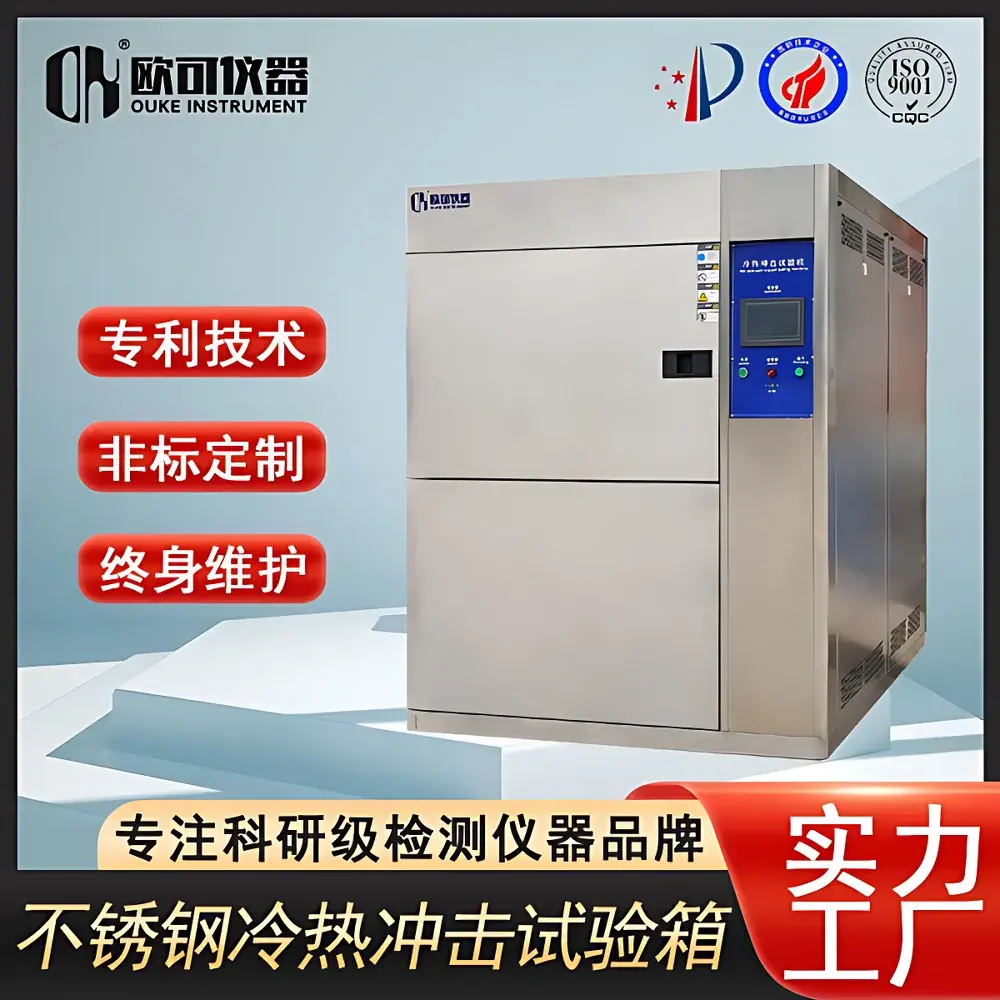
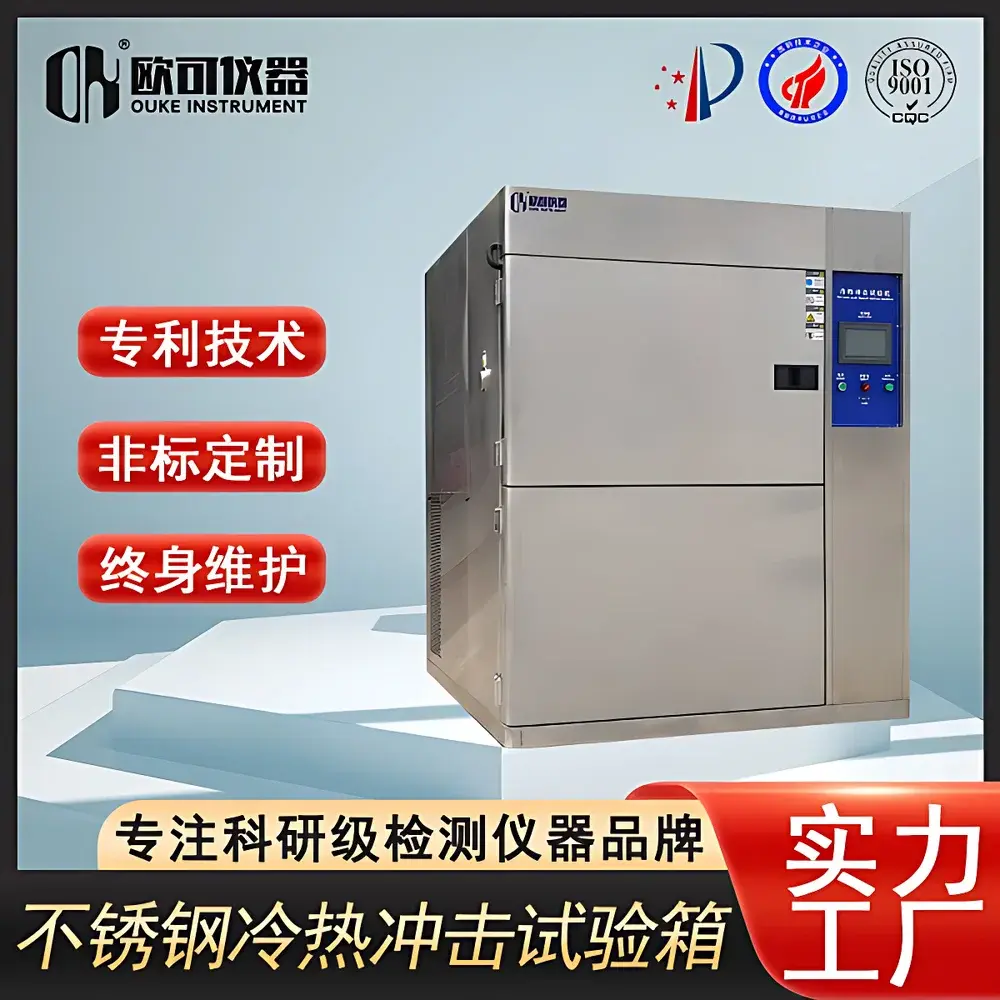
OK Instrument OK-TS-12 Thermal Shock Test Chamber
| Brand | OK Instrument |
|---|---|
| Origin | Guangdong, China |
| Manufacturer Type | Direct Manufacturer |
| Model | OK-TS-12 |
| Price | USD 12,500 (FOB Guangdong) |
| High-Temperature Range | +150 °C |
| Low-Temperature Range | −50 °C |
| Thermal Shock Range | −50 °C to +150 °C |
| Temperature Stability | ±2 °C |
| Heating Rate | 10 °C/min |
| Cooling Rate | 10 °C/min |
Overview
The OK Instrument OK-TS-12 Thermal Shock Test Chamber is an engineered environmental stress screening (ESS) system designed for rapid, repeatable, and high-fidelity evaluation of material and component reliability under extreme thermal transients. It operates on the principle of abrupt temperature transition—either through two-chamber (hot/cold) or three-chamber (hot/cool/test) configurations—to subject test specimens to controlled, accelerated thermal cycling. This methodology replicates real-world operational stresses encountered during aerospace deployment, automotive powertrain operation, semiconductor packaging validation, and military electronics fielding. Unlike standard temperature-humidity chambers, the OK-TS-12 delivers true thermal shock profiles defined by ISO 16750-4, IEC 60068-2-14 (Test N), and MIL-STD-810H Method 503.5—where dwell time at extremes is minimized and transfer time between zones is tightly regulated to induce mechanical strain via differential coefficient of thermal expansion (CTE) mismatch across heterogeneous interfaces.
Key Features
- Two-zone pneumatic door switching architecture with stainless-steel insulated chambers and SUS#304 interior lining for corrosion resistance and thermal integrity
- Dual-stage cascade refrigeration system using environmentally compliant R404A/R23 refrigerants and imported semi-hermetic compressors (Germany-sourced), enabling stable operation down to −50 °C and up to +150 °C
- Precision temperature control with ±0.5 °C setpoint accuracy and ±2.0 °C uniformity across the test volume, validated per IEC 60068-3-5
- Programmable ramp rates of 10 °C/min (both heating and cooling), configurable dwell times, and automated cycle counting with event logging
- Integrated energy modulation logic that dynamically adjusts compressor load and refrigerant flow to maintain thermal stability while optimizing power consumption and extending system service life
- Robust mechanical construction: 100 mm-thick polyurethane insulation (fire-retardant grade), reinforced chamber walls, and CE-compliant safety interlocks including over-temperature cut-off and door-open alarm
Sample Compatibility & Compliance
The OK-TS-12 accommodates a broad range of physical configurations—from PCB assemblies and IC packages to automotive sensors, battery modules, and polymer-based structural components—within its standard internal volume (W×H×D: 60 × 50 × 50 cm). Optional custom cavity dimensions are available upon request. All operational parameters and calibration protocols conform to internationally recognized test standards, including but not limited to: GB/T 2423.1–2022 (cold testing), GB/T 2423.2–2022 (dry heat), GB/T 2423.22–2012 (temperature change), GJB 150.5A–2009 (military thermal shock), IEC 60068-2-14 (Test N), and EIA-364-32 (connector thermal cycling). The chamber supports GLP-compliant validation documentation packages and meets requirements for audit-ready traceability under ISO/IEC 17025-accredited laboratories.
Software & Data Management
Equipped with OK-TCM v3.2 embedded controller firmware and optional PC-based OK-DataLink software, the system enables full-cycle configuration, real-time monitoring, and post-test analysis. The interface supports multi-segment profile programming (up to 999 cycles), automatic data export in CSV/Excel format, and timestamped event logs—including door actuation, compressor status, and alarm triggers. Audit trail functionality complies with FDA 21 CFR Part 11 requirements when configured with user-level access controls and electronic signature capability. Raw sensor data (Pt100 RTDs at multiple spatial locations) is sampled at 1 Hz and stored onboard for ≥30 days, ensuring reproducibility and root-cause analysis of failure modes.
Applications
- Qualification of solder joint integrity in surface-mount technology (SMT) assemblies subjected to CTE-induced fatigue
- Reliability screening of lithium-ion battery cells and module housings under repeated charge/discharge thermal loading
- Validation of optical adhesive bond strength in camera modules exposed to diurnal ambient swings
- Accelerated aging of elastomeric seals used in avionics enclosures operating across −55 °C to +125 °C envelopes
- Material compatibility assessment for multi-layer ceramic capacitors (MLCCs) in high-reliability power conversion systems
- Pre-certification testing for AEC-Q200 automotive passive components and IPC-9701 solder interconnect qualification
FAQ
What is the difference between two-chamber and three-chamber thermal shock configurations?
Two-chamber systems use a single test basket moved mechanically between hot and cold zones; three-chamber designs keep the specimen stationary in a central test zone while transferring air via high-speed pneumatic dampers—reducing mechanical stress on fixtures and improving repeatability.
Does the OK-TS-12 support automated calibration verification?
Yes—integrated reference Pt100 sensors and optional NIST-traceable calibration kits enable periodic verification per ISO/IEC 17025 Annex A.2 without external instrumentation.
Is external cooling water required for operation?
Yes—the cascade refrigeration system requires a dedicated closed-loop cooling tower delivering 10 m³/h of water at ≤32 °C inlet temperature, as specified in the installation manual.
Can the chamber be integrated into a factory MES or LIMS environment?
Yes—via Modbus TCP or optional OPC UA gateway, enabling real-time parameter streaming and cycle status reporting to enterprise-level quality management systems.
What maintenance intervals are recommended for long-term reliability?
Compressor oil analysis every 2,000 operating hours; refrigerant leak check annually; door gasket inspection quarterly; full system performance validation biannually per ASTM E2797.



