
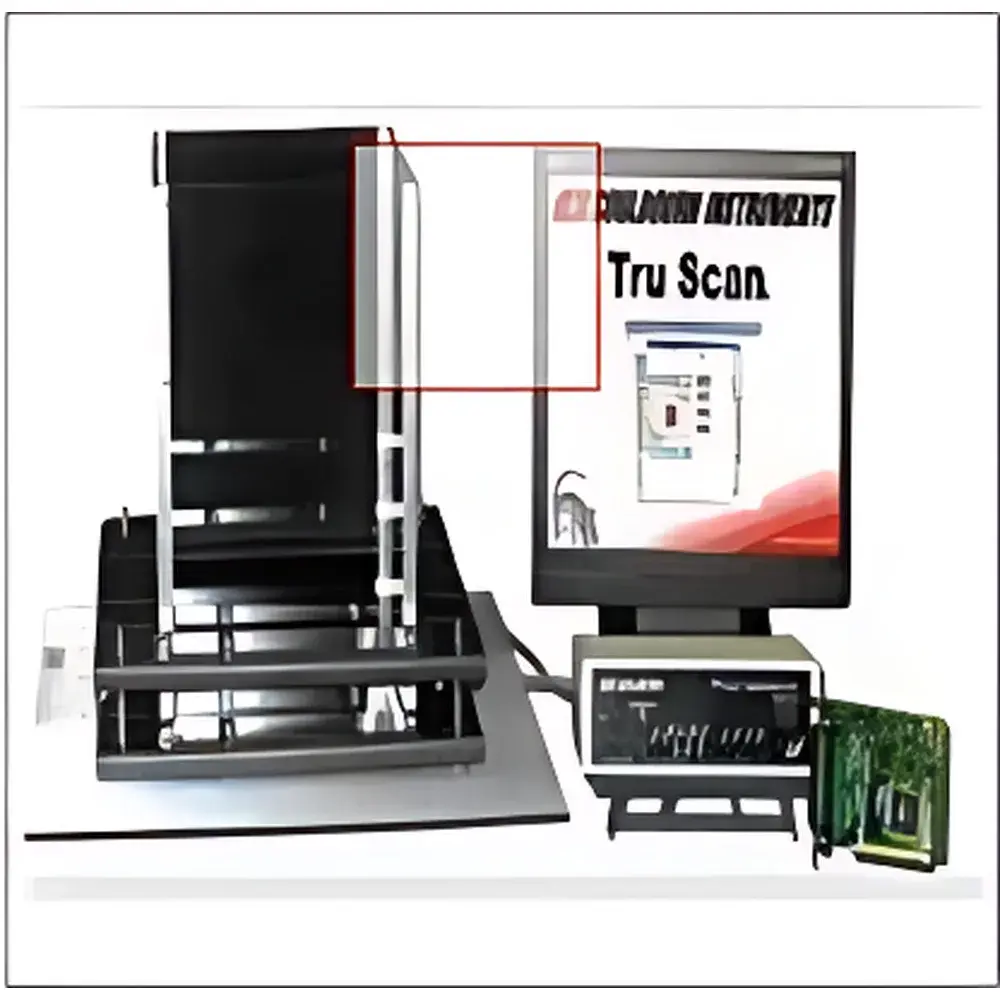
TruScan 3D Animal Behavior Monitoring System by Coulbourn Instruments
| Brand | Coulbourn |
|---|---|
| Origin | USA |
| Model | TSPAS |
| Regulatory Classification | Imported Instrument |
| Distribution Channel | Authorized Distributor |
| Pricing | Available Upon Request |
Overview
The TruScan 3D Animal Behavior Monitoring System (Model TSPAS) is a purpose-built, high-fidelity behavioral phenotyping platform engineered for longitudinal, non-invasive tracking of rodent locomotion and ethologically relevant behaviors in standardized housing or test enclosures. Unlike conventional 2D video-based systems, TruScan employs a proprietary sensor ring architecture—mounted circumferentially around the enclosure—to generate synchronized X-Y positional data at sub-second temporal resolution. This electromagnetic field–based detection method eliminates occlusion artifacts, lighting dependency, and animal marking requirements, ensuring robust performance across diverse experimental paradigms including fear conditioning, anxiety-related assays (e.g., light-dark box), exploratory behavior (nose-poke), and operant learning. The system operates on the principle of spatially resolved inductive sensing, enabling precise centroid localization without optical processing latency or frame-rate limitations inherent to camera-based solutions.
Key Features
- Real-time, contactless 2D trajectory reconstruction with millisecond-level timestamping and <1 cm spatial resolution
- Simultaneous control and synchronization of up to four independent stimulus modalities: programmable foot-shock (via integrated shock grid interface), calibrated LED illumination (light/dark transitions), broadband acoustic cues (50–20,000 Hz), and automated intraperitoneal or subcutaneous injection triggers via external pump integration
- Dedicated sensor ring design compatible with standard behavioral enclosures—including shuttle boxes, open fields, elevated plus mazes, and custom-built chambers—without requiring structural modification
- Station-independent operation: each monitoring station runs autonomous acquisition and event logging; intervention on one subject (e.g., drug injection) introduces zero cross-talk or timing drift to concurrent sessions
- Native support for ASTM E2507-22–compliant behavioral annotation protocols and ISO/IEC 17025–aligned metadata tagging (including operator ID, protocol version, environmental loggers)
Sample Compatibility & Compliance
TruScan TSPAS is validated for use with mice (C57BL/6, BALB/c, CD-1) and rats (Sprague-Dawley, Wistar) across weight ranges of 15–500 g. Enclosure compatibility extends to polycarbonate, acrylic, and stainless-steel configurations up to 60 × 60 × 40 cm (L×W×H). All hardware components meet UL 61010-1 safety standards for laboratory equipment. Software architecture supports audit trail generation per FDA 21 CFR Part 11 requirements when deployed in GLP-compliant environments, including electronic signature capture, immutable raw data archiving (binary .tsd format), and version-controlled protocol libraries. System validation documentation (IQ/OQ/PQ templates) is provided for GxP-regulated preclinical studies.
Software & Data Management
TruScan software (v8.5+, Windows 10/11 64-bit native) provides a deterministic real-time acquisition engine with dual-mode operation: continuous streaming mode for long-term home-cage monitoring and event-triggered burst capture for time-locked stimulus-response analysis. Raw coordinate streams are stored losslessly with embedded environmental metadata (ambient temperature, humidity, light intensity via optional I/O modules). Analytical modules include zone-based dwell time quantification, path complexity metrics (fractal dimension, meander ratio), velocity distribution histograms, and inter-stimulus interval response latency profiling. Export formats include CSV (for MATLAB/Python post-processing), Excel-compatible .xlsx with embedded charts, and HDF5 for large-scale cohort analysis. All reports retain traceability to original acquisition timestamps and hardware calibration certificates.
Applications
- Neuropharmacology: Quantitative assessment of anxiolytic, antidepressant, or cognitive-enhancing compound efficacy using standardized behavioral batteries (e.g., NIH Toolbox Rodent Battery)
- Translational neuroscience: Cross-species validation of behavioral endophenotypes in genetically modified models (e.g., APP/PS1, Shank3 KO)
- Toxicology: Detection of subtle motor deficits or circadian rhythm disruption following chronic low-dose exposure
- Behavioral neuroscience: High-throughput screening of optogenetic or chemogenetic interventions with millisecond-precision stimulus alignment
- Regulatory submission: Generation of ICH S7B-compliant behavioral safety pharmacology datasets for IND-enabling studies
FAQ
Does TruScan require video recording or animal tagging?
No. TruScan relies exclusively on electromagnetic field perturbation detection via its sensor ring—no cameras, infrared LEDs, or physical markers are needed.
Can multiple TSPAS units be networked for centralized data aggregation?
Yes. Systems support TCP/IP-based remote monitoring and synchronized multi-station experiments via Coulbourn’s NetStation Manager middleware.
Is raw data export compliant with FAIR (Findable, Accessible, Interoperable, Reusable) principles?
Yes. Each .tsd file includes embedded JSON metadata headers conforming to BIDS-Animal extension specifications, enabling automated ingestion into institutional data lakes.
What calibration procedures are required prior to GLP study initiation?
Annual factory recalibration is recommended; on-site verification using NIST-traceable dimensional gauges and timing references is documented in the included SOP-TRU-003.
How does TruScan handle signal interference from nearby MRI or electrophysiology equipment?
The sensor ring operates at 125 kHz with narrowband filtering and differential signal acquisition—validated to maintain SNR > 45 dB in 3T MRI suite adjacent rooms per IEEE Std. 1030.3-2020.



