
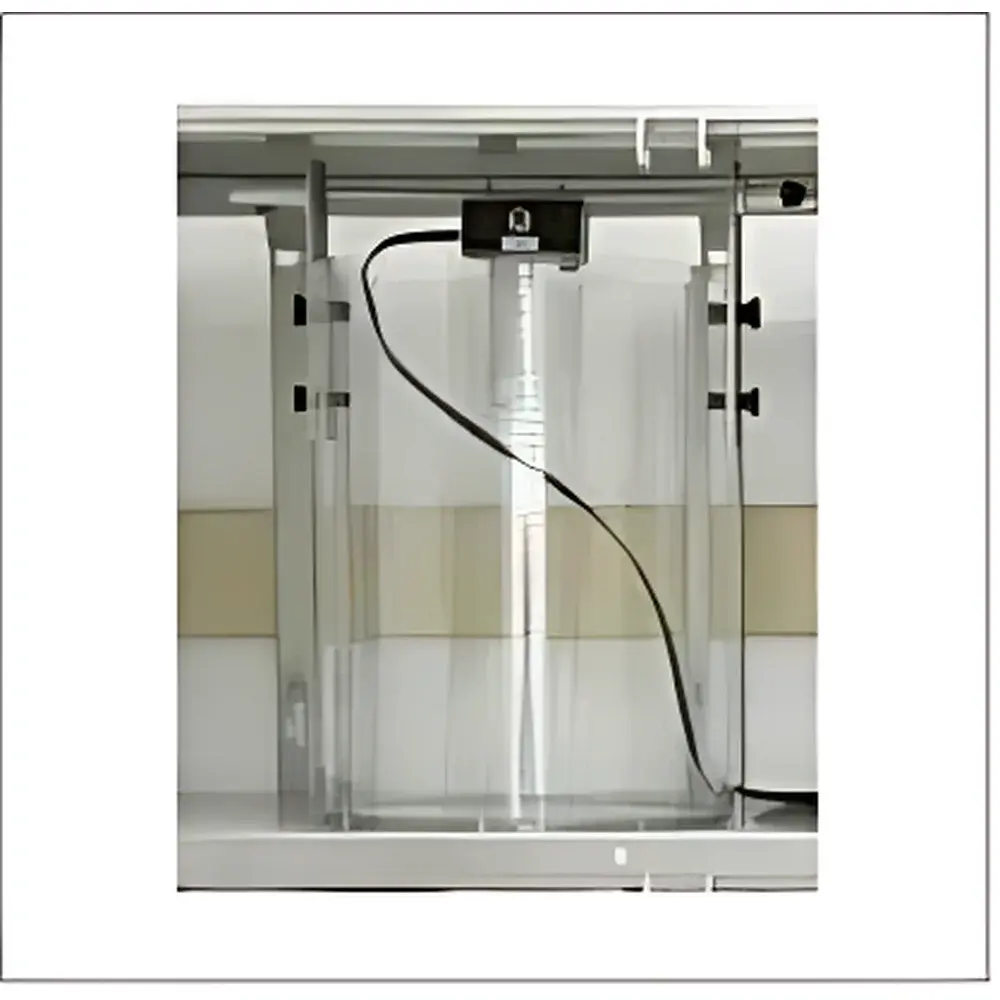
Rotation Monitor by Coulbourn Instruments – Automated Rodent Rotational Behavior Monitoring System
| Origin | USA |
|---|---|
| Manufacturer Type | Authorized Distributor |
| Origin Category | Imported |
| Model | Rotation Monitor |
| Pricing | Available Upon Request |
Overview
The Rotation Monitor by Coulbourn Instruments is a purpose-built, high-fidelity rotational behavior monitoring system designed for quantitative assessment of spontaneous or drug-induced circling behavior in rodent models—primarily mice and rats. It operates on the principle of high-resolution angular displacement tracking via dual-channel infrared photointerrupter arrays mounted orthogonally within each enclosure. This configuration enables unambiguous discrimination between clockwise (CW) and counterclockwise (CCW) rotations with angular resolution of 0.01 radian (≈3.6°), supporting precise quantification of rotational asymmetry—a well-established neurobehavioral biomarker in models of unilateral dopamine depletion (e.g., 6-OHDA lesioned rats), vestibular dysfunction, or antipsychotic-induced motor side effects. The system is engineered for longitudinal, multi-cage parallel experimentation under controlled environmental conditions, delivering time-stamped, event-based rotation logs compatible with rigorous preclinical behavioral phenotyping protocols.
Key Features
- Modular, scalable architecture supporting up to 64 independent rotation monitoring stations per controller unit
- Dual-axis infrared optical sensing per cage: three emitter–detector pairs per station ensure robust detection of both full 360° rotations and partial angular displacements (≥3.6°)
- Choice of two standardized housing configurations: cylindrical (4″ D × 3″ W × 2″ H) or bowl-shaped enclosures—both constructed from anodized aluminum frames and medical-grade polypropylene for chemical resistance and ease of sanitation
- Individual station-level hardware controls: dedicated toggle switch and real-time diagnostic LED display per cage enable rapid functional verification prior to session initiation
- Integrated slope ramp (18″ length) in standard enclosure design facilitates natural locomotor engagement and reduces false-positive triggering from vertical rearing or grooming artifacts
- Lightweight, adjustable restraint harness (optional) available for targeted vestibular or pharmacological challenge paradigms requiring head-fixed orientation control
Sample Compatibility & Compliance
The Rotation Monitor is validated for use with adult Sprague-Dawley, Wistar, C57BL/6, and CD-1 rodents (18–35 g mice; 200–350 g rats). Cage dimensions and material composition comply with NIH Guide for the Care and Use of Laboratory Animals standards for space allowance and non-toxicity. All electronic subsystems—including power supply units, signal conditioning boards, and PC interface modules—bear CE marking per Directive 2014/30/EU (EMC) and 2014/35/EU (LVD). The system supports GLP-compliant data integrity workflows when operated with audit-trail-enabled software configurations and timestamped raw binary logging.
Software & Data Management
The system runs on Coulbourn’s menu-driven Windows-based acquisition and analysis suite, compatible with Windows 10/11 (64-bit). Software modules include: (1) real-time session control with programmable start/stop triggers (simultaneous or staggered across cages); (2) diagnostic mode for sensor calibration and baseline function validation; (3) live rotation vector visualization (polar plot + cumulative histogram); (4) export of time-series rotation events in tab-delimited ASCII format (.txt), fully interoperable with MATLAB, R, GraphPad Prism, and SAS. All data files contain embedded metadata (date/time stamp, cage ID, operator ID, protocol name), enabling traceability per FDA 21 CFR Part 11 requirements when used with appropriate system validation documentation.
Applications
- Quantification of rotational bias in unilateral 6-OHDA or MPTP-lesioned Parkinsonian models
- Evaluation of dopaminergic agonist/antagonist efficacy and dose–response kinetics
- Assessment of vestibular compensation following unilateral labyrinthectomy
- Screening for CNS-active compounds inducing stereotypy or motor asymmetry
- Longitudinal monitoring of recovery dynamics post-neuroinflammatory insult (e.g., LPS-induced neuroinflammation)
- Validation of genetic knockouts exhibiting basal ganglia circuit imbalance (e.g., D2R−/−, A2AR−/− mice)
FAQ
What is the maximum number of cages the system can monitor simultaneously?
Up to 64 rotation cages can be monitored concurrently using a single master controller unit, with expandable rack-mount configurations for higher-throughput labs.
Is the system compatible with third-party data acquisition platforms such as LabChart or Spike2?
Yes—raw TTL pulse outputs from each station are accessible via DB-25 breakout panel; custom DAQ integration is supported through Coulbourn’s documented API and hardware trigger specifications.
Does the software support automated detection of partial rotations (e.g., 90° or 180° turns)?
The system records all angular displacements ≥3.6°; users may define custom rotation thresholds and directional bins during post-hoc analysis using the included scriptable analysis module.
Are replacement cages and harnesses available as consumables?
Yes—Coulbourn supplies certified replacement enclosures (cylindrical and bowl), sterilizable polypropylene liners, and calibrated restraint harness kits under part numbers RM-CAGE-STD, RM-LINER-PP, and RM-HARNESS-ADJ respectively.
Can the system be integrated into existing behavioral core facility infrastructure with centralized server logging?
The software supports network-shared data directories and UNC path mapping; optional SQL Server backend integration is available under extended support contract (Coulbourn Service Plan Tier 3).



