
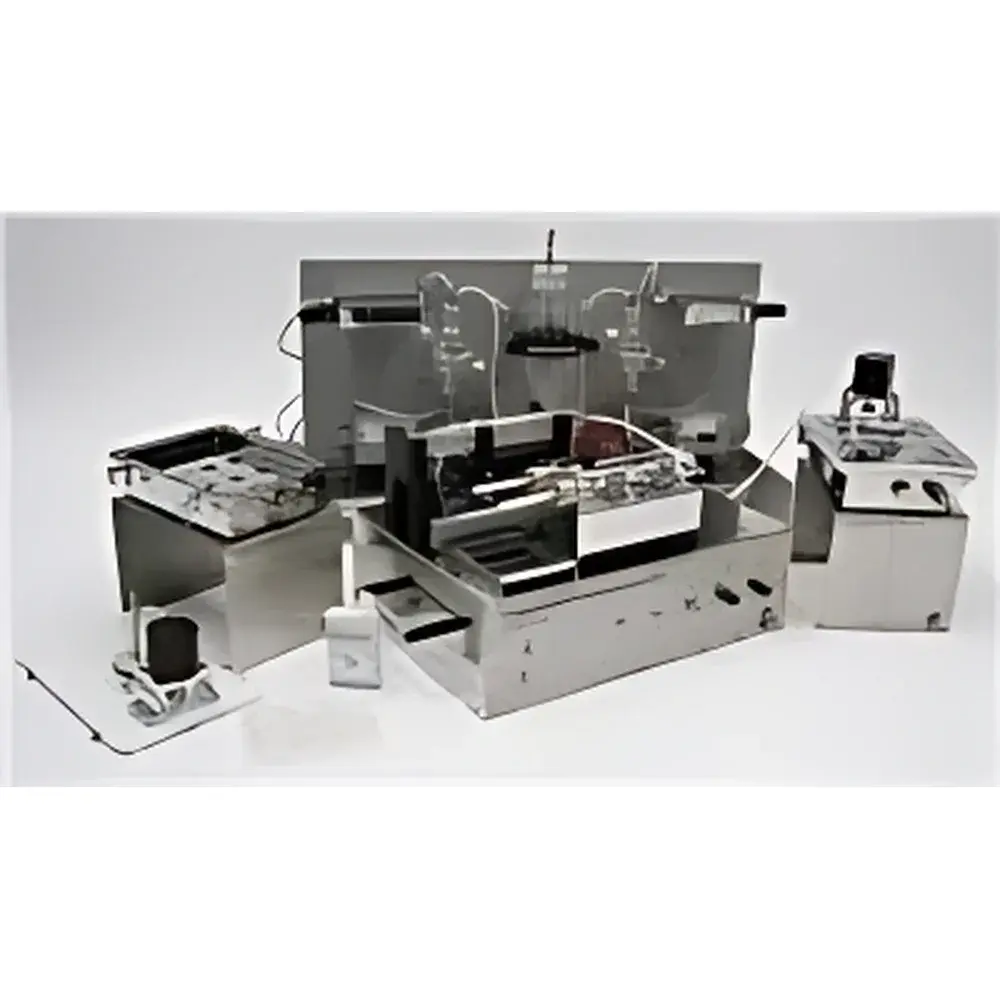
Cigarette Smoke Generator System
| Origin | USA |
|---|---|
| Manufacturer Type | Authorized Distributor |
| Origin Category | Imported |
| Model | CSG-2000 Series |
| Price | Available Upon Request |
Overview
The CSG-2000 Series Cigarette Smoke Generator System is a precision-engineered exposure platform designed for controlled, reproducible generation and delivery of mainstream and sidestream cigarette smoke to laboratory animals or in vitro biological models. Built upon the principles of standardized puffing protocols (e.g., ISO 3308, WHO TobReg specifications), the system integrates programmable smoking machines, real-time aerosol conditioning modules, and calibrated exposure chambers to emulate physiologically relevant inhalation exposures. It supports both acute and subchronic toxicological studies under GLP-compliant conditions and is widely deployed in pulmonary pharmacology, carcinogenicity assessment, and COPD/asthma model development.
Key Features
- Programmable puffing engine compliant with ISO 3308 (60 mL puff volume, 2 s duration, 60 s interval) and customizable profiles for research-grade flexibility
- Dual-path smoke generation architecture enabling simultaneous mainstream and sidestream aerosol production with independent flow control
- Integrated dilution air system with mass flow controllers (MFCs) for precise smoke concentration modulation (0–100% undiluted smoke)
- Temperature- and humidity-controlled exposure chamber (±0.5 °C, ±3% RH stability) with uniform aerosol distribution verified by laser Doppler anemometry
- Real-time particulate monitoring via integrated optical particle sizer (OPS) and condensation particle counter (CPC) for dynamic aerosol characterization
- Modular design supporting integration with whole-body or nose-only exposure configurations for rodents (rats/mice) and larger species (e.g., guinea pigs, rabbits)
- Fail-safe interlocks including pressure differential monitoring, smoke sensor redundancy, and emergency purge ventilation
Sample Compatibility & Compliance
The CSG-2000 accommodates commercial and research-grade cigarettes (standard 84 mm and 100 mm lengths), roll-your-own tobacco blends, and emerging nicotine delivery products (e.g., heated tobacco units) with adapter kits. All exposure protocols adhere to OECD Test Guideline 412 (Subacute Inhalation Toxicity) and support regulatory submissions under FDA, EMA, and PMDA frameworks. The system’s hardware and firmware are validated per ASTM E2912–22 (Standard Practice for Calibration of Aerosol Generation Systems) and maintain full traceability to NIST-traceable standards. Documentation packages include IQ/OQ/PQ protocols, calibration certificates, and audit-ready log files compliant with 21 CFR Part 11 requirements for electronic records and signatures.
Software & Data Management
Control and data acquisition are managed through the EXPOSURE-Link™ software suite—a Windows-based application with dual-mode operation (manual setup and automated protocol execution). The software provides synchronized logging of puff parameters (volume, duration, interval), chamber environmental metrics (T, RH, pressure), aerosol concentration (mg/m³ total particulate matter), and real-time particle size distribution (0.3–10 µm). All datasets are stored in encrypted SQLite databases with immutable timestamps, user access controls, and built-in audit trail functionality. Export options include CSV, PDF reports, and direct integration with LIMS platforms via HL7 or ASTM E1467-compliant APIs. Remote monitoring and alarm notification (email/SMS) are supported via optional Ethernet/Wi-Fi connectivity modules.
Applications
- Preclinical inhalation toxicology studies evaluating respiratory tract irritation, inflammation, and systemic toxicity endpoints
- Development and validation of in vitro air-liquid interface (ALI) cultures using primary human bronchial epithelial cells exposed to physiologically dosed smoke aerosols
- Pharmacokinetic modeling of nicotine and tobacco-specific nitrosamines (TSNAs) across exposure durations and concentrations
- Comparative assessment of reduced-risk product (RRP) emissions versus conventional combustible cigarettes
- Longitudinal studies on smoke-induced emphysema, mucus hypersecretion, and alveolar macrophage dysfunction in transgenic mouse models
- Support for regulatory submissions requiring GLP-compliant exposure characterization per ICH S5(R3) and OECD TG 413 guidelines
FAQ
What cigarette types and sizes are compatible with the CSG-2000?
The system accepts standard-length cigarettes (84 mm and 100 mm), slim variants, and custom tobacco blends; adapters are available for heated tobacco units and e-cigarette aerosol coupling.
Does the system meet ISO or OECD inhalation study standards?
Yes — puffing mechanics comply with ISO 3308 and WHO TobReg; exposure chamber performance aligns with OECD TG 412 and ASTM E2912–22 for aerosol delivery fidelity.
Can exposure concentration be precisely quantified and repeated across studies?
Yes — real-time TSP measurement, gravimetric filter sampling ports, and MFC-based dilution control ensure inter-study reproducibility within ±5% CV for target concentrations.
Is the software 21 CFR Part 11 compliant?
Yes — EXPOSURE-Link™ includes electronic signatures, role-based permissions, audit trails, and data integrity safeguards required for FDA-regulated submissions.
What maintenance is required to ensure long-term calibration stability?
Quarterly verification using NIST-traceable flow calibrators and annual third-party IQ/OQ validation are recommended; all service logs are automatically archived in the software database.





