
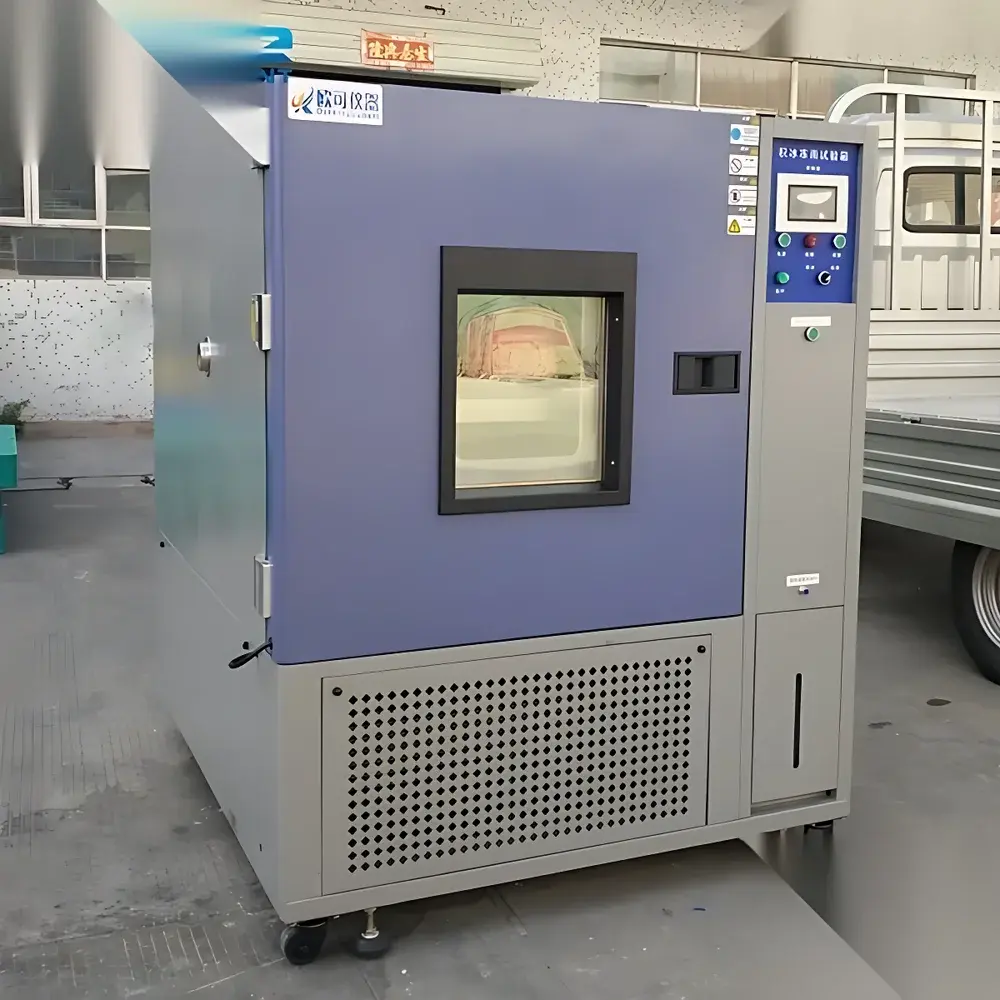
English Product Name
| Brand | OK Instruments |
|---|---|
| Origin | Imported |
| Manufacturer Type | Authorized Distributor |
| Price | USD 14,000 (FOB) |
| Internal Dimensions (L×W×H) | 500×600×500 mm to 1000×1000×1000 mm |
| Temperature Range | −20 °C to +80 °C (customizable) |
| Temperature Uniformity | ±2.0 °C |
| Temperature Stability | ±0.5 °C |
| Rainfall Intensity | 25 mm/h |
| Nozzle Orifice Diameter | φ0.4 mm |
| Simulated Droplet Diameter | 1.0–1.5 mm |
| Ice Accumulation Thickness Options | 6 / 13 / 37 / 75 mm |
| Simulated Ice Density Range | 0.2–0.9 g/cm³ |
| Water Temperature Control | 0–5 °C |
| Inner Chamber Material | SUS304 Stainless Steel |
| Outer Chamber Material | Galvanized Steel with Powder Coating or Optional SUS304 |
| Refrigeration System | Hermetic Scroll Compressor (Tecumseh or equivalent) |
| Controller | 5.7″ TFT Color LCD Touchscreen (Bilingual English/Chinese Interface) |
| Power Supply | AC 220 V ±5%, 50 Hz ±0.5 Hz, Single-Phase Three-Wire |
Overview
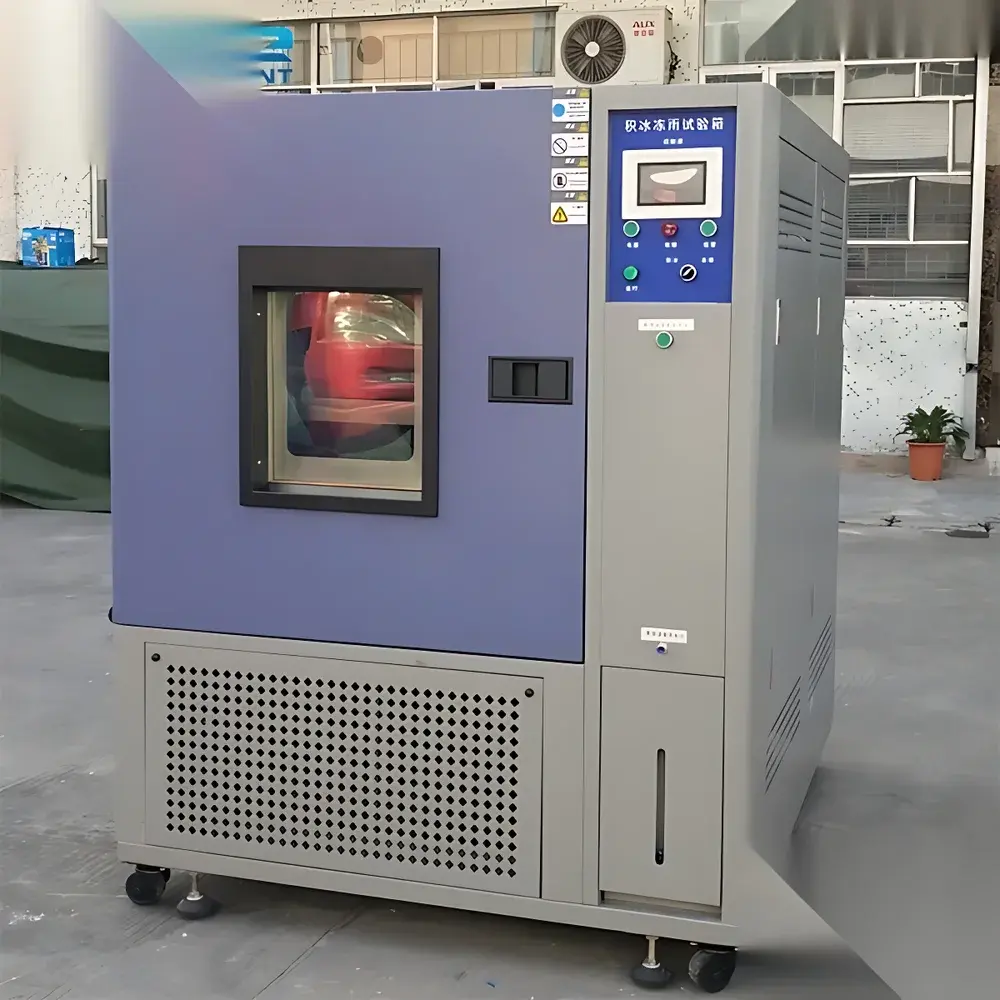
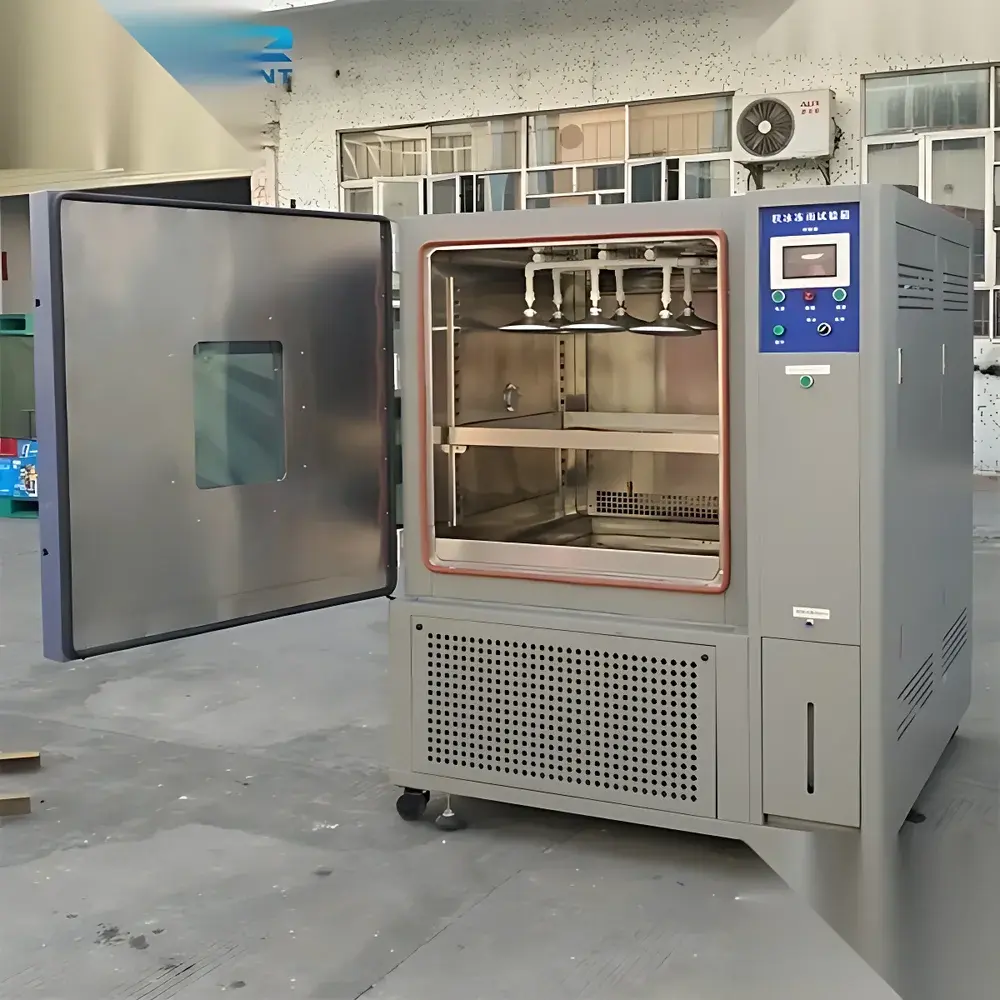
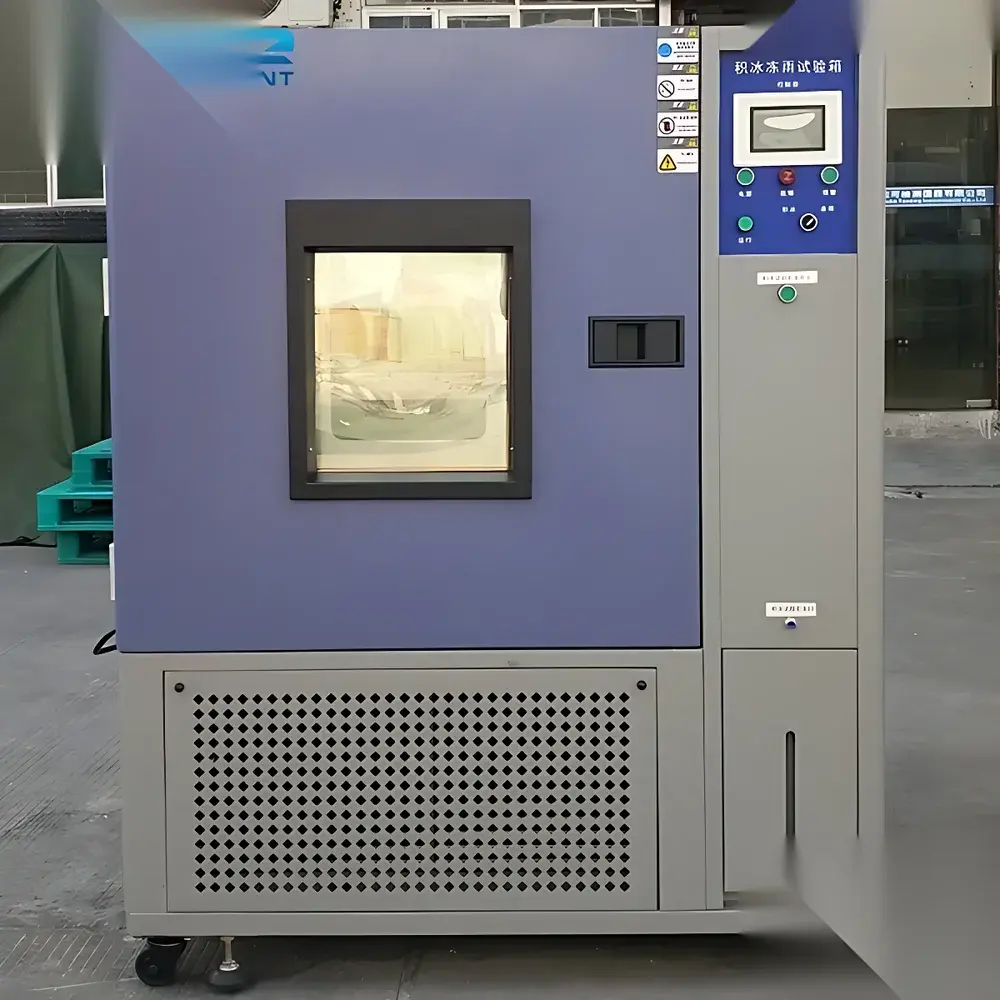
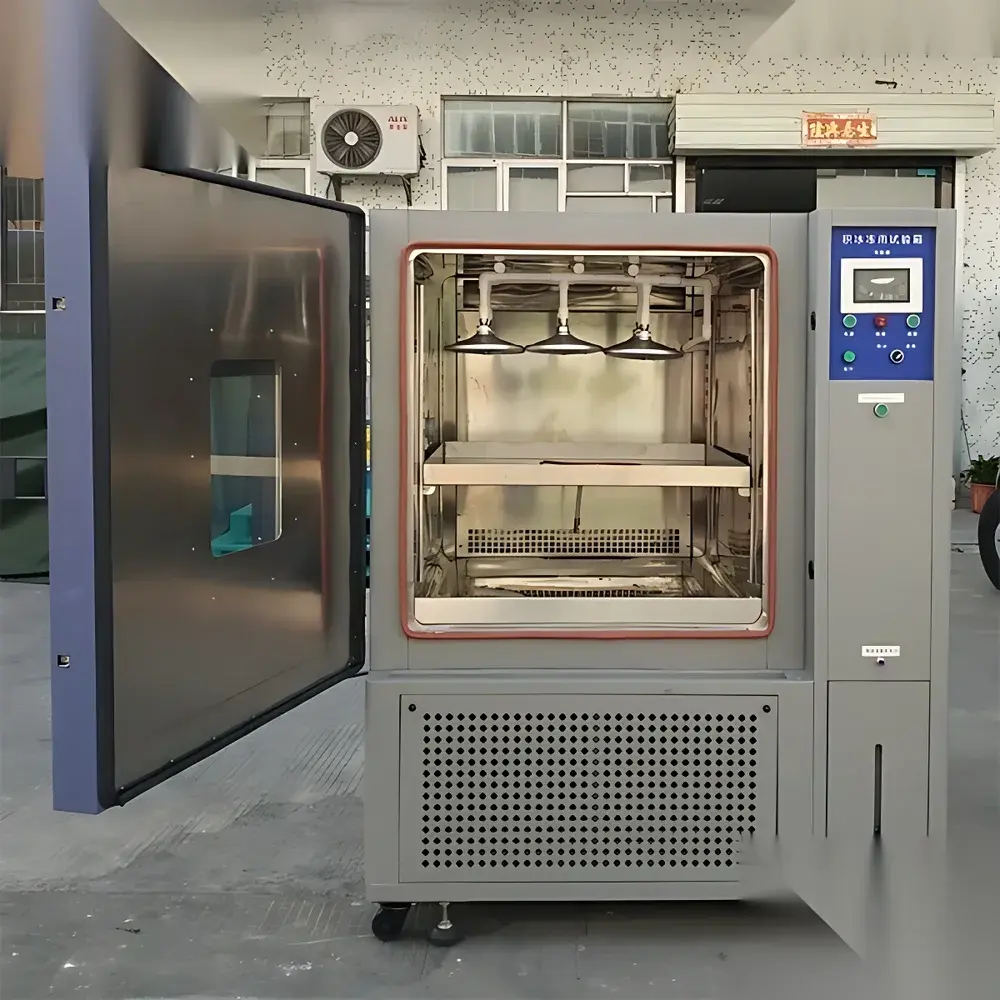
The OK-JBDY Series Icing and Freezing Rain Test Chamber is a purpose-built environmental simulation system engineered for rigorous laboratory evaluation of equipment performance under controlled icing and freezing rain conditions. It operates on the principle of dynamic droplet impingement combined with precise low-temperature thermal control to replicate the physical formation of glaze ice, rime ice, and mixed-phase accretions observed in natural atmospheric icing environments. Designed in strict accordance with GJB 150.22A–2009 (“Environmental Test Methods for Military Equipment — Part 22: Icing and Freezing Rain Testing”), this chamber enables reproducible, traceable, and standards-compliant testing of aerospace components, unmanned aerial systems (UAS), wind turbine blades, power transmission hardware, avionics enclosures, and marine instrumentation exposed to supercooled liquid precipitation. The system delivers calibrated water droplet delivery at defined kinetic energy, temperature, and impact geometry—critical parameters governing ice morphology, adhesion strength, and thermal load distribution across test specimens.
Key Features
- Multi-stage temperature control architecture featuring dual-stage refrigeration (−20 °C minimum) and high-stability PID-regulated heating, achieving ±0.5 °C stability and ±2.0 °C uniformity across the working volume.
- Calibrated rain generation subsystem with precision-machined stainless-steel nozzles (φ0.4 mm orifice), delivering uniform 25 mm/h rainfall intensity with droplet diameters tightly constrained between 1.0 and 1.5 mm—validated per GJB 150.22A requirements.
- Selectably configurable ice thickness accumulation profiles (6 mm, 13 mm, 37 mm, 75 mm), supported by real-time water mass flow monitoring and chilled water supply (0–5 °C) to ensure consistent ice density (0.2–0.9 g/cm³) during accretion cycles.
- Modular internal chamber design using full SUS304 stainless steel construction for corrosion resistance, paired with insulated double-wall outer housing (galvanized steel or optional SUS304) to minimize thermal bridging and condensation.
- Integrated 5.7″ TFT touchscreen controller with embedded logging, programmable test sequences, alarm history, and user-accessible calibration offset adjustment—supporting both English and Chinese operational interfaces.
- Standardized auxiliary provisions including one 50 mm diameter cable/port access hole, adjustable stainless-steel specimen support rack, and CE-marked electrical safety compliance (IEC 61000-6-2/6-4).
Sample Compatibility & Compliance
The OK-JBDY chamber accommodates test articles up to 1000 mm × 1000 mm × 1000 mm (OK-JBDY-1000 model), with scalable internal dimensions across four standard configurations. Specimens may include rotating or static assemblies—such as propellers, sensor housings, antenna radomes, and de-icing heater panels—as long as they fit within dimensional and weight limits (max. 150 kg distributed load). All models are validated against GJB 150.22A–2009 Annex A verification procedures for droplet size distribution, temperature field mapping, and rainfall rate linearity. While not certified to ISO 14644 or ASTM D3235 directly, the chamber’s controlled environment and documented metrology traceability support qualification testing aligned with MIL-STD-810H Method 521.4 (Icing) and RTCA DO-160G Section 21 (Icing Conditions). Full calibration certificates—including temperature sensor NIST-traceable verification and flowmeter calibration—are supplied with each unit.
Software & Data Management
The embedded controller provides local data acquisition at 1 Hz resolution for temperature, humidity (where applicable), water flow rate, and system status flags. Test logs are stored internally (≥10,000 records) and exportable via USB to CSV format for post-processing in MATLAB, Python, or LabVIEW. Optional Ethernet connectivity (RS-485 or Modbus TCP) enables integration into centralized lab management systems supporting GLP/GMP audit trails. Although native software does not implement FDA 21 CFR Part 11 electronic signature functionality, the controller supports time-stamped event logging with operator ID input—sufficient for internal quality system documentation under ISO/IEC 17025 Clause 7.7. Raw sensor outputs (Pt100, pulse flow, thermocouple) are accessible for third-party SCADA integration.
Applications
- Verification of electrothermal, pneumatic, and mechanical de-icing system efficacy on aircraft leading edges and rotor blades.
- Functional endurance testing of optical sensors, radar domes, and camera housings under progressive ice loading.
- Evaluation of thermal management strategies for battery enclosures and power electronics subjected to coastal freezing fog exposure.
- Material science studies on ice adhesion shear strength of hydrophobic coatings and anti-icing polymer composites.
- Qualification of maritime navigation equipment per IMO MSC.1/Circ.1283 guidelines for cold-climate operation.
- Supporting research into ice-phobic surface development under controlled nucleation kinetics and accretion morphology regimes.
FAQ
Does the chamber support automated cycling between icing and ambient recovery phases?
Yes—programmable multi-step profiles allow sequential execution of freezing rain exposure, hold periods, and controlled defrost or warm-up ramps.
Can the system simulate mixed-phase (supercooled drizzle + snow) conditions?
No—the OK-JBDY series is specifically optimized for liquid-droplet-based icing; mixed-phase simulation requires supplementary aerosol generators and is outside its validated scope.
Is NIST-traceable calibration documentation included with shipment?
Yes—each unit ships with a factory calibration report covering chamber temperature uniformity, rainfall rate accuracy, and water temperature stability, all referenced to NIST-traceable standards.
What maintenance intervals are recommended for the refrigeration and water delivery subsystems?
Compressor oil and filter replacement every 24 months; nozzle inspection and ultrasonic cleaning every 500 operational hours; full system validation annually or after major component replacement.
Can custom test protocols be loaded via external interface?
Yes—CSV-formatted sequence files can be imported via USB to define non-standard temperature ramps, rainfall durations, and dwell times, subject to controller memory constraints.



