
OK-S-20 Mechanical Shock Testing System
| Brand | OEM / Custom-Built |
|---|---|
| Origin | Imported |
| Manufacturer Type | Authorized Distributor |
| Country of Manufacture | Not Specified |
| Model | OK-S-20 |
| Price | USD 14,000 (approx.) |
Overview
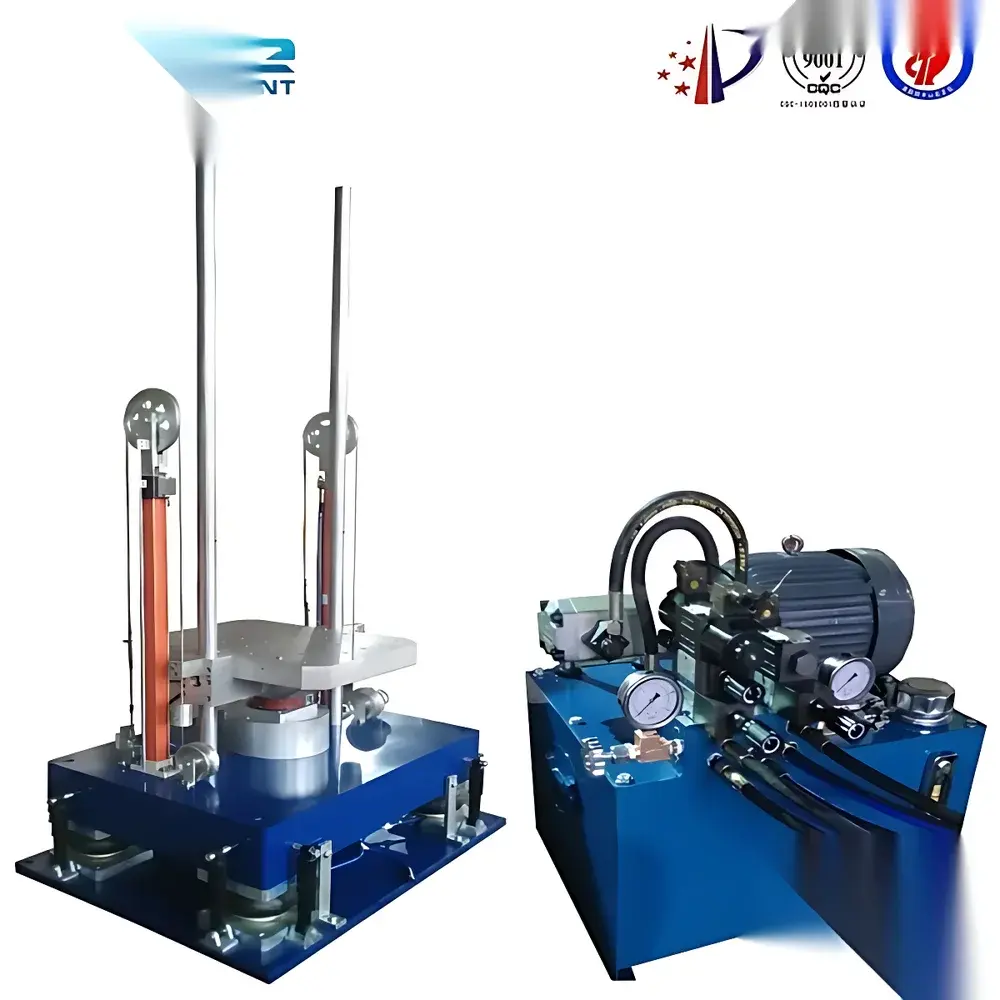
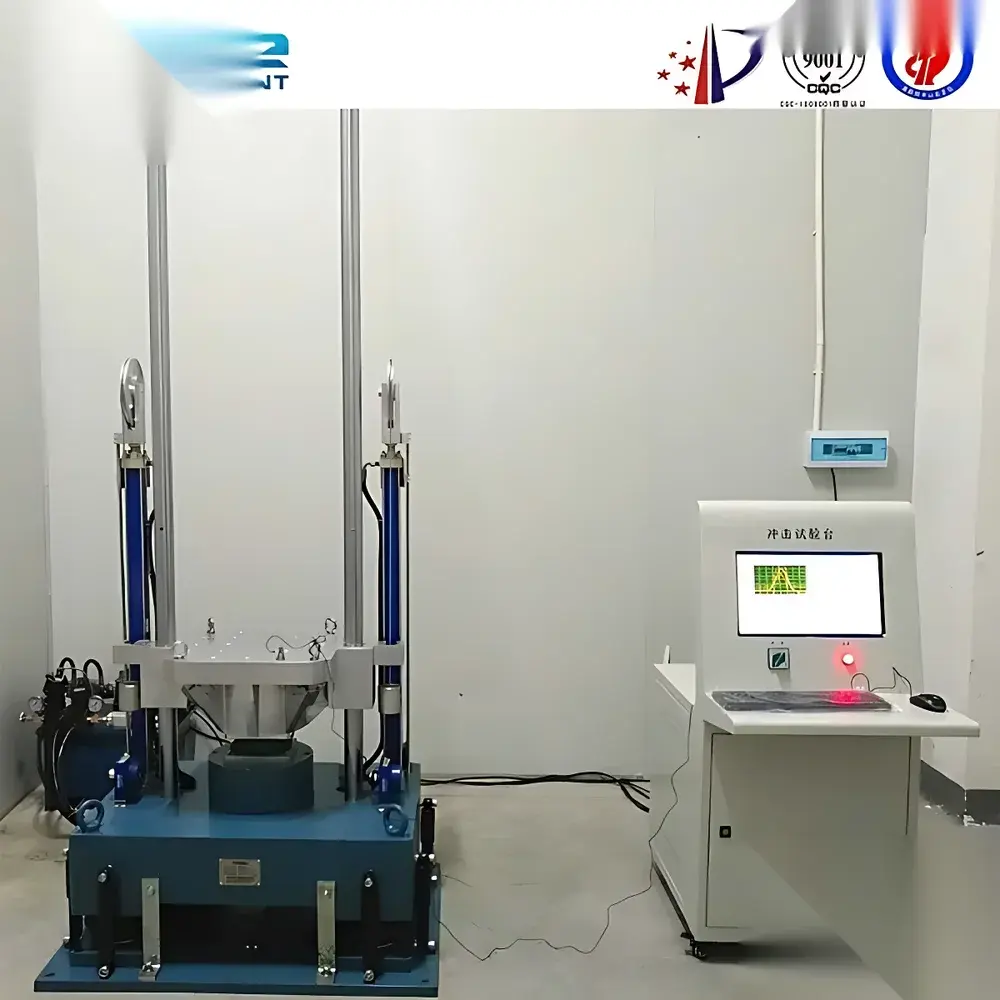
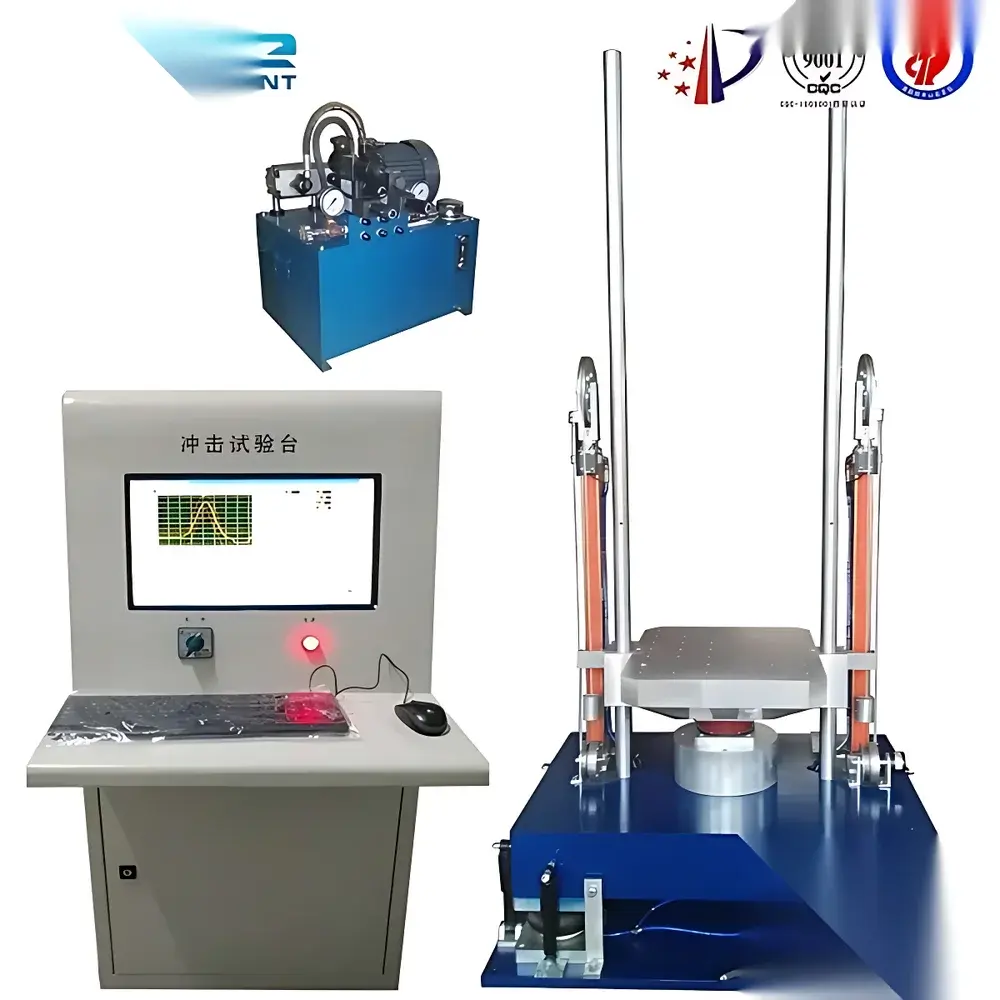
The OK-S-20 Mechanical Shock Testing System is a vertically oriented electro-mechanical shock simulator engineered for controlled, repeatable acceleration pulse generation in laboratory and industrial qualification environments. It operates on the principle of free-fall impact dynamics combined with spring-assisted energy modulation, enabling precise reproduction of standardized shock pulses—including half-sine, trapezoidal, and rear-peak sawtooth waveforms—as defined in IEC 60068-2-27, MIL-STD-810H Method 516.7, GJB 150.18A, JIS C 0041, and ASTM D999. The system delivers programmable acceleration amplitudes ranging from 150 to 15,000 m/s² with pulse durations adjustable between 0.5 ms and 11 ms, making it suitable for evaluating structural integrity, solder joint reliability, sensor survivability, and packaging performance under transient mechanical stress.
Key Features
- Electro-mechanical actuation architecture: DC motor-driven reduction gearbox and roller-guided lifting mechanism ensures smooth, repeatable vertical motion of the shock table without hydraulic complexity or oil contamination risk.
- Single-impact design with integrated damping base: Eliminates secondary rebound effects through calibrated mass–spring–damper isolation, ensuring waveform fidelity and measurement repeatability (±3% amplitude deviation over 100 consecutive shocks).
- Waveform flexibility: Standard half-sine output; optional trapezoidal and rear-peak sawtooth pulse generation achieved via interchangeable buffer pad materials (e.g., polyurethane, neoprene, silicone rubber) and thickness tuning (10–50 mm range).
- Adjustable repetition rate: Motor speed control enables pulse frequency adjustment from 1 to 30 shocks per minute—fully compatible with accelerated life testing protocols requiring high-cycle exposure.
- Robust structural frame: Heavy-duty welded steel chassis with vibration-damped mounting feet reduces transmitted floor vibration to <0.05 g RMS at 1 m distance, satisfying ISO 2041 Class B ambient noise requirements.
- Safety-integrated control logic: Emergency stop circuitry, position-limit switches, power-fail lockout, and automatic deceleration upon abnormal current draw ensure compliance with IEC 61800-5-2 functional safety standards.
Sample Compatibility & Compliance
The OK-S-20 accommodates test specimens up to 20 kg on its 20 × 20 cm aluminum shock table (anodized, threaded M6 grid). Mounting adaptability supports PCB assemblies, handheld electronics, automotive ECUs, medical devices, and small-scale packaging units. All shock profiles are traceable to NIST-calibrated accelerometers (e.g., PCB Piezotronics 352C33) and validated per ISO/IEC 17025-accredited calibration procedures. The system meets electromagnetic compatibility (EMC) requirements per EN 61326-1 and conforms to electrical safety standards EN 61000-3-2/3. Documentation includes full test report templates aligned with GLP and internal audit readiness for FDA 21 CFR Part 11–governed environments where electronic records and signature validation are required.
Software & Data Management
While the OK-S-20 operates via front-panel digital interface for manual setup, it integrates seamlessly with third-party data acquisition systems (e.g., National Instruments DAQmx, Dewesoft X, or Brüel & Kjær Pulse) via analog voltage output (±10 V) and TTL trigger signals. Optional USB-to-RS485 converter enables remote parameter scripting and batch test sequencing using Python-based automation frameworks. Audit trail functionality—including operator ID, timestamp, pulse parameters, and pass/fail status—is exportable as CSV or PDF for inclusion in IQ/OQ/PQ validation packages. Firmware updates are delivered via secure HTTPS portal with SHA-256 signature verification.
Applications
- Qualification testing of consumer electronics per IEC 60068-2-27 Ed. 4.0 (Shock)
- Design validation of aerospace avionics enclosures under MIL-STD-810H Section 516.7 (Shock)
- Drop-test simulation for logistics packaging per ISTA 3A and ASTM D5276
- Reliability screening of MEMS accelerometers, gyroscopes, and inertial measurement units (IMUs)
- Component-level robustness assessment in automotive Tier-1 supply chains (VW 80101, GM W3177)
- Research into dynamic failure modes of solder interconnects and wire bonds under high-g transients
FAQ
What shock waveforms does the OK-S-20 support natively?
The system generates half-sine pulses as standard; trapezoidal and rear-peak sawtooth waveforms require optional buffer pad kits and are subject to amplitude/duration trade-offs per ISO 10816-3 Annex B guidelines.
Is the OK-S-20 compliant with FDA 21 CFR Part 11 for electronic records?
The base unit does not include built-in Part 11 functionality, but when paired with validated third-party DAQ software (e.g., Dewesoft X with eSign module), full electronic signature, audit trail, and record retention compliance is achievable.
Can the system be integrated into an automated test cell?
Yes—digital I/O ports (8-channel opto-isolated input/output) and Modbus RTU over RS485 enable synchronization with PLCs, robotic handlers, and environmental chambers.
What calibration documentation is provided?
Each unit ships with a factory calibration certificate referencing ISO/IEC 17025-accredited accelerometer calibration, including uncertainty budgets for acceleration amplitude (k=2, ±2.5%) and pulse duration (k=2, ±0.15 ms).
Does the OK-S-20 require compressed air or hydraulic fluid?
No—it is fully electro-mechanical and operates exclusively on AC380 V ±5%, 3-phase, 5-wire power supply with no ancillary utilities required.



