
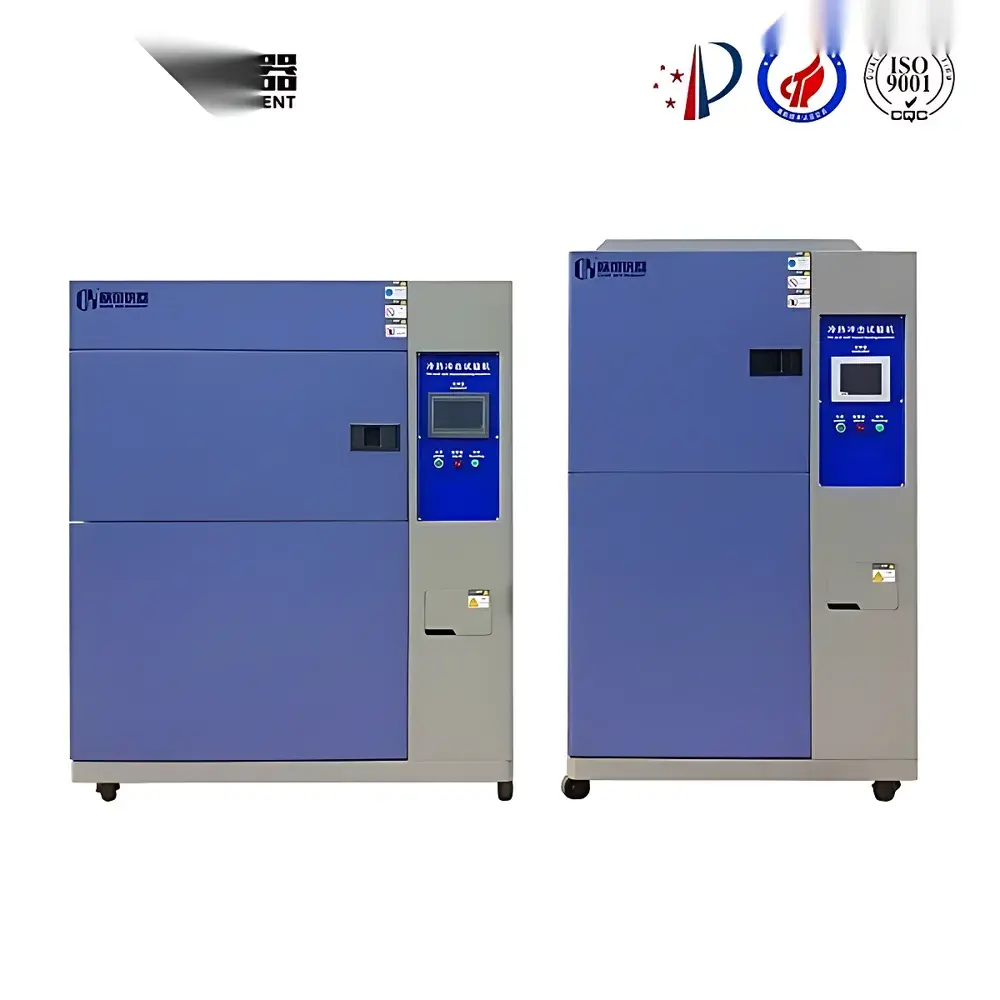
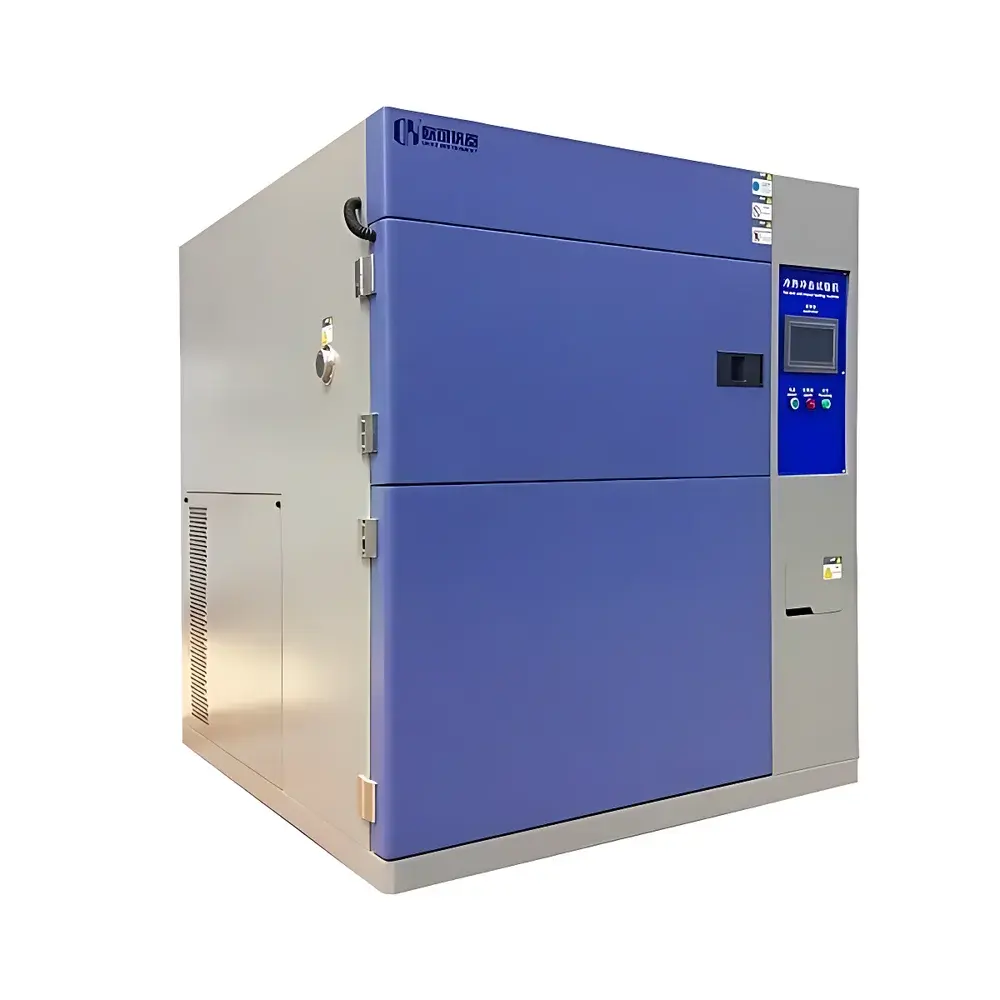
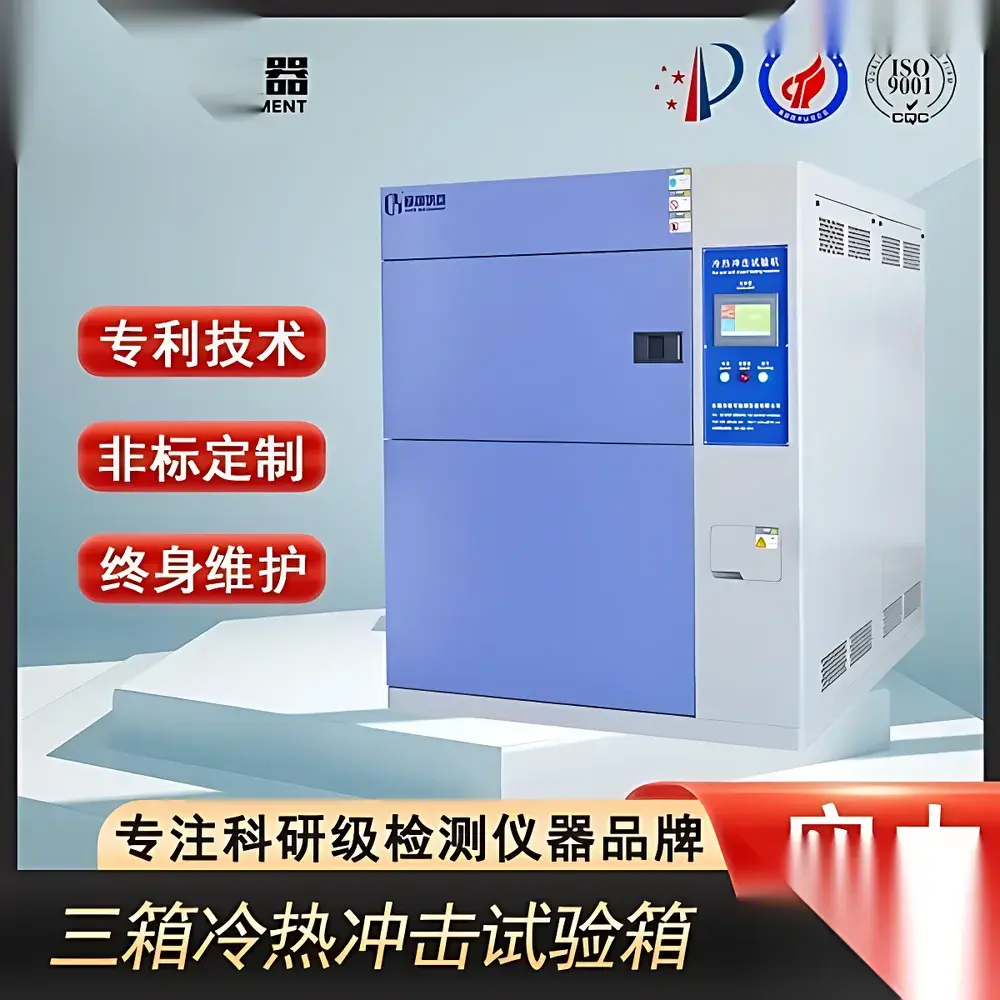
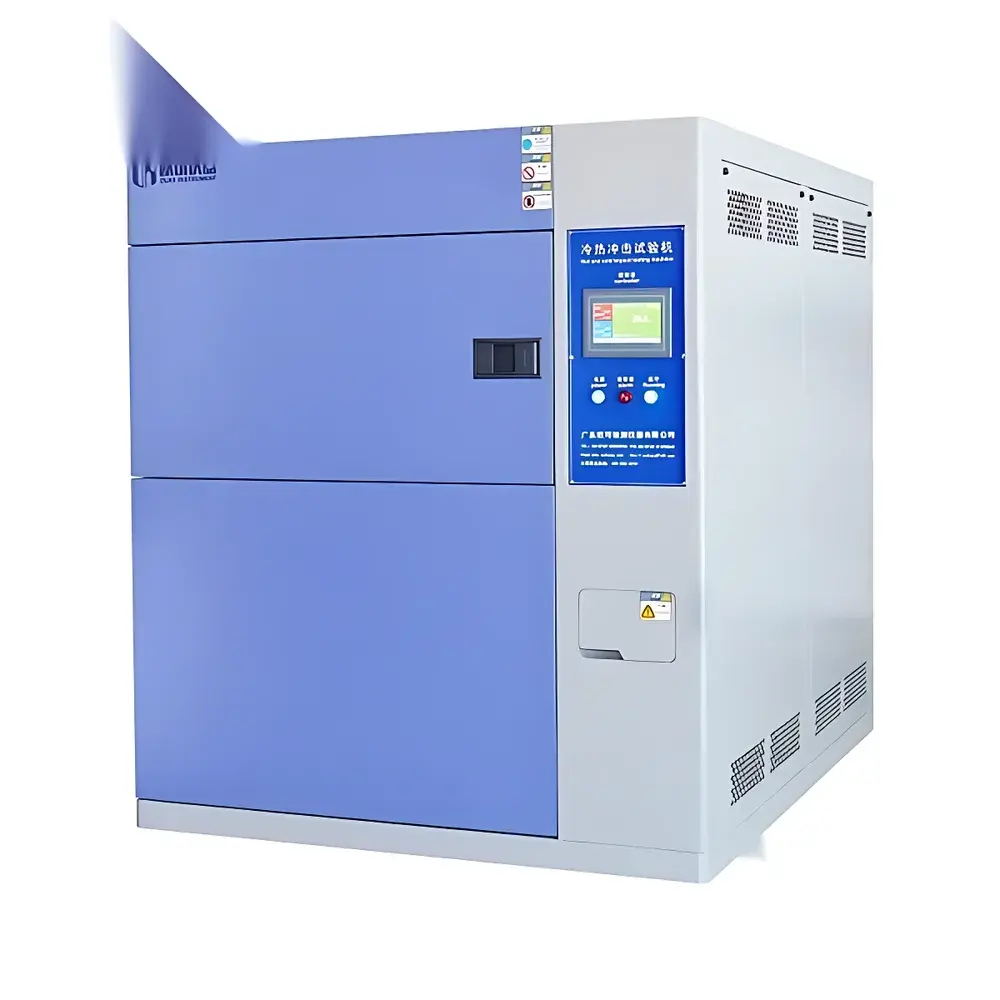
Benchtop Basket-Type Thermal Shock Test Chamber
| Brand | OEM / Custom Brand |
|---|---|
| Origin | Imported |
| Manufacturer Type | Authorized Distributor |
| Pricing | USD 11,200 (FOB) |
| Compliance | GB/T 2423.1–2022, GB/T 2423.2–2022, GB/T 2423.22–2022, GJB 150.3–2009, GJB 150.4–2009, GJB 150.5–2009, IEC 60068-2-14 (Test N), MIL-STD-810H Method 503.6 |
| Refrigeration System | Dual-stage cascade refrigeration with imported semi-hermetic compressors (Germany), water-cooled condenser requiring external cooling tower (10 m³/h flow rate) |
Overview
The Benchtop Basket-Type Thermal Shock Test Chamber is an engineered environmental test system designed to evaluate material and component reliability under rapid, repetitive transitions between extreme high and low temperature extremes. Operating on the principle of mechanical basket translation—where the test specimen is physically moved between independently controlled high-temperature and low-temperature chambers—the system delivers precise, repeatable thermal shock profiles without cross-contamination of chamber atmospheres or thermal mass interference. This architecture ensures minimal transition time (typically ≤15 seconds), high thermal gradient fidelity (>15 °C/min average ramp rate across full range), and stable dwell stability (±0.3 °C). Unlike single-chamber or air-mixing designs, the basket-type configuration eliminates residual heat transfer during dwell phases, enabling strict adherence to standardized thermal shock protocols including IEC 60068-2-14 (Test N) and MIL-STD-810H Method 503.6. The chamber is widely deployed in R&D labs, quality assurance departments, and production validation lines for electronics packaging, automotive ECUs, aerospace composites, and medical device housings where thermomechanical fatigue resistance must be quantified prior to field deployment.
Key Features
- Basket-driven dual-chamber architecture with servo-controlled linear actuator for precise, repeatable specimen transfer
- Independent high-temperature chamber (up to +150 °C) and low-temperature chamber (down to –70 °C), each equipped with PID-controlled heating/cooling loops
- Dual-stage cascade refrigeration system using semi-hermetic compressors (Germany-sourced), optimized for rapid cooldown and long-term stability at sub-zero setpoints
- Water-cooled condensing unit requiring external cooling tower (10 m³/h capacity); integrated flow monitoring and high-temperature cut-off protection
- Stainless-steel interior construction (SUS304), insulated with high-density polyurethane foam (≥150 mm thickness), sealed with silicone gaskets rated for –70 to +150 °C
- Programmable controller with 100-segment profile storage, real-time curve display, and USB data export capability
- Compliance-ready hardware architecture supporting audit trails, user-level access control, and optional 21 CFR Part 11-compliant software add-ons
Sample Compatibility & Compliance
This thermal shock chamber accommodates specimens up to 300 mm × 300 mm × 300 mm (W×D×H) and 20 kg maximum load, compatible with PCB assemblies, molded plastic enclosures, solder joints, battery modules, and elastomeric seals. All operational parameters—including dwell duration, transfer timing, ramp rates, and cycle count—are programmable to match test plans per GB/T 2423.22–2022 (Temperature Change), GJB 150.5–2009 (Temperature Shock), and EIA-364-32 (Thermal Shock for Connectors). The system meets structural and safety requirements of GB 4793.1–2019 (Electrical Safety for Laboratory Equipment) and includes CE-marked power distribution, overtemperature cutoffs, and door interlock switches. Calibration traceability follows ISO/IEC 17025 guidelines via third-party accredited service providers; factory calibration certificates include temperature uniformity (±1.5 °C across working volume) and stability (±0.3 °C over 30-min dwell).
Software & Data Management
The embedded controller runs a deterministic real-time OS with non-volatile memory for profile retention and event logging. Standard functionality includes cycle counting, alarm history (with timestamps and cause codes), and CSV-formatted temperature/time export via USB 2.0. Optional PC-based software enables remote monitoring, multi-chamber fleet management, statistical process control (SPC) charting, and GLP/GMP-aligned electronic records—including operator ID, calibration status, and deviation flagging. When configured with audit trail and electronic signature modules, the system satisfies FDA 21 CFR Part 11 requirements for regulated environments. Data integrity is ensured through cyclic redundancy check (CRC) validation on all stored logs and write-protected firmware partitions.
Applications
Typical use cases include accelerated life testing of surface-mount solder joints per IPC-J-STD-020, validation of adhesive bond integrity in hybrid power modules, qualification of conformal coating performance under thermal cycling, and evaluation of hermetic seal failure modes in MEMS sensors. In automotive applications, it supports QC/T 17–2021 (Automotive Component Environmental Testing) for engine control units exposed to under-hood thermal transients. Aerospace suppliers utilize this chamber for screening composite layups per SAE AS4783 and verifying thermal expansion mismatch in ceramic-metal interfaces. Universities employ it in materials science curricula for studying phase-transition-induced microcracking in shape-memory alloys and polymer nanocomposites.
FAQ
What is the typical temperature transition time between chambers?
Standard basket transfer time is ≤15 seconds from hot to cold chamber or vice versa, verified per IEC 60068-2-14 Annex B.
Does the system support custom thermal shock profiles beyond standard test methods?
Yes—users may define up to 100-step profiles with independent dwell times, ramp rates, and cycle repetitions via the front-panel interface or PC software.
Is external cooling infrastructure mandatory?
Yes—a dedicated water-cooled condenser requires a continuous supply of chilled water at 10 m³/h flow rate; a cooling tower meeting ASHRAE Guideline 12 specifications is required.
Can the chamber be integrated into a centralized lab automation network?
Optional Modbus TCP or Ethernet/IP communication modules enable integration with MES or SCADA platforms for automated test execution and data aggregation.
What maintenance intervals are recommended for the refrigeration system?
Compressor oil analysis and filter-drier replacement every 2,000 operating hours; annual leak detection and refrigerant charge verification per ISO 5149.



