
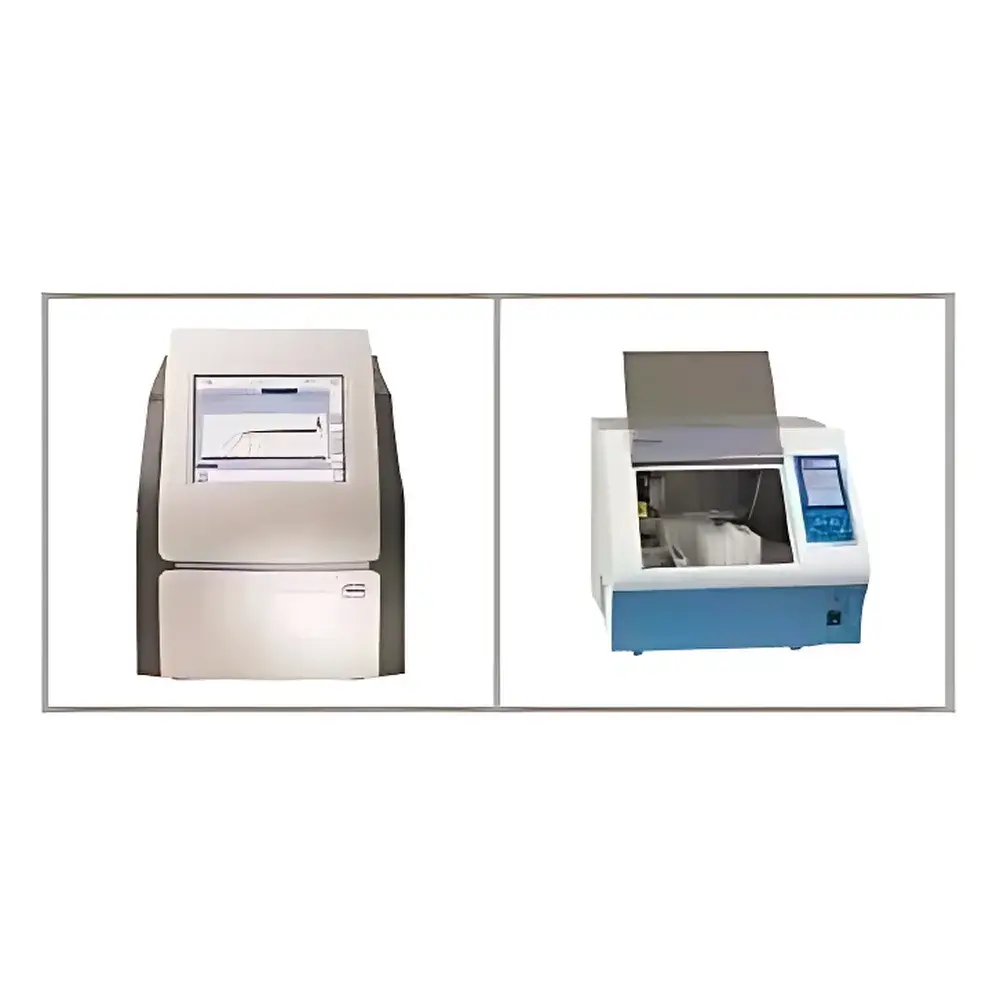
Evergreen MS-GDS Immuno-Magnetic Bead Separation Rapid Detection System
| Brand | Evergreen |
|---|---|
| Origin | USA |
| Manufacturer Type | Authorized Distributor |
| Origin Category | Imported |
| Model | Evergreen MS-GDS |
| Instrument Type | Semi-Automated Microbial Identification System |
| Sample Throughput | 8 samples per run |
| Thermal Cycling Technology | Centrifugal Air-Exchange Heat Cycling |
| Detection Principle | Magnetic Bead-Based Immunocapture Coupled with Real-Time PCR |
| Internal Control | Integrated Dual Internal Control per Reaction Vial |
| Regulatory Compliance | Designed for GLP/GMP environments |
Overview
The Evergreen MS-GDS Immuno-Magnetic Bead Separation Rapid Detection System is an integrated semi-automated platform engineered for rapid, specific, and sensitive detection of target microorganisms in complex matrices—particularly pharmaceutical, biologics, and food safety samples. It combines immunomagnetic separation (IMS) with real-time polymerase chain reaction (qPCR) to deliver actionable microbial identification results within significantly reduced turnaround times compared to conventional culture-based methods. The system operates on a dual-stage principle: first, pathogen-specific antibodies conjugated to superparamagnetic beads selectively capture target organisms from enriched broth cultures; second, captured cells are lysed and subjected to qPCR amplification using proprietary primer-probe chemistries optimized for high discrimination against phylogenetically related non-target species. This architecture eliminates reliance on colony isolation and subculturing, thereby shortening total assay duration by up to 48 hours while maintaining analytical rigor required for regulated environments.
Key Features
- Immunomagnetic bead-based sample preparation: Enables selective enrichment and concentration of target microbes (e.g., Salmonella, Staphylococcus aureus, Pseudomonas aeruginosa) directly from liquid enrichment broths without centrifugation or filtration steps.
- Centrifugal air-exchange thermal cycling module: Replaces conventional Peltier-block systems with a rotating chamber that ensures uniform heat transfer and minimizes thermal gradient-induced cycle delay—reducing typical qPCR run time by ≥120 minutes per assay.
- Dual internal control architecture: Each reaction vial contains both a process control (to monitor nucleic acid extraction and amplification efficiency) and a contamination control (to flag carryover or environmental amplicon interference), supporting result interpretability under ISO 13485 and USP validation frameworks.
- Eight-sample parallel processing capacity: Modular rack design accommodates standardized 2-mL tubes; all IMS wash, elution, and lysis steps are performed simultaneously across the full batch, ensuring inter-sample reproducibility (CV < 5% for Ct values).
- Proprietary primer-probe sets: Patented sequence targeting avoids cross-reactivity with commensal flora or closely related strains—validated against >200 ATCC reference strains and clinical isolates per organism panel.
Sample Compatibility & Compliance
The MS-GDS accepts primary enrichment broths including TSB, BPW, and mEC+n, as well as filtered water, rinse solutions, and sterile swab eluates. It has been verified for use with pharmacopeial compendia methods (USP , , ; EP 2.6.13; JP 4.07) and supports audit-ready documentation per FDA 21 CFR Part 11 when interfaced with compliant laboratory information management systems (LIMS). All reagent kits are manufactured under ISO 13485-certified conditions and supplied with CoA, stability data, and lot-specific performance verification reports.
Software & Data Management
The embedded MS-GDS Control Software (v3.2+) provides instrument control, protocol scheduling, real-time amplification curve visualization, automated Ct thresholding, and pass/fail interpretation based on user-defined acceptance criteria. Audit trails record all user actions, parameter changes, and result exports with timestamped digital signatures. Raw data files (.eds format) are exportable in CSV and SDM-compliant XML for secondary analysis or regulatory submission. Integration with enterprise LIMS is supported via HL7 v2.5.1 and ASTM E1384 interfaces.
Applications
- Routine microbial limit testing in sterile and non-sterile pharmaceutical manufacturing (APIs, excipients, final dosage forms)
- Environmental monitoring program (EMP) verification for Grade A/B cleanrooms
- Bioburden assessment of medical device components prior to sterilization
- Raw material screening in biologics and cell therapy workflows
- Out-of-specification (OOS) investigation support through rapid strain-level identification
FAQ
What types of microorganisms can be detected using the MS-GDS platform?
The system supports validated assays for Gram-negative rods (e.g., E. coli, P. aeruginosa), Gram-positive cocci (e.g., S. aureus, Enterococcus spp.), and select yeasts (e.g., Candida albicans). Custom assay development services are available under NDA.
Is the MS-GDS compliant with current Good Manufacturing Practice (cGMP) requirements?
Yes—the hardware architecture, software validation package, and reagent traceability framework meet ICH Q5C, ISO 9001, and EU Annex 1 expectations for automated microbiological testing equipment.
Can the system be integrated into an existing laboratory automation infrastructure?
The MS-GDS includes RS-232, Ethernet, and USB 3.0 ports; it supports middleware-driven orchestration via standard OPC UA protocols and is compatible with major robotic liquid handlers (e.g., Hamilton STAR, Tecan Fluent).
What is the shelf life of the magnetic bead reagent kits?
Unopened kits retain full performance for 18 months when stored at 2–8 °C; post-thaw stability is 72 hours at ambient temperature under controlled humidity conditions.
Does the system require external calibration or routine maintenance beyond scheduled service intervals?
No daily calibration is required; the thermal module undergoes factory-traceable verification every 12 months. Preventive maintenance is recommended annually and includes magnetic field strength mapping, pipette accuracy verification, and optical path cleaning.
Related Products




