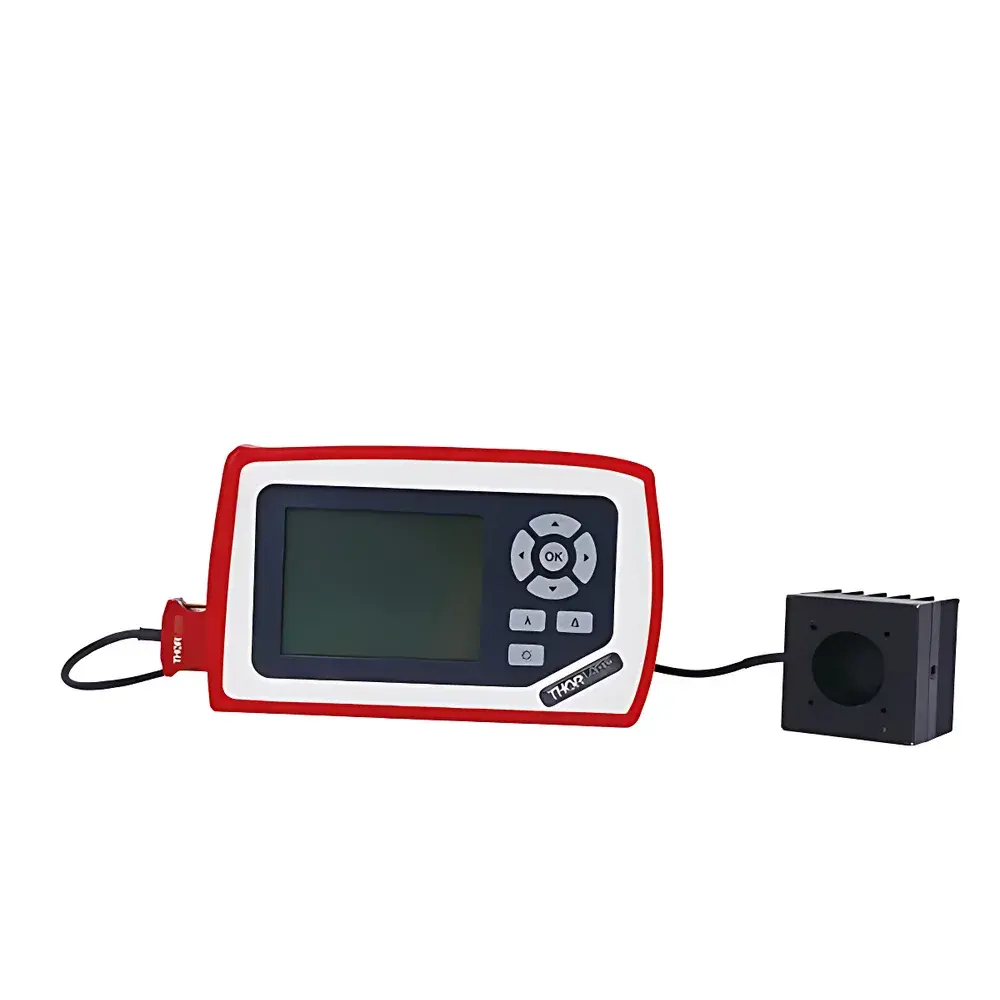
Thorlabs PM100D Digital Power Meter with S425C Thermal Sensor
| Brand | Thorlabs |
|---|---|
| Model | PM100D + S425C |
| Sensor Type | Thermopile-based Power Sensor |
| Wavelength Range | 190 nm – 20 µm |
| Power Range | 2 mW – 10 W |
| Aperture Diameter | 25.4 mm |
| Linearity | ±0.5% |
| Resolution | 100 µW |
| Calibration Traceability | NIST-traceable |
| Response Time | < 0.6 s |
| Cooling Method | Passive convection (detachable heatsink) |
| Uncertainty | ±3% @ 1064 nm, ±5% @ 250 nm – 17 µm |
Overview
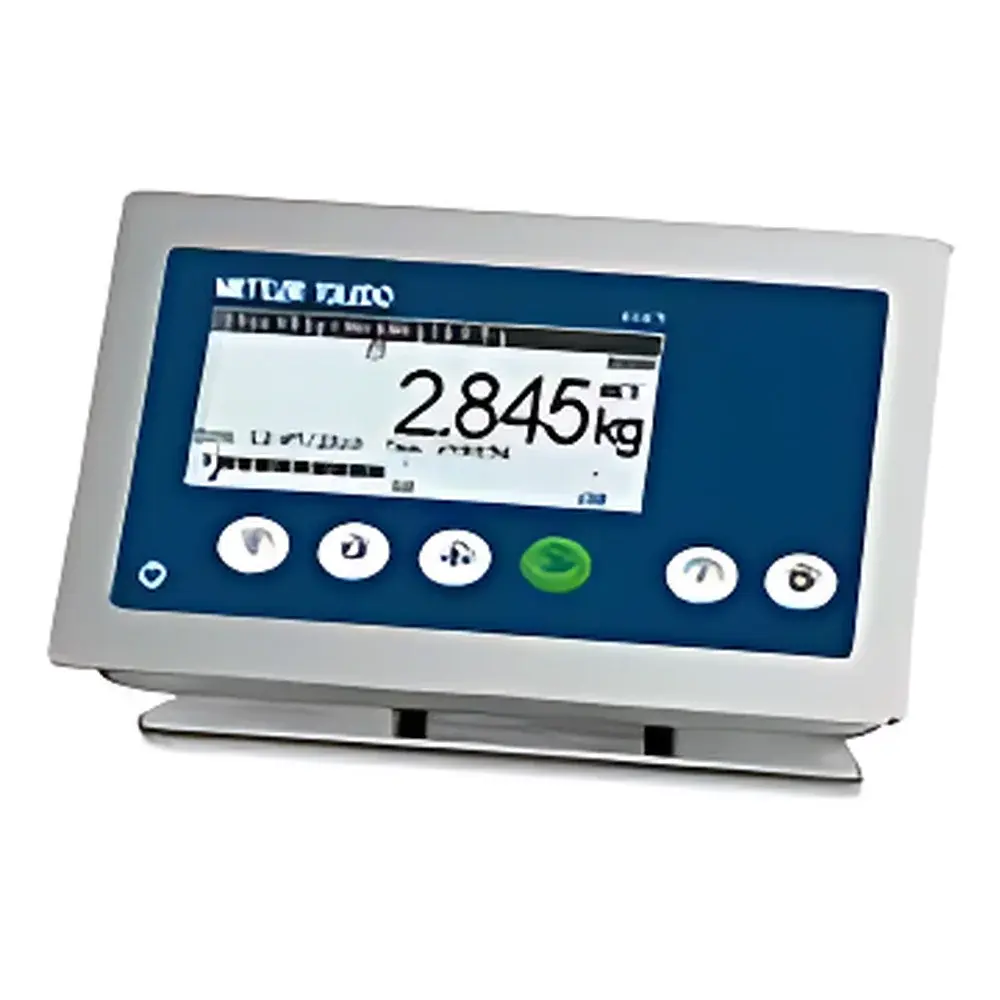
The Thorlabs PM100D Digital Power Meter paired with the S425C thermopile sensor is a precision optical power measurement system engineered for reproducible, traceable radiometric characterization in photonic research and industrial photonics applications. Based on thermoelectric detection principles, the S425C sensor converts incident radiant flux into a proportional voltage signal via a thermopile element, enabling broadband, wavelength-independent power measurement across an exceptionally wide spectral range—from deep ultraviolet (190 nm) to far-infrared (20,000 nm). Unlike photodiode-based sensors, which require wavelength-specific correction factors and exhibit strong spectral responsivity variation, the S425C delivers inherently flat spectral response—critical for quantifying polychromatic sources such as arc lamps, LEDs, supercontinuum lasers, and broadband solar simulators used in photocatalysis, photovoltaic testing, and materials photochemistry. The PM100D meter features a high-resolution 4.3-inch color LCD, intuitive menu navigation, real-time statistics (min/max/avg), and dual-channel capability (when configured with optional second sensor). All factory calibrations are NIST-traceable and documented in individual calibration certificates supplied with each sensor.
Key Features
- Thermopile-based detection ensures uniform spectral responsivity from 190 nm to 20 µm without correction factor dependencies
- 25.4 mm clear aperture enables accurate measurement of collimated and moderately divergent beams without vignetting
- Passive thermal management architecture with detachable aluminum heatsink—designed for integration into custom optical setups or replacement with active (fan- or water-cooled) thermal solutions
- Fast thermal response (< 0.6 s) supports dynamic power monitoring during pulsed or modulated source operation
- High linearity (±0.5%) and resolution (100 µW) facilitate reliable low-power quantification in catalytic reactor irradiance mapping and LED binning
- PM100D meter supports data logging (up to 10,000 points), USB 2.0 and RS-232 interfaces, and Thorlabs’ free PM100D software for real-time acquisition and post-processing
Sample Compatibility & Compliance
The PM100D+S425C system is compatible with continuous-wave (CW), quasi-CW, and low-repetition-rate pulsed light sources operating within its specified power and spectral envelope. It is routinely deployed in ISO/IEC 17025-accredited laboratories for irradiance validation prior to photocatalytic activity assays (e.g., ISO 22197-1 for NO degradation), photostability testing (ICH Q1B), and solar simulator classification per IEC 60904-9. The sensor’s surface-absorber design minimizes reflection losses and eliminates angle-of-incidence dependence up to ±10°, supporting robust measurements under non-ideal beam alignment conditions typical in benchtop reactor configurations. Calibration uncertainty values comply with ISO/IEC 17025 requirements for measurement traceability, and all delivered calibration reports include expanded uncertainties (k = 2) and environmental condition records.
Software & Data Management
Thorlabs provides the PM100D Control Software—a Windows-based application supporting real-time waveform display, statistical analysis, automated calibration file loading, and export to CSV or MATLAB-compatible formats. The software implements audit-trail functionality compliant with FDA 21 CFR Part 11 when used in validated environments (user-configurable electronic signatures, change logs, and session timestamps). Raw sensor output is digitized at 16-bit resolution with internal temperature compensation applied in real time to correct for thermal drift. Firmware updates are field-upgradable via USB; device drivers support LabVIEW, Python (PyVISA), and MATLAB Instrument Control Toolbox for integration into automated test sequences and LIMS workflows.
Applications
- Irradiance mapping and spatial uniformity verification of UV-Vis-NIR light sources in photocatalytic reactor development
- Quantitative dosimetry in photobiomodulation and dermatological light therapy device validation
- Calibration transfer between reference and working standards in metrology labs
- Stability monitoring of laser diodes, superluminescent LEDs, and broadband fiber sources
- Power verification of solar simulators used in perovskite and organic PV cell testing (ASTM E927-20, IEC 60904-9)
- Beam profiling support—used in conjunction with scanning slit profilers or camera-based systems to normalize intensity distributions
FAQ
Is the S425C sensor suitable for measuring pulsed laser energy?
No—the S425C is a power sensor only. For pulse energy measurement, Thorlabs recommends pairing the PM100D with compatible pyroelectric energy sensors (e.g., ES111C, ES220C) and using the meter’s energy mode.
Can the S425C be used without its heatsink?
Yes—its detachable heatsink allows direct mounting into thermal management subsystems; however, maximum rated power must be derated according to the thermal resistance of the alternative cooling solution.
Does the PM100D support analog output for external DAQ systems?
Yes—it provides a 0–5 V analog output proportional to measured power, with user-selectable scaling and offset settings via front-panel menu or software.
How often should recalibration be performed?
Thorlabs recommends annual recalibration for routine laboratory use; more frequent intervals may be required in high-use or regulated environments per internal quality procedures or ISO/IEC 17025 accreditation requirements.
Is firmware update capability available for legacy PM100D units?
Yes—all PM100D meters manufactured since 2012 support firmware upgrades via USB; older units may require hardware revision verification before update.
Related Products