
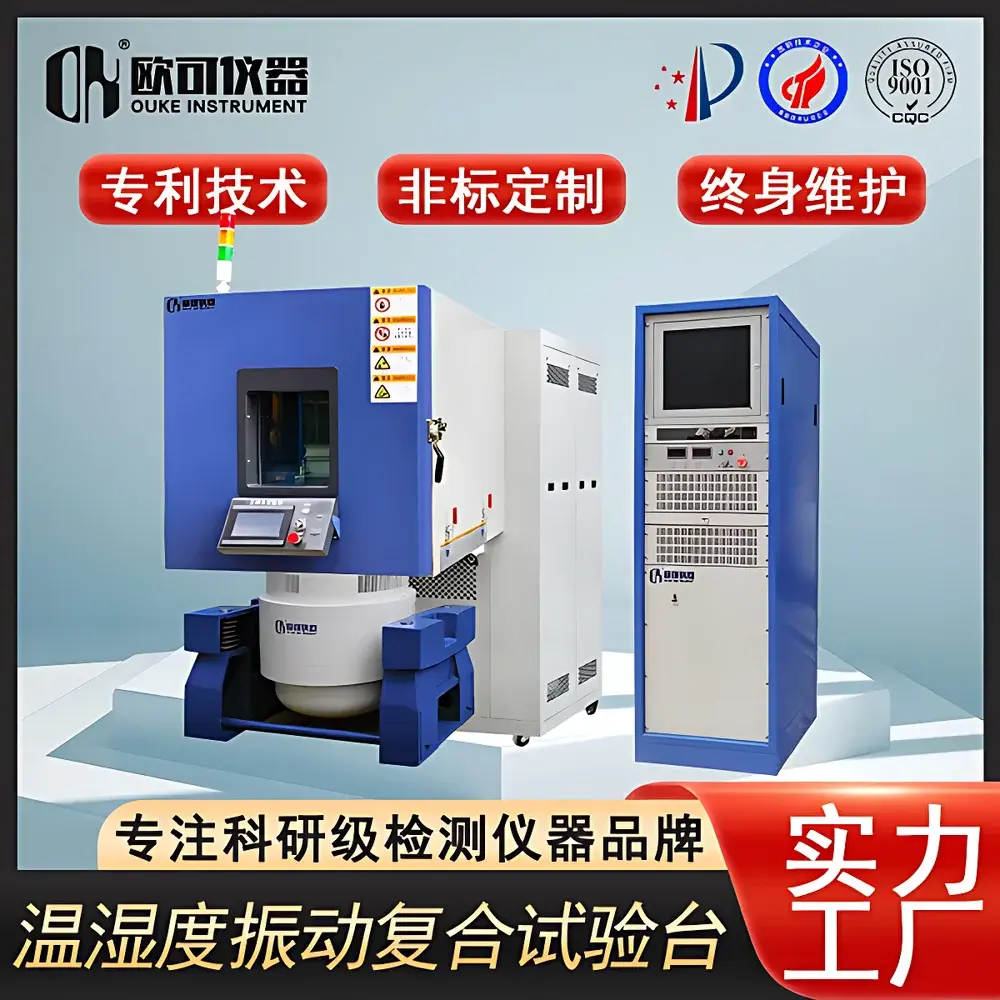
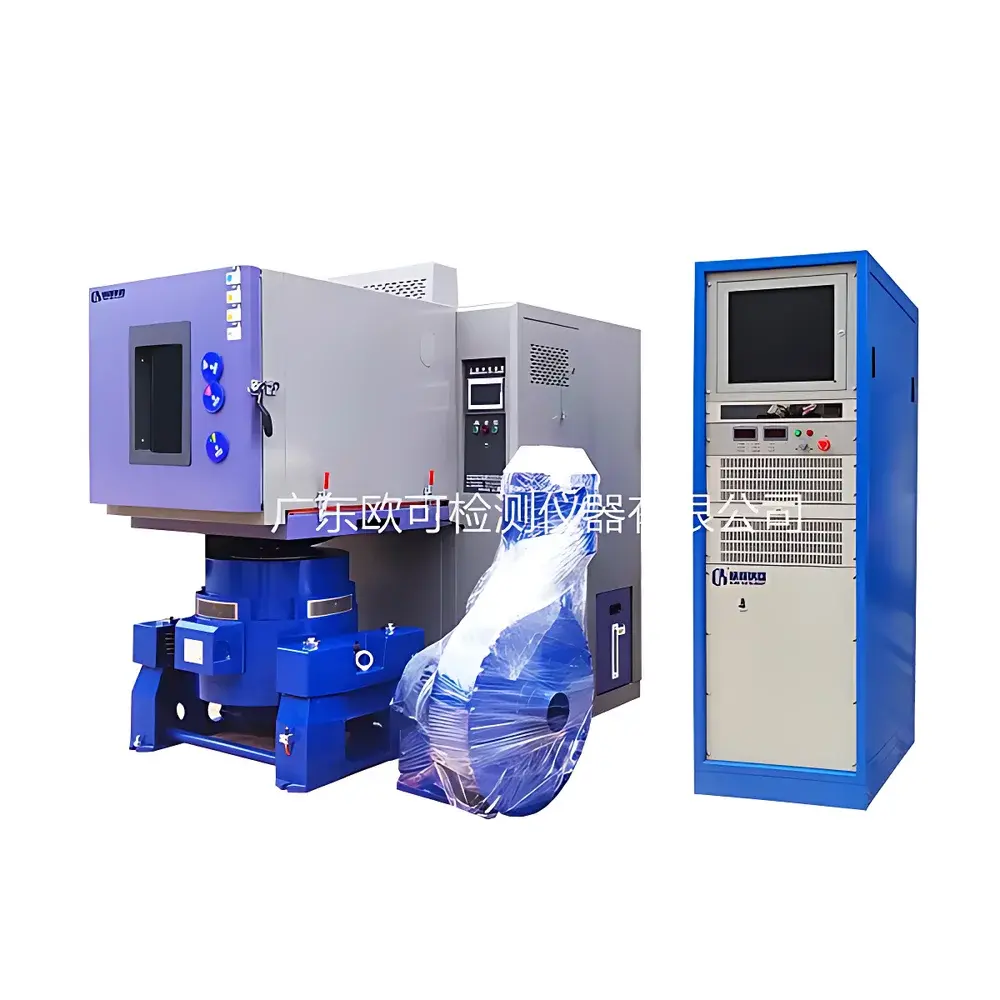
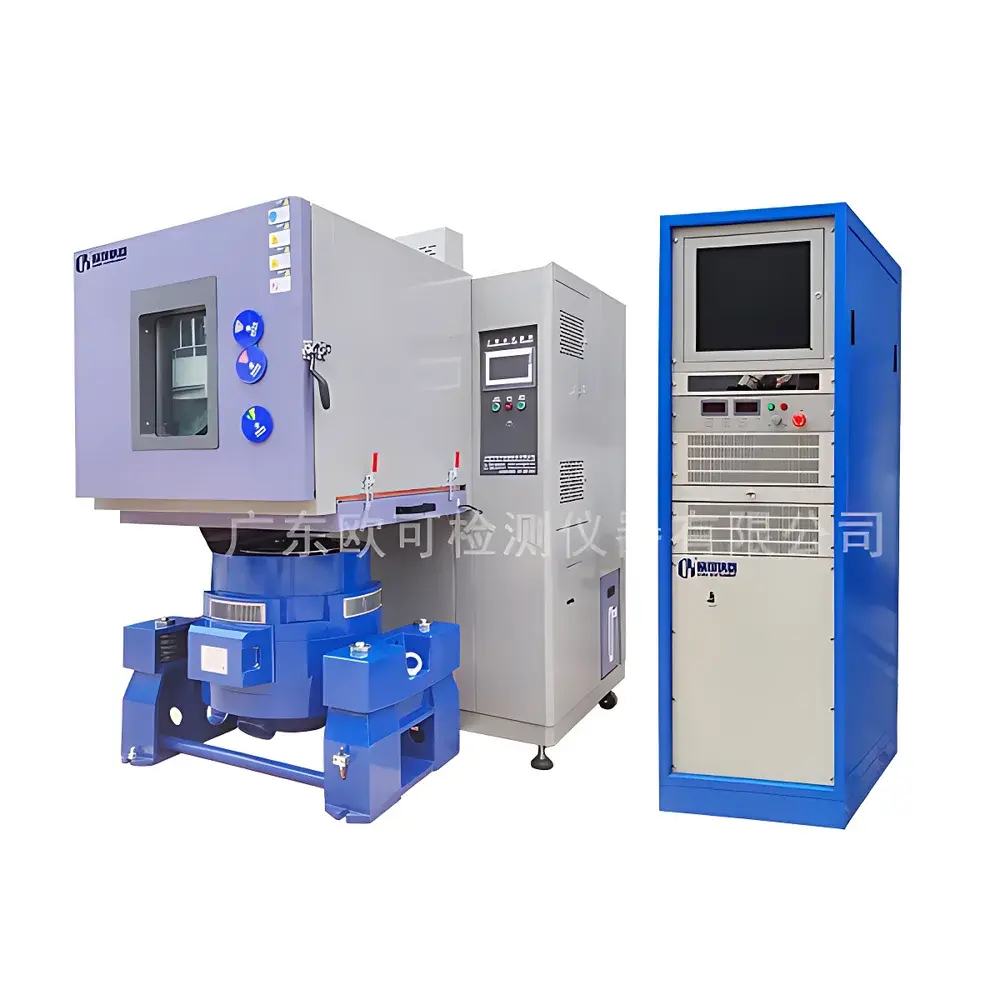
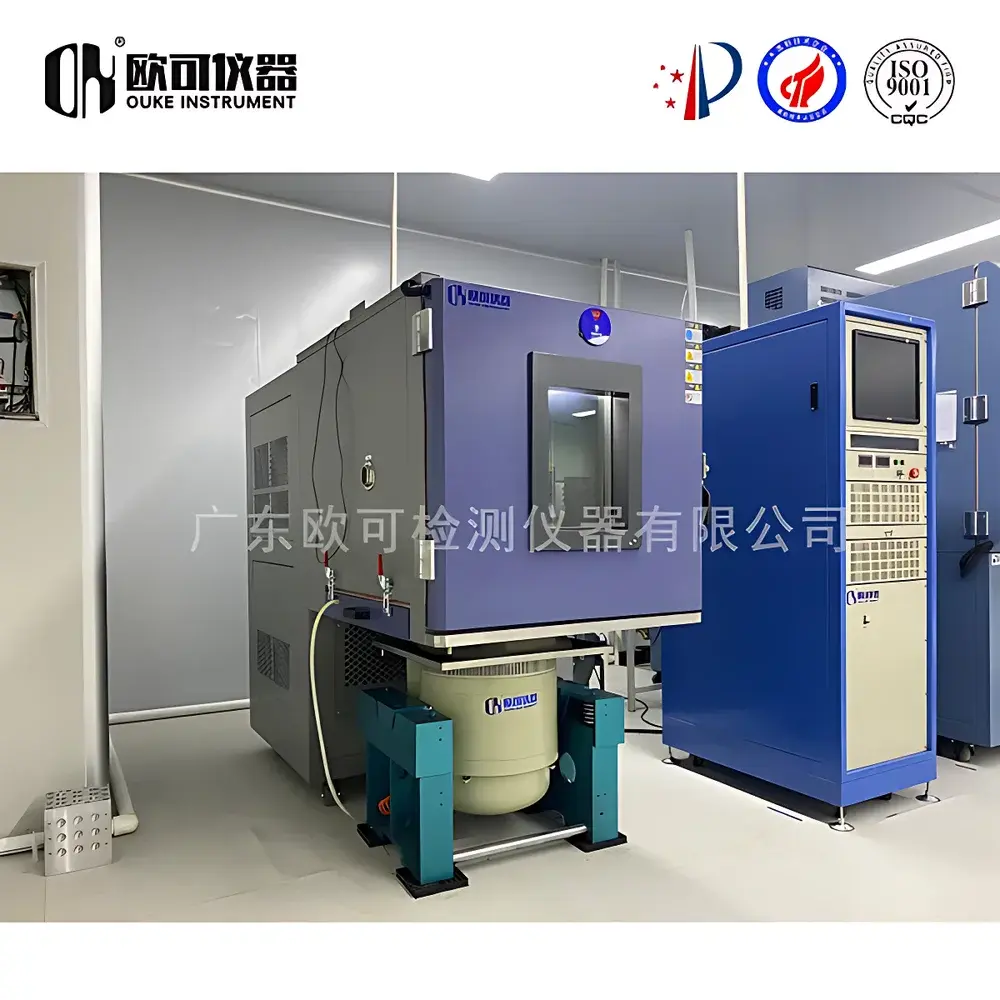
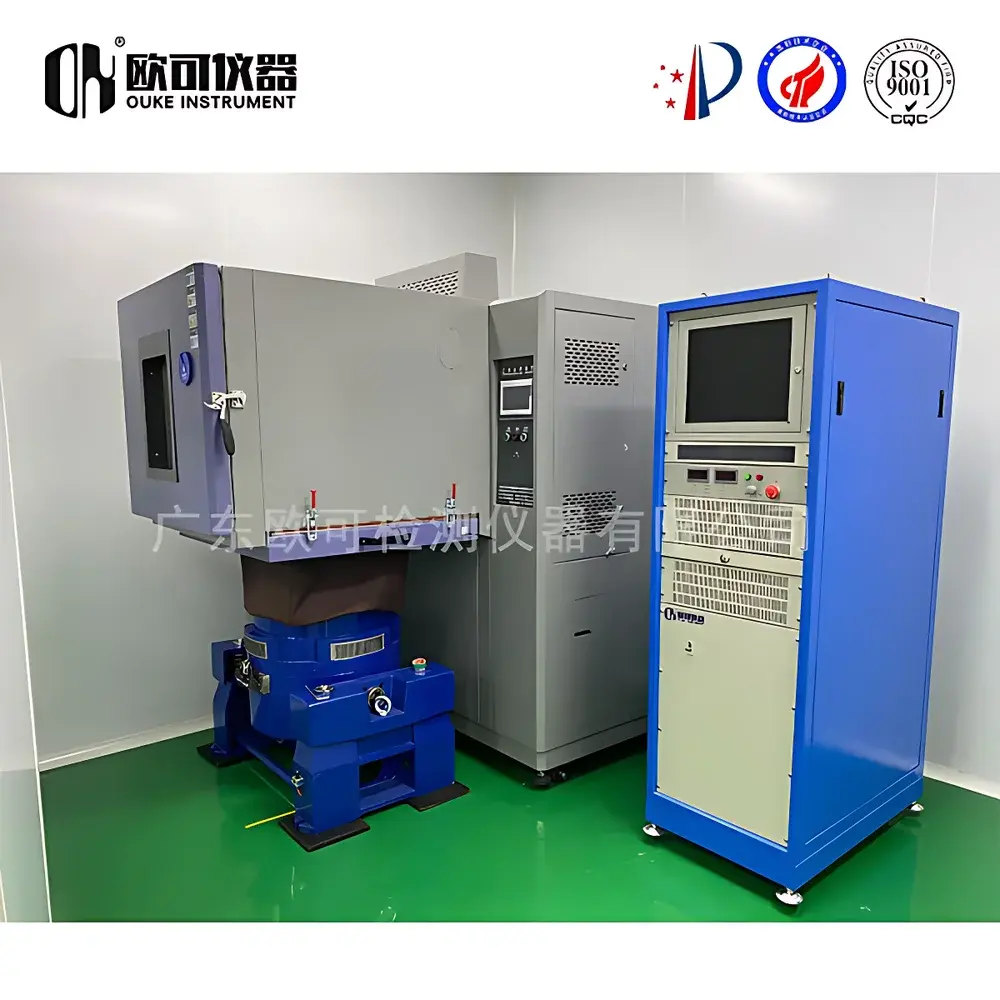
OK Instruments OK-ZTH-1440.269 Combined Temperature-Humidity-Vibration Test System
| Brand | OK Instruments |
|---|---|
| Origin | Guangdong, China |
| Manufacturer Type | Direct Manufacturer |
| Product Origin | Domestic (China) |
| Model | OK-ZTH-1440.269 |
| Temperature Range | −70 °C to +150 °C |
| Humidity Range | 20–98 %RH at 20–85 °C |
| Temperature Ramp Rate | 5 / 10 / 15 °C/min |
| Temperature Uniformity | ≤ ±0.5 °C |
| Standard Load Capacity | 15 kg aluminum mass, 350 W thermal dissipation |
Overview
The OK Instruments OK-ZTH-1440.269 Combined Temperature-Humidity-Vibration Test System is an integrated environmental reliability test platform engineered for simultaneous application of thermal, hygric, and mechanical stresses. It operates on the principle of multi-stress acceleration—leveraging synergistic interactions between temperature cycling, controlled humidity exposure, and broadband vibration—to replicate real-world operational, transportation, and storage conditions in a laboratory setting. Unlike sequential or single-stress testing, this system enables true concurrent stress application: samples mounted on the electrodynamic shaker are subjected to precisely regulated temperature-humidity profiles while undergoing programmable vibration spectra—including sine sweep, random vibration, transient shock, and time-history replay—all within a sealed climatic chamber. The architecture is designed to minimize cross-system interference: thermal isolation of the shaker’s voice coil and magnetic circuit prevents heat leakage into the cold zone; flexible bellows-type sealing interfaces decouple structural vibration transmission to the chamber frame while maintaining pressure integrity across extreme thermal gradients; and a dual-circulation air management system ensures spatial uniformity of both temperature (≤ ±0.5 °C) and relative humidity (20–98 %RH) under dynamic load.
Key Features
- Triple-stress integration: Simultaneous control of temperature (−70 °C to +150 °C), humidity (20–98 %RH), and vibration (electrodynamic shaker with programmable acceleration, frequency range, and displacement limits)
- High-fidelity thermal performance: Programmable ramp rates of 5, 10, or 15 °C/min; refrigeration via cascade compressor system with liquid nitrogen backup option; precision steam-based humidification and desiccant-assisted dehumidification
- Vibration subsystem: High-force electrodynamic shaker with integrated slip table for horizontal-axis extension; compliant mounting interface with low-frequency isolation and high-frequency coupling efficiency
- Robust chamber construction: Interior lined with electropolished 316 stainless steel; double-wall vacuum-insulated design; helium-leak-tested seals for long-term RH stability
- Unified control architecture: Real-time synchronized execution of multi-domain test profiles via deterministic Ethernet-based fieldbus; hardware-level interlock monitoring for over-temperature, over-humidity, excessive vibration amplitude, and coolant flow failure
- Compliance-ready operation: Built-in audit trail logging, user role-based access control, and electronic signature support aligned with GLP and GMP documentation requirements
Sample Compatibility & Compliance
The OK-ZTH-1440.269 accommodates test specimens up to 15 kg (aluminum reference mass) with maximum internal power dissipation of 350 W—sufficient for active electronics, battery modules, and embedded control units. Chamber dimensions support standard automotive ECUs, UAV avionics enclosures, and telecom outdoor base station components. The system is configured to execute test methods defined in MIL-STD-810H Method 520.5 (Combined Environmental Testing), IEC 60068-2-68 (Combined Temperature/Humidity/Vibration), ISO 16750-4 (Road Vehicles – Environmental Conditions), and GB/T 2423.35–2019 (Combined Temperature, Humidity, and Vibration Tests). All controllers comply with IEC 61000-4 electromagnetic compatibility standards, and firmware supports traceable calibration per ISO/IEC 17025 requirements.
Software & Data Management
The OK-TestSuite™ control software provides a unified GUI for defining, validating, and executing multi-dimensional test profiles. Users construct composite stress sequences using drag-and-drop waveform editors for vibration spectra, graphical temperature/humidity ramps, and conditional logic triggers (e.g., “initiate random vibration upon reaching 85 °C”). Raw data—including thermocouple readings, RH sensor outputs, accelerometer signals, and shaker drive current—is acquired at ≥10 kHz sampling rate and stored in HDF5 format with embedded metadata (test ID, operator, calibration certificates, timestamped version history). Export options include CSV, MATLAB .mat, and ASAM MDF4 for downstream analysis in fatigue life prediction tools (e.g., nCode DesignLife) or FEA correlation workflows. Audit logs record all parameter changes, user logins, emergency stops, and calibration events—fully compliant with FDA 21 CFR Part 11 for regulated industries.
Applications
This system serves as a critical validation tool across sectors where field failure modes arise from stress interaction rather than isolated environmental exposure. In aerospace, it verifies avionics box survivability during rapid ascent/descent cycles combined with turbulence-induced vibration. Automotive applications include battery module thermal runaway propagation under road-spectrum vibration at elevated humidity, and ADAS sensor housing seal integrity under cyclic condensation and chassis resonance. For defense electronics, it replicates transport vibration through desert or maritime environments followed by rapid temperature transitions. Renewable energy developers use it to assess inverter enclosure gasket degradation and PCB microcrack initiation in solar inverters exposed to coastal humidity and wind-induced panel flexure. Consumer electronics manufacturers apply it to screen wearables for solder joint fatigue under repeated thermal expansion mismatch during humidified drop-test simulations.
FAQ
What standards does the OK-ZTH-1440.269 support for combined environmental testing?
It natively supports MIL-STD-810H Method 520.5, IEC 60068-2-68, ISO 16750-4, and GB/T 2423.35–2019.
Can the system perform HALT or HASS protocols?
Yes—the controller supports step-stress and limit-search algorithms with real-time pass/fail decision logic based on monitored electrical parameters or optical feedback.
How is vibration isolation managed without compromising thermal integrity?
A hermetically sealed, low-compliance elastomeric bellows isolates the shaker from the chamber structure while permitting full axial stroke; thermal breaks and localized cooling channels prevent heat conduction from the shaker armature into the cold zone.
Is remote monitoring and control available?
Standard Ethernet/IP connectivity enables secure remote access via TLS-encrypted web interface or OPC UA server for integration into enterprise MES/QMS platforms.
What maintenance intervals are recommended for long-term reliability?
Compressor oil and filter replacement every 2,000 operating hours; shaker armature alignment verification annually; humidity sensor recalibration every 6 months per ISO/IEC 17025 accredited procedure.



