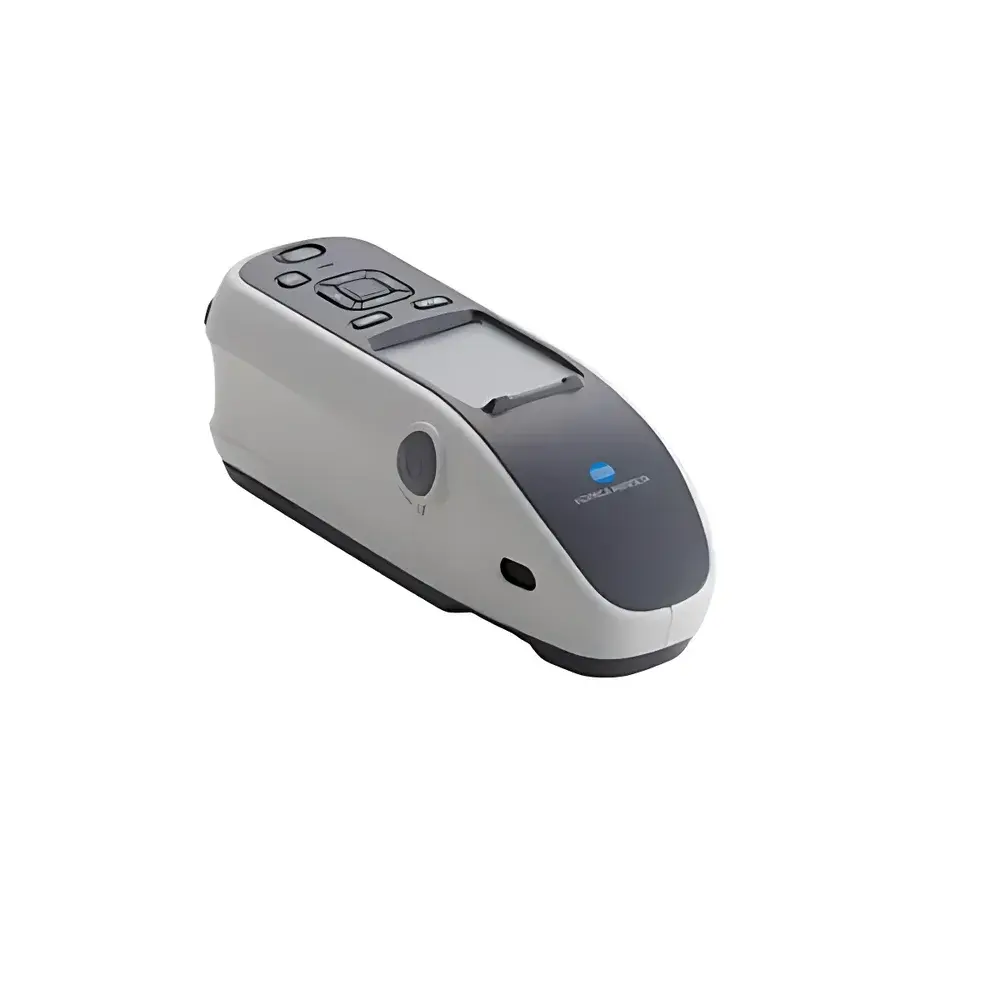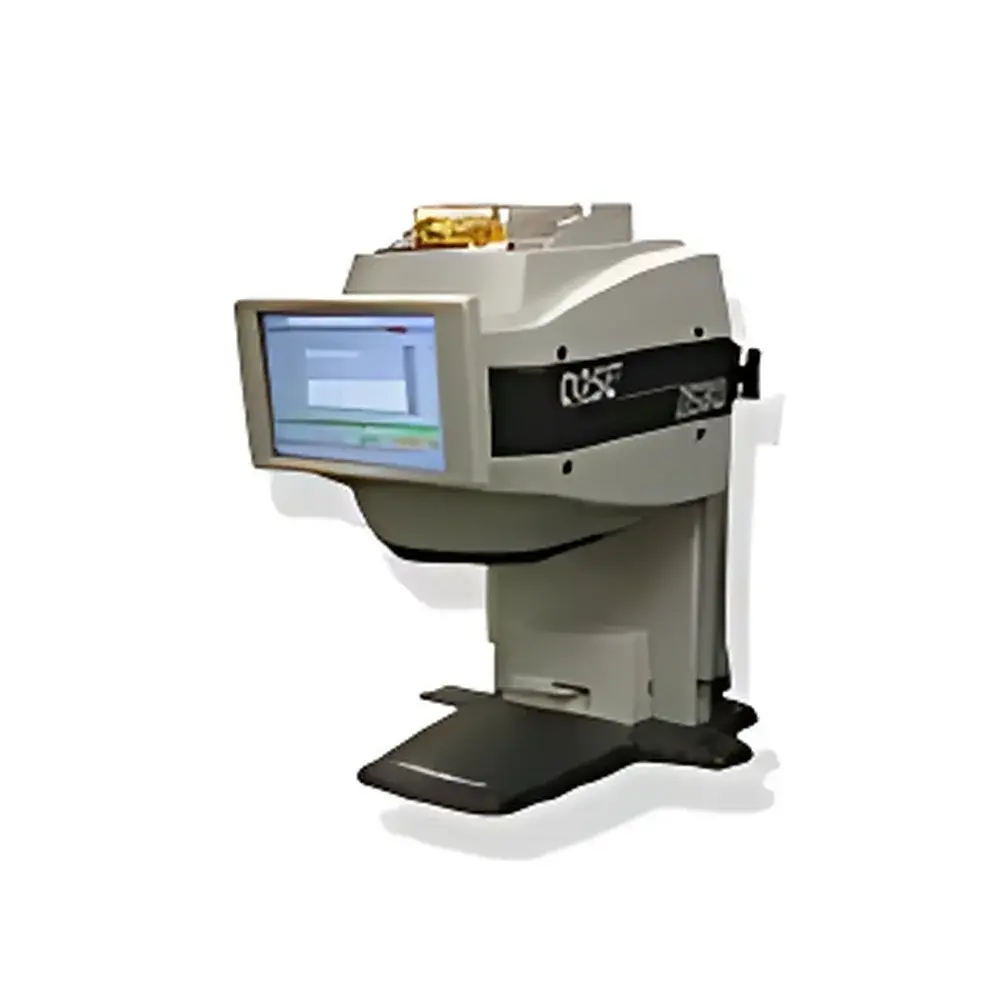
HunterLab D25LT Benchtop Colorimeter
| Origin | USA |
|---|---|
| Manufacturer Type | Authorized Distributor |
| Origin Category | Imported |
| Model | D25LT |
| Pricing | Available Upon Request |
Overview
The HunterLab D25LT Benchtop Colorimeter is a high-precision, 45°/0° geometry color measurement instrument engineered for robust industrial color quality control. Based on the fundamental principle of spectrophotometric reflectance measurement under standardized C-illuminant (CIE Standard Illuminant C), the D25LT employs a continuous tungsten-halogen light source and a large-area optical aperture (9.5 cm / 3.75 in diameter) to deliver exceptional spatial averaging—critical for heterogeneous, textured, or irregularly shaped samples where conventional small-spot instruments yield non-representative readings. Its fixed 2° standard observer angle conforms to CIE 1931 colorimetric conventions, ensuring metrological traceability and inter-laboratory comparability. Designed for operation in demanding production environments—including food processing lines, tile manufacturing facilities, and chemical R&D labs—the D25LT integrates a ruggedized mechanical architecture with an embedded real-time operating system, eliminating reliance on external PCs for routine measurements.
Key Features
- Large 9.5 cm (3.75 in) measurement aperture optimized for coarse, granular, or non-uniform surfaces—ideal for biscuits, potato chips, ceramic tiles, carpet swatches, powdered chemicals, and mineral aggregates.
- Dual-orientation sample port: configurable for upward-facing measurement (e.g., liquids in beakers or Petri dishes) or downward-facing measurement (e.g., flat tiles, rolled carpet, or conveyor-mounted specimens).
- 26.4 cm (10.4 in) full-color capacitive touchscreen display with integrated alphanumeric keypad—enabling intuitive navigation, real-time spectral visualization, and rapid sample ID entry without external peripherals.
- Built-in thermal line printer for immediate hard-copy output of measurement reports, including date/time stamps, sample IDs, color coordinates, delta-E values, and pass/fail status per user-defined tolerances.
- Native USB 2.0 and 10/100 Mbps Ethernet connectivity supporting direct integration into factory networks, LIMS, or MES systems; compatible with HunterLab’s Universal Software Suite (v5.x+) for remote configuration and audit-trail-enabled data export.
- Embedded firmware compliant with GLP/GMP documentation requirements: full measurement history retention (thousands of standards + thousands of samples), timestamped operator logs, and configurable electronic signatures.
Sample Compatibility & Compliance
The D25LT accommodates solid, semi-solid, and liquid samples across diverse physical forms—powders, pastes, slurries, opaque films, matte textiles, and rough-surfaced ceramics—without requiring custom fixtures or calibration offsets. Its 45°/0° optical geometry eliminates directional gloss artifacts common in 0°/45° or d/8° instruments when evaluating textured substrates. The system supports full compliance with ASTM D2244 (Standard Practice for Calculation of Color Tolerances), ISO 11664 (CIE colorimetry standards), and USP (Color Measurement in Pharmaceutical Excipients). All color space calculations—including CIE XYZ, Yxy, CIE L*a*b*, CIE L*C*h°, Hunter Lab, and Rdab—are performed in real time using NIST-traceable algorithms. Delta-E metrics include ΔE*ab, ΔECMC(2:1), ΔE00, and ΔC*ab, with automatic pass/fail flagging against user-defined tolerance limits per color scale or index (e.g., WI E313-96, YI E313-96, Z% for whiteness).
Software & Data Management
The D25LT operates independently via its onboard Linux-based OS but seamlessly interfaces with HunterLab’s Universal Software Suite for advanced data management. This software enables full 21 CFR Part 11 compliance through role-based access control, electronic signature capture, and immutable audit trails for all measurement, calibration, and configuration events. Data exports support CSV, XML, and PDF formats with embedded metadata (instrument ID, firmware version, calibration date, operator ID). Statistical functions include mean, standard deviation, min/max, range, and process capability indices (Cp/Cpk) across batches. Up to 10,000 standard references and 50,000 sample records can be stored internally; networked deployments allow centralized database synchronization and automated report generation for QA/QC dashboards.
Applications
- Food & Beverage: Objective color grading of baked goods (cookies, crackers), snack foods (chips, pretzels), dairy powders, spices, and confectionery coatings—replacing subjective visual assessment with quantifiable, repeatable metrics aligned with USDA and FDA guidelines.
- Ceramics & Building Materials: Consistent batch-to-batch evaluation of glazed tiles, porcelain stoneware, and architectural concrete pigments under controlled illumination conditions.
- Textiles & Carpet: Measurement of dyed yarns, tufted carpets, and nonwovens where surface texture and pile height introduce variability—mitigated by the D25LT’s large-area averaging capability.
- Chemicals & Minerals: Whiteness (WI), yellowness (YI), and hue angle monitoring of titanium dioxide, calcium carbonate, pharmaceutical excipients, and industrial pigments per ASTM E313 and ISO 2470.
- Quality Assurance Labs: Integration into IQ/OQ/PQ validation protocols for color-critical manufacturing processes subject to ISO 9001, IATF 16949, or AS9100 requirements.
FAQ
What is the optical geometry of the D25LT, and why is it suitable for textured samples?
The D25LT uses a 45°/0° circumferential illumination geometry with a large 9.5 cm aperture, providing uniform angular illumination and eliminating hotspot sensitivity—making it ideal for rough, mottled, or directionally reflective surfaces.
Does the D25LT support regulatory-compliant data integrity?
Yes—it meets 21 CFR Part 11 requirements when used with Universal Software Suite v5.3+, offering electronic signatures, audit trails, and secure user authentication.
Can the instrument measure liquids directly?
Yes—the upward-facing port configuration allows stable placement of standard cuvettes or petri dishes containing translucent or opaque liquids, with automatic meniscus compensation enabled in software.
Is calibration traceable to national standards?
All factory calibrations are traceable to NIST SRM 2035 (ceramic tiles) and SRM 2036 (diffuse reflectance standards), with optional annual recalibration services available through HunterLab-accredited labs.
How is color difference (ΔE) calculated and reported?
The D25LT computes ΔE using six industry-standard formulas (ΔE*ab, ΔECMC, ΔE00, ΔE94, ΔEHunter, ΔERdab) and displays pass/fail status relative to user-defined tolerances per color space or index.