
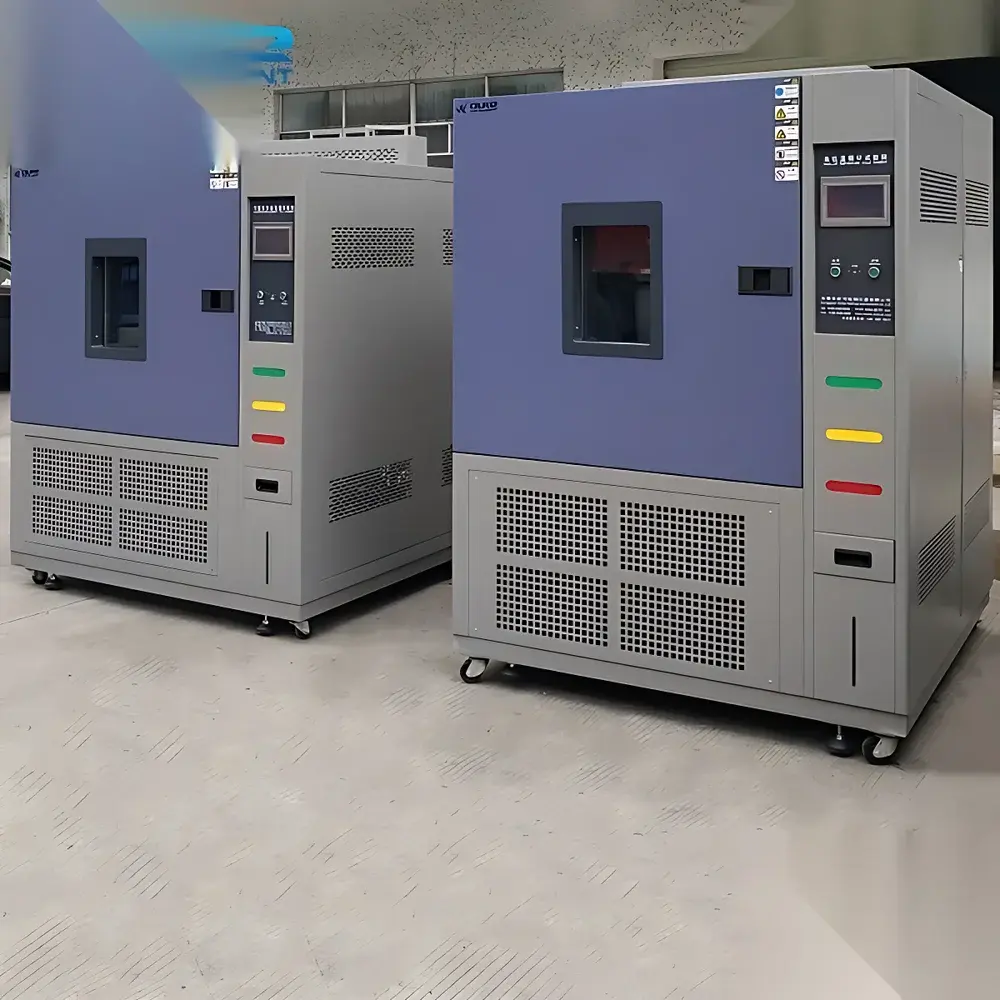
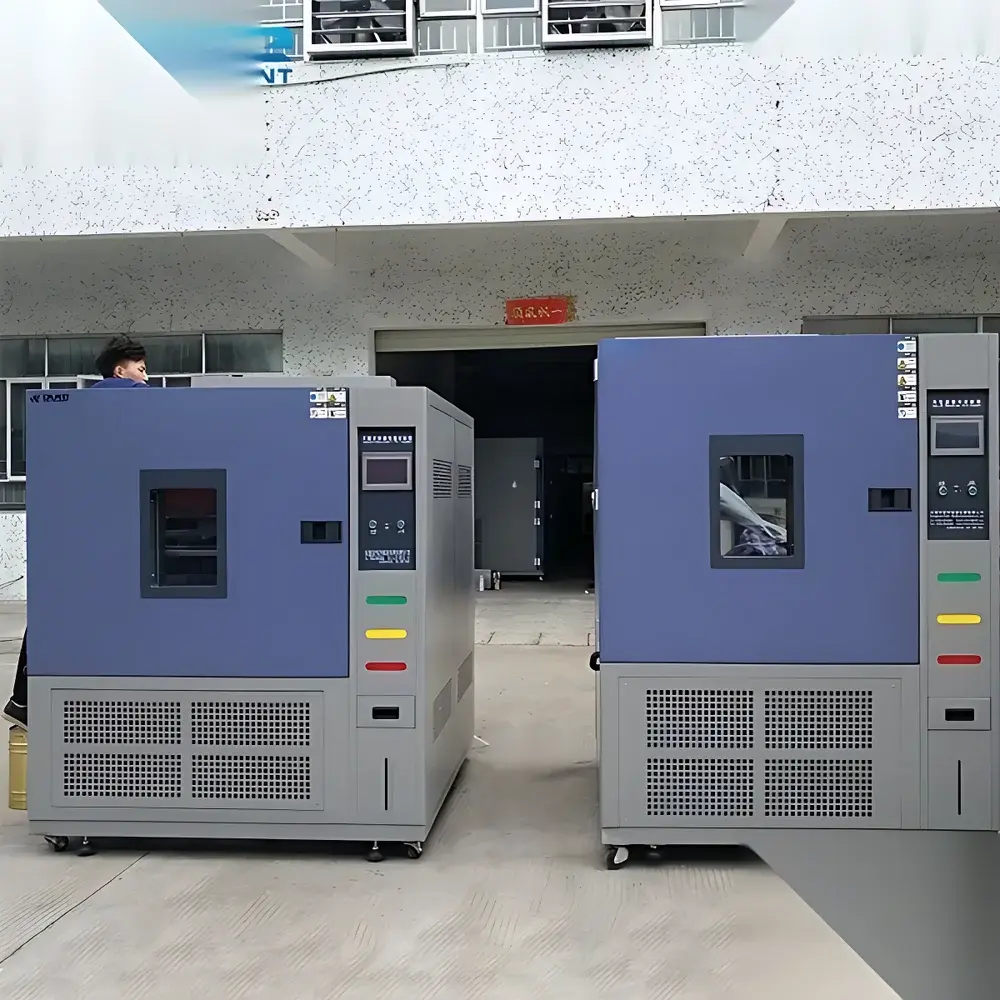
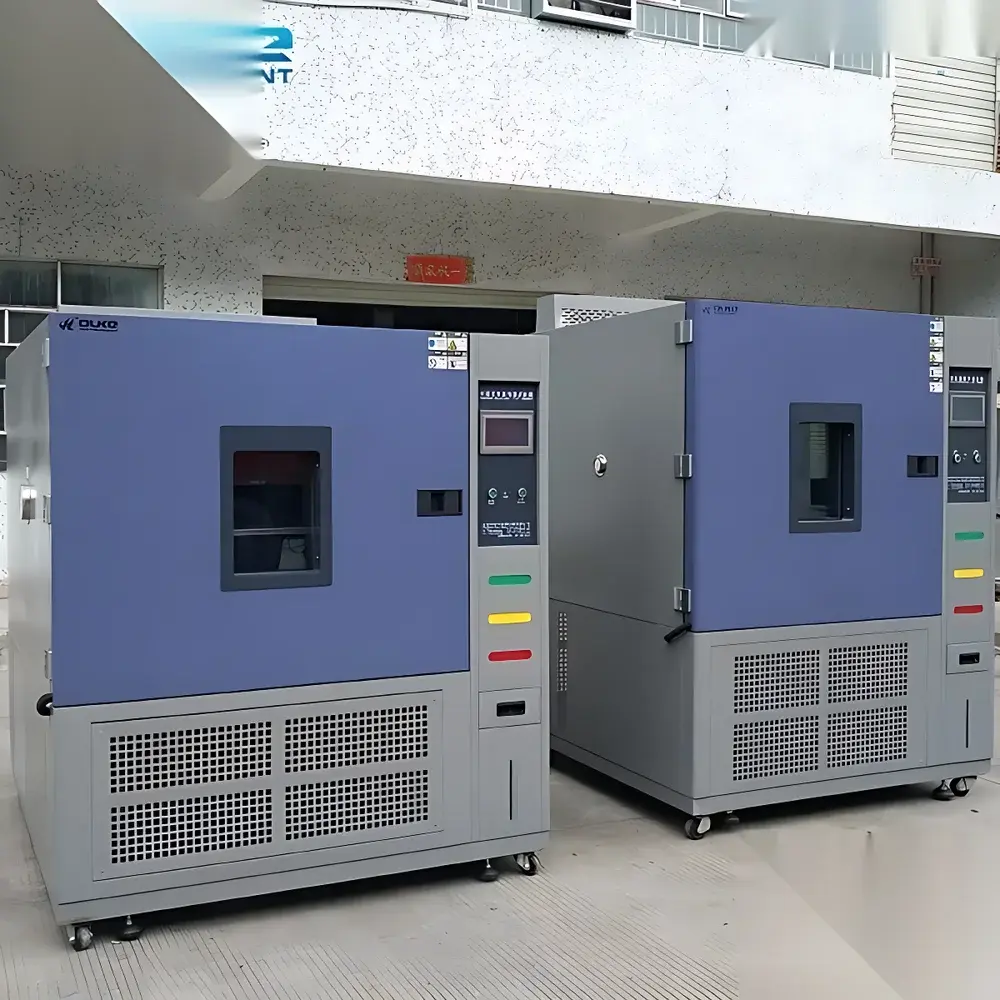
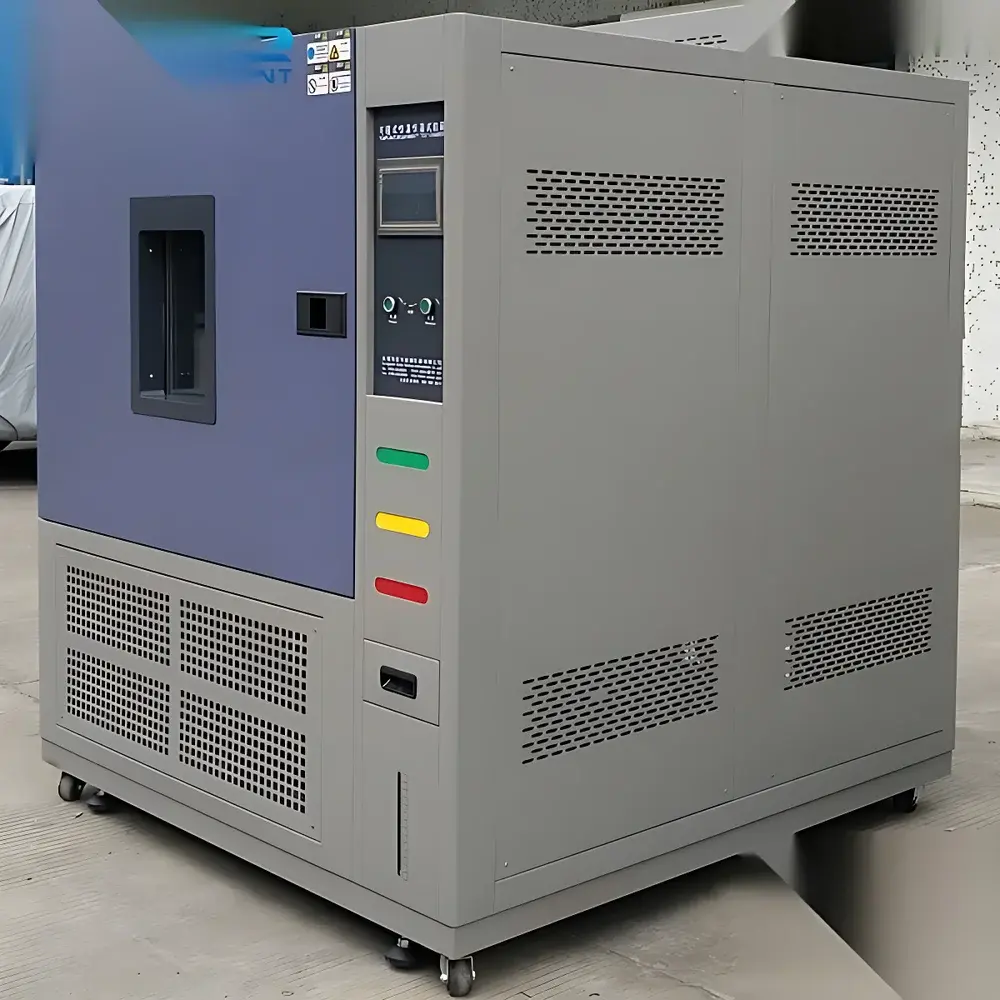
Smart Temperature and Humidity Controlled Environmental Test Chamber
| Brand | OEM / Custom-Built |
|---|---|
| Origin | Imported |
| Manufacturer Type | Authorized Distributor |
| Price | USD 29,800 (FOB Shanghai) |
| Temperature Range | −65 °C to +150 °C |
| Humidity Range | 20–95 % RH |
| Temp. Uniformity | ±2.0 °C |
| Humidity Uniformity | ±3.0 % RH |
| Temp. Fluctuation | ±0.5 °C |
| Humidity Fluctuation | ±1.5 % RH |
| Heating Rate (20 °C → 85 °C) | <60 min (no-load, non-linear) |
| Cooling Rate (20 °C → −40 °C) | <70 min (no-load, non-linear) |
| Power Supply | 3-phase 5-wire AC 380 V, 50 Hz, PE grounded |
Overview
The Smart Temperature and Humidity Controlled Environmental Test Chamber is an engineered environmental simulation system designed for precise, repeatable, and compliant evaluation of material and product behavior under controlled thermal and hygrothermal stress conditions. Based on forced-air convection with dual independent PID-controlled refrigeration and humidification circuits, the chamber delivers stable temperature and relative humidity profiles across a wide operational envelope—from cryogenic −65 °C to high-temperature +150 °C and 20–95 % RH. Its architecture adheres to fundamental thermodynamic principles governing heat transfer, moisture diffusion, and psychrometric equilibrium, enabling accurate replication of real-world environmental exposures encountered during product development, qualification, and reliability testing.
Key Features
- Compact footprint design optimized for space-constrained laboratories—minimum floor area requirement of 1.8 m × 1.6 m (W × D) for standard configurations;
- Large observation window with double-layer low-emissivity tempered glass and anti-fog heating film for uninterrupted visual monitoring without compromising thermal integrity;
- High-capacity stainless-steel water reservoir with drawer-type access for rapid refilling and maintenance-free cleaning cycles;
- Multi-tier safety architecture including over-temperature cutoff, compressor high-pressure protection, humidity sensor fault detection, door interlock, and independent mechanical thermostat backup;
- Intuitive 7-inch color touchscreen HMI with embedded logic for programmable ramp-soak profiles, event logging, and real-time deviation alarms;
- Structural frame fabricated from 8# channel steel grid foundation rated for ≥200 kg/m² static load; inner chamber lined with mirror-finish AISI 304 stainless steel to prevent corrosion under prolonged humid operation;
- Insulation using closed-cell polyurethane foam (density ≥40 kg/m³, thermal conductivity ≤0.022 W/m·K) with seamless pour-in-place application ensuring minimal thermal bridging.
Sample Compatibility & Compliance
This chamber accommodates test specimens up to 600 mm × 600 mm × 600 mm (W × D × H) in standard models—with custom walk-in variants available per IEC 60068-3-5 and MIL-STD-810H dimensional guidelines. It meets or exceeds the performance verification criteria specified in GB/T 5170.2–2017 (temperature equipment calibration), GB/T 5170.5–2017 (humidity equipment calibration), and ISO 16750-4:2010 (road vehicles—environmental conditions). All units undergo factory validation per ASTM E2293–22 (Standard Practice for Verification of Environmental Chambers) and include full traceable calibration certificates for primary sensors (PT100 temperature probes and capacitive RH transducers). The system supports GLP/GMP-compliant operation when integrated with optional audit trail-enabled software.
Software & Data Management
Equipped with PC-based control software compatible with Windows 10/11, the chamber supports automated test sequencing, multi-step profile definition (up to 99 segments), and real-time data export in CSV or Excel format. Optional FDA 21 CFR Part 11 compliance package includes electronic signatures, role-based user permissions, encrypted data storage, and immutable audit logs covering all parameter changes, alarm events, and manual interventions. Data acquisition resolution is 0.1 °C and 0.1 % RH at 1-second intervals, with onboard memory retaining ≥30 days of continuous history. Remote monitoring via Ethernet (TCP/IP) or optional RS485 Modbus RTU interface enables integration into centralized lab management platforms.
Applications
- Accelerated aging and shelf-life prediction of pharmaceutical packaging under ICH Q1A(R2) climatic zones;
- Thermal cycling validation of automotive ECUs per ISO 16750-4 and AEC-Q200 requirements;
- Moisture absorption/desorption analysis of polymer composites and battery cell housings;
- Environmental stress screening (ESS) of printed circuit assemblies prior to burn-in;
- Qualification testing of aerospace avionics enclosures per DO-160G Section 4 (temperature) and Section 5 (humidity);
- Calibration reference environment for metrology labs performing ISO/IEC 17025-accredited humidity-sensitive instrument verification.
FAQ
What is the difference between air temperature change rate and specimen temperature change rate?
Air temperature change rate refers to the average rate at which chamber air reaches target setpoints under no-load conditions, as defined in GB/T 5170.2. Specimen temperature response depends on mass, thermal diffusivity, mounting configuration, and thermal inertia—and is always slower than air rate. Users must validate specimen thermal response separately per test plan.
Is external cooling water required for operation below −40 °C?
Yes. For sustained operation at ≤−40 °C, a chiller-supplied cooling water loop at 10–28 °C and 0.1–0.3 MPa is mandatory to maintain refrigerant condensing efficiency and prevent compressor overload.
Can this chamber be configured for walk-in size and custom interior dimensions?
Yes. Structural engineering support is provided for walk-in chambers ranging from 2 m³ to 50 m³, including reinforced insulated panels, personnel access doors, internal lighting, and optional dehumidification bypass systems.
Does the chamber comply with US FDA or EU CE requirements for regulated industries?
The base unit carries CE marking per Machinery Directive 2006/42/EC and EMC Directive 2014/30/EU. For FDA-regulated applications, optional IQ/OQ documentation packages and 21 CFR Part 11 software modules are available upon request.
How is temperature and humidity uniformity verified during installation qualification?
Uniformity mapping is performed using nine calibrated PT100 and RH sensors placed at standardized locations (center + eight corners) per ISO 16750-4 Annex B. Acceptance criterion is ±2.0 °C for temperature and ±3.0 % RH across the working volume.



