
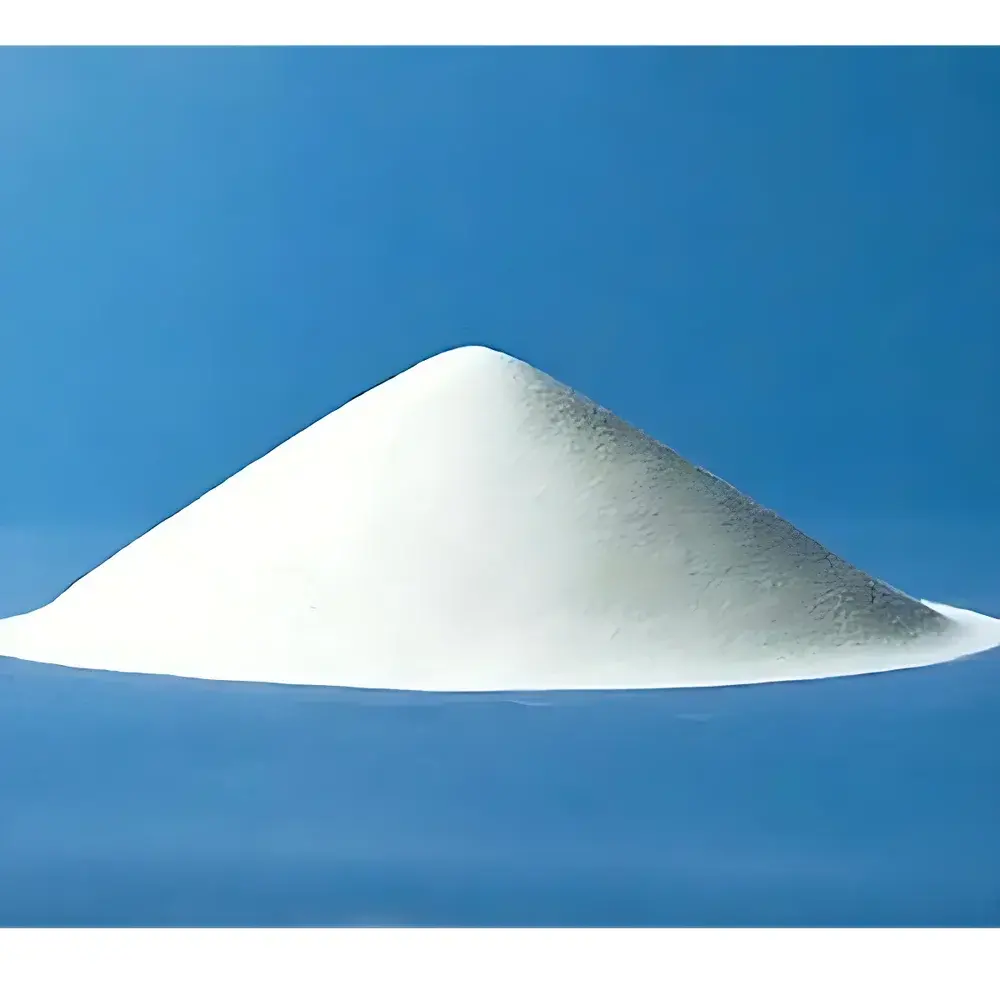
Sumitomo Chemical AKP & HIT Series High-Purity Alumina Powder
| Brand | Sumitomo Chemical / SCAS |
|---|---|
| Origin | Japan |
| Manufacturer Type | Authorized Distributor |
| Origin Category | Import |
| Model | AKP-20, AKP-30, AKP-50, AKP-3000, HIT-60A, HIT-70 |
| Crystalline Phase | α-Al₂O₃ |
| Purity (Al₂O₃) | ≥99.99% (AKP), ≥99.7% (HIT-60A), ≥99.5% (HIT-70) |
| Primary Particle Size | 0.05–0.5 µm |
| D₅₀ (HRA) | 0.1–0.8 µm |
| Specific Surface Area | 3–20 m²/g |
| Bulk Density (Loose) | 0.3–1.1 g/cm³ |
| Bulk Density (Tapped) | 0.6–1.6 g/cm³ |
| Impurities (Si, Fe, Na, Mg, Cu) | ≤10–50 ppm |
| Packaging | 10–20 kg in plastic bags or steel drums |
Overview
Sumitomo Chemical’s AKP and HIT series high-purity alumina powders are engineered for advanced ceramic manufacturing, precision polishing, and functional material synthesis. Produced via controlled hydrolysis of aluminum alkoxides—a proprietary sol-gel process—these powders deliver exceptional chemical homogeneity, narrow particle size distribution, and phase-pure α-alumina crystallinity. Unlike conventionally calcined alumina, the alkoxide-derived route enables precise control over nucleation and growth kinetics, resulting in spherical, non-agglomerated primary particles with minimal internal defects. This structural fidelity translates directly into superior sinterability, enhanced green density uniformity, and predictable densification behavior under both pressureless and hot-pressing conditions. The AKP series emphasizes ultra-high purity and tight particle size control for optical-grade ceramics and single-crystal substrate applications, while the HIT series prioritizes mechanical grinding efficiency and surface finish consistency in fine abrasive formulations.
Key Features
- Phase-pure α-Al₂O₃ crystallinity confirmed by XRD, with no detectable transition-phase residues (e.g., γ-, δ-, or θ-alumina)
- Narrow primary particle size distribution (D₁₀–D₉₀ < 0.2 µm range for AKP-30 and HIT-70), enabling reproducible slurry rheology and tape-casting stability
- Controlled specific surface area (3–20 m²/g) tailored to application requirements—from low-surface-area feedstocks for high-density sintering to high-surface-area variants for catalytic support or reactive sintering aids
- Ultra-low metallic impurity content (Si ≤ 50 ppm; Fe ≤ 30 ppm; Na/Mg/Cu ≤ 10 ppm), critical for electronic-grade substrates and phosphor host matrices where trace elements induce luminescence quenching or electrical leakage
- Consistent tap density and flow characteristics validated per ASTM D6393, supporting automated powder handling and die-filling processes in industrial ceramic production
Sample Compatibility & Compliance
The AKP and HIT series comply with material specifications referenced in ISO 13320 (laser diffraction particle sizing), ISO 9277 (BET surface area determination), and JIS R 1634 (alumina powder for refractories). Each batch undergoes full certificate of analysis (CoA) documentation—including ICP-MS trace element profiling, XRD phase quantification, and BET/N₂ adsorption isotherm validation—ensuring conformance with semiconductor-grade raw material controls. These powders are routinely qualified for use in GMP-compliant manufacturing environments per ISO 13485 and FDA 21 CFR Part 820, particularly in medical ceramic components (e.g., dental implants, orthopedic bearing surfaces) where biocompatibility and long-term in vivo stability are governed by ISO 13779-2 and ISO 6474-1.
Software & Data Management
While inherently a raw material rather than an instrument, Sumitomo Chemical provides comprehensive digital material passports for each production lot. These include QR-coded CoAs accessible via secure portal, full spectral data (XRD patterns, FTIR transmittance curves), and historical batch-to-batch comparability reports generated using LIMS-integrated statistical process control (SPC) algorithms. Traceability extends to raw alkoxide precursor sourcing and reactor residence time logs, supporting regulatory audits under ICH Q5D (quality of biotechnological products) and EU MDR Annex II requirements for critical starting materials.
Applications
- High-performance structural ceramics: Dense, translucent alumina components for semiconductor processing fixtures, laser tube substrates, and wear-resistant nozzles
- Sapphire crystal growth: High-purity AKP-3000 as feedstock for Kyropoulos and Czochralski methods, minimizing inclusion formation and dislocation density
- Advanced abrasives: HIT-60A and HIT-70 in sub-micron CMP slurries for SiC wafers and GaN-on-sapphire epitaxial templates
- Luminescent host materials: Low-sodium, low-iron AKP grades for YAG:Ce phosphors used in high-CRI LED packaging
- Porous filtration media: Controlled grain growth kinetics enabling >99.9% removal efficiency for sub-100 nm particulates in pharmaceutical vent filters
- Thermal barrier coatings: Plasma-sprayed HIT-series powders exhibiting reduced splat porosity and improved thermal cycle resistance vs. conventional fumed alumina
FAQ
What distinguishes AKP from HIT series alumina powders?
AKP grades prioritize ultra-high purity (≥99.99% Al₂O₃) and monodisperse α-phase morphology for optical and electronic applications; HIT grades trade slight purity reduction for optimized mechanical hardness and grinding efficiency in abrasive systems.
Are these powders suitable for nanoparticle dispersion in polymer matrices?
Yes—surface-treated variants (e.g., silane-modified AKP-30) are available upon request to improve interfacial adhesion and reduce agglomeration in epoxy, polyimide, and PEEK composites.
Do you provide particle size distribution data beyond D₅₀?
Yes—full PSD reports (D₁₀, D₅₀, D₉₀, span, and Rosin-Rammler coefficients) are included in every CoA, measured per ISO 13320 using Malvern Mastersizer 3000 with wet dispersion in isopropanol.
Can these powders be used in USP Class VI-certified medical devices?
AKP-20 and AKP-30 have been successfully incorporated into ISO 10993-5 cytotoxicity-tested ceramic components; full biocompatibility dossier support is available under NDA.
Is lot-to-lot consistency guaranteed across multi-year supply agreements?
Yes—Sumitomo Chemical maintains dedicated production lines with real-time in-process monitoring (Raman spectroscopy, online BET), ensuring ΔD₅₀ ≤ ±0.03 µm and ΔSSA ≤ ±0.5 m²/g across consecutive batches.



