
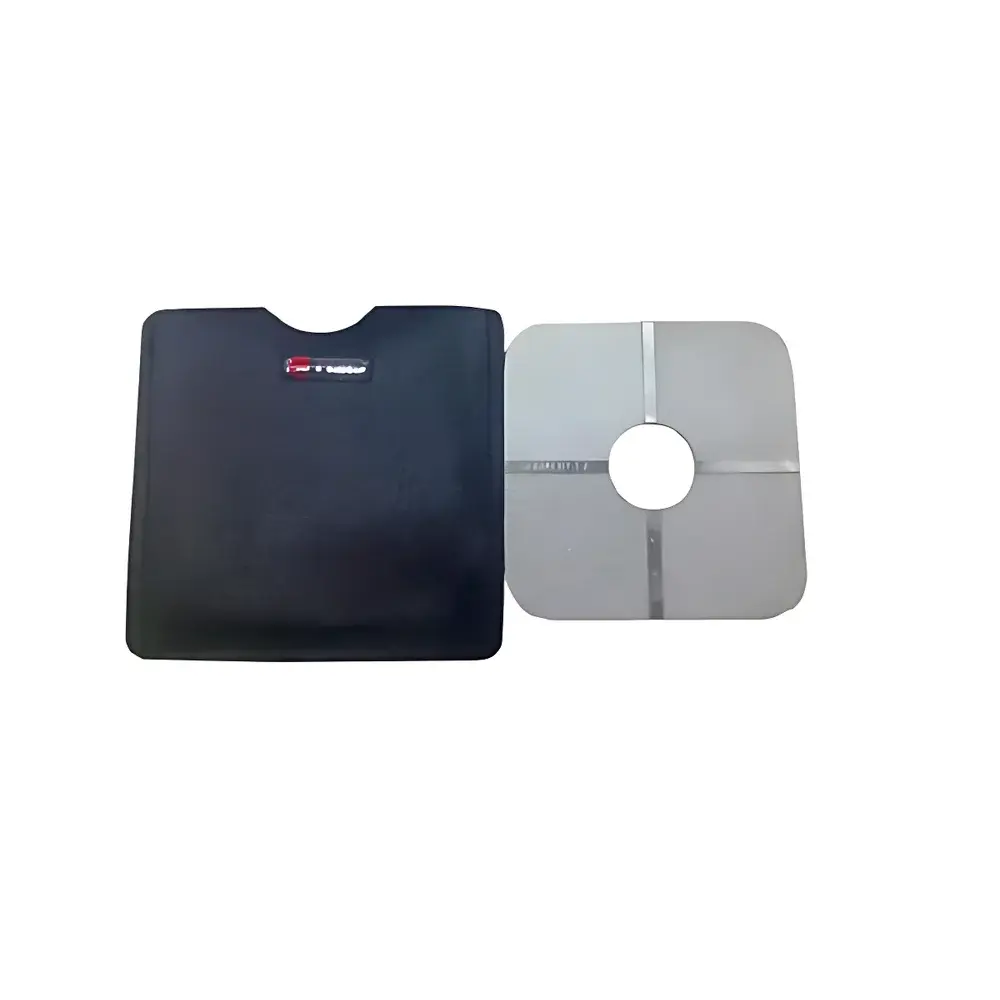
TQC Roughness Comparator Blocks (LD2040 & LD2050)
| Origin | Netherlands |
|---|---|
| Manufacturer Type | Authorized Distributor |
| Origin Category | Imported |
| Model | LD2040 / LD2050 |
| Pricing | Available Upon Request |
Overview
The TQC Roughness Comparator Blocks (Models LD2040 and LD2050) are precision-engineered reference standards designed for rapid, field-ready visual and tactile assessment of surface profile depth following abrasive blast cleaning. These comparator blocks operate on the principle of direct optical and haptic comparison between a prepared steel substrate and certified reference surfaces with defined peak-to-valley (Rt) roughness values. They are specifically calibrated to support compliance verification for near-white metal blast cleaning grades Sa 2.5 and Sa 3 per ISO 8501-1 and SSPC-SP 10, enabling inspectors, coating applicators, and QA/QC personnel to make immediate, repeatable judgments without requiring electronic instrumentation.
Key Features
- Four certified reference surfaces per block, each with traceable peak-to-valley roughness values of 25 µm, 60 µm, 100 µm, and 150 µm — representing fine, medium, and coarse blast profiles
- Manufactured in the Netherlands under strict quality control to ensure dimensional stability, corrosion resistance, and long-term repeatability
- Compliant with ASTM D4417 Method B (visual/tactile comparison) and ISO 8503-2 (surface profile comparators for blast-cleaned steel)
- Dual-model configuration: LD2040 (Grit-type profile) simulates angular abrasive media; LD2050 (Shot-type profile) replicates rounded shot-blast topography
- Robust stainless-steel construction with engraved model identification and calibration year for audit trail integrity
- No power supply, calibration software, or environmental controls required — optimized for use in shipyards, offshore platforms, pipeline yards, and industrial maintenance environments
Sample Compatibility & Compliance
These comparators are intended exclusively for use on ferrous substrates cleaned by dry abrasive blasting methods. They are not suitable for wet blasting, grinding, wire brushing, or chemical etching. Each block is supplied with a manufacturer’s certificate of conformity referencing ISO/IEC 17025-accredited calibration procedures. The 25–150 µm Rt range aligns with the most commonly specified anchor pattern requirements for high-performance protective coatings (e.g., epoxy, polyurethane, and zinc-rich primers). Use is validated under ISO 19840 for coating adhesion prequalification and supports documentation requirements for ISO 9001, ISO 14001, and OHSAS 18001-based quality management systems.
Software & Data Management
The TQC Roughness Comparator Blocks are analog reference tools and do not incorporate embedded electronics, firmware, or data logging capabilities. However, their use integrates seamlessly into digital inspection workflows: observations may be recorded in certified inspection reports (e.g., NACE RP0188, ISO 12944 Part 5), linked to photographic evidence, and archived within cloud-based QA platforms compliant with ISO/IEC 17020 and FDA 21 CFR Part 11 for audit-ready traceability. Calibration certificates include uncertainty budgets and are valid for 24 months under normal handling conditions.
Applications
- On-site verification of blast profile prior to coating application in marine, oil & gas, and infrastructure projects
- Training tool for abrasive blasting operators and third-party inspectors on Sa 2.5/Sa 3 recognition criteria
- Supporting root cause analysis during coating failure investigations involving inadequate surface preparation
- Baseline reference for validating performance of portable stylus profilometers (e.g., Elcometer 224, Mitutoyo SJ-210) in field calibration checks
- Integration into contractor pre-qualification audits and client acceptance testing protocols
FAQ
How often should the comparator blocks be recalibrated?
Recalibration is recommended every 24 months or after any physical damage, excessive wear, or exposure to corrosive environments that may alter surface geometry.
Can LD2040 and LD2050 be used interchangeably?
No — LD2040 replicates grit-blasted angular profiles; LD2050 replicates shot-blasted rounded profiles. Selection must match the actual abrasive media used on site per ISO 8503-1 Annex A.
Do these blocks meet NACE/SSPC requirements?
Yes — they satisfy NACE SP0188 Section 7.3.2 and SSPC-PA 2 Appendix B requirements for visual/tactile comparators when used in accordance with ASTM D4417 Method B.
Is there a digital version or app available?
No — TQC does not offer digital equivalents. The value lies in their physical traceability, immunity to battery failure or software obsolescence, and direct correlation to international standard definitions.
What documentation is provided with purchase?
Each set includes a multilingual user guide, a manufacturer’s certificate of conformity, and a durable storage case with foam inserts to prevent mechanical damage during transport.



