
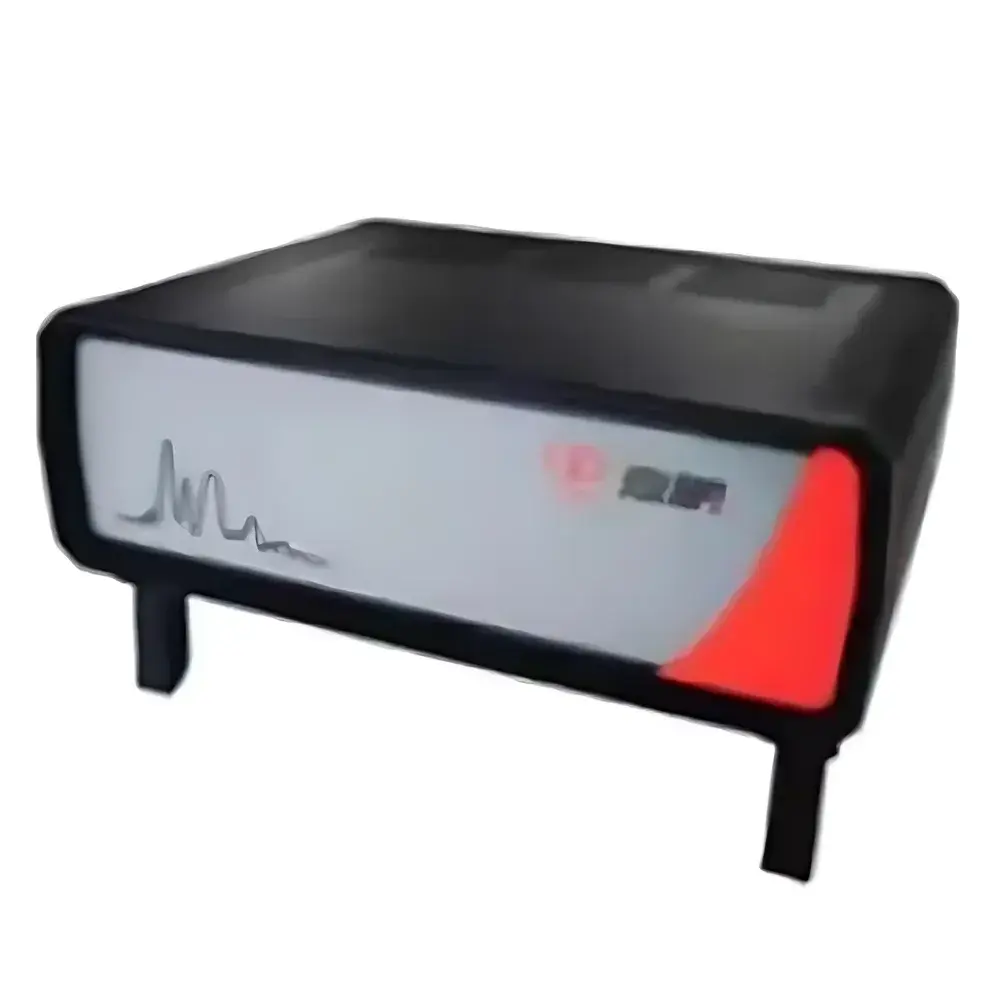
Keebio Blupad Chromatography Workstation
| Brand | Keebio |
|---|---|
| Origin | Shanghai, China |
| Manufacturer Type | Authorized Distributor |
| Country of Origin | China |
| Model | JP-Keebio |
| Purification Principle | Ion Exchange Chromatography (IEX) |
| Gradient Profile | Linear Gradient |
| UV Detection Range | –6 AU to +6 AU |
| Linearity | ±1.5% (0–2 AU) |
| Output Voltage Range | –500 mV to +1500 mV |
| Integration Sensitivity | 1 µV/s |
| Minimum Resolution | 0.1 µV |
| Minimum Peak Width | 0.1 s |
| Input Impedance | >10 MΩ |
| Repeatability | ±0.01% |
| Maximum Sampling Rate | 100 Hz |
| Interface | USB 2.0 |
| Operating Temperature | 4–40 °C |
| OS Compatibility | Windows 10 & 11 |
| Power Supply | 220 VAC |
| Dimensions (L×W×H) | 180 × 140 × 20 mm |
| Weight | 0.7 kg |
Overview
The Keebio Blupad Chromatography Workstation is a dedicated software-hardware integrated data acquisition and processing platform engineered for analytical and preparative liquid chromatography systems—particularly those employed in protein purification workflows utilizing ion exchange chromatography (IEX). Unlike generic data loggers, Blupad is purpose-built to interface with analog-output detectors (e.g., UV-Vis absorbance, conductivity, temperature, and flow sensors) commonly found in benchtop and mid-scale protein purification instruments. Its architecture supports real-time signal digitization, synchronized multi-channel monitoring, and method-driven execution—ensuring traceable, reproducible, and audit-ready operation in regulated environments. The workstation operates as a critical node within the purification control loop: acquiring raw analog signals, converting them into calibrated digital chromatograms, and enabling on-the-fly evaluation of peak elution profiles, fraction collection triggers, and buffer transition fidelity.
Key Features
- Multi-parameter real-time chromatogram generation: Simultaneously acquires and displays UV absorbance (–6 to +6 AU), conductivity (mS/cm), temperature (°C), and flow rate (mL/min) as synchronized time-series curves—with configurable scaling and overlay options.
- Peak-centric analysis engine: Automatically detects, integrates, and quantifies elution peaks using adaptive baseline correction and derivative-based peak boundary identification; supports manual validation and re-integration per ICH Q2(R2) guidelines.
- Method-linked result file architecture: Each run generates a structured .blupad result file containing raw sensor data, executed method parameters (including linear gradient ramp rates, hold times, and valve switching logic), and post-run processing metadata—including integration reports, fraction mapping coordinates, and timestamped audit logs.
- Interactive chromatogram navigation: Enables pixel-level UV value interrogation, horizontal/vertical zooming, panning, export (PNG, CSV, PDF), and direct printing of elution profiles—without loss of original sampling resolution (100 Hz).
- USB-native plug-and-play integration: Requires no external DAQ cards or driver installations; fully compatible with Windows 10 and 11 (64-bit); supports hot-plug detection and automatic device enumeration.
- Low-footprint hardware design: Compact 180 × 140 × 20 mm enclosure with passive thermal management; weighs only 0.7 kg—optimized for integration into laminar flow hoods, cold rooms, or mobile purification carts.
Sample Compatibility & Compliance
Blupad is validated for use with IEX-purified proteins—including monoclonal antibodies (mAbs), recombinant enzymes, and fusion-tagged constructs—where precise gradient delivery and UV-conductivity correlation are critical for resolving charge variants and aggregates. It complies with foundational data integrity requirements outlined in FDA 21 CFR Part 11 (electronic signatures, audit trails, and user access controls) when deployed with appropriate system configuration (e.g., role-based login, password policies, and immutable result file archiving). While not certified to ISO 13485 or GMP Annex 11 out-of-the-box, its deterministic sampling behavior (100 Hz fixed-rate acquisition), traceable calibration records (via voltage-to-AU conversion coefficients), and repeatable peak integration (±0.01% RSD) support GLP-compliant documentation practices across academic, biotech, and contract development labs.
Software & Data Management
The Blupad software implements a hierarchical data model: raw analog inputs are timestamped at acquisition, converted using factory-calibrated gain/offset parameters, and stored in binary-packed format to preserve bit-level fidelity. Processed results—including peak area, retention time, asymmetry factor, and fraction assignment—are embedded as XML metadata within each .blupad file. Export functions support ASTM E1382-compliant CSV templates for LIMS ingestion and third-party statistical packages (e.g., JMP, GraphPad Prism). All user actions—method loading, parameter edits, manual integrations, and file exports—are logged with ISO 8601 timestamps, operator ID, and contextual event descriptors, satisfying basic ALCOA+ principles (Attributable, Legible, Contemporaneous, Original, Accurate).
Applications
- Optimization of IEX gradient slopes and pH transitions during mAb polishing steps
- Monitoring aggregate formation via UV280/UV260 ratio tracking across elution profiles
- Correlating conductivity shifts with salt-mediated elution of His-tagged proteins
- Validating fraction collector trigger accuracy against UV peak maxima
- Generating SOP-compliant purification reports for internal QA review or regulatory submissions
- Teaching chromatographic fundamentals (resolution, selectivity, capacity factor) in university protein biochemistry labs
FAQ
Is Blupad compatible with third-party purification systems beyond Keebio hardware?
Yes—provided the system outputs standard analog signals (0–5 V or 0–10 V) for UV, conductivity, or pressure, and supports TTL-level fraction collector triggering via its USB interface.
Does Blupad support 21 CFR Part 11 compliance out of the box?
It provides foundational capabilities (audit trail, electronic signature prompts, and user authentication), but full Part 11 compliance requires site-specific validation, including documented risk assessment, change control procedures, and periodic backup verification.
Can multiple detectors be acquired simultaneously?
Yes—Blupad natively supports up to four synchronized analog input channels, enabling concurrent monitoring of UV, conductivity, temperature, and auxiliary pressure or pH signals.
What is the maximum duration of an uninterrupted acquisition session?
Limited only by available disk space; typical 8-hour purification runs generate <150 MB of raw data at full 100 Hz sampling.
Is offline reprocessing supported?
Yes—saved .blupad files retain all raw digitized samples and method context, allowing full recalibration, baseline adjustment, and peak reintegration without requiring instrument reconnection.
Related Products




