
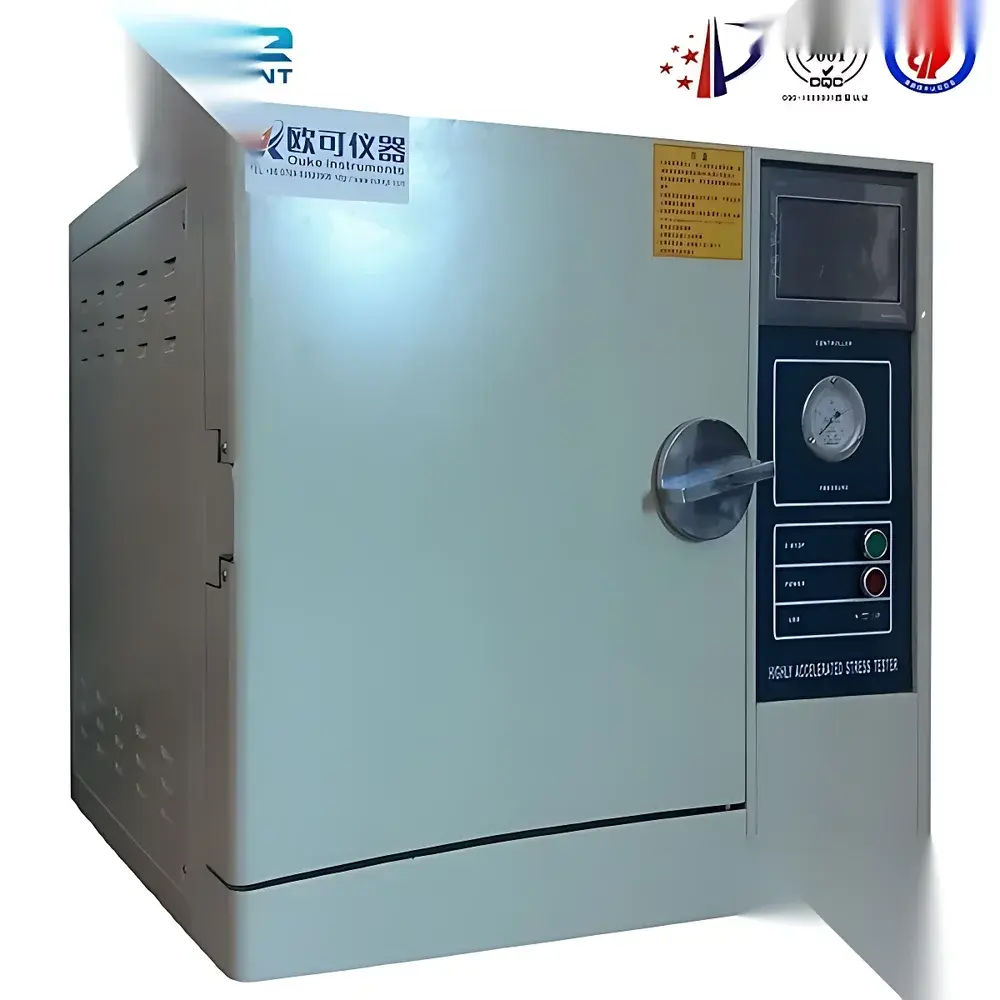
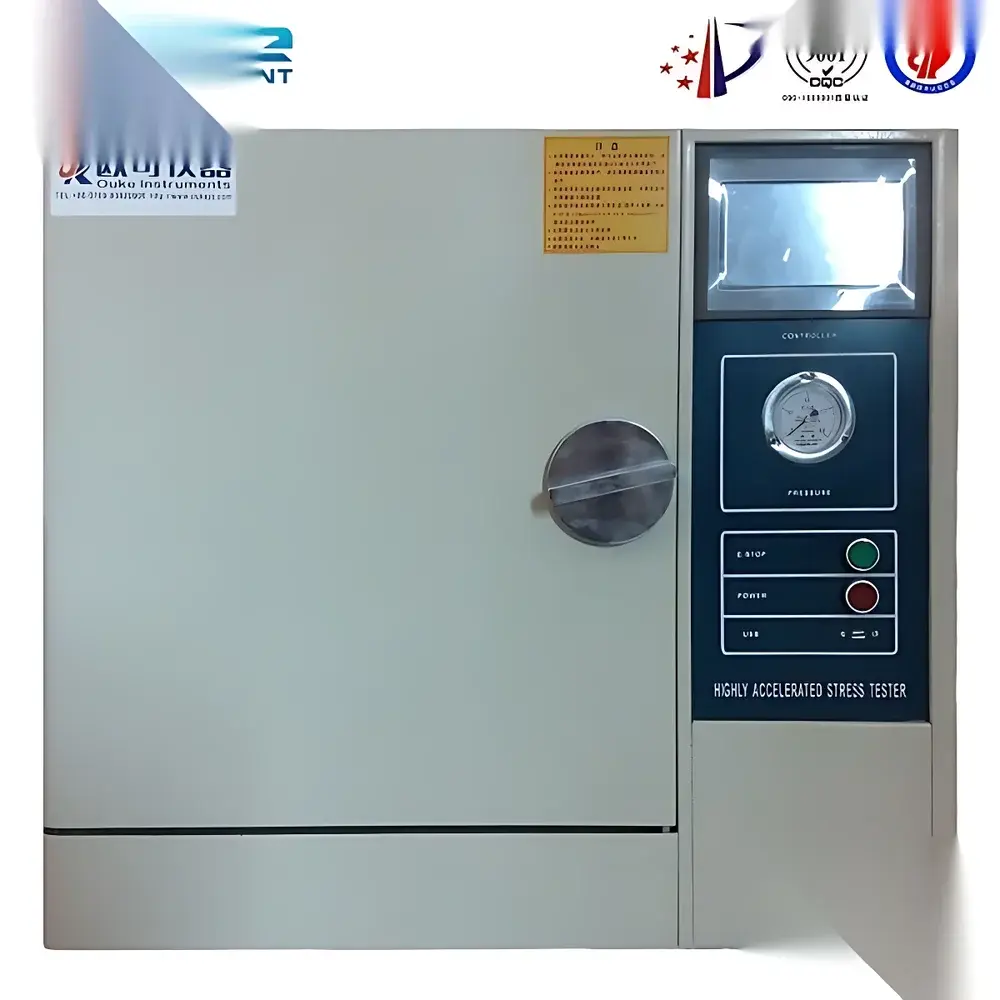
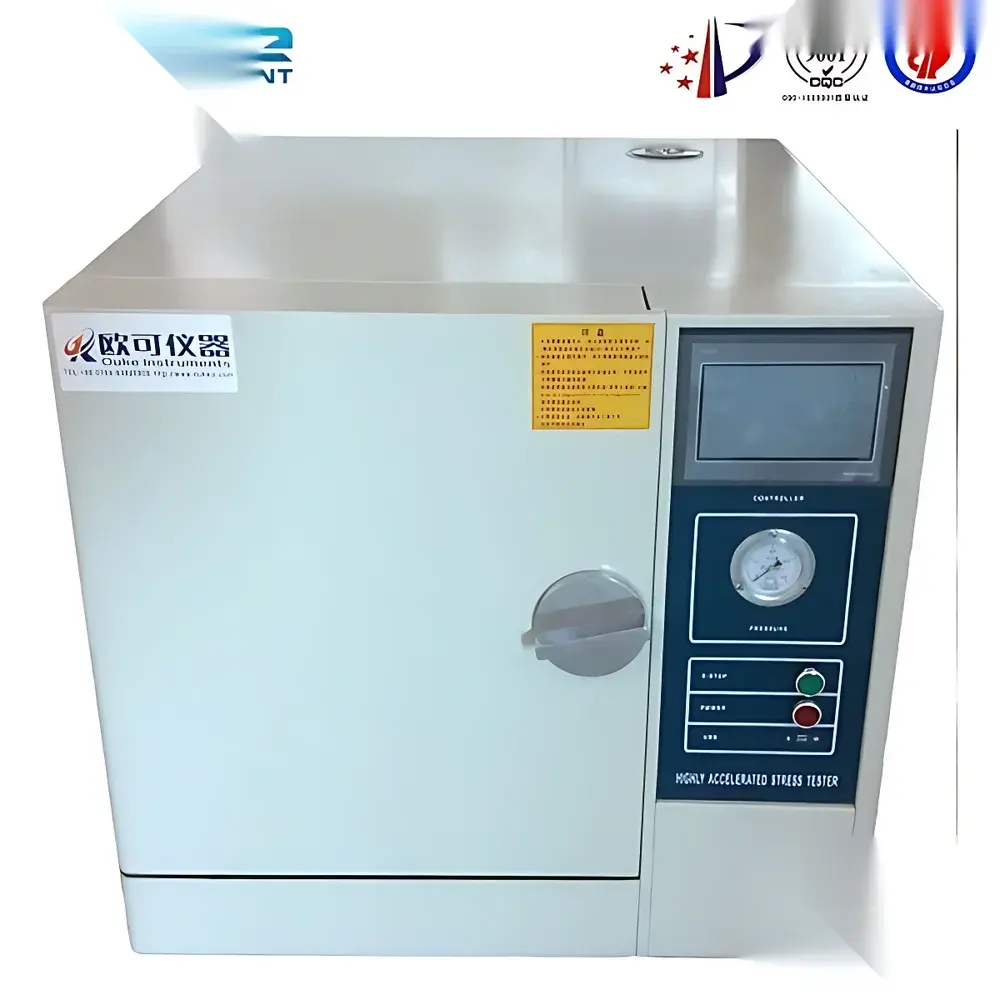
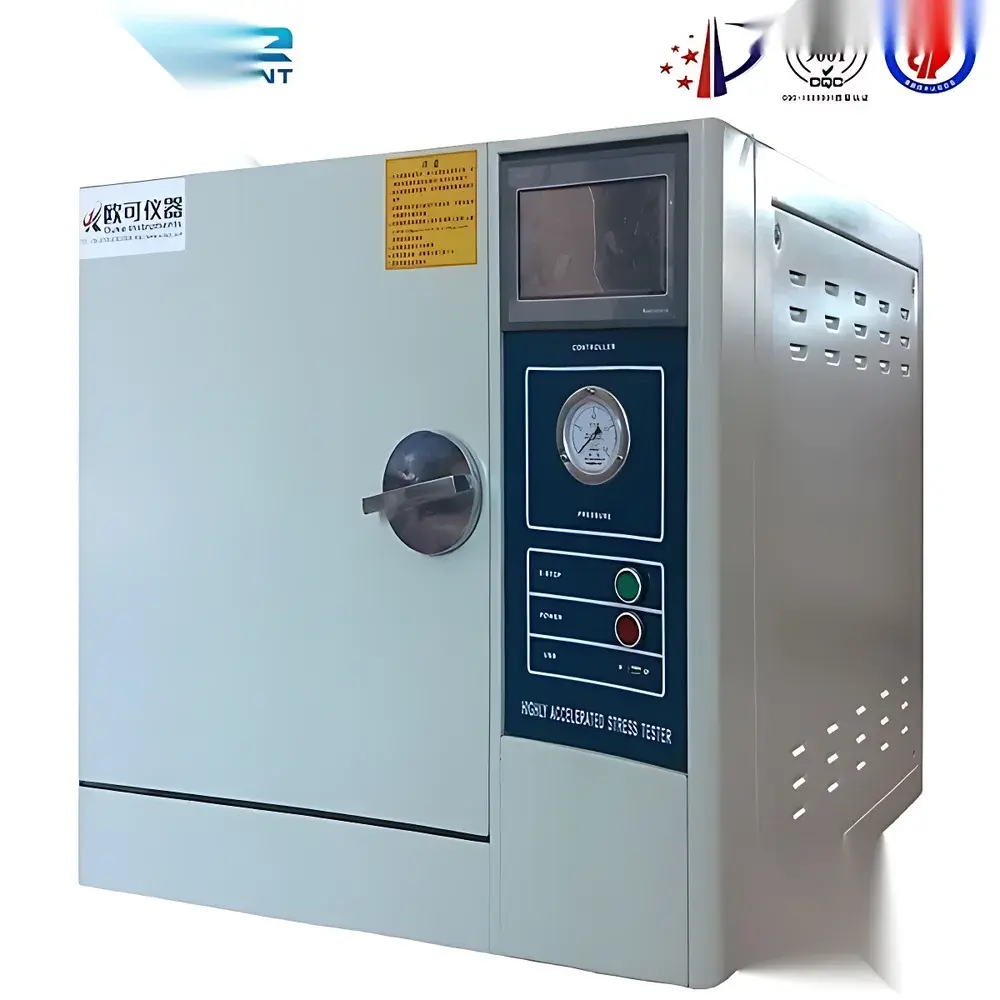
EOKE Saturation Accelerated Life Aging Test Chamber
| Brand | Other Brands |
|---|---|
| Origin | Imported |
| Manufacturer Type | Authorized Distributor |
| Price | USD 14,000 (FOB) |
| Internal Chamber Dimensions | Ø300 mm × L500 mm |
| Max Operating Pressure | 3.2 kg/cm² (abs) |
| Design Burst Pressure | 4.0 kg/cm² (abs) |
| Temperature Range | 100–132 °C (saturated steam) |
| Humidity | 100% RH (steam-saturated environment) |
| Temperature Uniformity | ±0.5 °C |
| Temperature Resolution | 0.1 °C |
| Pressure Uniformity | ±0.2 kg/cm² |
| Test Duration Range | 0–999 hours |
| Pressurization Time to 1.04 kg/cm² | ~45 min |
| Heating Element | Finned seamless stainless steel tube heater with platinum-plated surface |
| Insulation | Rockwool + rigid polyurethane foam |
| Inner Liner Material | SUS316 stainless steel (3 mm thick) |
| Outer Casing Material | SUS316 stainless steel (1 mm thick) |
| Control System | Taiwan-made microcomputer PID controller with PT-100 platinum RTD sensor |
| Display | LED time indicator and analog pressure gauge |
| Safety Features | Dual-circuit high-temp/overpressure protection, automatic & manual pressure release, interlocked anti-opening door under pressure, vapor condensate drip prevention design |
Overview
The EOKE Saturation Accelerated Life Aging Test Chamber is an industrial-grade environmental stress screening system engineered for accelerated reliability validation of electronic components, polymer seals, medical device packaging, and hermetic encapsulations under saturated steam conditions. It operates on the principle of saturation aging—exposing test specimens to precisely controlled, pressurized saturated steam environments where temperature and absolute pressure are thermodynamically coupled per the IAPWS-IF97 steam tables. This enables accelerated hydrothermal degradation mechanisms—including oxidation, hydrolysis, and interfacial delamination—to be induced at elevated temperatures (100–132 °C) while maintaining 100% relative humidity and eliminating condensation-related artifacts. The chamber’s cylindrical inner vessel (Ø300 mm × L500 mm), fabricated from 3-mm-thick SUS316 stainless steel, complies with ASME BPVC Section VIII Div. 1 requirements for pressure containment and resists chloride-induced stress corrosion cracking common in steam-rich environments. Its double-wall construction, insulated with rockwool and rigid polyurethane foam, ensures thermal stability and minimizes external heat loss during extended 400-hour continuous operation cycles.
Key Features
- Cylindrical internal chamber geometry with seamless SUS316 liner—eliminates crevices, facilitates uniform steam circulation, and prevents localized condensate pooling
- Dual-circuit electromagnetic pressure control valve (imported, high-temperature rated) ensuring zero leakage across operational pressure range (1.5–3.2 kg/cm² abs)
- Integrated anti-drip vapor baffle system that redirects latent heat flux away from test samples, preventing direct impingement of condensing steam
- Interlocked door mechanism: mechanical lock automatically engages when internal pressure exceeds 0.1 kg/cm²—physically prohibits opening until full depressurization
- Redundant safety architecture: independent overtemperature cutoff (±2 °C hysteresis), overpressure rupture disc, emergency manual vent, and programmable auto-depressurization sequence
- Continuous-operation water supply: precision float-controlled inlet valve enables unattended 400-hour runs without interruption or manual refilling
Sample Compatibility & Compliance
The chamber accommodates standard IPC/JEDEC-compliant test boards (up to 250 mm × 250 mm footprint), molded plastic housings, silicone gaskets, Tyvek®-laminated pouches, and glass vials sealed with butyl rubber stoppers. Its design aligns with key industry standards including JEDEC JESD22-A108F (Steam Aging), ISO 11607-1 (Packaging for terminally sterilized medical devices), ASTM F1980 (Accelerated Aging of Sterile Barrier Systems), and MIL-STD-810H Method 507.5 (Humidity). All critical process parameters—including real-time pressure, temperature, and elapsed time—are logged with traceable timestamps, supporting GLP/GMP audit readiness and FDA 21 CFR Part 11 compliance when paired with validated data acquisition software.
Software & Data Management
The embedded microcontroller (Taiwan-made, industrial-grade) implements a robust PID algorithm using PT-100 Class A platinum resistance thermometers (IEC 60751) for closed-loop saturated steam temperature regulation. While the base unit features LED-based time display and analog pressure indication, optional Ethernet-enabled data logging modules provide CSV-exportable records with 1-second sampling resolution, configurable alarm thresholds, and digital signature support for electronic records. Audit trails include operator ID, parameter change history, calibration event logs, and deviation alerts—fully compatible with LIMS integration and electronic batch record systems.
Applications
This chamber is routinely deployed for: accelerated shelf-life prediction of pharmaceutical blister packaging; qualification testing of automotive EV battery module gaskets under thermal-hygric stress; validation of solder mask adhesion integrity on PCB assemblies per IPC-TM-650 2.6.25; evaluation of hydrolytic stability in biodegradable polymers (e.g., PLA, PCL); and accelerated corrosion testing of conformal coatings on military-grade electronics. Its ability to maintain stable saturation conditions over multi-day durations makes it especially suitable for failure mode analysis requiring statistical confidence intervals across large sample populations.
FAQ
What steam quality standard does the chamber maintain?
It generates saturated steam per IAPWS-IF97 thermodynamic properties—no superheat, no entrained liquid droplets—verified via calibrated PT-100 sensor placement in the vapor space.
Is the chamber suitable for testing oxygen-sensitive materials?
Yes—optional nitrogen purge cycle (not standard) can be integrated pre-pressurization to reduce dissolved O₂ content in the steam phase.
Can test parameters be exported for regulatory submission?
Yes—when equipped with the optional data logger, raw parameter files comply with ALCOA+ principles (Attributable, Legible, Contemporaneous, Original, Accurate, Complete, Consistent, Enduring, Available) for FDA/EMA submissions.
What maintenance intervals are recommended?
Quarterly verification of PT-100 calibration, semiannual inspection of seal integrity and pressure relief valve function, and annual replacement of insulation moisture barrier layer.
Does the system support remote monitoring?
Via optional RS-485 or Modbus TCP interface—enabling integration into centralized facility SCADA platforms for real-time status and alarm forwarding.



