
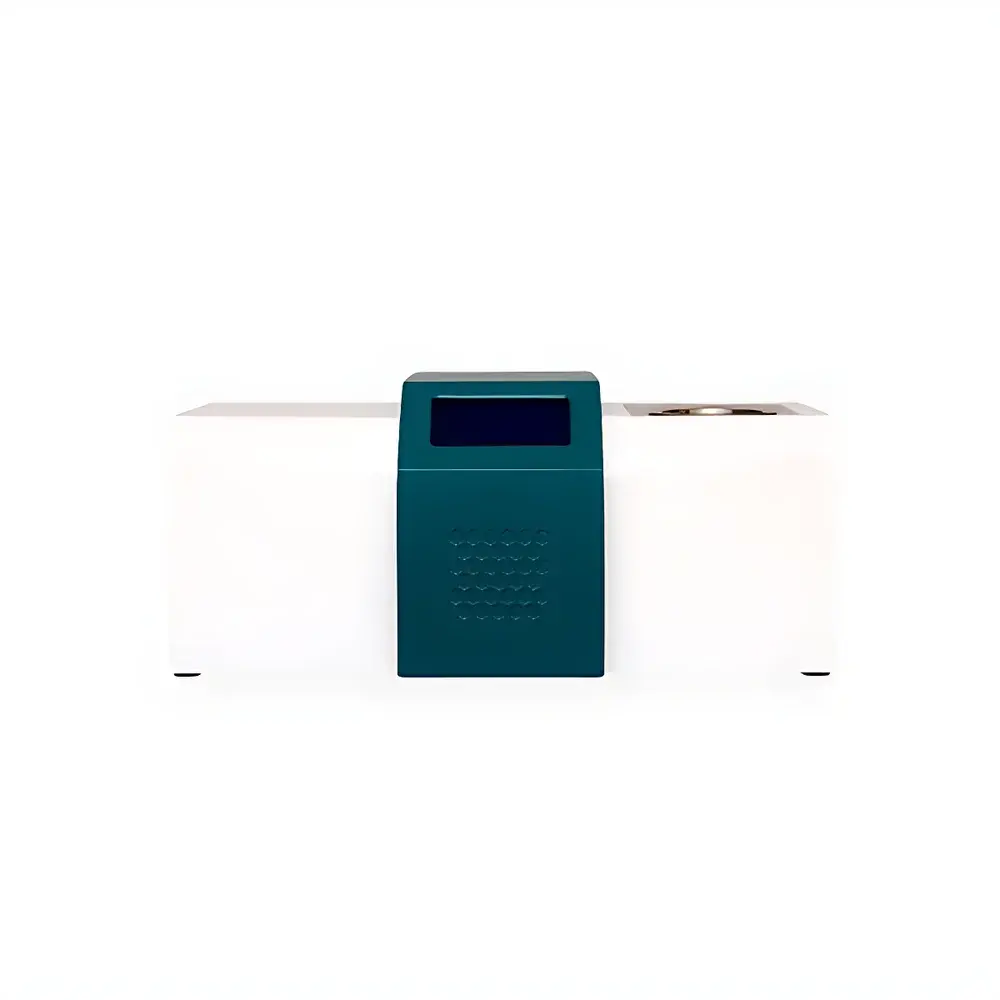
Henven HSC-1 Thermal Flow-Type Differential Scanning Calorimeter
| Brand | Henven |
|---|---|
| Origin | Beijing, China |
| Manufacturer Type | Direct Manufacturer |
| Instrument Type | DSC |
| Model | HSC-1 |
| Sample Capacity | Single |
| Temperature Range | Ambient to 680 °C |
| Programmable Temperature Control | Heating, Isothermal, Cooling |
| Temperature Accuracy | ±0.1 °C |
| Temperature Precision | ±0.1 °C |
| Temperature Stability | ±0.1 °C |
| Heating/Cooling Rate | 0.1–100 °C/min |
| DSC Signal Range | 0 to ±500 mW |
| DSC Minimum Resolution | ±0.1 µW |
| DSC Power Noise | ±0.1 µW |
| DSC Power Accuracy | ±0.1 µW |
| Atmosphere Control | Dual-channel mass flow-controlled gas system (10–200 mL/min), auto-switchable |
| Standard Crucibles | Al₂O₃, high-purity Al |
| Optional Crucibles | Sealed Al (liquid/solid), ZrO₂, quartz, graphite, Pt/Rh |
| Crucible Volume | 0.06 mL |
| Cooling Method | Forced-air |
| Display | Large-character LCD with dual thermocouples (sample + furnace) |
| Interface | RS232 + USB |
| Software Features | Auto-baseline correction, calibration with certified standards (In, Sn, Pb, Zn, Al), automated report generation (Tg, Tm, ΔH, OIT), remote diagnostics & parameter tuning via Internet |
Overview
The Henven HSC-1 is a thermal flow-type differential scanning calorimeter engineered for precision measurement of heat flow differences between a sample and inert reference under controlled temperature programs. Based on the principle of heat flux DSC—where both sample and reference are placed on a single sensor plate within a symmetric furnace—the instrument delivers high reproducibility in enthalpy quantification and transition temperature determination. Its robust architecture supports routine operation across academic research laboratories, polymer development centers, pharmaceutical QC units, and materials science departments requiring compliance with ASTM E794, ISO 11357, and USP <1163> for thermal characterization. Designed for ambient-to-680 °C operation, the HSC-1 enables full thermal profiling of organic and inorganic solids, including polymers, metals, pharmaceuticals, ceramics, and food matrices—without requiring cryogenic cooling or vacuum infrastructure.
Key Features
- Integrated furnace-controller design minimizes thermal lag and signal attenuation, ensuring fidelity in rapid heating/cooling cycles up to 100 °C/min.
- Dual thermocouple monitoring: one measures actual sample temperature; the other continuously tracks furnace block temperature—enabling real-time thermal gradient assessment and improved baseline stability.
- Mass flow-controlled dual-gas system (10–200 mL/min) supports programmable atmosphere switching during a single run, critical for oxidation induction time (OIT) testing per ASTM D3895 and comparative degradation studies under N₂/O₂ sequences.
- Thermal resolution of ±0.1 µW and power accuracy of ±0.1 µW allow detection of subtle endothermic/exothermic events, such as secondary relaxations in amorphous polymers or low-enthalpy crystallization peaks in semi-crystalline systems.
- Self-contained calibration suite includes certified reference materials (indium, tin, lead, zinc, aluminum) for independent verification of temperature accuracy and enthalpy response across the full operating range.
- Remote maintenance capability via secure internet connection permits firmware updates, diagnostic logging, and parameter optimization without onsite technician intervention—supporting GLP/GMP-aligned audit readiness.
Sample Compatibility & Compliance
The HSC-1 accommodates a broad spectrum of solid and liquid samples using interchangeable crucibles: standard alumina and high-purity aluminum, plus optional sealed aluminum (for volatile or reactive species), zirconia (for high-temperature alkaline melts), quartz (UV-transparent applications), graphite (reducing atmospheres), and Pt/Rh (catalytic or corrosive systems). Each crucible holds 0.06 mL, optimized for micro-scale screening while maintaining signal-to-noise integrity. The instrument meets key regulatory expectations for thermal analysis instrumentation: data integrity safeguards include electronic signatures, audit trails, and user-access controls compatible with FDA 21 CFR Part 11 requirements when deployed with validated software configurations. Routine use aligns with ISO/IEC 17025 documentation practices for accredited testing laboratories.
Software & Data Management
The embedded control and analysis software provides full automation from method setup to final reporting. Users define multi-segment temperature programs—including ramp-hold-ramp sequences—and assign gas switching logic synchronized to specific temperature thresholds. Baseline correction is performed algorithmically or manually, with selectable polynomial orders to accommodate complex drift profiles. Quantitative outputs include glass transition onset/midpoint (Tg), melting point (Tm), crystallization temperature (Tc), enthalpy of fusion/crystallization (ΔHf/ΔHc), oxidative induction time (OIT), and kinetic parameters derived from isoconversional methods. All reports are exportable in PDF, CSV, and XML formats, with embedded metadata (operator ID, timestamp, calibration status, instrument serial number) to support traceability and LIMS integration.
Applications
- Polymers: Quantification of Tg, cold crystallization, melt behavior, crosslink density estimation, and thermal stability assessment under inert or oxidative conditions.
- Pharmaceuticals: Polymorph screening, hydrate/anhydrate transitions, excipient compatibility studies, and shelf-life prediction via Arrhenius-based degradation modeling.
- Metals & Alloys: Solidus/liquidus determination, phase transformation kinetics (e.g., martensitic start temperature), and specific heat capacity (Cp) mapping.
- Food Science: Fat crystallization profiling, starch gelatinization enthalpy, and moisture-induced phase changes in dairy or confectionery products.
- Ceramics & Composites: Sintering onset, binder burnout exotherms, and interfacial reaction enthalpies in multilayer systems.
FAQ
What type of DSC technology does the HSC-1 employ?
It uses thermal flow (heat flux) DSC, where sample and reference sit on a common sensor platform within a symmetric furnace—optimized for high sensitivity and baseline repeatability.
Can the HSC-1 perform oxidative induction time (OIT) testing?
Yes, its dual-mass-flow gas system enables automatic switching between inert (N₂) and oxidative (air/O₂) atmospheres during a single run, fully compliant with ASTM D3895 and ISO 11357-6 protocols.
Is calibration traceable to national standards?
Calibration is performed using NIST-traceable reference materials (In, Sn, Pb, Zn, Al); users may document calibration events with timestamps and deviation values for internal QA records.
Does the software support 21 CFR Part 11 compliance?
When configured with role-based user accounts, electronic signatures, and immutable audit logs, the software meets foundational requirements for regulated environments—subject to site-specific validation.
What cooling method is used, and what is the lowest practical operating temperature?
Forced-air cooling enables return to ambient temperature after high-temperature runs; the lower limit is ambient (~25 °C), making it unsuitable for sub-ambient transitions unless paired with an external chiller accessory.



