
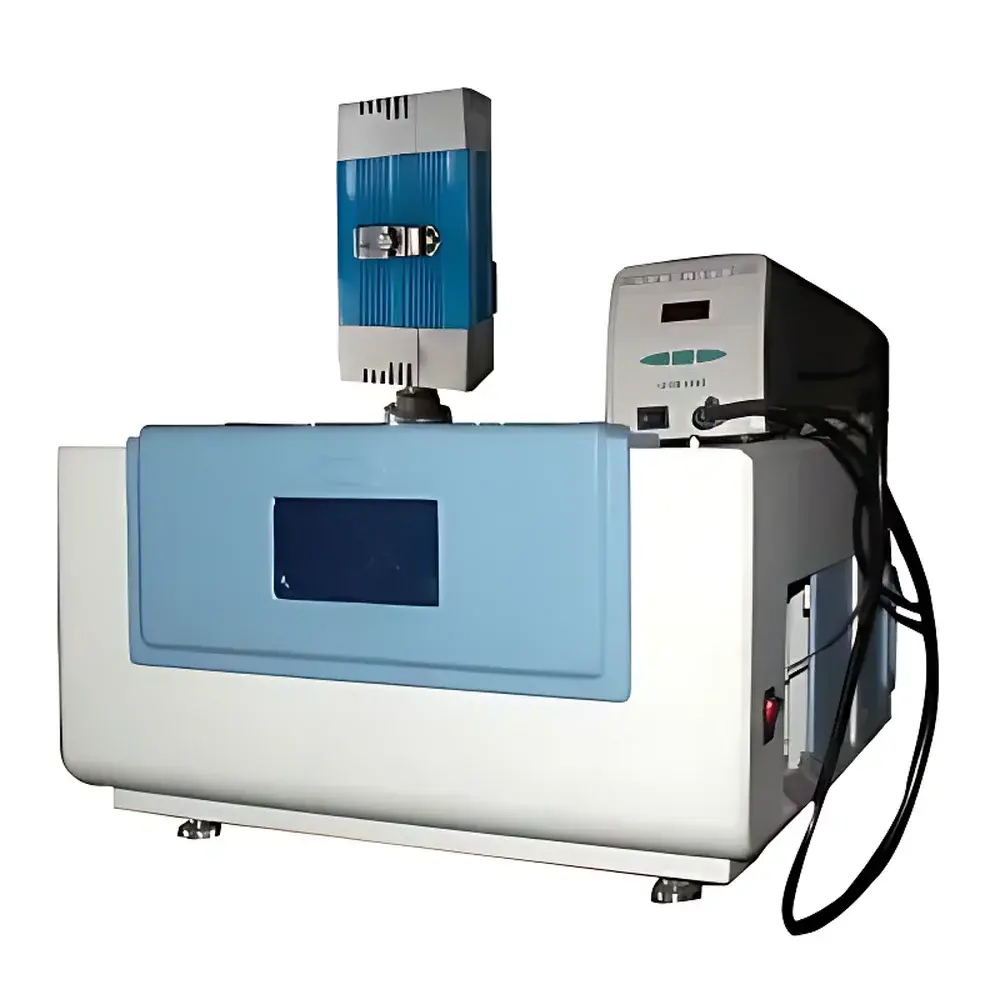
Henven HKG Advanced Thermogravimetric Analyzer
| Brand | Henven |
|---|---|
| Origin | Beijing, China |
| Manufacturer Type | Direct Manufacturer |
| Origin Category | Domestic |
| Model | HKG |
| Price Range | USD 14,000–28,000 |
| Operating Environment | Ambient Pressure |
| Sample Capacity | Single Sample |
| Instrument Type | Dedicated TGA System |
| Temperature Range | RT to 950 °C |
| Temperature Accuracy | ±0.1 K |
| Balance Sensitivity | 0.1 µg |
| Heating/Cooling Rate | Up to 10 K/min (standard), configurable up to 300 °C/min |
| Maximum Sample Mass | 5 g |
| Baseline Drift | ≤0.01% of full scale |
Overview
The Henven HKG Advanced Thermogravimetric Analyzer is a high-precision, vertically integrated TGA system engineered for rigorous thermal stability, decomposition kinetics, and compositional analysis under controlled atmospheric conditions. Based on the fundamental principle of thermogravimetry—continuous monitoring of sample mass as a function of temperature or time under defined gas environments—the HKG delivers reproducible, traceable mass change data with sub-microgram resolution. Its design conforms to core ASTM E1131, ISO 11358, and USP standards for thermogravimetric methodology, supporting GLP-compliant workflows in R&D, quality control, and regulatory submission environments. The instrument features a dual-thermocouple architecture: one continuously monitors furnace temperature (active or idle), while the second directly measures sample temperature during operation—enabling accurate kinetic modeling and eliminating furnace–sample thermal lag artifacts.
Key Features
- High-stability vertical microbalance with 0.1 µg sensitivity and ≤0.01% full-scale baseline drift over extended runs (e.g., 12+ h at 900 °C).
- Optimized ceramic-heated furnace delivering rapid, uniform heating up to 950 °C with ±0.1 K temperature accuracy and programmable ramp rates from 0.1 to 300 °C/min.
- Triple-channel mass flow controller (MFC)-based atmosphere system enabling automatic, sequential switching among inert (N₂, Ar), oxidizing (air, O₂), or reactive gases—including customizable corrosion-resistant MFC modules for HCl, SO₂, NH₃, or HF service.
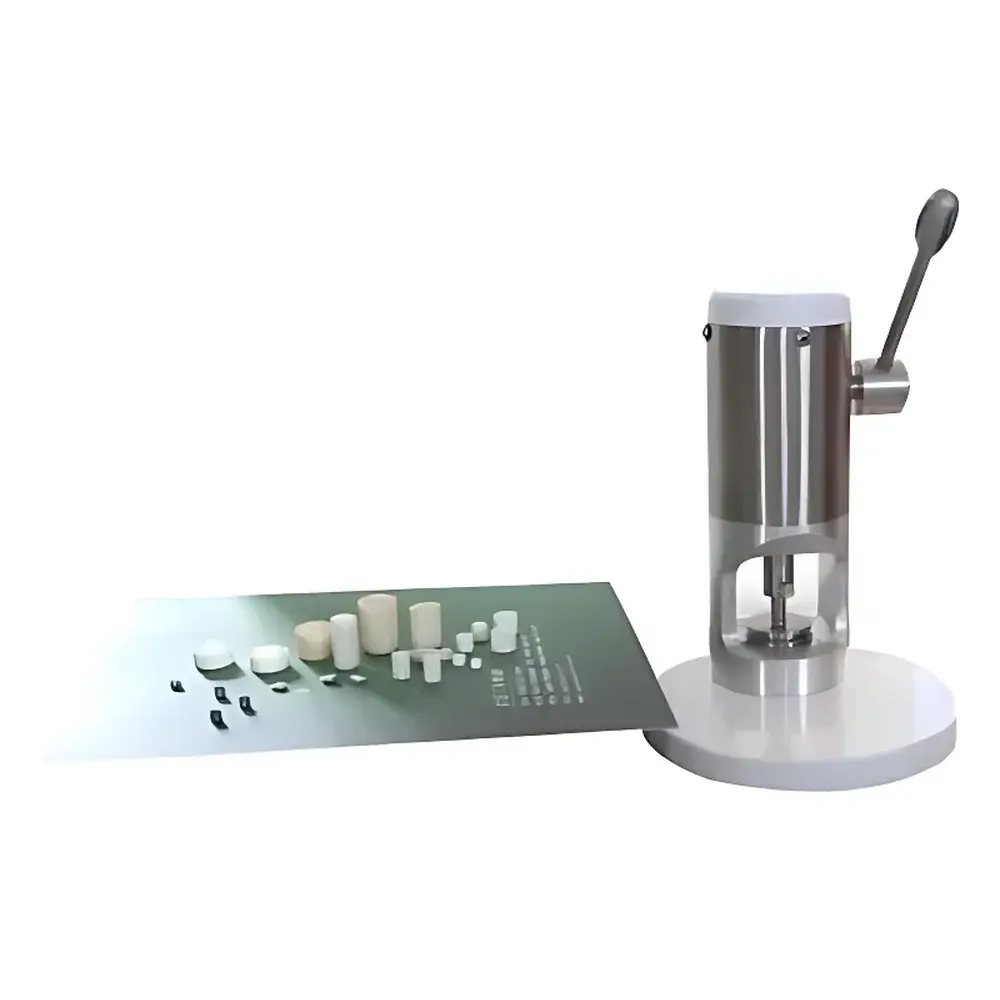
- Modular crucible support system accommodating standard ceramic crucibles (0.06 mL / 0.12 mL) and optional high-temperature variants: alumina, quartz, graphite, and platinum—each certified for thermal stability and low background volatility.
- Dual-range dynamic weighing: auto-ranging from 1 mg to 5 g capacity via interchangeable support rods; real-time signal-adaptive gain adjustment ensures optimal S/N across mass transitions.
- Integrated 7-inch industrial LCD interface displaying simultaneous real-time plots of mass, derivative (DTG), furnace temperature, sample temperature, gas flow status, and vacuum level (when vacuum option installed).
Sample Compatibility & Compliance
The HKG supports diverse solid and powder samples—from nanogram-scale catalysts to 5 g polymer composites—without modification. Crucible geometries include Φ5×4 mm, Φ5×8 mm, Φ8×10 mm, Φ18×8 mm, Φ18×15 mm, and Φ18×20 mm configurations to optimize heat/mass transfer for volatile evolution studies or residue quantification. All hardware and firmware comply with CE electromagnetic compatibility (EMC) directives and meet essential requirements for laboratory safety per IEC 61010-1. Optional vacuum configuration (2.66×10⁻² Pa) enables pyrolysis studies under reduced pressure, aligned with ASTM D6372 for volatile content determination. Software audit trails, electronic signatures, and user-access-level controls support FDA 21 CFR Part 11 readiness when configured with validated software packages.
Software & Data Management
The proprietary HKG-TA Suite provides native acquisition and post-processing for TG, DTG, and DDTG curves, with export to CSV, ASCII, and universal .tdf formats compatible with OriginLab, MATLAB, and Thermo Scientific™ OMNIC. Built-in analytical modules compute residual mass %, decomposition onset/peak/endset temperatures, activation energy (via Kissinger, Ozawa-Flynn-Wall), and multi-step reaction modeling. Users may define custom calculation templates (e.g., ash content, filler loading, moisture loss %) which are compiled into executable analysis routines within the software environment. All raw data files include embedded metadata: instrument ID, operator, calibration timestamp, gas sequence log, and environmental chamber status—ensuring full traceability for internal audits or regulatory review.
Applications
- Thermal degradation profiling of polymers, composites, and pharmaceutical excipients per ICH Q1A(R2) stability guidelines.
- Quantitative determination of moisture, volatiles, organic content, and inorganic residue (ash) in ceramics, batteries, and catalysts.
- Kinetic analysis of char formation, oxidation induction time (OIT), and catalytic coke burn-off in petrochemical feedstocks.
- Interface studies between evolving gases and downstream detectors—enabled by optional heated transfer lines (0–400 °C), GC/MS coupling ports, and FTIR gas cells.
- Validation of thermal behavior in battery electrode materials (e.g., LiCoO₂, NMC, Si-anodes) under N₂/O₂ atmospheres per UL 1642 and UN 38.3 protocols.
FAQ
What calibration standards are supported for temperature and mass verification?
The HKG accepts NIST-traceable metal standards (e.g., Ni, Cu, Al, KClO₃) for temperature calibration and certified weight sets (Class E2) for balance linearity verification. Procedures align with ASTM E967 and ISO 11358-2.
Can the system operate under vacuum or reducing atmospheres?
Yes—vacuum operation (down to 2.66×10⁻² Pa) is available with optional vacuum pump and sealed furnace housing. Reducing atmospheres (e.g., H₂/Ar mixtures) are supported using corrosion-rated MFCs and quartz or alumina components.
Is method transfer possible between HKG units in multi-site labs?
Fully supported: all methods—including gas sequences, ramp profiles, and custom calculations—are stored as portable XML files and retain full parameter fidelity across identical HKG installations.
Does the software support 21 CFR Part 11 compliance?
Yes—when deployed with validated software version v3.2+, the system provides electronic signatures, role-based access control, immutable audit trails, and data integrity safeguards required for regulated pharmaceutical and medical device testing.
What maintenance intervals are recommended for long-term accuracy?
Balance recalibration every 6 months; furnace thermocouple verification annually; MFC calibration every 12 months or after exposure to corrosive gases. Full service documentation and OEM-certified technician support are included with extended warranty options.



