
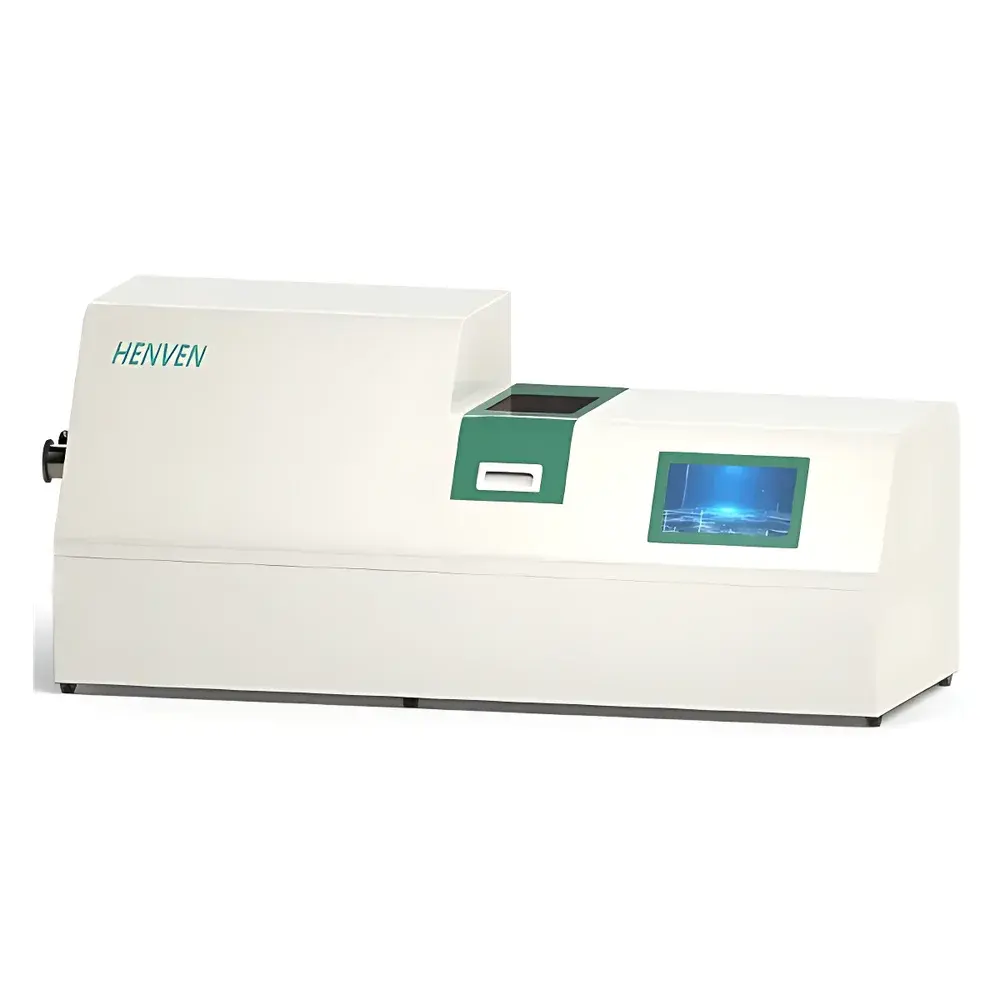
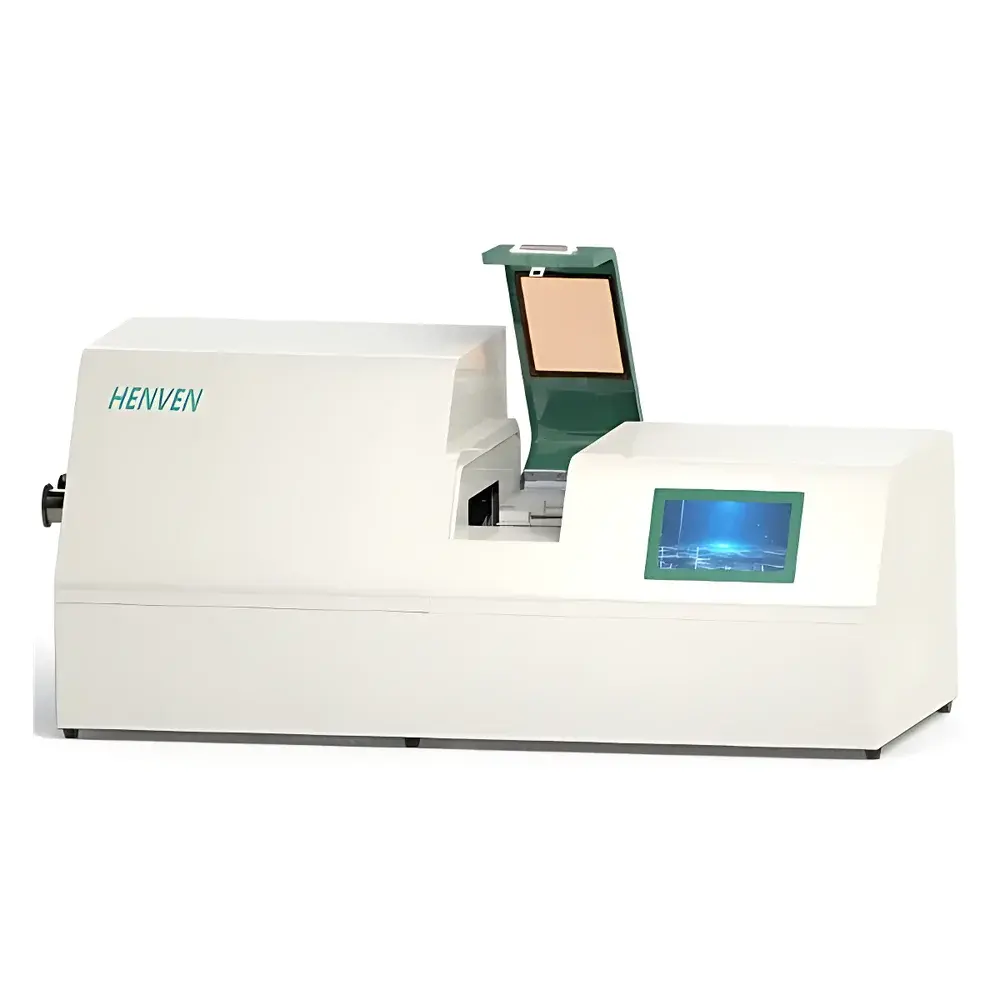
Henven HRPC-1600 High-Speed Reaction Calorimeter
| Brand | Henven |
|---|---|
| Origin | Beijing, China |
| Manufacturer Type | Direct Manufacturer |
| Instrument Type | Reaction Calorimeter |
| Intelligence Level | Intelligent Control |
| Temperature Range | Ambient to 1600 °C |
| Temperature Detection Limit | 1600 °C |
| Temperature Resolution | ±1 °C |
| Temperature Stability | ±1 °C |
| Precision | ±1 °C |
| Heat Capacity Calibration Reference | 12,000 kcal (coal-calorimetry equivalent) |
| Sample Mass | 5 g |
| Heating Element | Silicon Molybdenum (MoSi₂) Rod |
| Heating Rate | 0.1–100 °C/min |
| Power Measurement Range | ±2000 mW |
| Minimum Power Resolution | 0.1 µW |
| Power Noise Floor | <0.1 µW |
| Electrical Supply | 220 V AC, 3000 W |
| Atmosphere Control | Dual-gas inlet with mass flow control (max. 5 L/min per channel) |
Overview
The Henven HRPC-1600 High-Speed Reaction Calorimeter is a precision-engineered benchtop reaction calorimeter designed for real-time quantification of heat flow during exothermic and endothermic processes in energetic materials research and development. It operates on the principle of heat conduction calorimetry, where thermal power is determined by measuring temperature differentials across calibrated thermal resistances under controlled dynamic heating conditions. Unlike conventional differential scanning calorimeters (DSC), the HRPC-1600 integrates high-fidelity power compensation with active furnace temperature regulation, enabling direct measurement of reaction enthalpy, heat release rate, and kinetic onset parameters under programmable thermal ramps. Its operational envelope—spanning ambient to 1600 °C—makes it uniquely suited for characterizing decomposition, combustion, and deflagration behaviors of propellants, explosives, pyrotechnics, and thermite formulations. The instrument meets foundational thermal safety testing requirements aligned with ASTM E698 (kinetic analysis of thermally unstable materials) and supports method development compliant with UN Test Series 1–3 for hazard classification.
Key Features
- High-temperature furnace with dual-zone MoSi₂ heating elements, rated for continuous operation up to 1600 °C and offering rapid thermal response (0.1–100 °C/min ramp rates)
- Intelligent PID-based temperature control architecture delivering ±1 °C stability and resolution across full operating range
- Ultra-low-noise power transduction system with <0.1 µW baseline noise and 0.1 µW minimum detectable power increment
- Dual independent gas inlet channels with integrated mass flow controllers (0–5 L/min each), supporting inert (N₂, Ar), oxidizing (O₂), or reactive atmospheres
- Calibrated heat capacity reference traceable to coal-based calorimetric standards (12,000 kcal equivalence), facilitating cross-validation with ASTM D5865 and ISO 1928
- Modular sample chamber design accommodating standardized 5 g sample loads in crucibles compatible with refractory oxide or graphite liners
- Embedded microcontroller with real-time data acquisition at 10 Hz, synchronized with thermal and gas-flow parameters
Sample Compatibility & Compliance
The HRPC-1600 accepts solid energetic samples—including nitrocellulose, RDX, HMX, CL-20, ammonium perchlorate composites, and metal-oxide thermite mixtures—in gram-scale quantities (nominal 5 g). Sample containment uses high-purity alumina or silicon carbide crucibles rated for >1700 °C, ensuring chemical inertness and minimal parasitic heat loss. The system complies with essential laboratory safety protocols for energetic material handling, including pressure-relief venting pathways and optional explosion-proof enclosure integration. Data integrity adheres to GLP principles: all thermal profiles, power traces, and atmosphere logs are time-stamped, digitally signed, and exportable in CSV/ASCII format for audit-ready reporting. While not FDA 21 CFR Part 11-certified out-of-the-box, the firmware architecture supports configurable electronic signature and audit trail modules upon request for regulated environments.
Software & Data Management
Control and analysis are executed via Henven CaloSuite™ v4.x—a Windows-based application providing graphical experiment setup, real-time thermal/power overlay visualization, and post-run kinetic modeling (e.g., Ozawa-Flynn-Wall, Kissinger, and ASTM E698-derived activation energy estimation). Raw data streams include furnace temperature, sample-stage delta-T, compensated power output, gas flow rates, and event markers. Export options include Excel-compatible .csv, MATLAB .mat, and PDF report generation with embedded metadata (operator ID, calibration date, instrument serial number). All datasets are stored with SHA-256 checksums to ensure forensic reproducibility. Remote monitoring via Ethernet interface supports integration into centralized lab information management systems (LIMS) using standard TCP/IP protocols.
Applications
- Thermal decomposition kinetics of high-nitrogen compounds and insensitive munitions formulations
- Combustion enthalpy validation for solid rocket propellants under simulated chamber-pressure atmospheres
- Hazard assessment of aging energetic materials via comparative heat flow profiling
- Process safety screening for scale-up of nitration, oxidation, or reduction reactions involving thermally sensitive intermediates
- Validation of computational thermochemical models (e.g., CHEMKIN, Thermo-Calc) against empirical reaction calorimetry data
- Quality control of batch-to-batch consistency in commercial explosive manufacturing (per MIL-STD-1751A Annex A)
FAQ
What sample size is required for reliable calorimetric measurement?
A nominal mass of 5 g is recommended to ensure signal-to-noise ratio optimization and representative thermal behavior for heterogeneous energetic solids. Smaller masses (≥2 g) may be used with adjusted sensitivity settings but require recalibration verification.
Can the HRPC-1600 operate under vacuum or reduced pressure?
No—this model is configured exclusively for atmospheric or positive-pressure gas-controlled environments. Vacuum operation requires custom furnace sealing and modified sensor feedthroughs, available as an engineering option (HRPC-1600-VAC).
Is calibration traceable to national metrology institutes?
Yes. Temperature calibration is performed using NIST-traceable Pt/Pt–10Rh thermocouples; power calibration employs Joule-heating reference standards verified annually against CNAS-accredited laboratories (Certificate No. CNAS LXXXXX).
Does the system support automated reaction quenching or emergency cooling?
Not natively. Emergency cooling must be implemented externally via auxiliary cryogenic gas injection or water-jacketed reactor adapters. An optional fast-response pneumatic purge module (HRPC-PURGE-2) is available for rapid inert gas displacement.



