
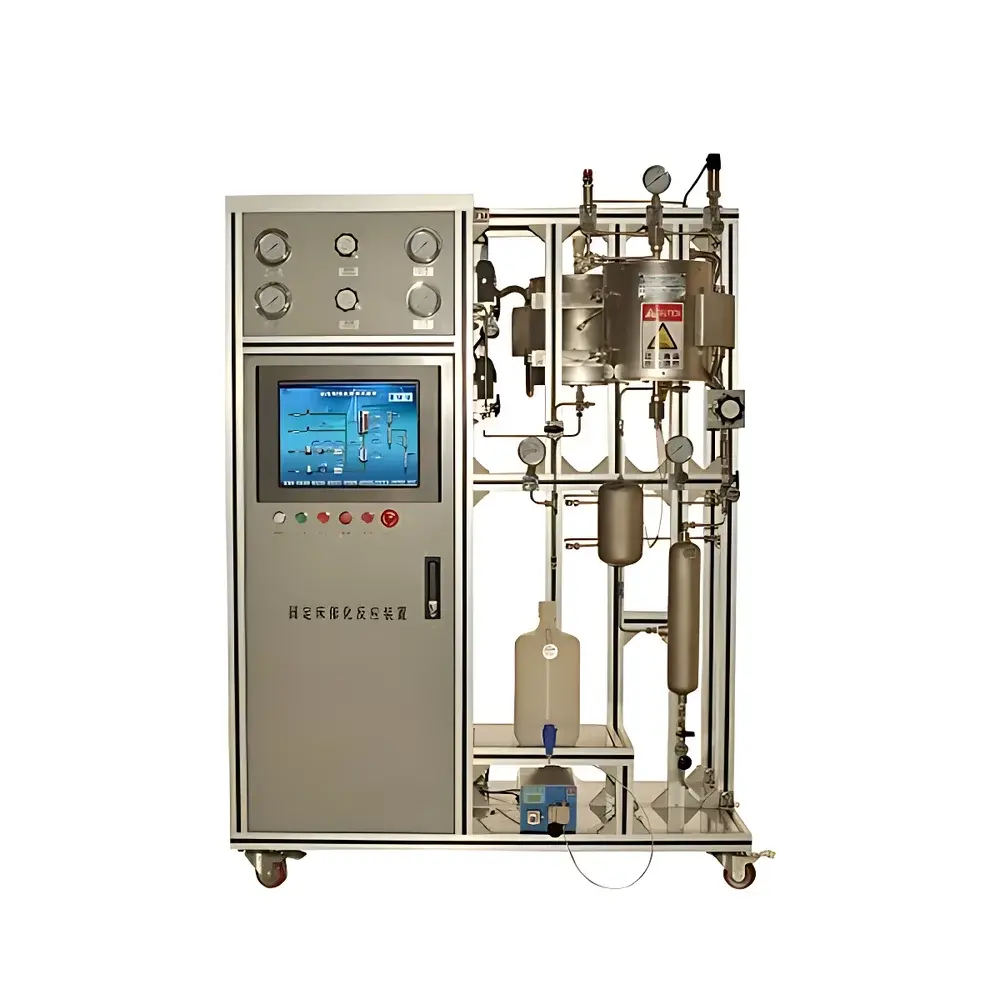
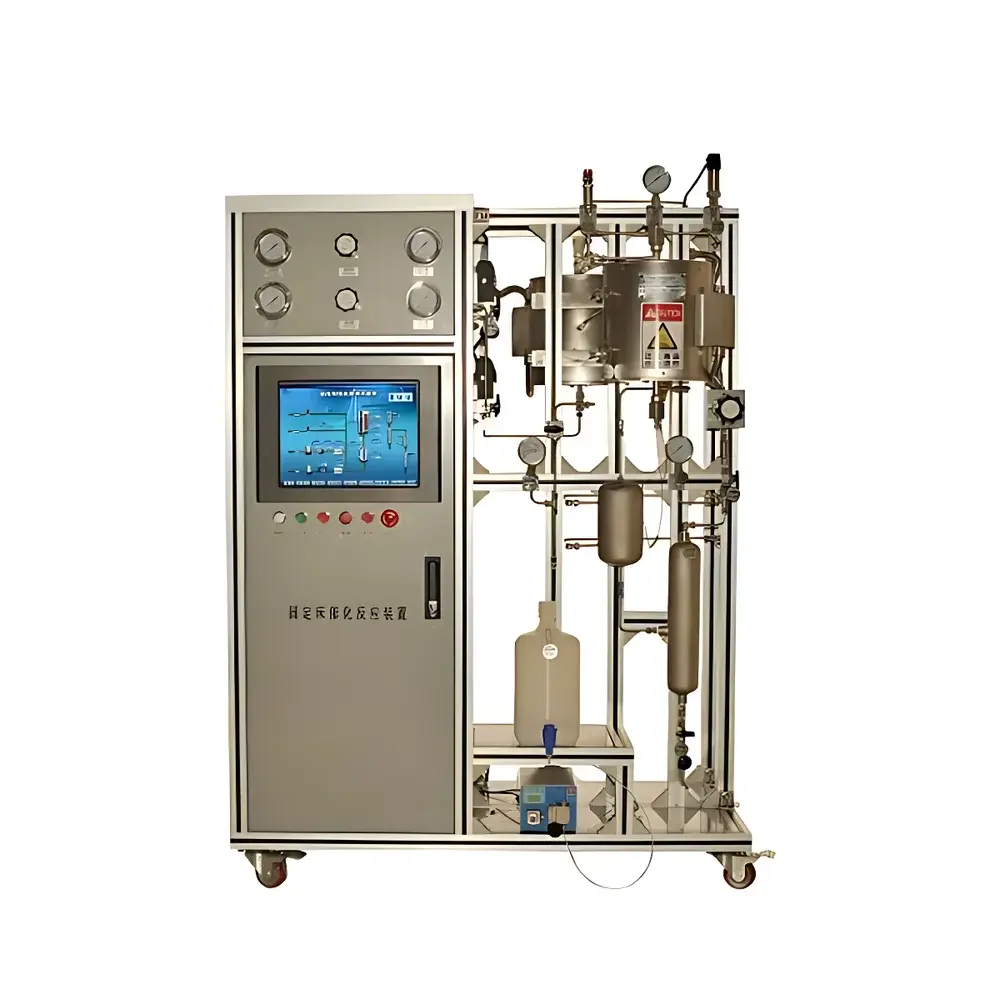
Henven HJC Fixed-Bed Catalytic Reaction System
| Brand | Henven |
|---|---|
| Origin | Beijing, China |
| Manufacturer Type | Direct Manufacturer |
| Model | HJC |
| Price Range | USD 28,000 – 70,000 |
| Flow Rate | up to 10 L/h |
| Operating Pressure | 1–6.0 MPa |
| Maximum Design Temperature | 600 °C |
| Catalyst Loading Volume | 2 mL |
Overview
The Henven HJC Fixed-Bed Catalytic Reaction System is an engineered laboratory-scale continuous-flow reactor platform designed for heterogeneous catalysis research under elevated temperature and pressure conditions. It operates on the principle of fixed-bed catalytic reaction kinetics, where gaseous or liquid-phase reactants pass through a stationary catalyst bed while undergoing thermally activated surface reactions. The system supports aggressive chemistries—including hydrogen fluoride (HF)-containing feedstocks—through its corrosion-resistant construction, including Hastelloy C-276 or equivalent alloy-lined reactors, fluoropolymer-sealed valves, and PFA-lined tubing. Its modular architecture integrates precision thermal management, real-time process monitoring, and closed-loop control logic to support reproducible catalyst evaluation, kinetic modeling, deactivation studies, and long-duration stability testing in accordance with ASTM D3241, ISO 10139, and IUPAC-recommended catalytic testing protocols.
Key Features
- Corrosion-resistant reactor assembly rated for HF, Cl₂, HCl, SO₂, and other highly reactive feedstocks; wetted materials include Hastelloy C-276, Monel 400, and perfluoroalkoxy (PFA) linings.
- Segmented programmable heating zones enabling independent linear ramping and high-stability isothermal operation across the catalyst bed (±0.5 °C over 24 h at 500 °C).
- Integrated high-fidelity sensor suite: RTD-based axial temperature profiling (up to 6 measurement points), piezoresistive pressure transducers (0–10 MPa full scale), and mass flow controllers (MFCs) with NIST-traceable calibration (±0.5% FS accuracy).
- Self-contained fault detection and safety interlock system: monitors critical thresholds for temperature deviation (>±10 °C), overpressure (>6.3 MPa), and flow interruption (>3 s); triggers automatic shutdown, venting, and alarm logging.
- Industrial-grade stainless steel structural frame (AISI 304, powder-coated) with IP54-rated control panel and ergonomic operator interface.
Sample Compatibility & Compliance
The HJC system accommodates solid catalysts in pellet, extrudate, or granular form (particle size range: 0.2–5 mm), with standard loading volume of 2 mL (adjustable via custom reactor inserts). It supports both gas-phase (e.g., CO/H₂ Fischer–Tropsch synthesis, NH₃ decomposition) and liquid-phase (e.g., hydrodesulfurization, selective hydrogenation) reaction modes. All pressure-retaining components comply with ASME BPVC Section VIII Division 1 design standards. Electrical safety meets IEC 61000-6-2/6-4 EMC requirements. Data integrity and audit trail functionality align with FDA 21 CFR Part 11 expectations when paired with optional validated software modules.
Software & Data Management
The proprietary Renmai Flow Control System (v3.2+) provides intuitive touchscreen HMI with multi-language support (English, German, Japanese, Chinese). It enables full parameter configuration—including temperature profiles, pressure setpoints, flow sequencing, and event-triggered actions—via drag-and-drop logic blocks. Process data (temperature, pressure, flow, valve status) are logged at 10 Hz resolution and exported in CSV/Excel-compatible format. Optional integration with LabVIEW™ or MATLAB® via TCP/IP or Modbus RTU enables advanced model-based control and real-time kinetic fitting. Raw sensor data includes timestamped metadata compliant with ISA-88 batch record conventions.
Applications
- Catalyst screening and ranking under industrially relevant conditions (T = 150–600 °C, P = 1–6 MPa)
- Deactivation mechanism studies (coking, sintering, poisoning) via time-on-stream (TOS) analysis
- Reaction engineering: determination of intrinsic kinetics, effectiveness factors, and mass-transfer limitations
- Process intensification validation for microchannel or monolith-based alternatives
- Training and method development for ISO/IEC 17025-accredited catalysis laboratories
FAQ
Is the reactor suitable for hydrogen fluoride (HF) service?
Yes—the reactor tube, fittings, and seals are constructed from HF-compatible alloys and fluoropolymers, validated per ASTM G152 accelerated corrosion testing.
Can the system operate in fully unattended mode for extended durations?
Yes—equipped with redundant safety circuits, automated emergency response, and 72-hour local data buffering; remote monitoring is supported via Ethernet.
What catalyst forms are compatible with the 2 mL bed volume?
Standard configurations accept 0.5–3 mm diameter pellets or extrudates; custom inserts allow testing of powders (with frit support) or structured catalysts (e.g., foams, monoliths).
Does the system support compliance with GLP or GMP environments?
With optional 21 CFR Part 11-compliant software add-on, electronic signatures, change control logs, and audit trails meet GLP/GMP documentation requirements.
Are spare parts and technical support available outside China?
Yes—Henven maintains authorized service partners in Germany, USA, and Singapore; all critical spares (MFCs, RTDs, solenoid valves) are stocked regionally with ≤5 business day lead time.



