
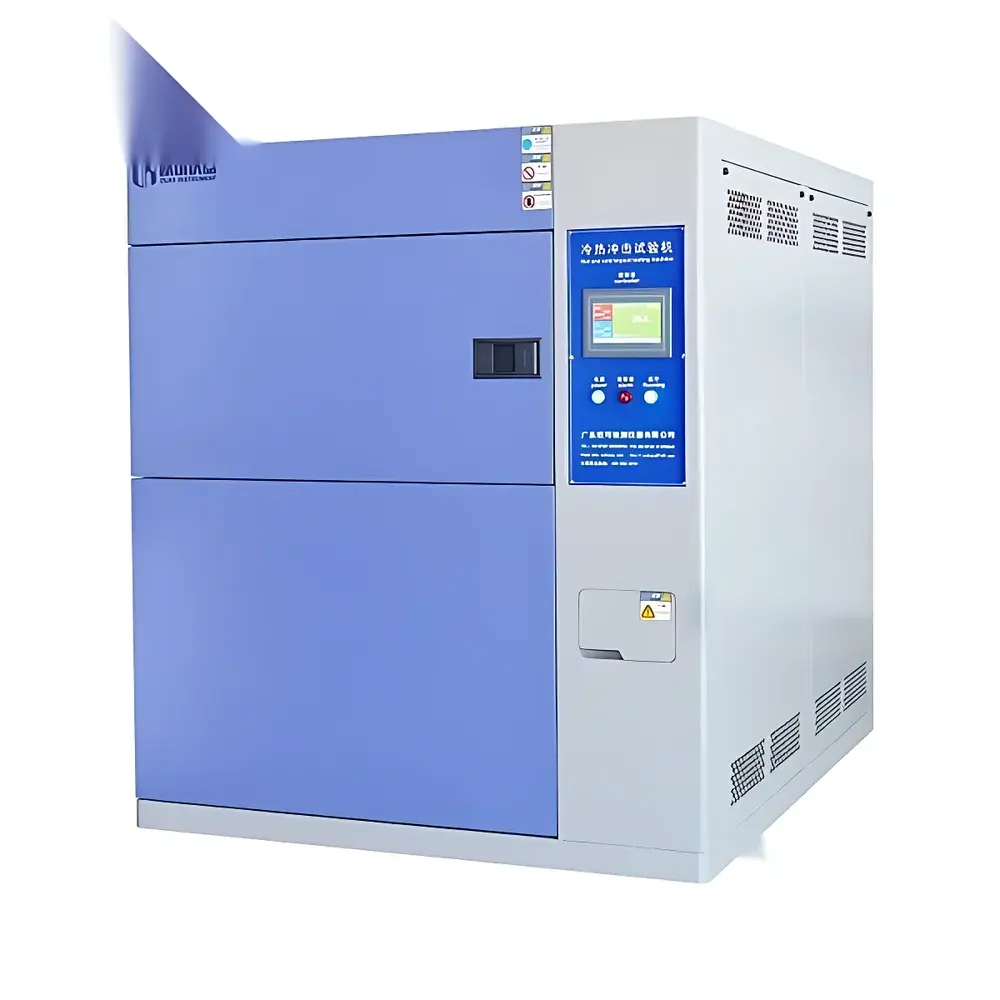
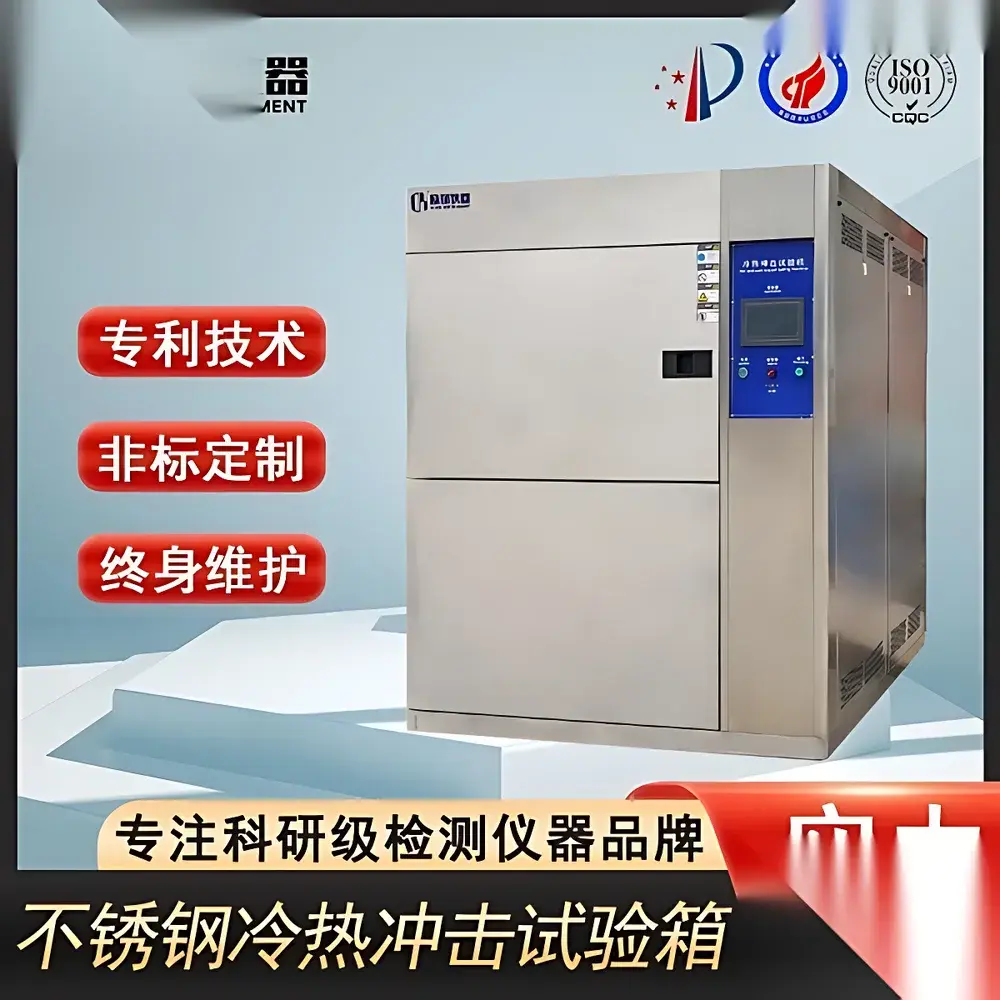
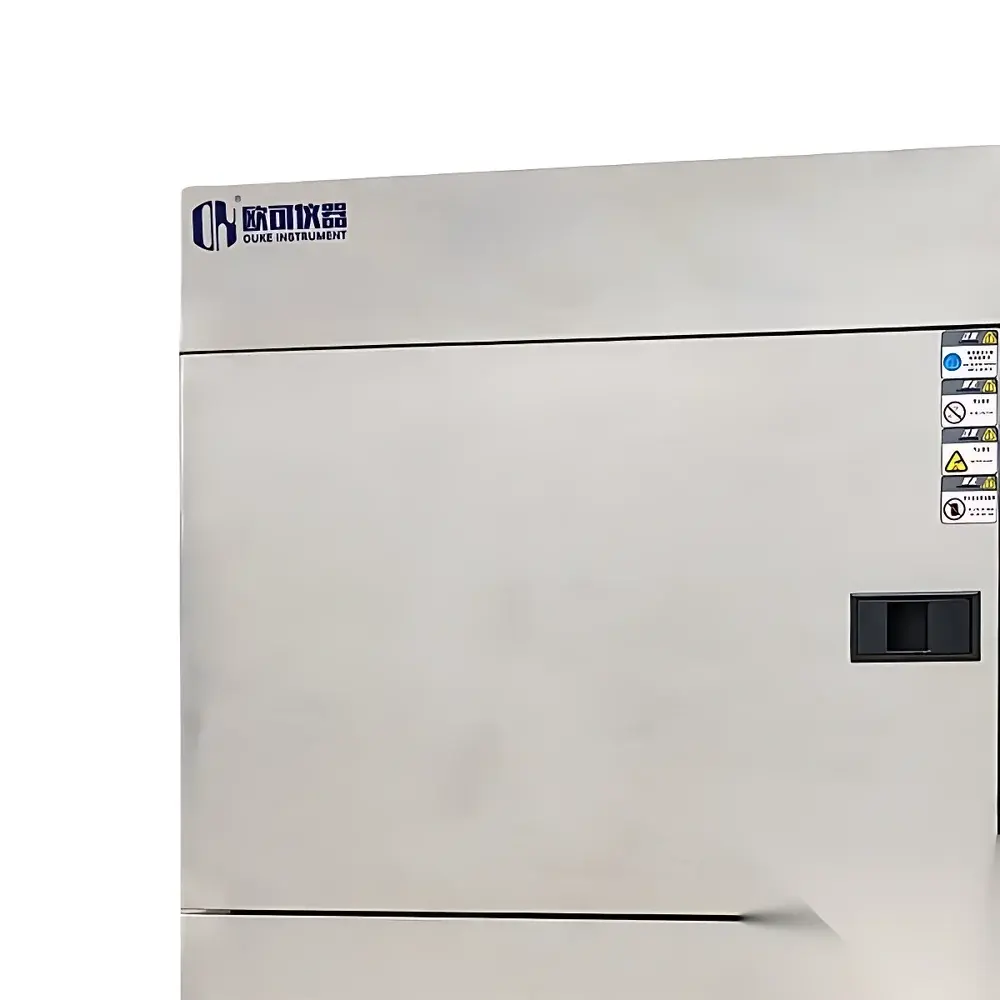
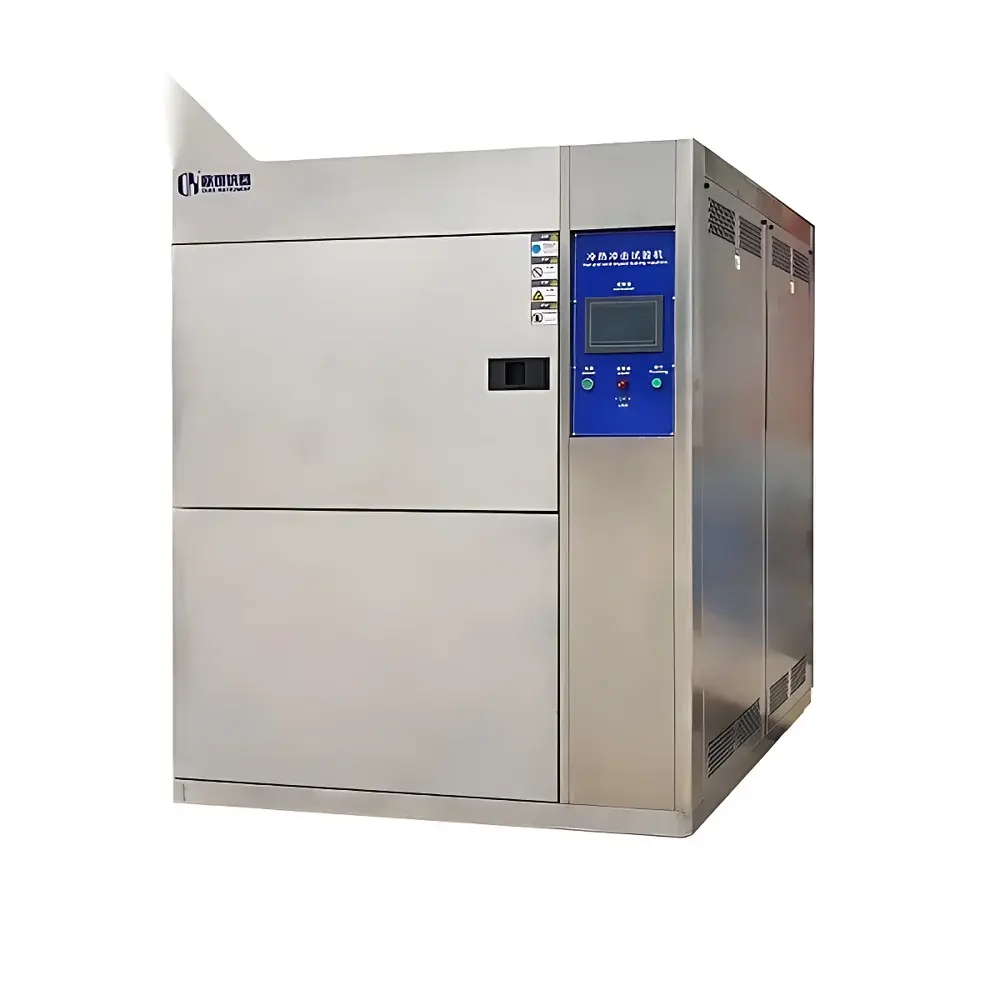
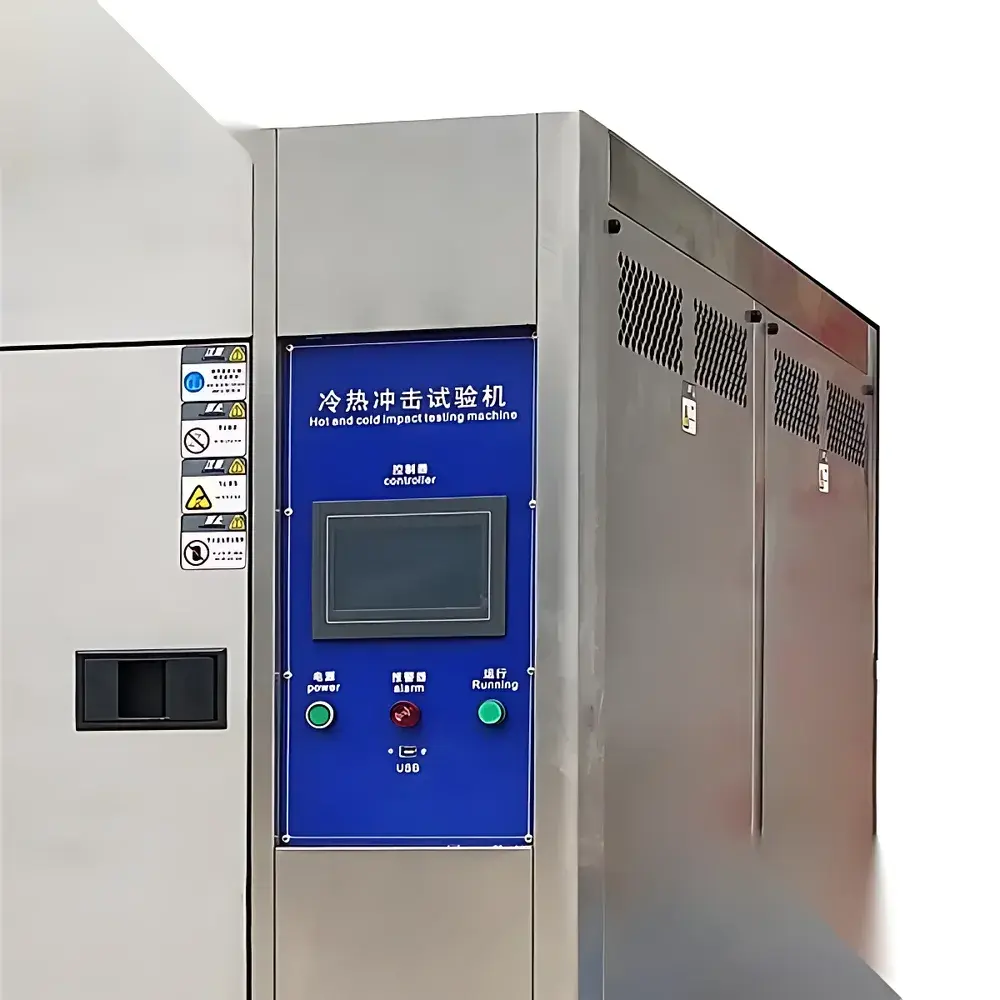
OK-TS-80 Triple-Zone Thermal Shock Test Chamber with Rapid Air-Actuated Temperature Transition
| Brand | OK Instruments |
|---|---|
| Model | OK-TS-80 |
| Internal Chamber Dimensions | 50 × 40 × 50 cm (L×W×H) |
| Internal Material | Mirror-Finished SUS304 Stainless Steel (8K grade) |
| External Material | Electrophoretically Coated Steel or Optional SUS304 Brushed Stainless Steel |
| High-Temperature Zone Range | +60 °C to +200 °C |
| Low-Temperature Zone Range (Configurable) | -55 °C to -10 °C |
| Test Zone Shock Range | +60 °C to +150 °C / -10 °C to -40 °C, -55 °C, or -65 °C |
| Heating Rate | +60 °C to +200 °C in ≤35 min |
| Cooling Rate | +20 °C to -55 °C in ≤75 min |
| Temperature Recovery Time after Shock Transition | ≤5 min |
| Air-Actuated Damper Switching Time | ≤3 s |
| Control System | 7.5" Full-Color LCD Touchscreen HMI with 96 Predefined Test Profiles, Multi-PID Algorithms, and GLP-Compliant Data Logging |
| Power Supply | AC 380 V, 50 Hz |
| Standard Port | One Ø50 mm Test Access Port |
| Safety Compliance | Overcurrent, Overtemperature, Compressor Overheat/Overpressure, Ground Fault, Dry-Heater Protection, Real-Time Fault Diagnostics |
Overview
The OK-TS-80 Triple-Zone Thermal Shock Test Chamber is engineered for accelerated reliability assessment of electronic components, aerospace materials, automotive subsystems, and high-performance polymers under extreme thermal cycling conditions. Based on the air-actuated dual- or triple-chamber architecture, it implements rapid thermal transition via pneumatically driven damper systems that isolate and sequentially expose test specimens to pre-conditioned hot and cold airstreams—eliminating mechanical movement of samples and ensuring repeatable, contamination-free thermal shock profiles. Unlike single-chamber ramp-and-soak systems, the OK-TS-80 delivers true thermal shock by maintaining independent, stable temperature zones (high-temp reservoir, low-temp reservoir, and insulated test chamber), enabling precise control over dwell time, transition speed, and thermal gradient magnitude. Its design conforms to core requirements of IEC 60068-2-14 (Test N: Change of Temperature), MIL-STD-810H Method 503.6, and JESD22-A104D, supporting qualification testing for mission-critical hardware in defense, semiconductor packaging (e.g., BGA, CSP, wafer-level chips), and electric vehicle power modules.
Key Features
- Triple-zone configuration with independently controlled high-temperature (+60 °C to +200 °C) and low-temperature (down to -80 °C) reservoirs, plus a thermally isolated test chamber—enabling true static-sample thermal shock testing.
- Air-actuated damper system with ≤3-second switching time and ≤5-minute temperature recovery in the test zone, meeting stringent transition rate demands per ASTM E1613 and IPC-9701A.
- Advanced PLC-based control architecture with multi-loop PID algorithms, real-time fault diagnostics, and auto-recovery logic for compressor cycling, heater status, and airflow integrity.
- Environmentally compliant refrigeration: cascade cooling system utilizing R507/R23 (zero ozone depletion potential, low GWP) and high-efficiency semi-hermetic compressors from EU/US OEM suppliers.
- 7.5-inch full-color LCD touchscreen HMI with bilingual (English/Chinese) interface, 96 programmable test profiles, up to 999 cycles, and 999 h 59 min per segment—with timestamped parameter logging and exportable CSV data traces.
- Structural integrity: 8K mirror-finish SUS304 interior walls, PU foam insulation (≥120 mm thickness), reinforced C-channel and angle-iron base frame, and optional LN₂ augmentation for sub-80 °C shock capability.
Sample Compatibility & Compliance
The OK-TS-80 accommodates test specimens up to 40 × 30 × 40 cm (L×W×H) within its 50 L internal volume. Its static-test-zone geometry ensures compatibility with PCB assemblies, IC packages, solder joints, composite laminates, and hermetically sealed sensors—without vibration-induced artifacts. The chamber meets mechanical and electrical safety requirements per IEC 61000-6-2 (immunity) and IEC 61000-6-4 (emission), and includes comprehensive protection: dual-stage overtemperature cutoff, compressor discharge pressure monitoring, phase-loss detection, ground-fault interrupter (GFI), and dry-heater lockout. All operational parameters—including setpoints, actual temperatures, cycle count, and alarm history—are logged with ISO/IEC 17025-aligned traceability, supporting FDA 21 CFR Part 11–compliant audit trails when paired with optional software validation packages.
Software & Data Management
The embedded controller supports local data storage (≥10,000 hours of 1-second interval logging) and USB export of calibrated temperature/time datasets. Optional Ethernet or RS485 interfaces enable integration into centralized MES or LIMS platforms via Modbus TCP or ASCII protocols. Firmware includes configurable alarm escalation (visual + audible), password-protected parameter editing, and GLP-compliant electronic signatures for profile activation. Calibration verification routines follow ISO/IEC 17025 Annex A.3 guidelines, with NIST-traceable probe inputs and automatic drift compensation across the full operating range. No cloud dependency or vendor-locked licensing is required for basic operation or data retrieval.
Applications
This chamber is routinely deployed for: accelerated aging of automotive ADAS radar housings under thermal fatigue; intermetallic growth analysis in lead-free solder joints (IPC-J-STD-001); validation of thermal interface material (TIM) adhesion stability on SiC power modules; qualification of ceramic capacitors per AEC-Q200; and evaluation of polymer matrix composite delamination thresholds in UAV airframes. It also serves as a primary tool for failure mode identification in MEMS devices, fiber-optic transceivers, and medical imaging detector arrays—where microstructural phase changes induced by repeated expansion/contraction must be quantified prior to field deployment.
FAQ
What is the difference between a two-zone and three-zone thermal shock chamber?
A two-zone system alternates specimen exposure between one hot and one cold chamber. The OK-TS-80’s three-zone architecture adds a dedicated, thermally isolated test chamber—ensuring zero thermal mass interference during transitions and enabling stricter adherence to IEC 60068-2-14 dwell-and-transfer specifications.
Can the OK-TS-80 meet MIL-STD-810H Method 503.6?
Yes—when configured with the -65 °C low-temperature option and programmed with appropriate dwell times (≥15 min), transfer time (≤15 s), and recovery criteria (≤5 min), it satisfies all environmental engineering considerations outlined in Section 503.6.
Is LN₂ integration available as a factory-installed option?
Yes—liquid nitrogen injection nozzles, cryogenic solenoid valves, and integrated pressure regulation are offered as an upgrade path for achieving ≤-100 °C shock temperatures with ≤3-minute recovery, subject to site utility review.
Does the controller support automated report generation for quality audits?
The standard firmware exports raw time-series data; optional PC software provides customizable PDF/Excel reporting templates aligned with ISO 9001 internal audit requirements—including operator ID, calibration dates, and deviation flags.
What maintenance intervals are recommended for the refrigeration system?
Compressor oil analysis and filter-drier replacement every 24 months; annual inspection of heat exchanger fins, damper actuator seals, and door gasket compression set—documented per manufacturer’s Maintenance Log Template (included).



