
English Product Name
| Brand | ASLI |
|---|---|
| Origin | Imported |
| Manufacturer Type | Authorized Distributor |
| Price | USD 21,000 (FOB) |
| Temperature Range | −70°C to +180°C |
| Humidity Range | 10%–98% RH |
| Vibration Frequency Range | 5–2000 Hz |
| Max. Acceleration | 100 g (peak) |
| Max. Displacement | ±25 mm (p-p) |
| Vibration Control Modes | Sine Sweep, Random, Classical Shock, Programmable Step, Logarithmic & Octave Sweeps |
Overview
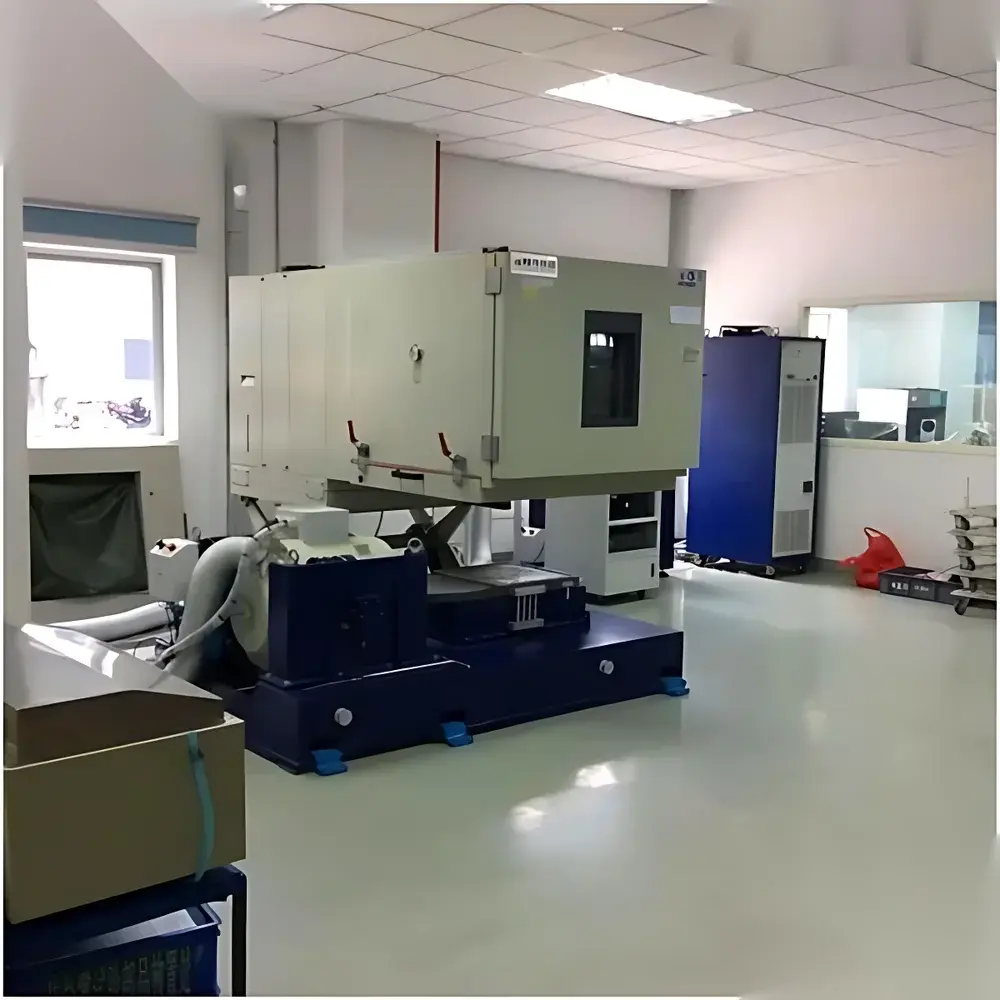
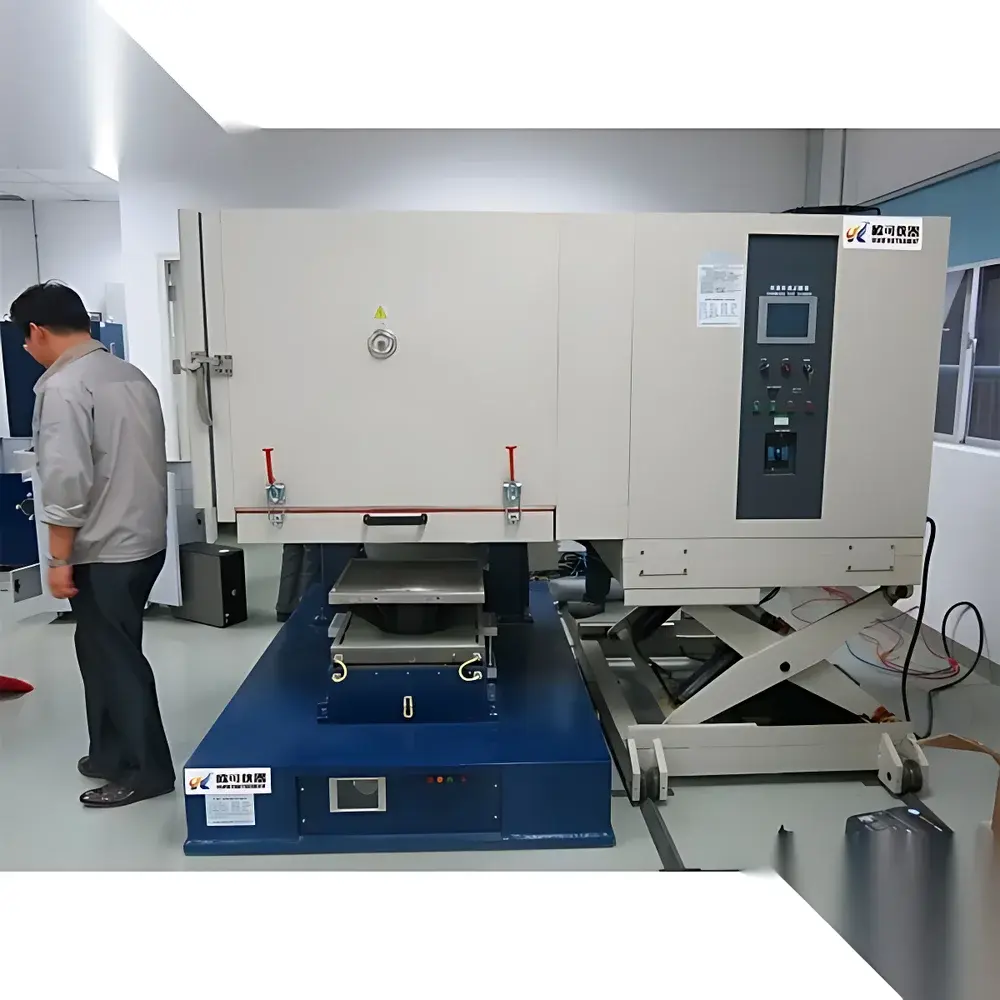
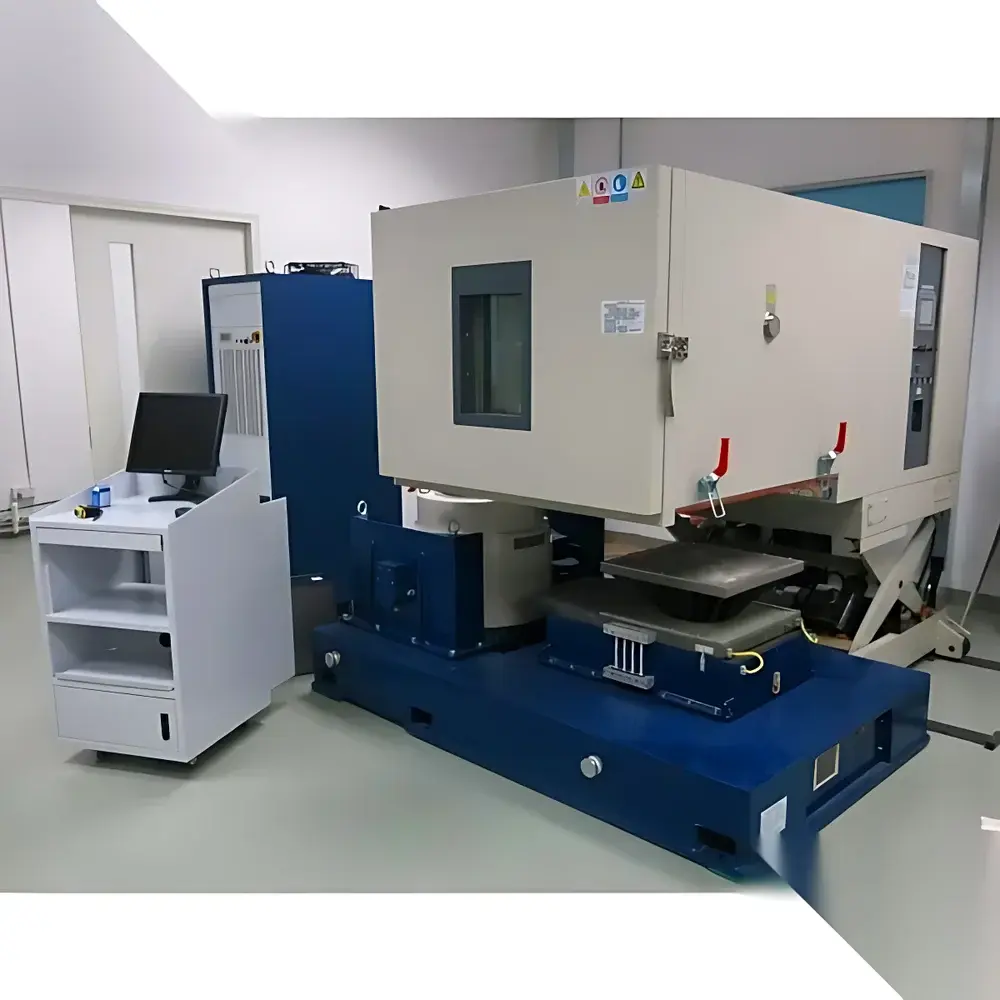
The ASLI Combined Temperature-Humidity-Vibration Environmental Test System is an integrated reliability validation platform engineered for simultaneous application of thermal, hygroscopic, and mechanical stress stimuli. It operates on the principle of coupled environmental simulation—where temperature and humidity are precisely regulated via dual-stage refrigeration and PID-controlled steam humidification, while broadband electrodynamic vibration is generated through a high-fidelity shaker system driven by a digital servo amplifier. This triaxial stress combination enables accelerated life testing (ALT), HALT/HASS protocols, and qualification per MIL-STD-810H, IEC 60068-2-64, IEC 60068-2-78, and ISO 16750-4. The system supports real-time correlation of thermal transients with dynamic mechanical response—critical for validating electronics enclosures, automotive ECUs, aerospace avionics modules, and medical device housings under realistic field-representative conditions.
Key Features
- Dual independent refrigeration circuitry using cascaded French Tecumseh (formerly Danfoss) hermetic compressors, enabling stable operation at −70°C with rapid cooldown rates (≥3°C/min from 25°C to −40°C)
- High-accuracy humidity control (±2% RH, 20–98% RH) via stainless-steel steam generator and dew-point-based dehumidification using finned-tube evaporator banks
- ThreeBand (Japan) voice-coil actuator with IMV (Japan) excitation monitoring and Tohbu (Japan) stainless mesh diaphragm—optimized for low harmonic distortion (<3% THD @ 100 g, 1 kHz)
- Siemens industrial-grade power amplifier with Mitsubishi IGBT modules, Fuji fast-acting fuses, and real-time thermal derating logic
- DSP-based vibration controller with built-in dual-channel charge amplifiers, supporting closed-loop feedback from piezoelectric accelerometers (CGJ-1 compliant)
- Comprehensive safety architecture: dry-run protection, refrigerant high-pressure cutoff, overtemperature cutout (dual-stage), phase-loss detection, and vibration over-acceleration shutdown
Sample Compatibility & Compliance
The system accommodates test specimens up to 100 kg mass and 600 × 600 × 600 mm (W × H × D) volume. Load mounting interfaces comply with ISO 5344 and ASTM D4728 standards for fixture rigidity and modal decoupling. All thermal-humidity-vibration profiles are fully traceable and support GLP/GMP audit requirements—including electronic signature capability, 21 CFR Part 11-compliant data integrity controls (when paired with optional ASLI TraceLog™ software suite), and automated calibration certificate generation per ISO/IEC 17025 guidelines. Humidity sensors are NIST-traceable; temperature uniformity meets ±1.5°C (±2.0°C at extremes) per IEC 60068-3-5.
Software & Data Management
The system ships with ASLI VCS Pro™—a Windows-based control suite licensed from U.S.-origin vibration control firmware (compatible with Windows 10/11 x64). It provides synchronized multi-parameter logging at ≥10 kHz sampling rate across all channels (temperature, RH, acceleration X/Y/Z, displacement, drive voltage). Export formats include CSV, MATLAB (.mat), and Universal File Format (UFF 58). Built-in analysis tools support PSD estimation (per IEEE 1003.1), shock response spectrum (SRS), fatigue damage spectrum (FDS), and time-history replay. Optional Ethernet/IP or RS-485 interfaces enable integration into factory MES systems and centralized test fleet monitoring platforms.
Applications
This system is routinely deployed in R&D labs and quality assurance departments for: PCB solder joint fatigue assessment under thermal cycling + random vibration; battery pack thermal runaway propagation studies during mechanical shock; MEMS sensor drift characterization across humidity gradients; ECU housing seal integrity validation under combined condensation and resonance exposure; and packaging durability evaluation for cold-chain logistics devices. Its ability to replicate correlated environmental profiles—such as “cold soak → humidity ramp → resonant shake” sequences—makes it indispensable for failure mode identification in complex mechatronic assemblies.
FAQ
Does the system support real-time closed-loop vibration control with temperature/humidity feedback?
Yes—via optional ASLI SyncLink™ interface module, which enables cross-domain parameter coupling (e.g., modulating vibration amplitude based on chamber temperature deviation).
Is third-party calibration certification included?
No—calibration certificates (NIST-traceable) are available as a separate service with annual recalibration plan options.
Can the system operate unattended for extended durations (e.g., 72+ hours)?
Yes—equipped with redundant safety interlocks, UPS-compatible power management, and remote alarm notification via SMTP/SNMP.
What is the maximum allowable specimen center-of-gravity offset?
≤15 mm from shaker table centerline to maintain ≤5% axis cross-talk; fixture design guidance is provided in ASLI Engineering Bulletin EB-THV-003.
Are custom test profiles exportable between instruments?
Yes—all profile definitions conform to the IEEE 1003.1-2021 standard and are portable across ASLI VCS Pro™ installations.



