
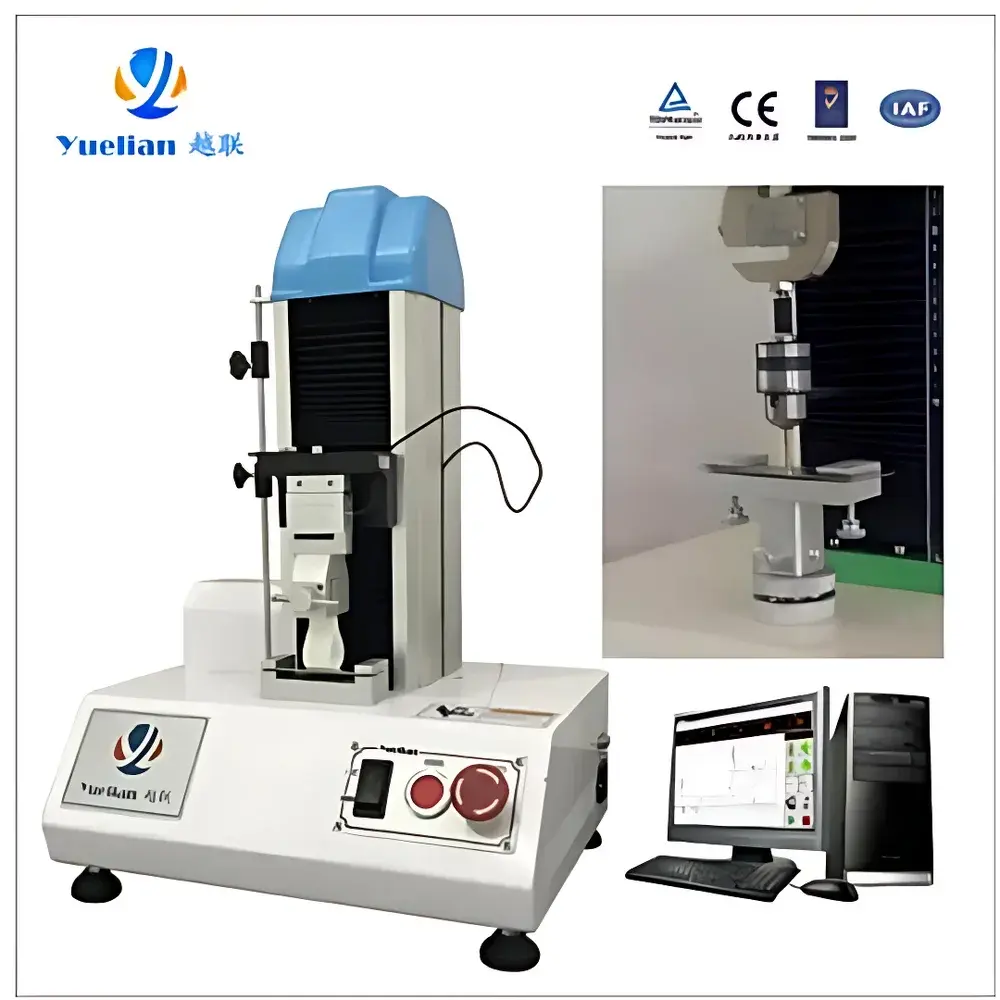
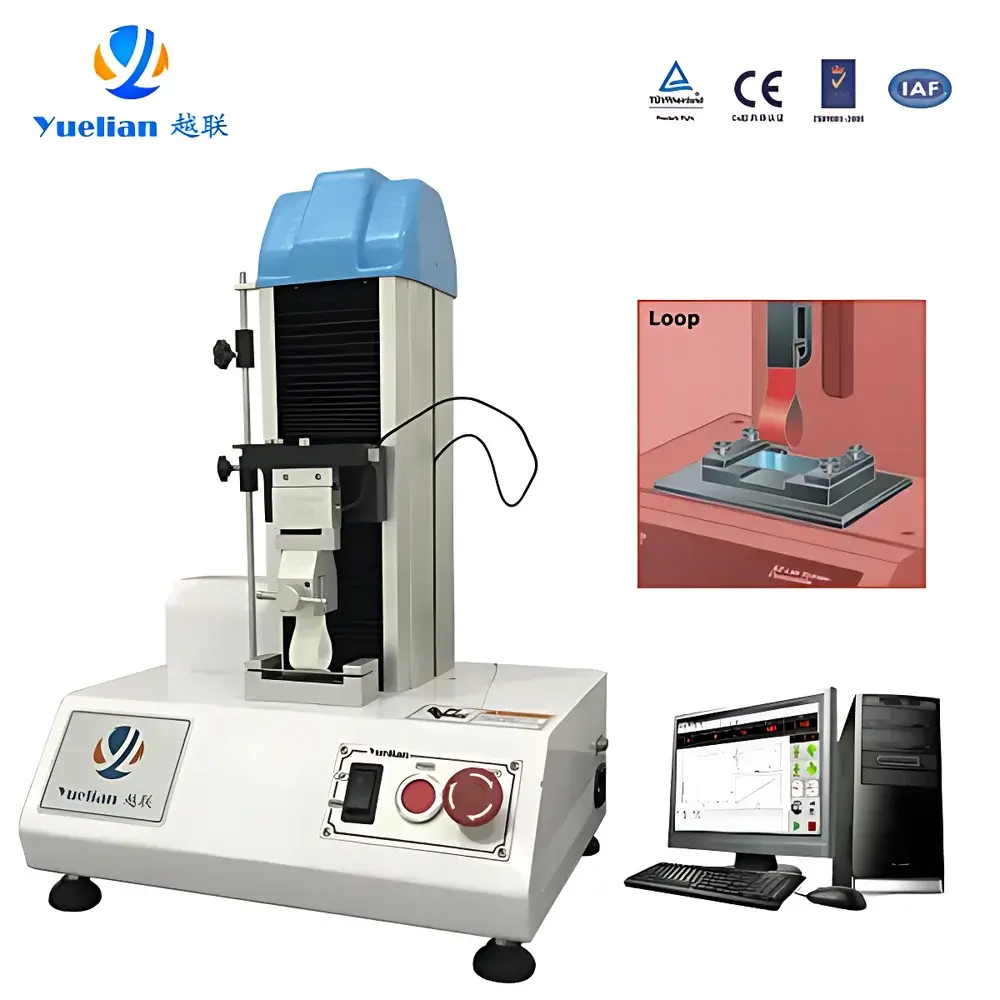
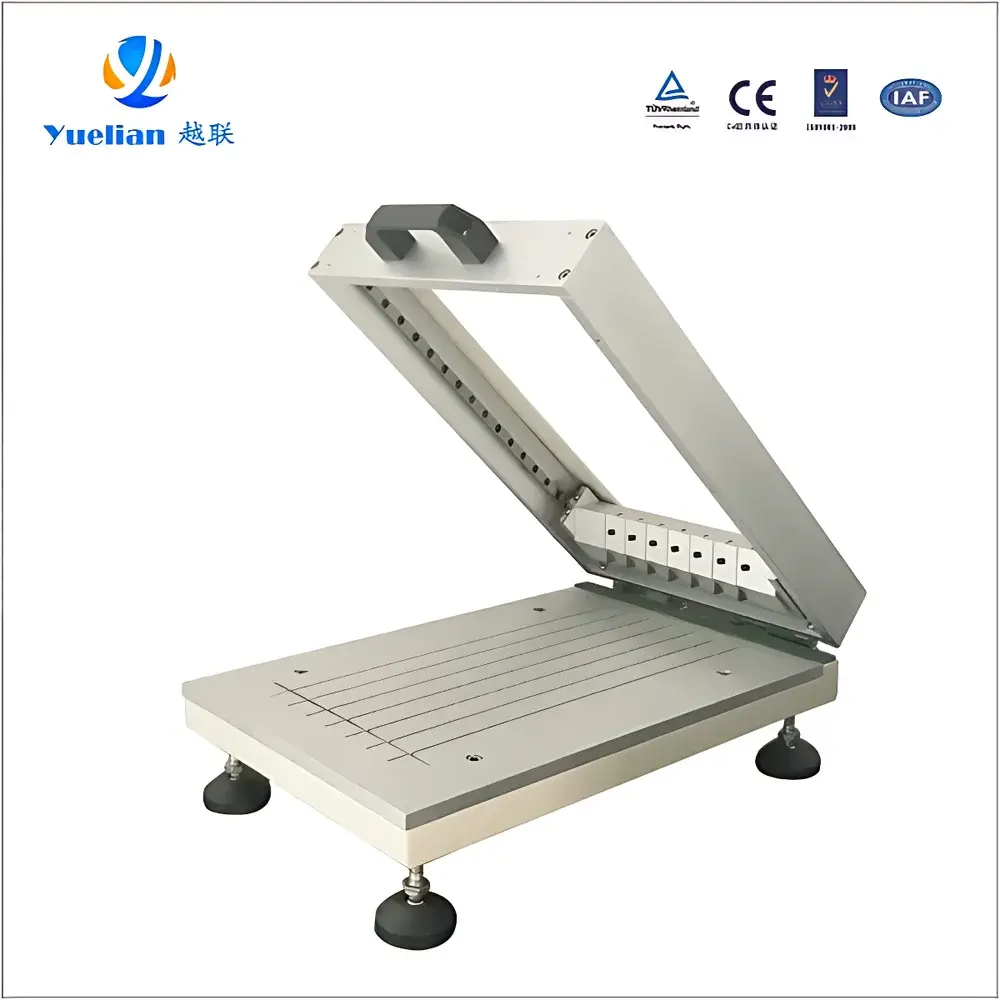
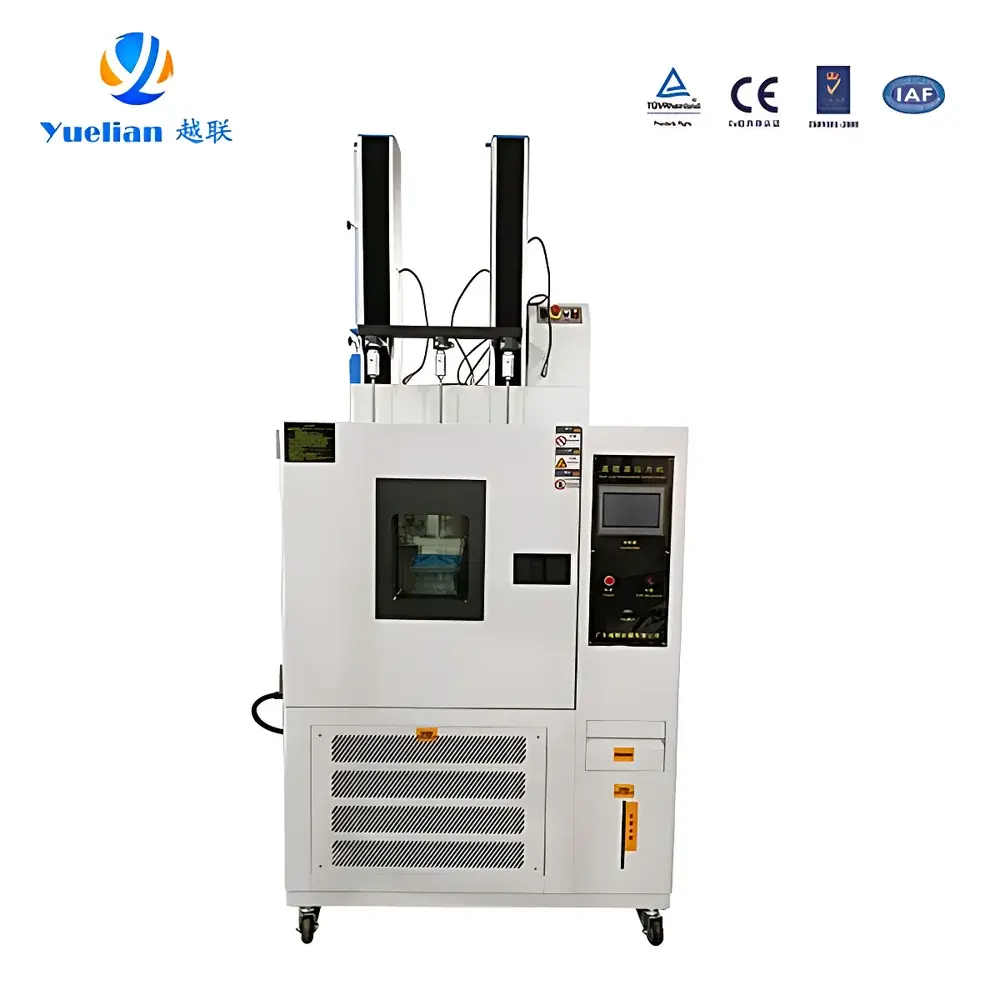
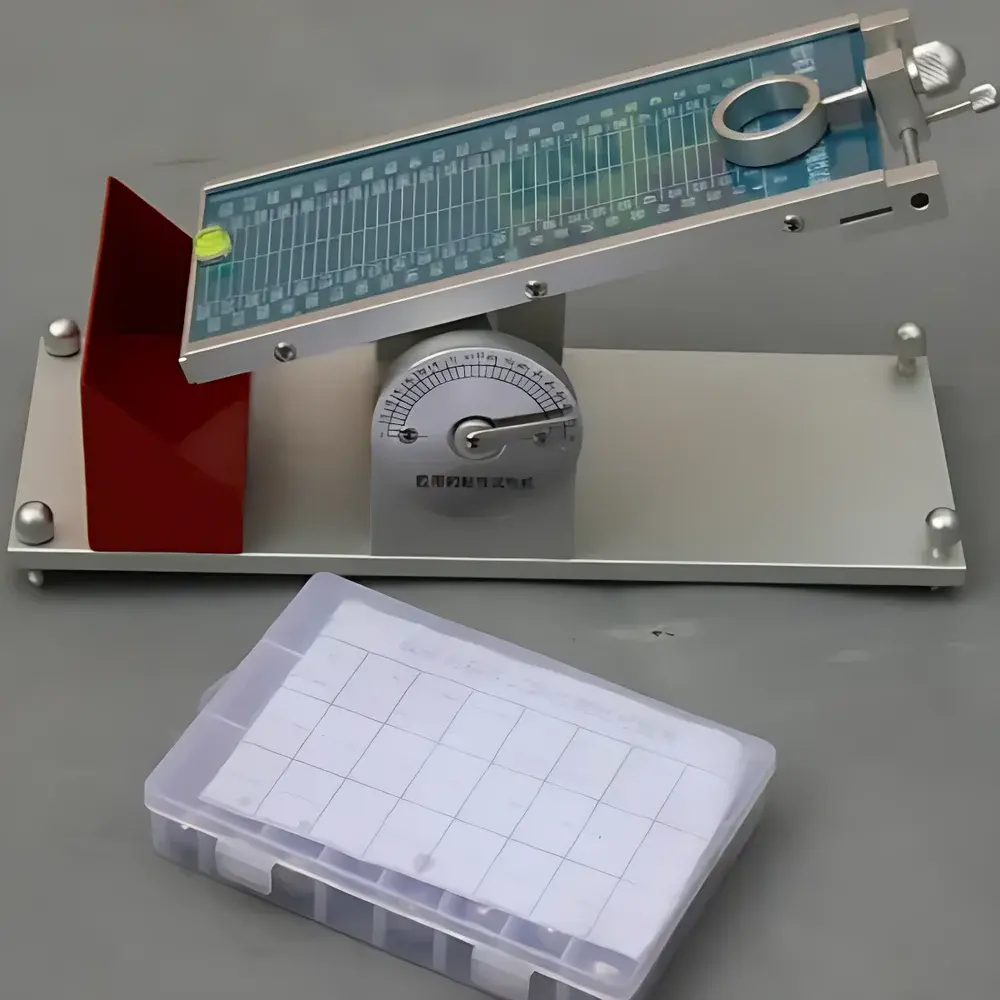
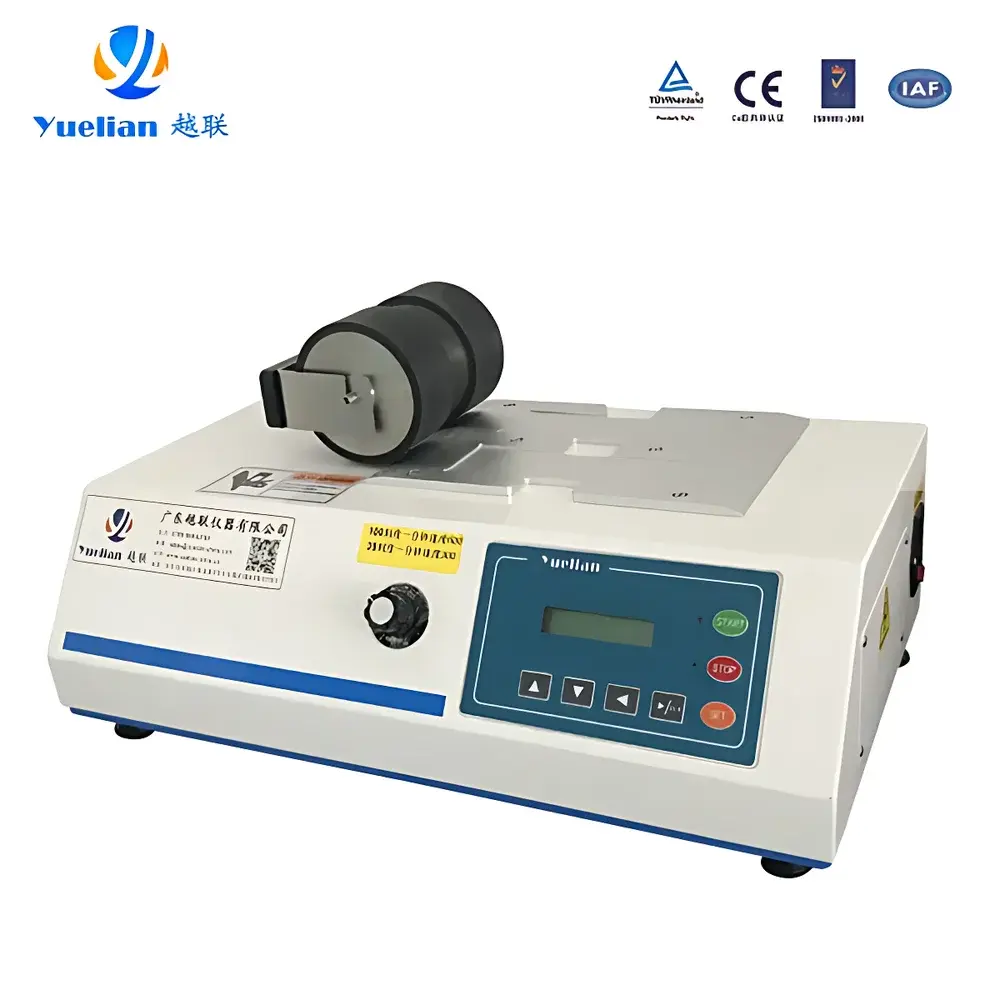
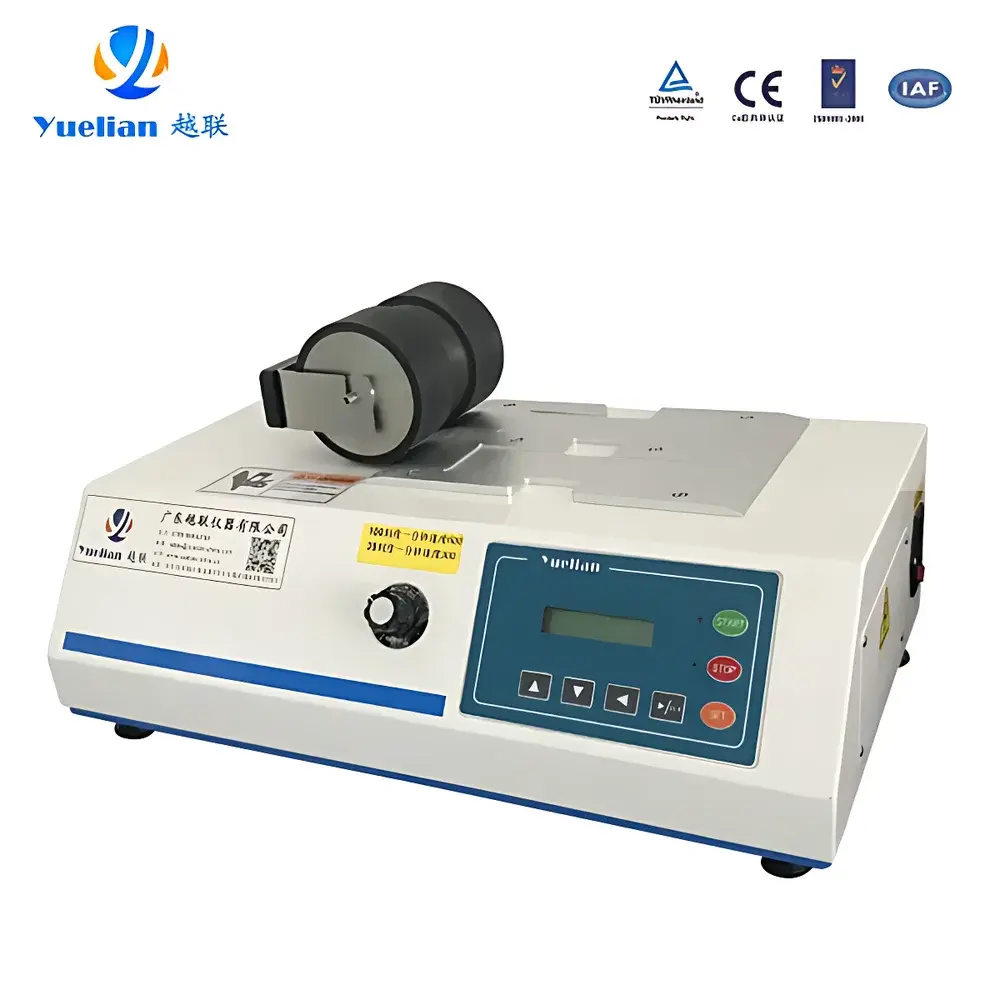
Yuelian PW-US16T Probe Tack Tester
| Brand | Yuelian / PW |
|---|---|
| Origin | Guangdong, China |
| Manufacturer Type | Authorized Distributor |
| Country of Origin | China |
| Model | PW-US16T |
| Price | Upon Request |
| Load Capacity | 0–50 N |
| Measurement Accuracy | ±1% of reading |
| Resolution | 0.01 N |
| Probe Diameter | 5 mm (precision-ground flat tip) |
| Separation Speed Range | 0.5–500 mm/min |
| Position Control Speed Range | 1–800 mm/min |
| Maximum Travel | 200 mm |
| Dimensions (W×L×H) | 360 × 380 × 520 mm |
| Power Supply | 220 V, 50 Hz |
| Weight | 75 kg |
Overview
The Yuelian PW-US16T Probe Tack Tester is a precision-engineered instrument designed to quantify the initial adhesive tack—defined as the instantaneous resistance to separation upon brief contact and controlled debonding—of pressure-sensitive adhesives (PSAs), tapes, labels, and laminates. It operates on the probe tack measurement principle per ASTM D2979 (“Standard Test Method for Tack of Pressure-Sensitive Adhesives by Probe Tack”), wherein a standardized 5 mm diameter flat-ended stainless-steel probe makes normal contact with the adhesive surface under defined preload, dwells for a preset time (typically 0.1–1.0 s), and then retracts at a constant linear velocity. The peak tensile force recorded during separation—the maximum load (in newtons)—is reported as the probe tack value. This method provides high repeatability for comparative evaluation across formulation batches, substrate variations, and curing conditions, making it indispensable in R&D laboratories, quality control environments, and regulatory compliance testing workflows.
Key Features
- High-resolution load measurement system with ±1% full-scale accuracy and 0.01 N resolution, calibrated traceable to national metrological standards.
- Precision-ground 5 mm flat probe tip manufactured to ISO 2768-mK tolerances, ensuring consistent contact geometry and minimal edge effects.
- Computer-controlled electromechanical actuation using low-noise brushless DC motor and preloaded recirculating ball screw assembly for smooth, backlash-free displacement control.
- Programmable separation speed range from 0.5 to 500 mm/min, with independent position-speed profiling capability (1–800 mm/min) for method flexibility.
- Integrated data acquisition interface supporting real-time force–displacement curve plotting, automatic peak detection, and digital hold function for post-test review.
- Robust aluminum-alloy frame with vibration-damped base and modular sensor mounting architecture for long-term mechanical stability and thermal drift mitigation.
Sample Compatibility & Compliance
The PW-US16T accommodates standard PSA test specimens (e.g., 25 mm × 25 mm or 50 mm × 50 mm strips) mounted on rigid backing plates or directly on glass/metal substrates. It supports testing of solvent-based, aqueous, hot-melt, and UV-curable adhesives—including acrylics, rubber-based, and silicone systems—across ambient temperature ranges (18–25°C) and relative humidity levels compliant with ASTM D618 conditioning protocols. The instrument meets functional requirements of ASTM D2979, ISO 2965 (adhesive tack by probe method), and aligns with GLP documentation practices through timestamped test logs, operator ID fields, and audit-ready CSV export. While not certified for FDA 21 CFR Part 11 out-of-the-box, its software architecture permits integration with validated electronic lab notebook (ELN) platforms for regulated environments.
Software & Data Management
The system operates via Windows-compatible proprietary software featuring intuitive graphical user interface (GUI) with multi-language support (English default). Test methods—including dwell time, approach speed, separation rate, and trigger threshold—are fully configurable and savable as named protocols. All raw force–time and force–displacement datasets are stored with metadata (date/time, operator, sample ID, environmental conditions) in encrypted local databases. Export options include CSV, Excel (.xlsx), and PDF report generation with embedded curves, statistical summaries (mean, SD, CV%), and pass/fail flagging against user-defined specification limits. Data integrity safeguards include write-protected archives, automatic backup scheduling, and optional network drive synchronization for centralized QC server deployment.
Applications
- Formulation screening of PSA raw materials (tackifiers, elastomers, plasticizers) during early-stage development.
- Batch-to-batch consistency verification for tape manufacturers prior to release.
- Evaluation of aging effects (thermal, UV, humidity exposure) on initial tack retention.
- Substrate interaction studies—e.g., influence of surface energy, roughness, or primer coatings on probe adhesion.
- Correlation analysis between probe tack and rolling ball or loop tack results per ASTM D3121 and D6195.
- Supporting technical dossiers for ISO 9001, IATF 16949, and ISO 13485-certified production facilities.
FAQ
What adhesive types are suitable for probe tack testing with the PW-US16T?
The instrument is validated for pressure-sensitive adhesives including acrylics, natural/synthetic rubbers, silicones, and hot-melt thermoplastics—provided they exhibit measurable cohesive strength and surface wetting within the 0–50 N load range.
Does the system comply with ASTM D2979 without modification?
Yes—the mechanical design, probe geometry, speed control fidelity, and data sampling rate meet all mandatory provisions of ASTM D2979-20, including probe diameter tolerance (±0.05 mm), dwell time accuracy (±0.02 s), and force resolution requirements.
Can test data be integrated into LIMS or ERP systems?
Raw CSV outputs and structured XML reports are compatible with common laboratory information management systems (LIMS); custom API integration is available upon request for enterprise-level deployments.
Is calibration certification included with purchase?
Each unit ships with a factory calibration certificate traceable to CNAS-accredited reference standards; annual recalibration services and on-site verification kits are offered separately.
What maintenance is required to ensure long-term measurement stability?
Routine cleaning of the probe tip and load cell contact surfaces, biannual lubrication of the ball screw assembly, and quarterly verification of zero-load baseline and linearity using certified deadweight standards are recommended.



