
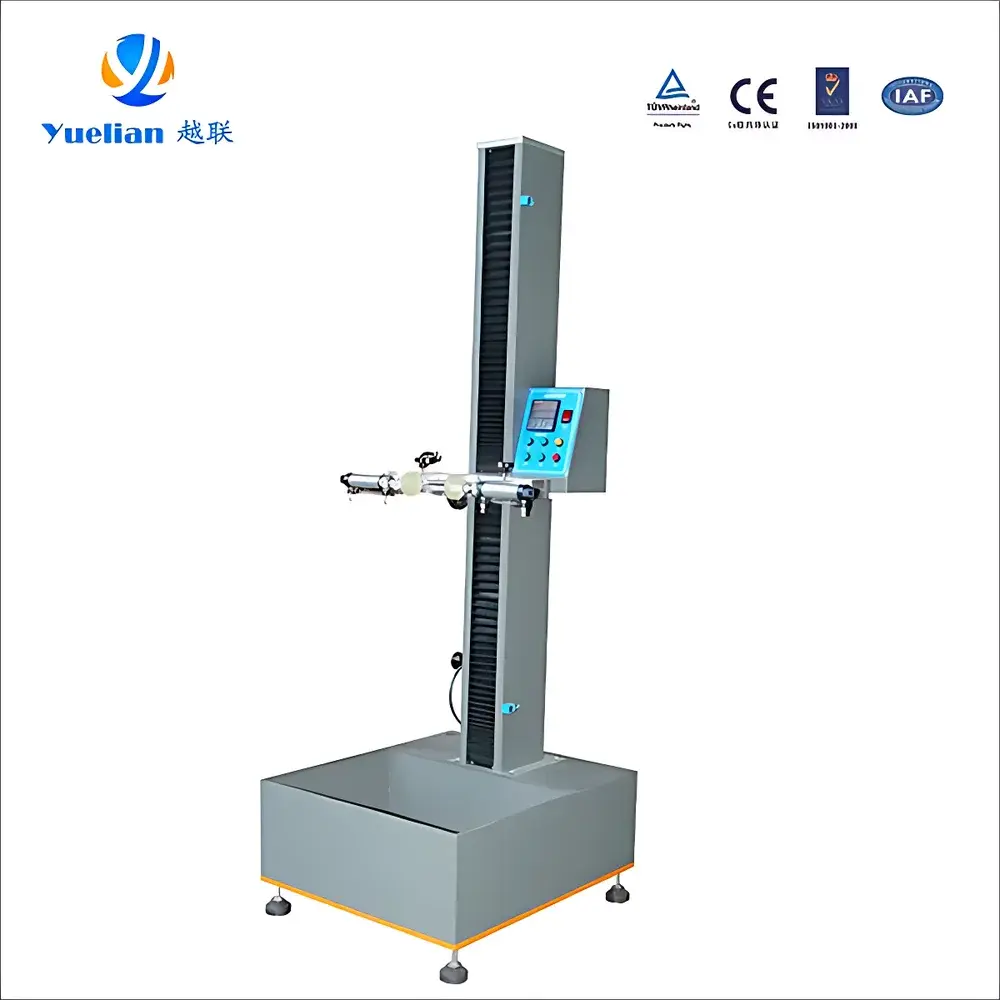
Yuelian YLB-LP216 Electromagnetic Interference-Simulated High-Altitude Low-Pressure Environmental Test Chamber
| Brand | Yuelian |
|---|---|
| Origin | Guangdong, China |
| Manufacturer Type | Authorized Distributor |
| Country of Origin | China |
| Model | YLB-LP216 |
| Price Range | USD 2,800 – 7,000 |
| Temperature Control Accuracy | ±0.1 °C |
| Heating Time (25 °C to 200 °C) | 200 min |
| Cooling Time (25 °C to −20 °C) | 20 min |
| Temperature Uniformity & Stability | ±1 °C |
| Temperature Range | −20 °C to +200 °C |
| Vacuum Range | 5.0 kPa to 101.3 kPa (abs) |
| Minimum Achievable Pressure | 5.0 kPa (abs) |
| Vacuum Control Precision | ±0.5 kPa (≤5 kPa), ±1 kPa (5–40 kPa), ±2 kPa (40–80 kPa) |
| Pressure Ramp Rate (Depressurization) | 15 kPa/min ±3 kPa |
| Chamber Leak Rate | ≤0.8 kPa/h |
| Vacuum Pump Noise Level | ≤75 dB(A) |
| Vacuum Sensor Type | Diffused Silicon Pressure Transducer |
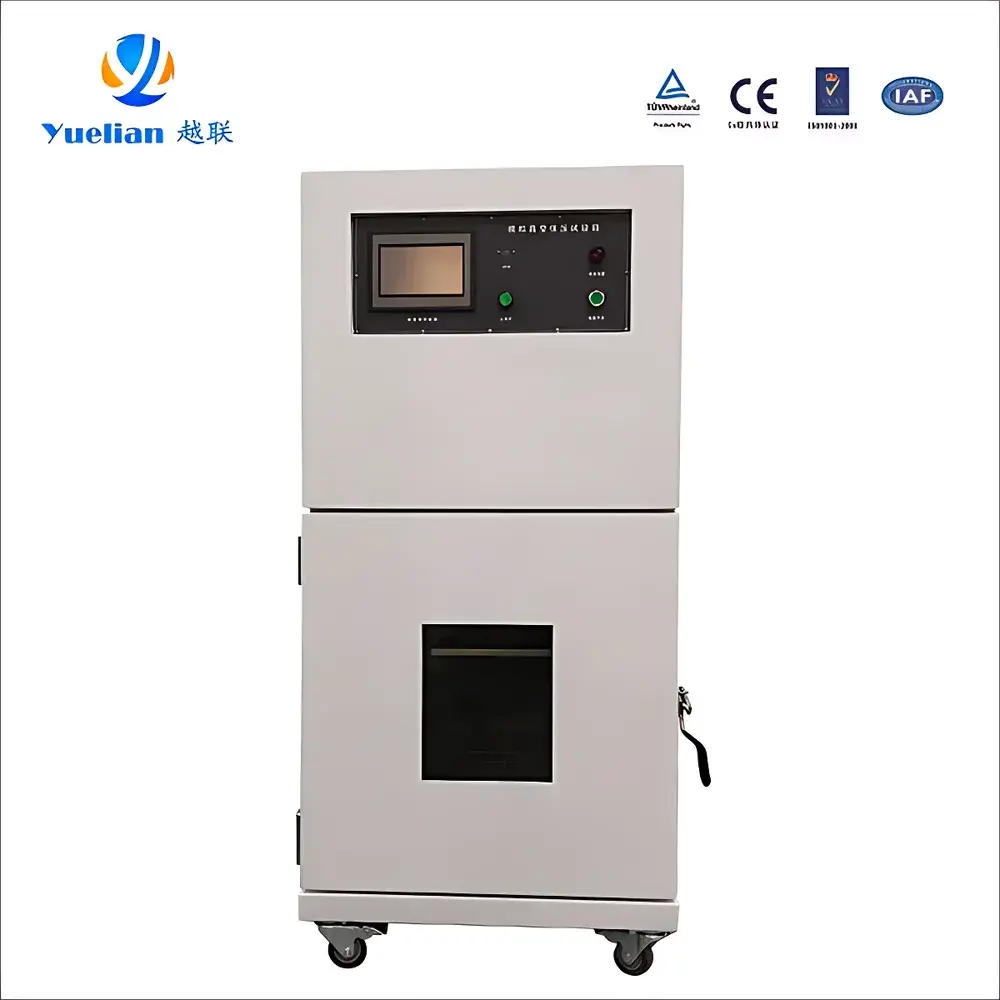
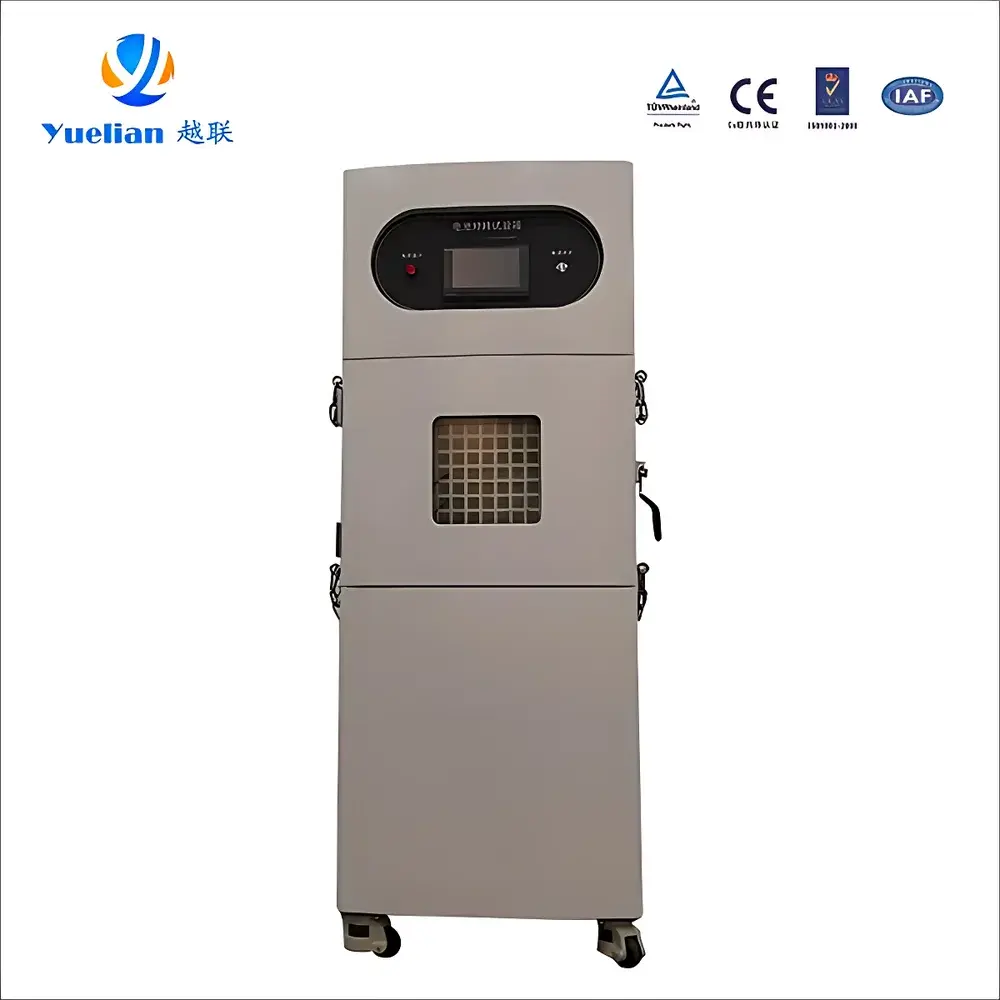
| Control Interface | 5.8″ TFT Touchscreen Controller (Programmable Logic-Based Sequencing) |
| Internal Dimensions | 600 × 600 × 600 mm (W×D×H) |
| External Dimensions (approx.) | 800 × 750 × 1370 mm (W×D×H) |
| Interior Material | 4.0 mm Thick 304 Stainless Steel (Reinforced Structural Design) |
| Exterior Material | 1.2 mm Cold-Rolled Steel with Powder-Coated Finish (Off-White) |
| Insulation | Rockwool Core (Thermal Conductivity <0.04 W/m·K) |
| Viewing Window | 300 × 350 mm Tempered Glass (19 mm Thickness) |
| Sealing System | High-Temperature Silicone Gasket |
| Mobility | Four Lockable Casters with Brake Mechanism |
| Power Supply | AC 220 V ±10%, 50/60 Hz, 2.0 kW Total Load |
| Safety Protections | Ground Fault Protection, Thermal Cut-Off, Overcurrent Fuse, Automatic Pressure Relief Interlock |
Overview
The Yuelian YLB-LP216 Electromagnetic Interference-Simulated High-Altitude Low-Pressure Environmental Test Chamber is an engineered platform for replicating low-barometric-pressure conditions equivalent to high-altitude environments—specifically designed to evaluate the functional integrity and safety performance of lithium-ion batteries, portable electronics, avionics subsystems, and sealed electronic enclosures under controlled depressurization. While commonly mischaracterized as an “EMI simulator” in regional nomenclature, this chamber does not generate electromagnetic fields; rather, its designation reflects integration-ready compatibility with external EMI test systems (e.g., conducted/radiated immunity setups per IEC 61000-4 series) during concurrent low-pressure operation—a configuration frequently mandated in aerospace component qualification protocols. The system operates on a dual-axis environmental principle: precise thermal conditioning (−20 °C to +200 °C) coupled with programmable vacuum control (5.0 kPa to 101.3 kPa absolute), enabling dynamic simulation of ascent profiles up to ~18,000 m (equivalent to 5.0 kPa). Its primary validation scope aligns with UN Manual of Tests and Criteria Part III, subsection 38.3 (Section 38.3.4: Altitude Simulation), UL 1642 (Clause 9: Low-Pressure Storage), and GB 31241–2014 (Section 7.7: Low-Pressure Test), all requiring non-catastrophic behavior—including absence of fire, explosion, venting, electrolyte leakage, or pressure-relief valve failure—under sustained sub-atmospheric stress.
Key Features
- Structurally reinforced 304 stainless steel inner chamber (4.0 mm thickness) with internal bracing to prevent deformation under cyclic vacuum loading up to 95 kPa differential pressure;
- Integrated 5.8″ programmable touchscreen controller supporting multi-step vacuum sequencing—user-definable upper/lower pressure limits, hold duration, controlled depressurization rate (15 kPa/min ±3 kPa), and automatic pressure relief upon cycle completion or fault detection;
- High-fidelity vacuum regulation using a calibrated diffused silicon pressure transducer (IEC 60770-1 compliant) with real-time feedback and closed-loop PID compensation;
- Dual-layer internal configuration with removable stainless steel mesh shelves (two included), facilitating simultaneous testing of heterogeneous sample sets while maintaining laminar flow distribution;
- Acoustically damped vacuum system featuring YC0020 rotary vane pump (0.9 kW motor, oil-lubricated, ultimate vacuum ≤5.0 kPa abs) operating at ≤75 dB(A) at 1 m distance;
- Robust thermal insulation using mineral rockwool (density ≥100 kg/m³, thermal conductivity ≤0.04 W/m·K) sandwiched between inner and outer walls to minimize thermal drift during prolonged low-pressure holds;
- Fail-safe interlocks including overpressure cut-off, ground-fault circuit interruption, thermal overload protection, and automatic emergency venting if vacuum exceeds user-defined safety thresholds.
Sample Compatibility & Compliance
The YLB-LP216 accommodates samples up to 550 mm × 550 mm × 550 mm per shelf, with total usable volume of 216 L. It supports standard battery formats (18650, 21700, pouch cells, prismatic modules), PCB assemblies, sensor housings, medical device enclosures, and UAV power systems. All operational parameters—including ramp rates, dwell times, temperature setpoints, and pressure tolerances—are traceable and auditable per GLP/GMP documentation requirements. The controller logs timestamped pressure/temperature data at user-selectable intervals (1–60 s), generating CSV-compatible reports suitable for FDA 21 CFR Part 11-compliant review when paired with validated electronic signature workflows. Calibration certificates for the pressure sensor and thermal sensors are provided with initial delivery and conform to ISO/IEC 17025-accredited laboratory practices.
Software & Data Management
No proprietary PC software is bundled; however, the embedded controller exports native .CSV files via USB port for post-processing in MATLAB, Python (pandas), or statistical analysis platforms (JMP, Minitab). Logged datasets include absolute pressure (kPa), chamber air temperature (°C), elapsed time (hh:mm:ss), and system status flags (e.g., “Vacuum Active”, “Hold Phase”, “Relief Valve Open”). Optional RS485 Modbus RTU interface enables integration into centralized LabVIEW or SCADA environments for remote monitoring and alarm forwarding. Audit trails retain all parameter changes, operator IDs (via optional RFID login module), and calibration events for minimum 12 months—fully compliant with ISO 17025 clause 7.7 and ICH Q7 Annex 19 record retention mandates.
Applications
- Lithium-based battery safety certification per UN 38.3 Section 38.3.4 (altitude simulation at 11.6 kPa for ≥6 h);
- Functional verification of MEMS barometers, altimeters, and pressure-compensated sensors under representative flight envelopes;
- Accelerated aging studies of hermetic seals, gaskets, and conformal coatings exposed to repeated pressure cycling;
- Validation of condensation resistance in optoelectronic assemblies during rapid decompression;
- Pre-compliance screening of consumer electronics prior to formal MIL-STD-810H Method 500.7 (Low Pressure) testing;
- Research into vapor-phase electrolyte transport mechanisms in solid-state battery prototypes under sub-ambient partial pressures.
FAQ
Does the YLB-LP216 generate electromagnetic interference?
No. The “electromagnetic” descriptor refers to its mechanical and electrical design compatibility with external EMI test systems—not intrinsic field generation. It contains no RF sources or intentional radiators.
Can the chamber perform combined temperature–vacuum profiling?
Yes. Independent thermal and vacuum control loops allow simultaneous execution of temperature ramps and pressure steps—for example, holding at −20 °C while depressurizing from 101.3 kPa to 11.6 kPa over 30 minutes.
Is the vacuum pump oil-free?
No. The YC0020 pump uses mineral oil lubrication, requiring scheduled oil changes every 500 operational hours or per manufacturer specifications.
What is the maximum sample weight the shelves support?
Each stainless steel mesh shelf is rated for 30 kg uniformly distributed load; total chamber payload capacity is 60 kg.
Does the unit comply with CE or UKCA marking requirements?
The base configuration meets EMC Directive 2014/30/EU and Low Voltage Directive 2014/35/EU. CE marking documentation (DoC, risk assessment, harmonized standards list) is available upon request for export configurations.



