
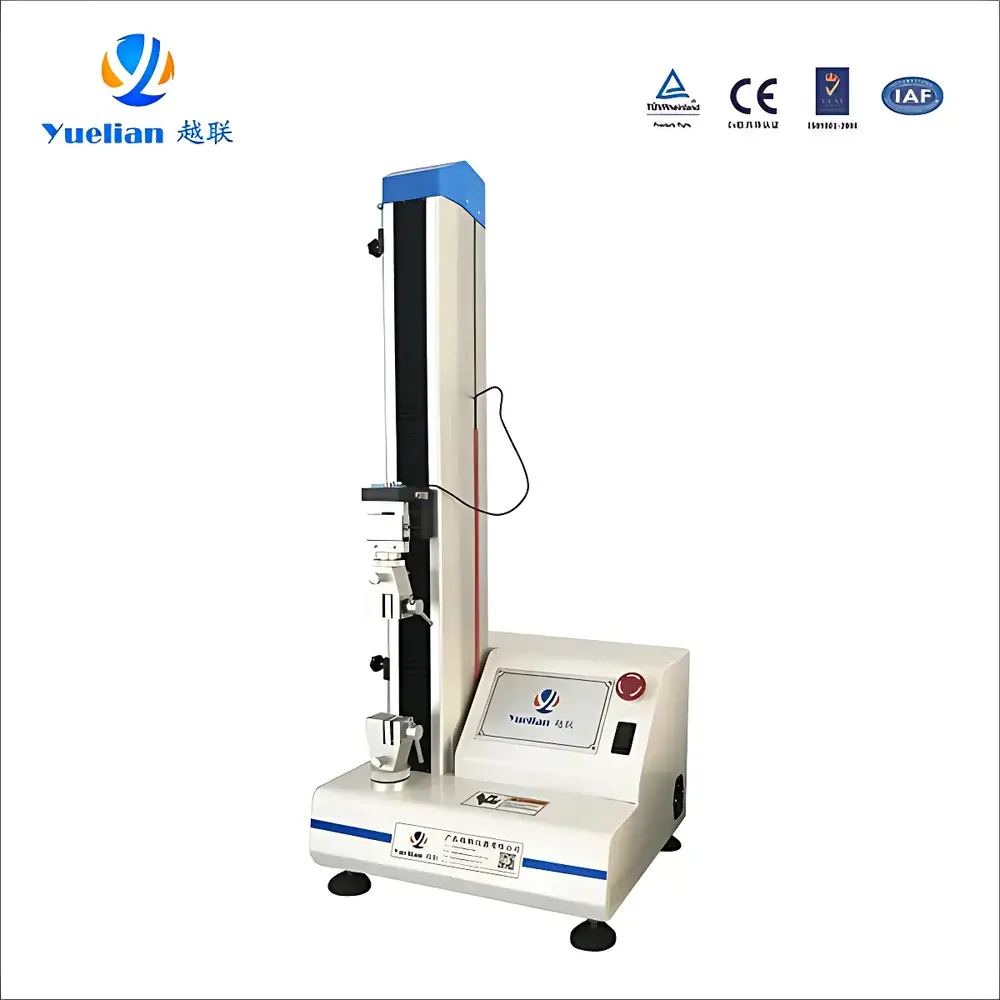
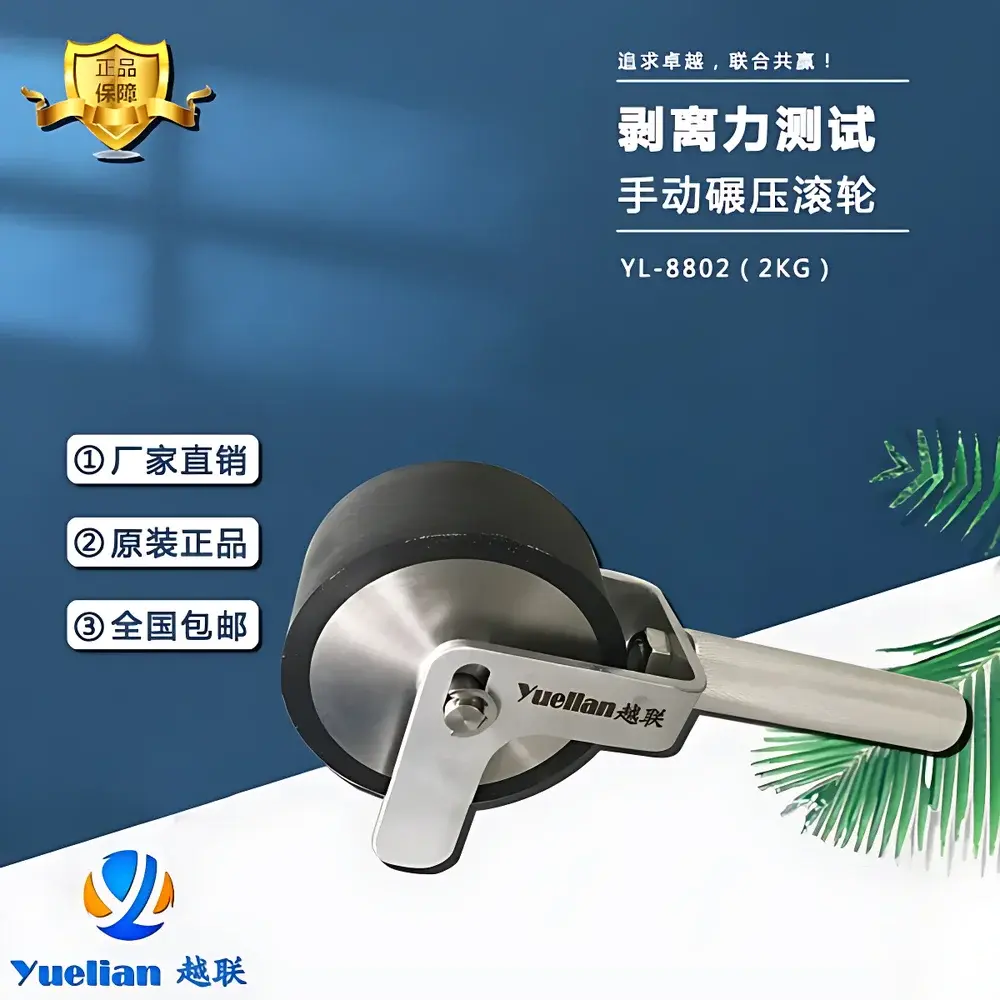
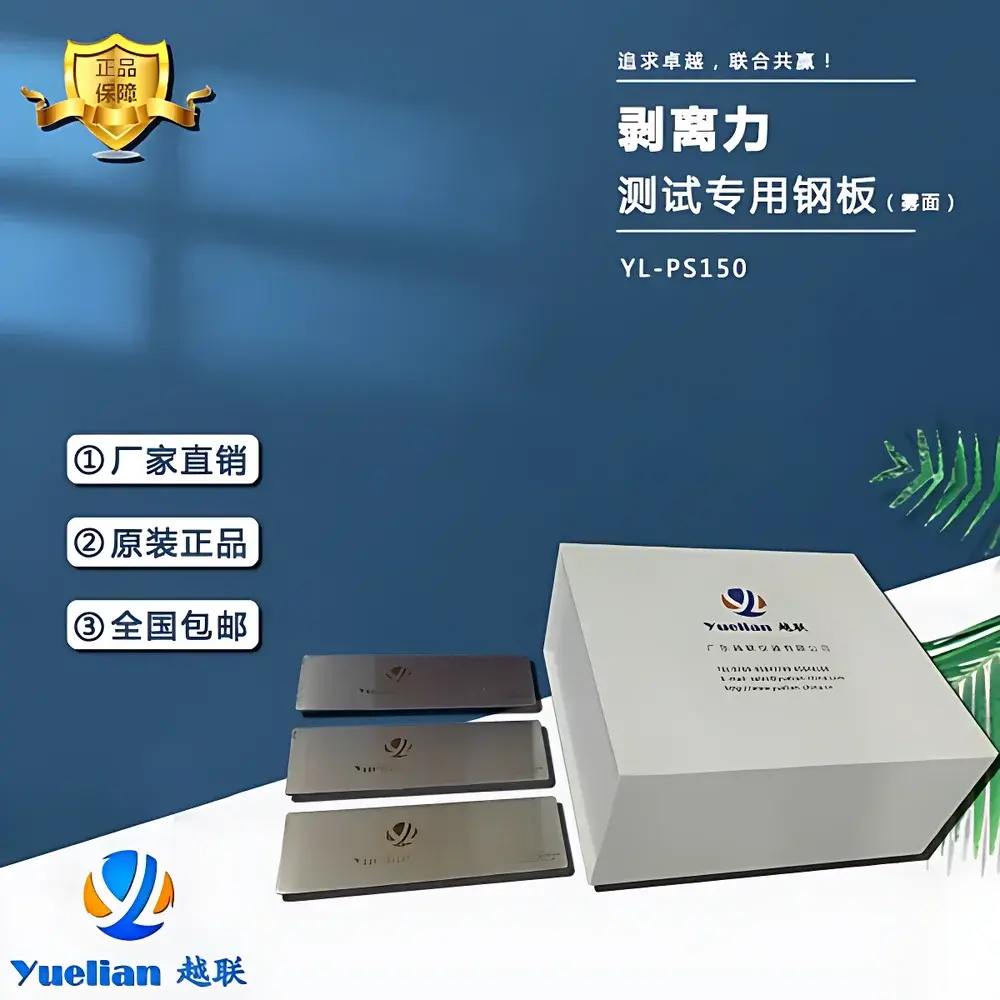
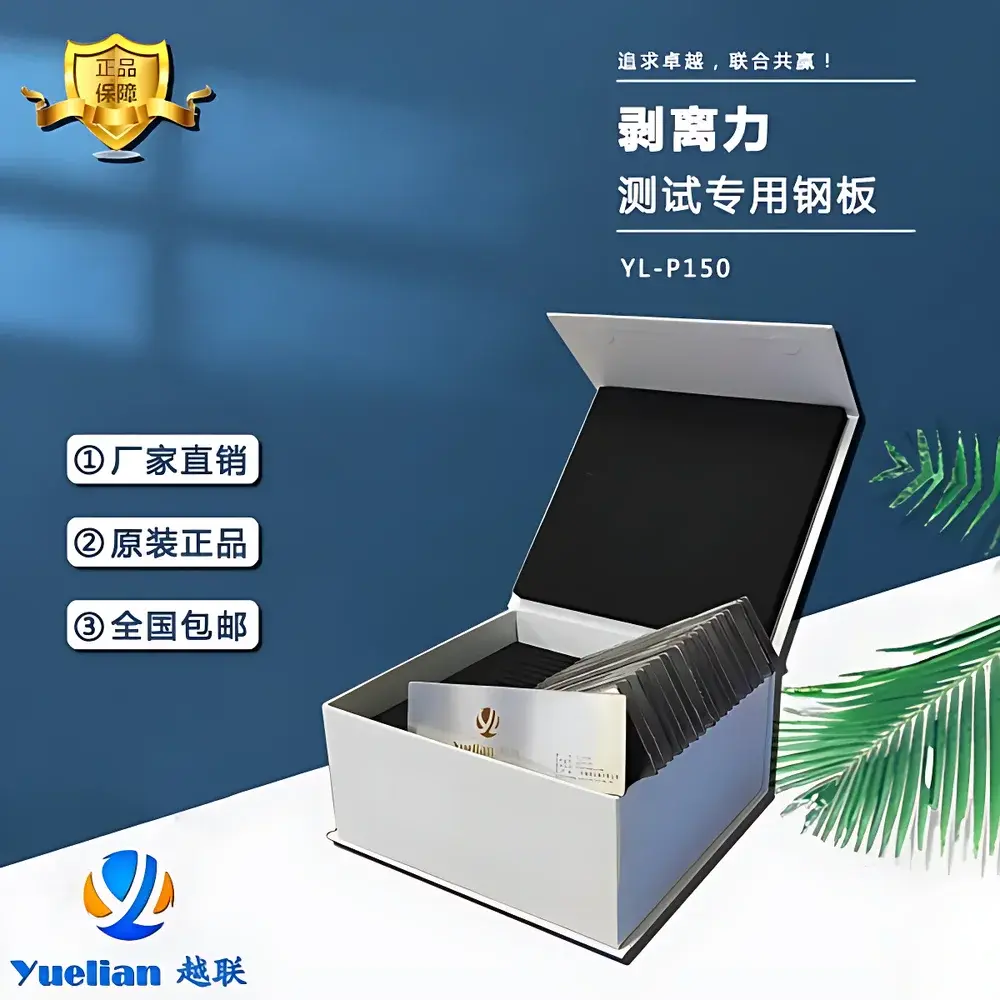
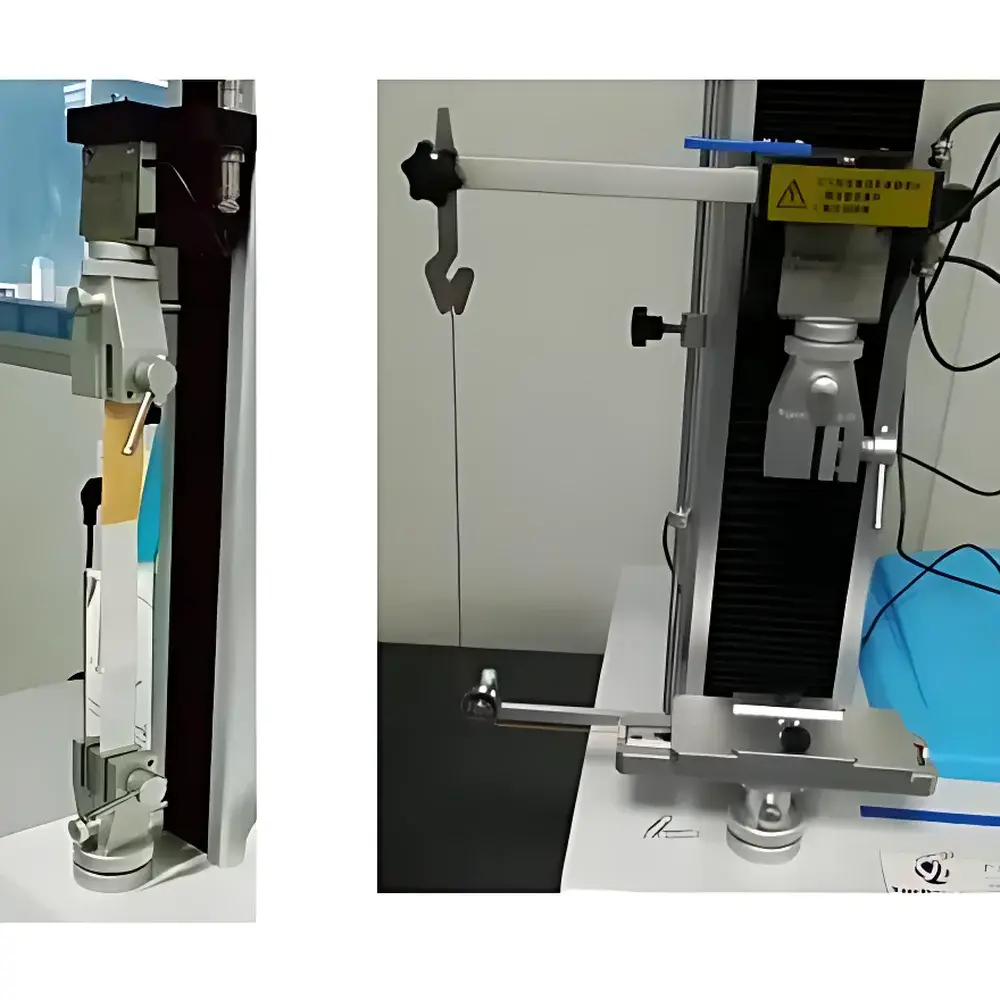
Yuelian YL-S90 Universal Testing Machine for Tensile, Peel, and Adhesion Testing
| Brand | Yuelian |
|---|---|
| Origin | Guangdong, China |
| Manufacturer Type | Authorized Distributor |
| Country of Origin | China |
| Model | YL-S90 |
| Instrument Type | Electromechanical Universal Testing Machine |
| Load Capacity Options | 10 N, 20 N, 50 N, 100 N, 200 N, 500 N, 1 kN (dual-range configuration available) |
| Force Resolution | 1/500,000 full scale |
| Force Accuracy | ±0.30% of reading |
| Displacement Resolution | 1/500,000 full scale |
| Test Stroke | 500 mm / 800 mm (model-dependent) |
| Test Width | 110 mm |
| Speed Range | 0.1–500 mm/min (software-controlled, step motor-driven) |
| Drive System | Precision preloaded ball screw with timing belt transmission |
| Power Supply | 220 V AC, 50/60 Hz, 10 A |
| Power Consumption | 180 W |
| Dimensions (W×D×H) | 40 × 37 × 92 cm (standard) |
| Net Weight | 28 kg / 35 kg |
| Compliance Standards | GB/T 2792, ASTM D3330, GB/T 12914–1991, GB 13022–91, GB/T 1040–92, GB 2792–81, GB/T 14344–9, GB/T 2191–95, QB/T 2171–95, GB/T 10003–2008 |
Overview
The Yuelian YL-S90 is an electromechanical universal testing machine engineered for high-reproducibility mechanical property evaluation of soft and semi-rigid materials across research laboratories, quality control departments, and production environments. It operates on a precision-controlled servo-motor–driven ball screw actuation system, delivering stable, low-noise, and energy-efficient force application with >85% mechanical transmission efficiency. Designed in accordance with fundamental principles of uniaxial static loading, the system measures tensile strength, peel adhesion, shear resistance, tear propagation, compressive modulus, and loop tack—enabling standardized mechanical characterization under controlled displacement or load-rate conditions. Its modular architecture supports both stand-alone operation via USB-connected PC and integrated software-based test sequencing, making it suitable for routine compliance verification as well as method development workflows.
Key Features
- Precision electromechanical drive system utilizing a high-torque stepper motor coupled to a preloaded ground ball screw and synchronous timing belt transmission
- Adjustable crosshead travel (500 mm or 800 mm variants) with rapid manual fine-tuning controls for optimal specimen alignment
- Multi-range load cell options (10 N to 1 kN), including dual-capacity configurations for extended dynamic range without hardware replacement
- Real-time dual-channel display of force (in N, kgf, lbf, g, ton, MPa) and displacement (mm/inch) with automatic unit conversion
- Programmable test speed from 0.1 to 500 mm/min, digitally set and maintained with <±0.5% speed stability over full range
- Auto-return function upon test completion; configurable stop triggers including overload cutoff, specimen rupture detection, upper/lower limit enforcement, and emergency stop activation
- Quick-release universal mounting interface compatible with ISO-standardized grips—including pneumatic, wedge, peel, shear, and loop-tack fixtures
- Integrated USB 2.0 and RS-232 interfaces for direct connection to host PCs, data loggers, or industrial printers
Sample Compatibility & Compliance
The YL-S90 accommodates specimens from diverse material classes: polymeric films and laminates, elastomeric compounds, nonwovens, coated papers, textile webs, adhesive tapes, biomedical dressings, and thin metallic foils. Its mechanical design and control firmware conform to multiple national and international standard test methods, including but not limited to: GB/T 2792 (peel strength of pressure-sensitive tapes), ASTM D3330 (180° peel adhesion), GB/T 12914–1991 (tensile properties of paper and board), GB/T 1040–92 (plastics tensile testing), and GB/T 10003–2008 (biaxially oriented polypropylene films). All force and displacement measurements traceably adhere to metrological requirements defined in ISO/IEC 17025-accredited calibration practices, ensuring audit readiness for GLP, GMP, and ISO 9001 quality management systems.
Software & Data Management
The included Windows-compatible software provides full test method definition, real-time curve visualization (force vs. displacement, stress vs. strain), automated peak detection, statistical reporting (mean, SD, CV%), and export to CSV, Excel, or PDF formats. Audit-trail functionality records operator ID, timestamp, test parameters, calibration history, and raw data files—supporting regulatory compliance with FDA 21 CFR Part 11 requirements when deployed with appropriate IT infrastructure controls. Data integrity safeguards include password-protected method libraries, electronic signatures for report approval, and version-controlled test templates aligned with SOPs.
Applications
- Quantification of 90° and 180° peel adhesion for pressure-sensitive adhesives (PSAs) and laminated packaging structures
- Tensile modulus and elongation-at-break assessment of thermoplastic films per ASTM D882
- Loop tack and probe tack measurement for hot-melt and acrylic-based adhesives
- Compression behavior of foam cushions, gaskets, and hydrogel wound dressings
- Tear resistance evaluation of woven/nonwoven fabrics using tongue or trapezoid methods
- Shear strength determination of structural adhesives and double-coated tapes
- Quality assurance screening for incoming raw materials and finished goods in electronics, medical device, and packaging manufacturing
FAQ
What standards does the YL-S90 support out-of-the-box?
The system is pre-configured with test templates and calculation routines compliant with GB/T 2792, ASTM D3330, GB/T 1040, and other widely adopted mechanical testing standards.
Can the YL-S90 perform constant-load or constant-strain-rate tests?
Yes—it supports closed-loop control modes for both displacement-controlled and load-controlled testing, including hold (creep) and ramp-hold sequences.
Is third-party calibration certification available?
Calibration certificates traceable to NIM (National Institute of Metrology, China) or equivalent national metrology institutes can be provided upon request.
Does the software meet FDA 21 CFR Part 11 requirements?
When deployed with validated user access controls, electronic signature workflows, and secure audit logging, the software satisfies core technical requirements for Part 11 compliance.
What is the maximum recommended specimen thickness for peel testing?
For consistent interfacial separation, substrate thickness should remain ≤1.5 mm; thicker substrates may require custom fixture adaptation to maintain test geometry fidelity.



