
Xenon Arc Weathering Test Chamber – Air-Cooled Type
| Brand | Other Brands |
|---|---|
| Origin | Imported |
| Manufacturer Type | Authorized Distributor |
| Price | USD 5,200 (Reference Only) |
Overview
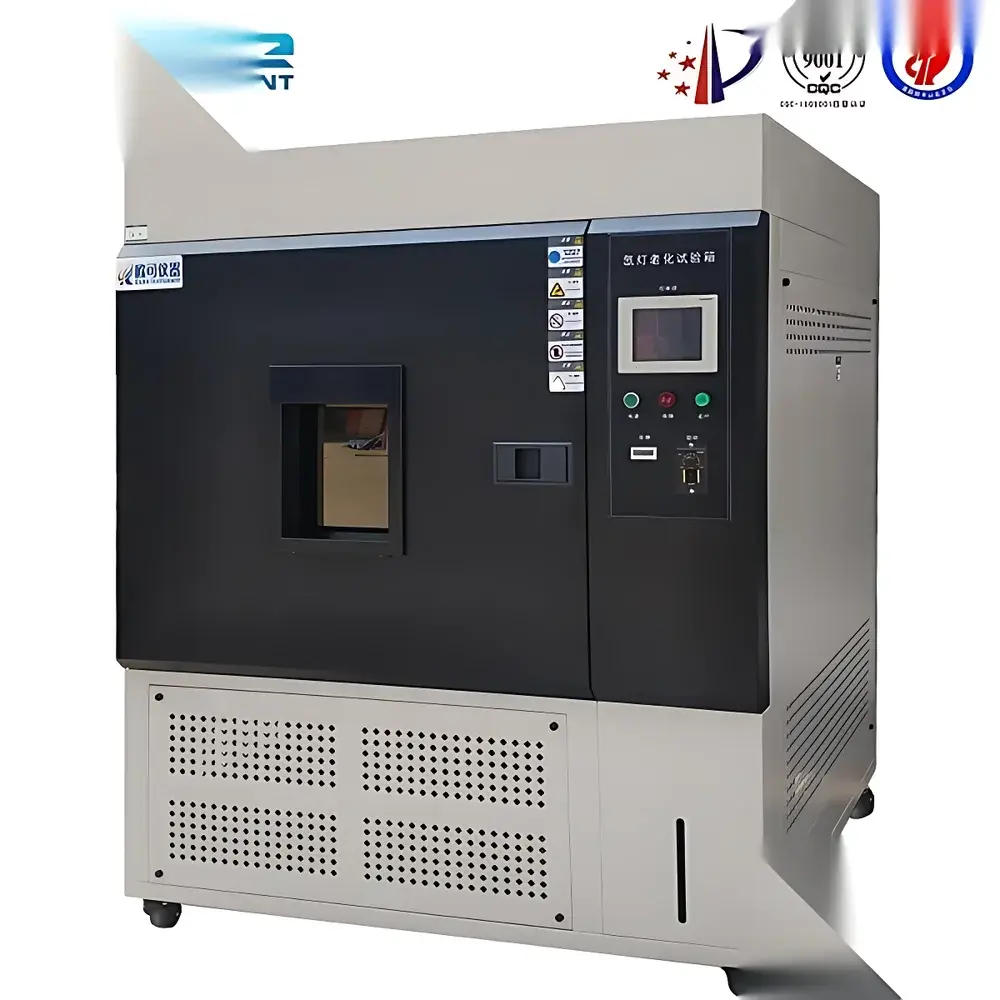
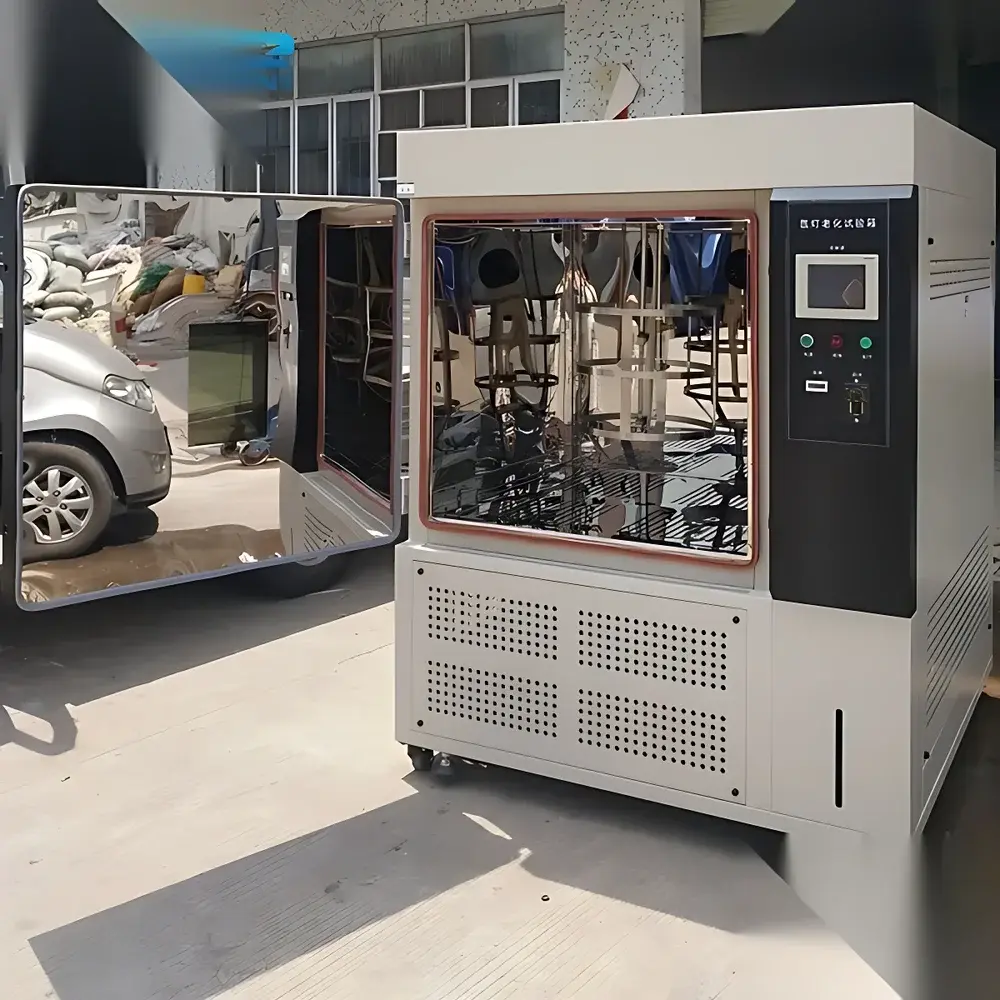
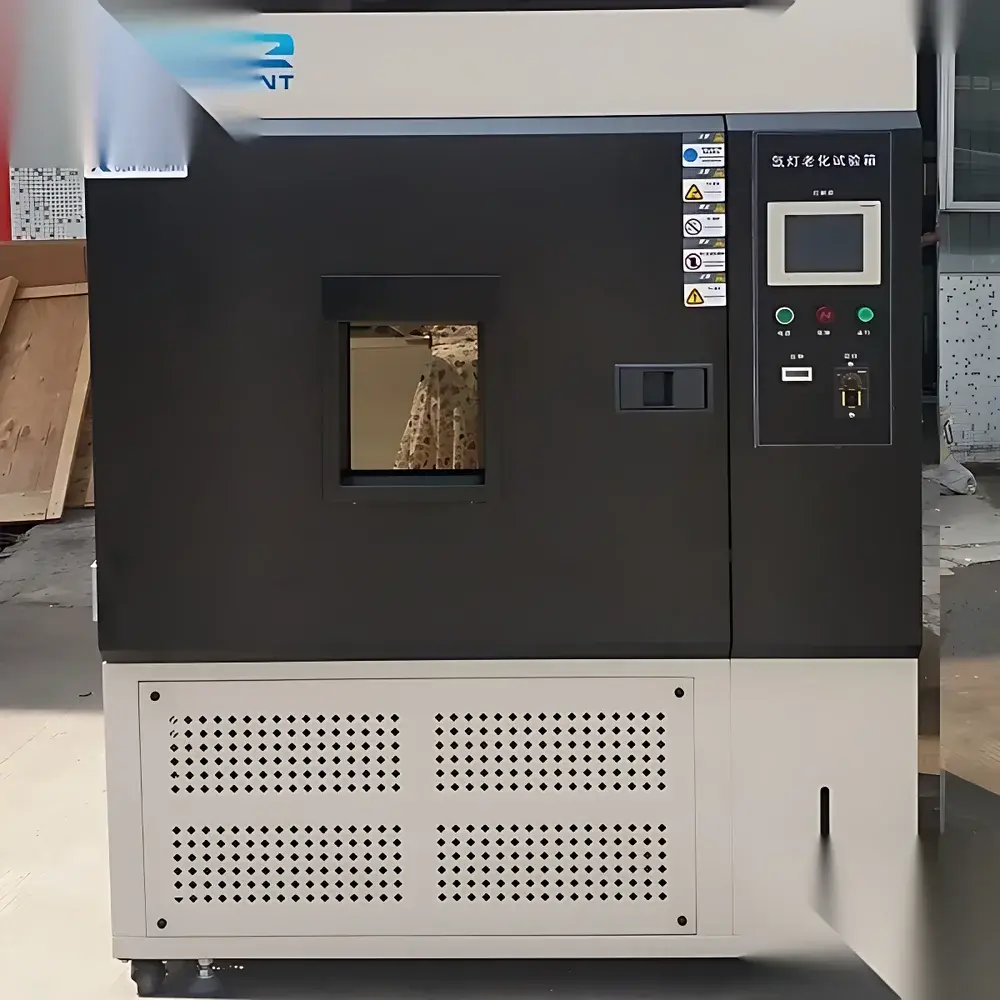
The Xenon Arc Weathering Test Chamber – Air-Cooled Type is a precision-engineered environmental test system designed to simulate full-spectrum solar radiation, temperature, and humidity conditions for accelerated weathering evaluation of materials. It employs a stabilized xenon arc lamp as the light source, filtered through calibrated optical filters to replicate natural daylight (ISO 4892-2, ASTM G155, SAE J2527, ISO 11341). Unlike water-cooled variants, this air-cooled configuration eliminates dependency on deionized water supply, external chillers, or complex plumbing—reducing infrastructure requirements while maintaining spectral fidelity and irradiance stability across the critical 290–800 nm range. The chamber integrates real-time closed-loop control of black-panel temperature (BPT), relative humidity (RH), and irradiance (W/m² @ 340 nm or 420 nm), enabling reproducible exposure profiles aligned with international durability testing protocols.
Key Features
- Air-cooled xenon lamp assembly with high-efficiency forced-air heat dissipation—no external chiller, deionized water loop, or condensate drainage required.
- Integrated rotating sample carousel with hollow-shaft design and RF-coupled telemetry: enables continuous temperature monitoring of rotating specimens without mechanical slip rings or cable twisting.
- Industrial-grade touchscreen HMI (10.1″ LCD) running proprietary weathering control firmware—supports multi-step exposure programs, real-time parameter visualization, and audit-trail-enabled operation logs.
- Dual-stage optical filtering system (quartz inner + borosilicate outer) ensures stable UV cut-on, visible transmission, and IR attenuation per ISO 4892-2 Class A specifications.
- Full digital I/O architecture with PLC-based motion and thermal control: all analog signals (BPT, RH, irradiance) conditioned via 16-bit ADCs; control outputs delivered via zero-cross SSRs for precise proportional power regulation.
- Comprehensive hardware safety interlocks: overtemperature cutoff (dual independent sensors), airflow failure detection, lamp arc instability monitoring, and door-open emergency shutdown.
- Pre-wired modular electrical cabinet compliant with IEC 60204-1: standardized wire labeling (laser-printed sleeve markers), DIN-rail mounted Omron/Chint contactors & thermal relays, segregated low-voltage control zones.
Sample Compatibility & Compliance
The chamber accommodates flat or three-dimensional specimens up to 75 mm thickness on a 360 mm diameter turntable (max. 20 kg load). Standard fixtures support ISO 18898-compliant specimen mounting, ASTM D7869 coupon holders, and custom jigs for automotive trim, textile swatches, or polymer films. All operational parameters—including irradiance setpoint (0.35–1.20 W/m² @ 340 nm), black-panel temperature (40–110 °C), and relative humidity (10–95% RH)—are traceable to NIST-calibrated reference sensors. System validation documentation supports IQ/OQ protocols per ISO/IEC 17025 and GLP-compliant test reporting. Complies with key regulatory frameworks including ASTM G155, ISO 4892-2, GB/T 16422.2, and JIS D 0205.
Software & Data Management
The embedded control software provides password-protected user roles (Operator, Engineer, Administrator), configurable exposure cycles (light/dark, spray/no-spray, ramp/hold), and automatic data logging at 10-second intervals. All measurement records—including BPT, chamber RH, irradiance, elapsed time, and alarm events—are timestamped and stored onboard for ≥24 months. Export formats include CSV and XML; historical datasets can be retrieved via USB or Ethernet (Modbus TCP). Audit trail functionality complies with FDA 21 CFR Part 11 requirements: electronic signatures, immutable event logs, and change history for all parameter modifications. Optional cloud synchronization enables remote monitoring and centralized fleet management.
Applications
This chamber is routinely deployed in R&D laboratories and QC departments for evaluating photostability, color fade resistance, gloss retention, and mechanical degradation of polymers, coatings, textiles, automotive interiors, and packaging materials. Typical use cases include qualification testing for OEM automotive specifications (e.g., Ford CETP, GMW14124), compliance verification against UL 746C, accelerated aging per IEC 61215 for PV encapsulants, and formulation benchmarking under cyclic UV/humidity stress. Its air-cooled architecture makes it especially suitable for facilities with limited utility infrastructure or space-constrained labs requiring plug-and-play deployment.
FAQ
What is the primary advantage of air-cooling versus water-cooling in xenon arc testing?
Air-cooling removes dependency on purified water, chillers, and associated plumbing—lowering total cost of ownership and simplifying installation in non-dedicated lab spaces.
Does the system support calibration traceability to national standards?
Yes: irradiance sensors are factory-calibrated against NIST-traceable reference cells; temperature and humidity sensors include certificate-of-calibration with uncertainty statements.
Can the chamber operate unattended for extended exposure cycles?
Yes: integrated watchdog timers, redundant safety circuits, and automatic fault logging enable secure 7×24 operation with minimal supervision.
Is the software compatible with LIMS or enterprise MES platforms?
Yes: Modbus TCP and OPC UA interfaces allow seamless integration with laboratory information management systems and manufacturing execution systems.
What maintenance intervals are recommended for long-term reliability?
Lamp replacement every 1,500–2,000 hours; filter set replacement every 500 hours; annual verification of sensor drift and irradiance uniformity per ISO 4892-2 Annex C.



