
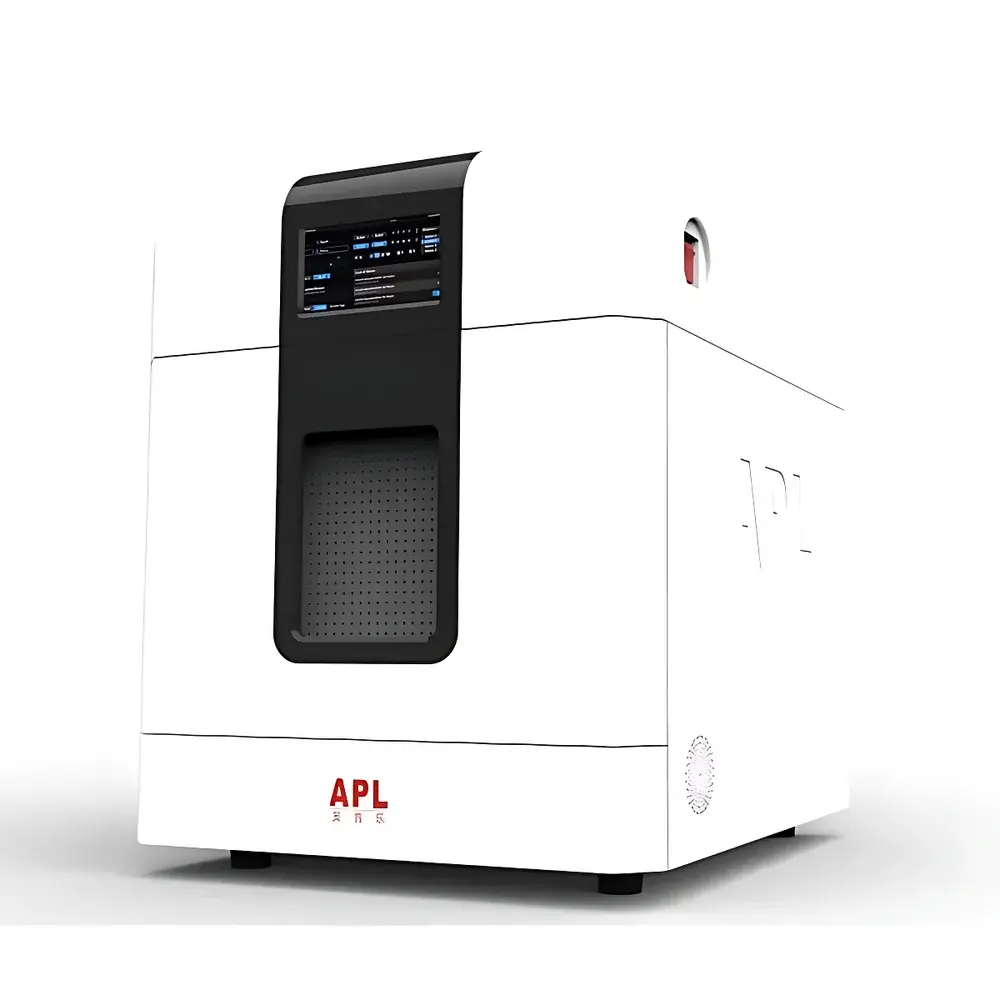
APL Optimum Touchwin2.0 (XiaoLe) 16-Position Intelligent Microwave Digestion System
| Brand | APL Optimum |
|---|---|
| Origin | Sichuan, China |
| Manufacturer Type | Direct Manufacturer |
| Country of Origin | China |
| Model | Touchwin2.0 (XiaoLe) |
| Cavity Class | Industrial-Grade |
| Sample Capacity | 16 vessels |
| Microwave Source | Single Magnetron |
| Max Temperature | 300 °C |
| Max Pressure | 2200 psi |
Overview
The APL Optimum Touchwin2.0 (XiaoLe) 16-Position Intelligent Microwave Digestion System is an industrial-grade, closed-vessel microwave-assisted sample preparation platform engineered for high-precision, reproducible acid digestion of inorganic and organometallic matrices. Operating on the principle of controlled microwave energy coupling into polar solvents—primarily concentrated nitric, hydrochloric, and hydrofluoric acid mixtures—the system enables rapid, uniform thermal decomposition of complex samples under elevated temperature and pressure conditions. Designed to meet the stringent throughput and safety requirements of modern analytical laboratories, the Touchwin2.0 integrates real-time multimodal process monitoring with robust hardware architecture, supporting applications ranging from environmental soil analysis and geological geochemistry to food safety testing and pharmaceutical raw material qualification.
Key Features
- Industrial-grade stainless-steel cavity with triple-layer PFA (perfluoroalkoxy alkane) interior coating—resistant to long-term exposure to aggressive mineral acids including HF, aqua regia, and perchloric acid mixtures.
- Patented mid-infrared bottom-scanning sensor technology for non-contact, vessel-specific temperature measurement across all 16 positions—ensuring accurate thermal profiling without interference from microwave field distortion.
- Real-time, individual vessel pressure monitoring via piezoresistive transducers integrated into each rotor port—enabling dynamic power modulation and immediate overpressure response.
- Three-dimensional magnetron arrangement with optimized waveguide distribution for homogeneous microwave field distribution (±5% spatial variance), minimizing hot/cold zones and ensuring inter-vessel temperature uniformity.
- 10.1-inch capacitive touchscreen interface with dual-user role management (administrator and operator), audit-trail-enabled electronic signatures, and GLP-compliant session logging per ICH GCP and FDA 21 CFR Part 11 requirements.
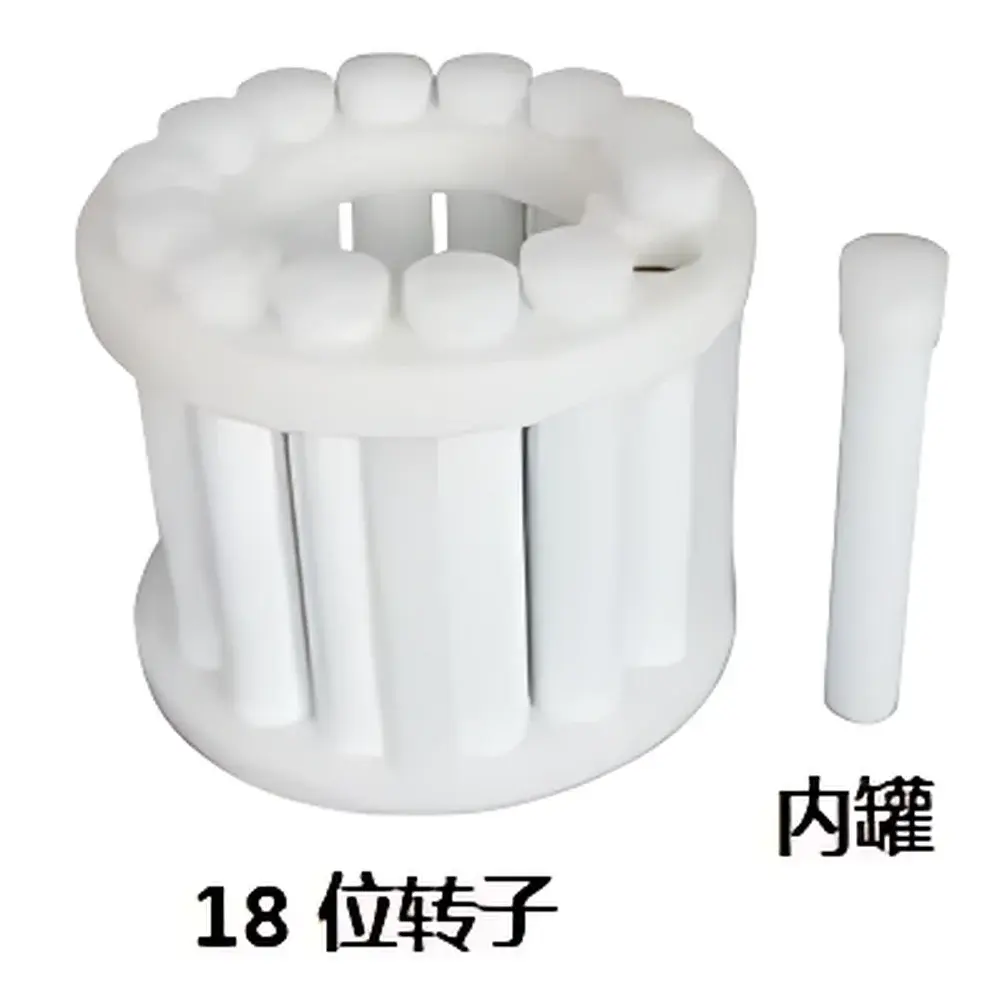
- Modular rotor compatibility—including universal adapters for internationally standardized digestion vessels (e.g., Milestone ETHOS, CEM MARS, Anton Paar Multiwave series)—facilitating method transfer and cross-platform validation.
Sample Compatibility & Compliance
The Touchwin2.0 supports a wide range of solid and semi-solid matrices, including biological tissues, plant materials, polymers, catalysts, ores, sludges, and ceramic powders. It complies with key international digestion protocols including EPA Method 3052, ISO 15587-1, ASTM D5511, and USP <231> heavy metals testing. All pressure-rated consumables are manufactured to ASME BPVC Section VIII Div. 1 standards, and the system’s safety interlocks conform to IEC 61000-4-3 (EMC) and IEC 61010-1 (electrical safety). Full traceability of digestion parameters—including ramp rate, hold time, maximum T/P, and cooling profile—is retained for regulatory submission and internal QA review.
Software & Data Management
The embedded Touchwin2.0 OS provides intuitive workflow-driven method programming with up to 99 customizable digestion programs, each supporting multi-step ramp-hold-cool sequences. Raw sensor data (temperature, pressure, power, time) is logged at 1 Hz resolution and exportable in CSV or XML formats. Optional PC connectivity via Ethernet or USB enables remote method deployment, batch report generation, and integration with LIMS platforms. Wireless monitoring via iOS/Android devices (Wi-Fi module optional) allows live cavity observation and status alerts—without compromising RF shielding integrity. All software modules support electronic signature capture, user-defined permission levels, and automated backup to network drives or cloud storage compliant with ISO/IEC 27001 data governance frameworks.
Applications
- High-throughput trace metal analysis (ICP-MS, ICP-OES) requiring sub-ppt detection limits and minimal blank contribution.
- Geochemical sample preparation for rare earth element (REE) quantification and isotopic ratio determination (MC-ICP-MS).
- Pharmaceutical excipient and active ingredient digestion prior to elemental impurity screening per ICH Q3D guidelines.
- Food and feedstuff analysis for As, Cd, Pb, Hg, and inorganic Sn in compliance with EU Commission Regulation (EU) No 2023/2041.
- Microplastic digestion for polymer-bound additive leaching studies under controlled oxidative conditions.
- Organometallic synthesis and catalytic reaction optimization under sealed-vessel microwave irradiation.
FAQ
Does the system support ASTM D5511 or EPA 3052-compliant digestion methods?
Yes—preconfigured method templates for both standards are included, with validated temperature/pressure profiles and certified reference material (CRM) traceability documentation available upon request.
Can third-party digestion vessels be used with the Touchwin2.0 rotor?
Yes—universal adapters accommodate standard 16-position rotors from major OEMs, subject to dimensional and pressure rating verification per APL’s compatibility matrix.
Is remote diagnostics and firmware update capability built-in?
Firmware updates are performed locally via USB or network download; remote diagnostic access requires optional APL Remote Support License and IT-approved secure tunneling configuration.
What safety certifications does the instrument carry?
CE marking (EN 61000-4-3, EN 61010-1), RoHS 2011/65/EU, and China CCC certification (CNCA-C09-01:2023) are fully documented in the technical compliance dossier.
How is data integrity ensured during long-duration digestion runs?
Continuous write-caching with battery-backed RAM, cyclic redundancy checksum validation, and automatic recovery after unexpected power loss ensure zero data corruption across multi-hour sequences.



