
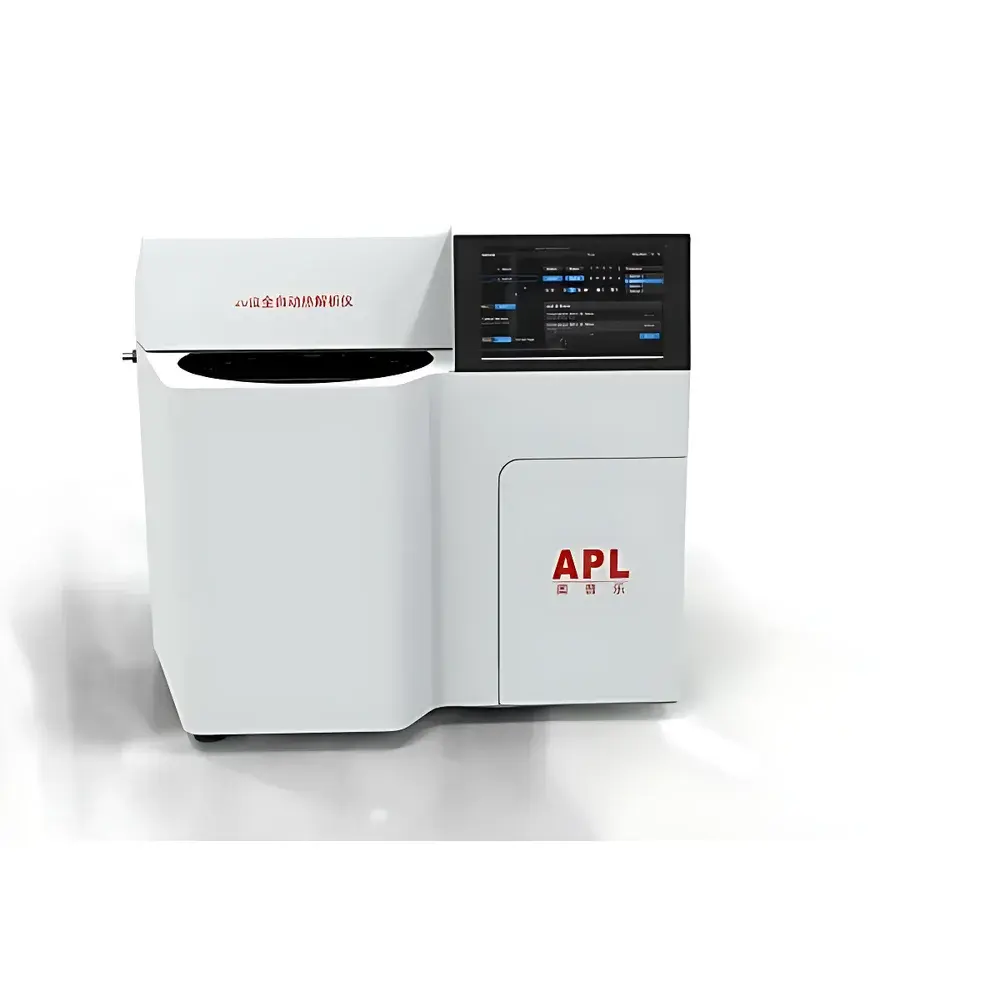
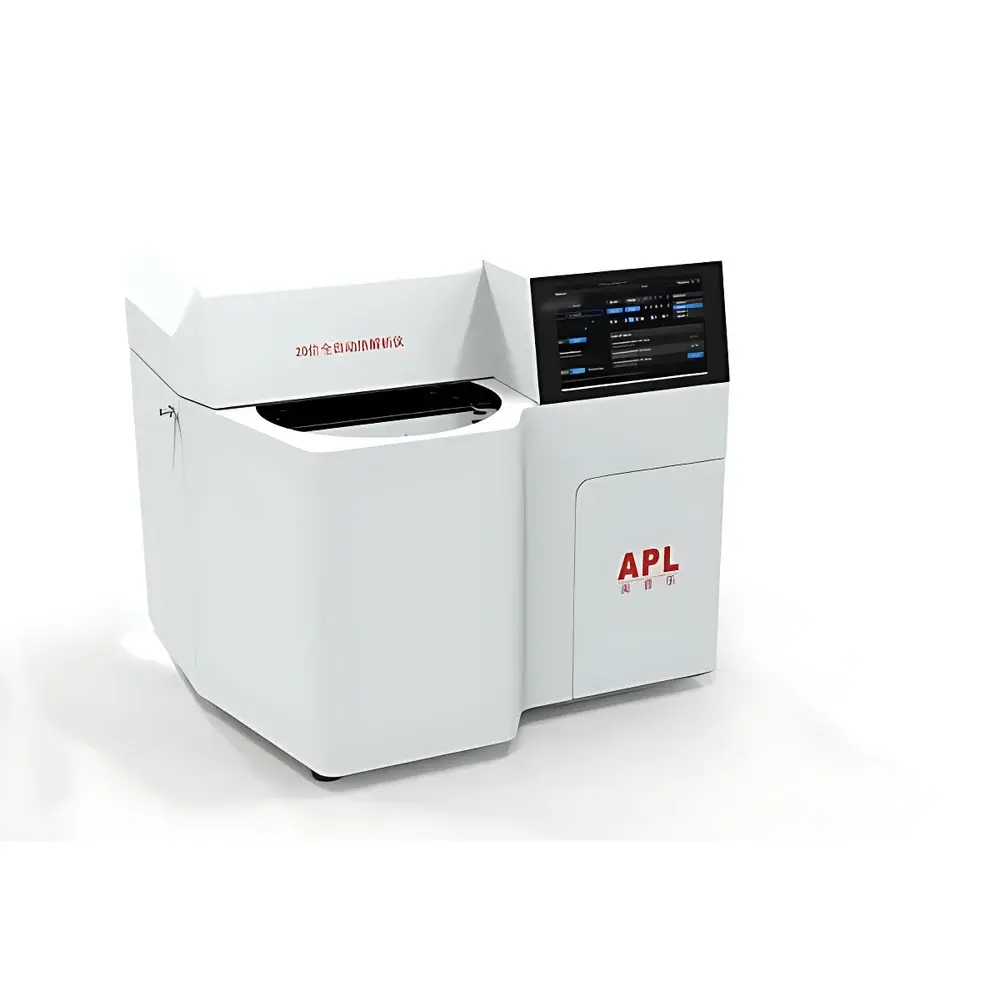
APL Optolong TD20N Automated Thermal Desorber
| Brand | APL Optolong |
|---|---|
| Origin | Sichuan, China |
| Manufacturer Type | Direct Manufacturer |
| Product Category | Domestic |
| Model | APL-TD20N |
| Instrument Type | Dual-Stage Thermal Desorber |
| Desorption Temperature Range | –35 °C to 400 °C |
| Cold Trap Temperature Range | –35 °C |
| Desorption Recovery Rate | >98% (compound-dependent) |
| Sample Capacity | 20 adsorption tubes |
Overview
The APL Optolong TD20N is a fully automated dual-stage thermal desorber engineered for high-fidelity, quantitative analysis of volatile and semi-volatile organic compounds (VOCs and SVOCs) in environmental, indoor air, automotive cabin, and industrial emission matrices. It operates on the principle of thermally driven analyte release from sorbent-packed sampling tubes—first by controlled thermal desorption of trapped volatiles into a cryogenically focused cold trap, followed by rapid flash-heating (>3000 °C/min) and transfer to the gas chromatograph (GC) or GC–MS inlet. This two-step process minimizes breakthrough, enhances sensitivity, and ensures reproducible quantitation of trace-level compounds across complex sample backgrounds. Designed to meet stringent regulatory requirements, the TD20N supports method-compliant workflows aligned with major Chinese environmental standards including HJ 644–2013, HJ 583–2010, HJ 734–2014, and GB/T 18883–2002.
Key Features
- Fully automated operation via intuitive 7-inch capacitive touchscreen interface—enabling method creation, storage, recall, and real-time visualization of valve actuation, heating stages, and pneumatic sequencing.
- Independent temperature control for three critical zones: desorption tube oven (–35 °C to 400 °C), six-port valve manifold (up to 220 °C), and transfer line (up to 260 °C), each with ±1 °C stability and programmable ramp/soak profiles.
- Dual-stage desorption architecture incorporating a Peltier-cooled cold trap capable of –35 °C operation without external coolant—eliminating reliance on liquid nitrogen or mechanical chillers.
- Simple-Lock™ magnetic coupling system for rapid, leak-tight adsorption tube mounting and removal (<2 seconds per tube), ensuring consistent sealing integrity and minimizing operator-induced variability.
- Integrated calibration and simulation mode: programmable 100 mL/min simulated sampling flow enables direct preparation of calibration standards on-tube, streamlining method development and linear range verification.
- Compatible with standardized 89 mm × 6.4 mm OD sorbent tubes rated to 420 °C; sealed with PTFE-lined caps to preserve sample integrity during storage and transport.
- Universal GC interface: modular needle assembly accommodates all mainstream split/splitless inlets (Agilent, Thermo, Shimadzu, PerkinElmer, etc.) with adjustable insertion depth and septum-pierce alignment.
Sample Compatibility & Compliance
The TD20N accepts standard 1/4″ OD stainless steel or quartz sorbent tubes packed with single- or multi-bed media (e.g., Tenax TA, Carbopack B/C, Carboxen 1000, graphitized carbon blacks). Its 20-position carousel supports unattended batch processing under time-programmed sequences—including desorption, inert gas purge (0–600 mL/min adjustable), back-flush regeneration, and tube cooling. The system complies with performance criteria specified in HJ 644–2013 (environmental air VOCs), HJ 734–2014 (stationary source emissions), and GB 50325–2010 (civil construction IAQ), delivering >98% analyte recovery for C2–C12 hydrocarbons, aromatics, aldehydes, and halogenated organics when operated within validated method parameters. All thermal and pneumatic events are timestamped and logged, supporting GLP-aligned data traceability.
Software & Data Management
Method files—including temperature ramps, valve timing, flow rates, and synchronization triggers—are stored locally on the embedded industrial-grade controller. Each run generates a structured log file containing start/stop timestamps, actual vs. setpoint temperatures, valve state transitions, and error codes. While the TD20N does not include proprietary chromatography data system (CDS) software, it outputs TTL-compatible start signals compatible with Agilent OpenLab, Thermo Chromeleon, and Shimadzu GCsolution for seamless instrument synchronization. Audit trails, user access levels, and electronic signatures are managed externally via laboratory information management systems (LIMS) interfaced through RS-232 or Ethernet. The system meets foundational data integrity expectations under FDA 21 CFR Part 11 when deployed in regulated environments with appropriate procedural controls.
Applications
- Environmental monitoring: ambient air, stack emissions, landfill fugitive gases per HJ 734–2014 and EPA TO-17 equivalents.
- Indoor air quality assessment: formaldehyde, benzene, toluene, xylene (BTX), and terpenes in residential/commercial buildings per GB/T 18883–2002 and HJ/T 400–2007.
- Automotive cabin testing: VOC screening of interior materials, adhesives, and trim components.
- Occupational hygiene: workplace exposure monitoring for regulated solvents and process intermediates.
- Method development and validation labs requiring robust, repeatable thermal desorption performance across diverse sorbent chemistries and analyte polarities.
FAQ
Does the TD20N support both single- and dual-stage desorption protocols?
Yes—the instrument is configured by default for dual-stage operation with cryofocusing, but single-stage direct desorption mode is selectable via method programming.
What is the maximum allowable desorption temperature for standard adsorption tubes?
Standard 89 mm × 6.4 mm tubes are rated to 420 °C; the TD20N’s tube oven reaches 400 °C, providing a 20 °C safety margin for thermal stability.
Is external cooling required for the cold trap?
No—the integrated Peltier cooler achieves –35 °C without liquid nitrogen, dry ice, or chiller units.
Can I use non-APL branded sorbent tubes?
Yes—any tube conforming to ASTM D6196 and ISO 16017-1 dimensions and thermal specifications is compatible.
How is data integrity ensured during unattended runs?
All thermal setpoints, valve actions, and timing events are recorded in a tamper-evident binary log; no manual data entry is required for routine operation.
Related Products






