
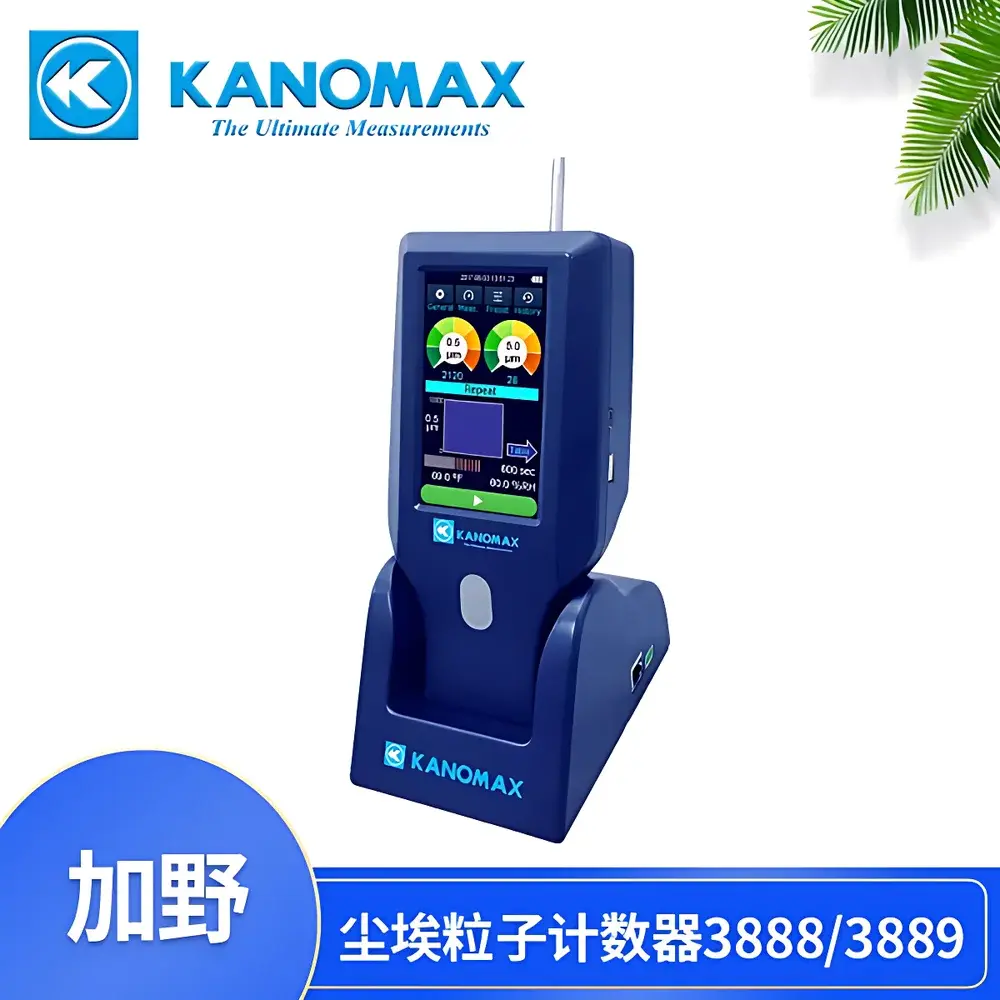
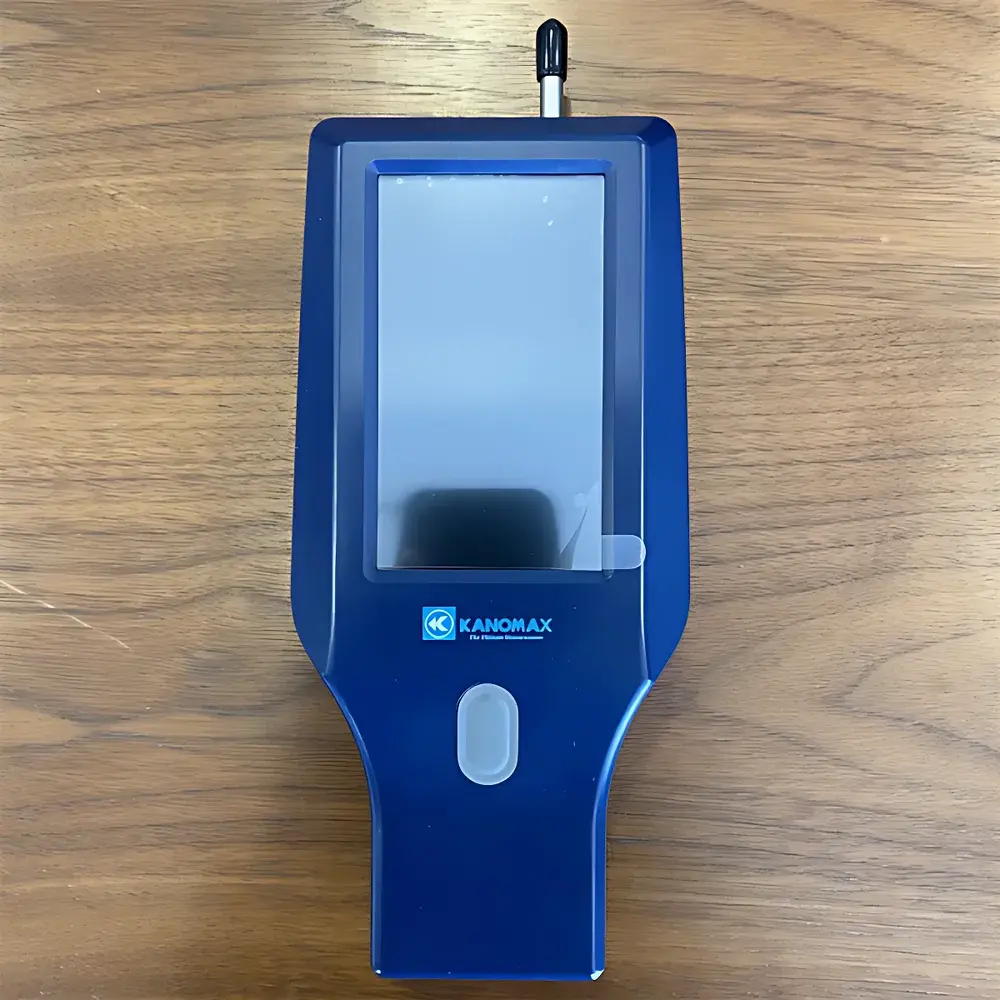
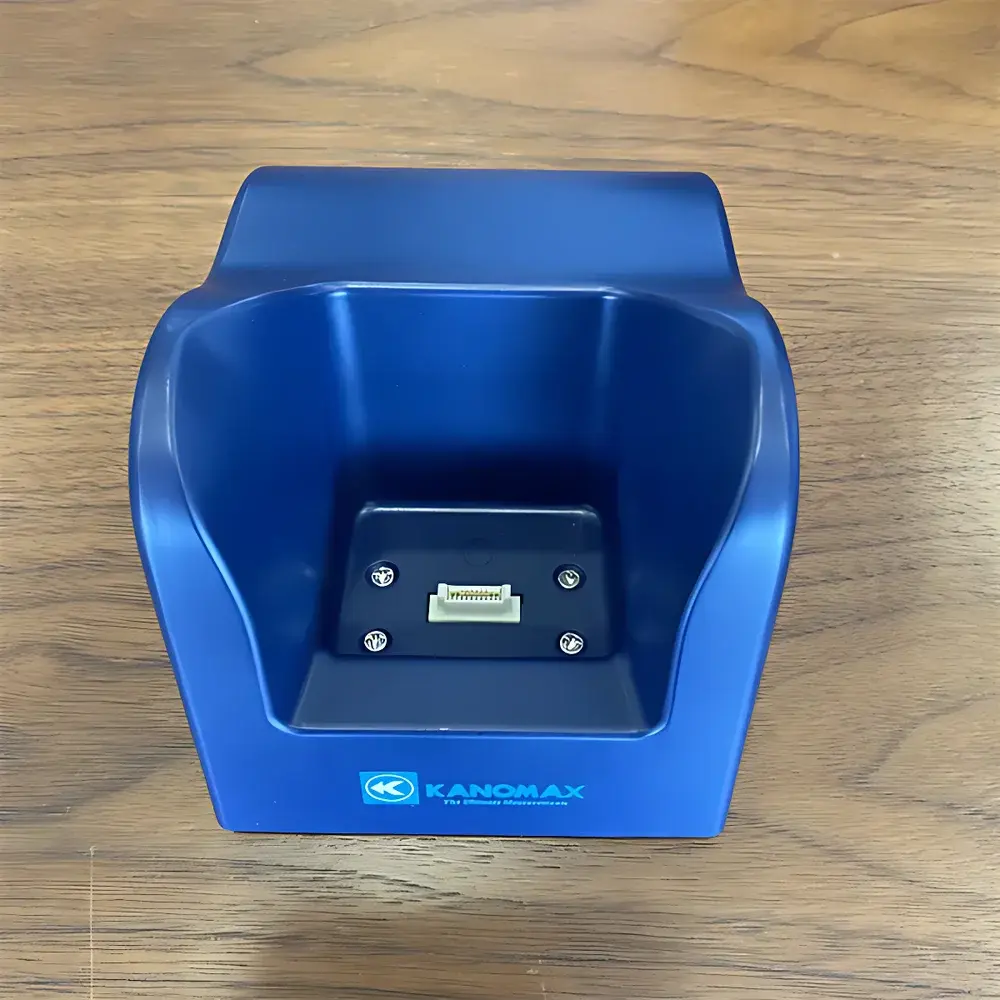
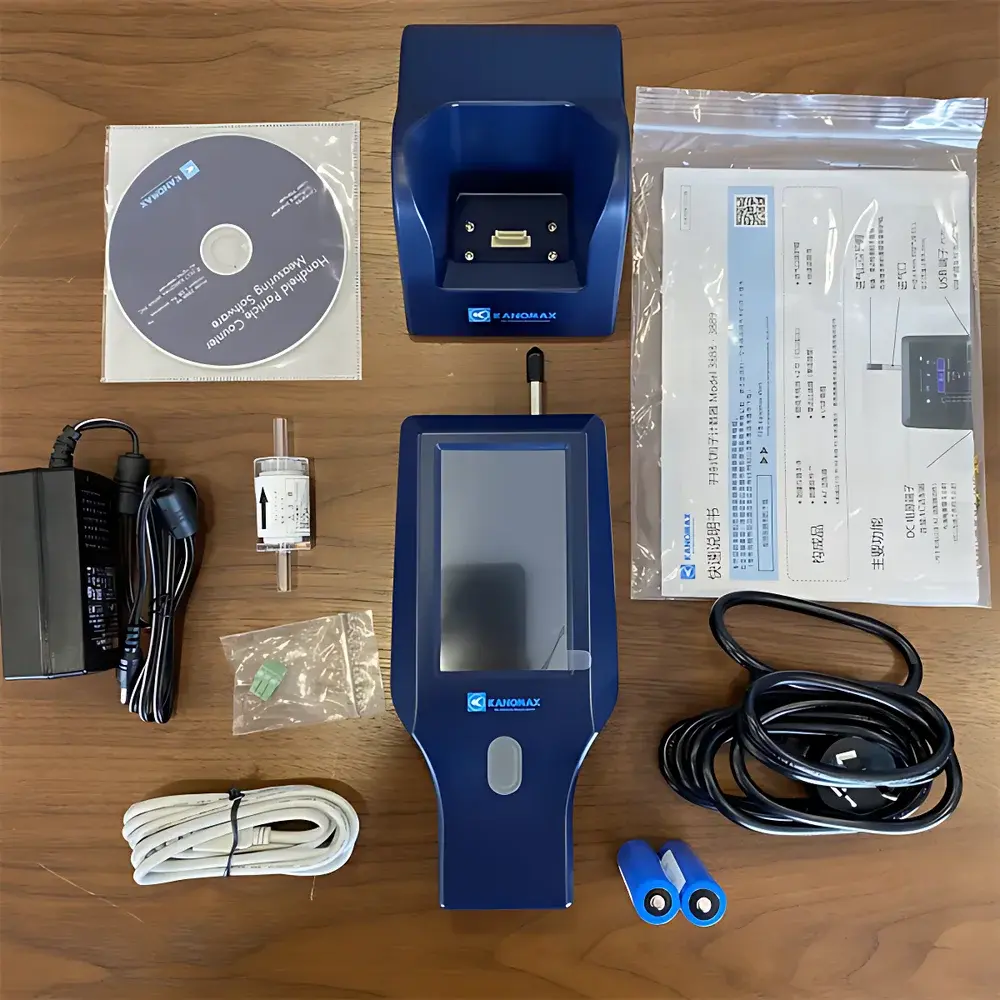
Kanomax Model 3888/3889 Handheld Laser Particle Counter
| Brand | Kanomax |
|---|---|
| Origin | Japan |
| Instrument Type | Handheld |
| Flow Rate | 2.83 L/min |
| Flow Accuracy | <1 particle per 5 min |
| Timing Accuracy | ±1 s within 6-min sampling |
| Repeatability | ≤±10% FS |
| Size Distribution Error | ≤±30% |
| Indication Error | ≤±30% FS |
| Detectable Particle Sizes | 0.3, 0.5, 5.0 µm (Model 3888) |
| Maximum Concentration | 2,000,000 particles/ft³ |
| Sampling Duration | 6 sec–99 min 59 sec |
| Count Alarm Range | 1–9,999,999 |
| Compliance | ISO 21501-4, JIS B 9921, GB/T 16292-2010, Annex 1 of EU GMP, FDA Guidance for Aseptic Processing |
| Data Storage | 10,000 records (CSV format) |
| Communication | USB (Host & Device), RS485, Ethernet, Wi-Fi |
| Power | Dual 3.7 V / 2600 mAh rechargeable Li-ion batteries or AC adapter (100–240 V) |
| Battery Life | Up to 5 h (single-test mode) |
| Operating Environment | 10–40 °C, 0–85% RH (non-condensing) |
| Dimensions | 100 × 213 × 55 mm (W × H × D) |
| Weight | 650 g (body only, excluding batteries) |
Overview
The Kanomax Model 3888 and 3889 are portable, laser-diode-based optical particle counters engineered for high-fidelity airborne particulate monitoring in regulated cleanroom environments. These instruments operate on the principle of light scattering—where particles drawn through a precisely controlled laminar airflow intersect a focused 650 nm laser beam, generating scattered photons proportional to particle size and refractive index. The detected signals are classified into user-selectable channels corresponding to standardized threshold diameters, enabling real-time quantification of particle concentrations per cubic foot (or cubic meter) across multiple size bins. Designed specifically for pharmaceutical manufacturing, medical device assembly, semiconductor fabrication, and aseptic laboratory applications, the 3888/3889 series meets the metrological rigor required for ISO 14644-1 classification, EU GMP Annex 1 environmental qualification, and FDA process validation protocols. Its compact form factor, integrated battery operation, and dual-mode sampling architecture support both point-of-use verification and systematic mapping of contamination gradients during facility commissioning and routine monitoring.
Key Features
- Laser diode light source with stable output and calibrated wavelength (650 nm) ensuring consistent Mie scattering response across the specified size range.
- Fixed flow rate of 2.83 L/min (0.1 CFM), traceable to NIST-traceable volumetric standards and validated per ISO 21501-4 Annex C for volumetric accuracy.
- Two model variants: Model 3888 supports simultaneous detection at 0.3, 0.5, and 5.0 µm; Model 3889 extends capability to six channels (0.3, 0.5, 1.0, 3.0, 5.0, 10.0 µm) for comprehensive ISO Class 3–8 characterization.
- Onboard zero-count verification protocol using certified HEPA-filtered air—enabling field-based instrument baseline validation prior to critical measurements.
- Multi-language interface supporting English, Japanese, Chinese, and Spanish—facilitating global deployment across multinational facilities and QA/QC teams.
- Dual USB ports (Host and Device) plus optional base station with RS485, Ethernet, and Wi-Fi connectivity—supporting both local data export and networked integration into centralized environmental monitoring systems (EMS).
- Internal storage capacity of 10,000 timestamped measurement records in CSV format, each containing full channel counts, sampling duration, ambient conditions (when external sensors attached), and operator-defined metadata.
Sample Compatibility & Compliance
The 3888/3889 is validated for use with ambient air and filtered process gases in non-corrosive, non-explosive environments. It is not intended for oil mist, condensable vapor, or high-humidity aerosol sampling without optional temperature/humidity sensor integration. Regulatory alignment includes full conformance with ISO 21501-4:2018 (Calibration and testing of light scattering airborne particle counters), JIS B 9921:2010 (Japanese Industrial Standard for particle counters), GB/T 16292–2010 (Chinese national standard for cleanroom testing), and the technical requirements outlined in EU GMP Annex 1 (2022 revision) for viable and non-viable particle monitoring. Instrument performance is verified under GLP-compliant procedures, and audit trails—including calibration history, firmware version, and user access logs—are retained internally to support 21 CFR Part 11 readiness when paired with Kanomax’s validated PC software suite.
Software & Data Management
Kanomax’s proprietary ParticleView™ PC software enables bidirectional communication via USB or network connection. Users can configure sampling parameters (duration, frequency, test mode), initiate remote start/stop commands, and visualize real-time particle concentration trends by size channel. All raw data—including cumulative and differential counts, sampling timestamps, and instrument status flags—are logged in ASCII-compatible CSV files, compatible with LIMS, statistical process control (SPC) platforms, and Excel-based trending analysis. The software supports automated report generation aligned with ISO 14644-2 compliance templates and includes built-in tools for calculating UCL (Upper Confidence Limit) values per ISO 14644-1 Annex B. Optional Wi-Fi-enabled base station allows up to 16 units to be synchronized in cascade mode for spatially resolved contamination mapping without cabling.
Applications
- ISO 14644-1 cleanroom classification and re-certification (Class 3–8).
- GMP Annex 1 environmental monitoring during aseptic filling, isolator qualification, and barrier system validation.
- Source identification and localization of particle generation points (e.g., glove integrity, HEPA filter leakage, equipment exhaust).
- In-process monitoring of critical manufacturing steps in biopharmaceutical and microelectronics production lines.
- Filter efficiency testing (e.g., pre-filter and ULPA challenge tests) using upstream/downstream comparative counting.
- Validation of laminar airflow workstations, biosafety cabinets, and clean benches per NSF/ANSI 49 and EN 12469.
- Environmental baseline establishment and change-control documentation following facility modifications or HVAC recommissioning.
FAQ
What calibration standards does the 3888/3889 comply with?
It adheres to ISO 21501-4:2018 for optical calibration using PSL (polystyrene latex) reference particles traceable to NIST SRM 1963 and SRM 1930.
Can the instrument be used for continuous unattended monitoring?
Yes—via the optional Wi-Fi base station and scheduled sampling mode, it supports autonomous 24/7 logging with automatic data upload to network drives or cloud repositories.
Is the internal battery replaceable in the field?
The dual 2600 mAh Li-ion batteries are user-replaceable using standard Torx T5 tools; replacement kits include CE-marked cells with embedded safety circuitry.
Does the device meet FDA 21 CFR Part 11 requirements?
While the hardware itself does not enforce electronic signatures, its firmware and ParticleView™ software support audit trail generation, user access controls, and data integrity safeguards required for Part 11 compliance when deployed in validated environments.
How is zero-count verification performed?
Using the included zero-count filter, users perform a 15-minute background count under HEPA-filtered air; stability (±0 counts over ≥10 s) confirms optical chamber cleanliness and photodetector baseline integrity prior to operational use.







