
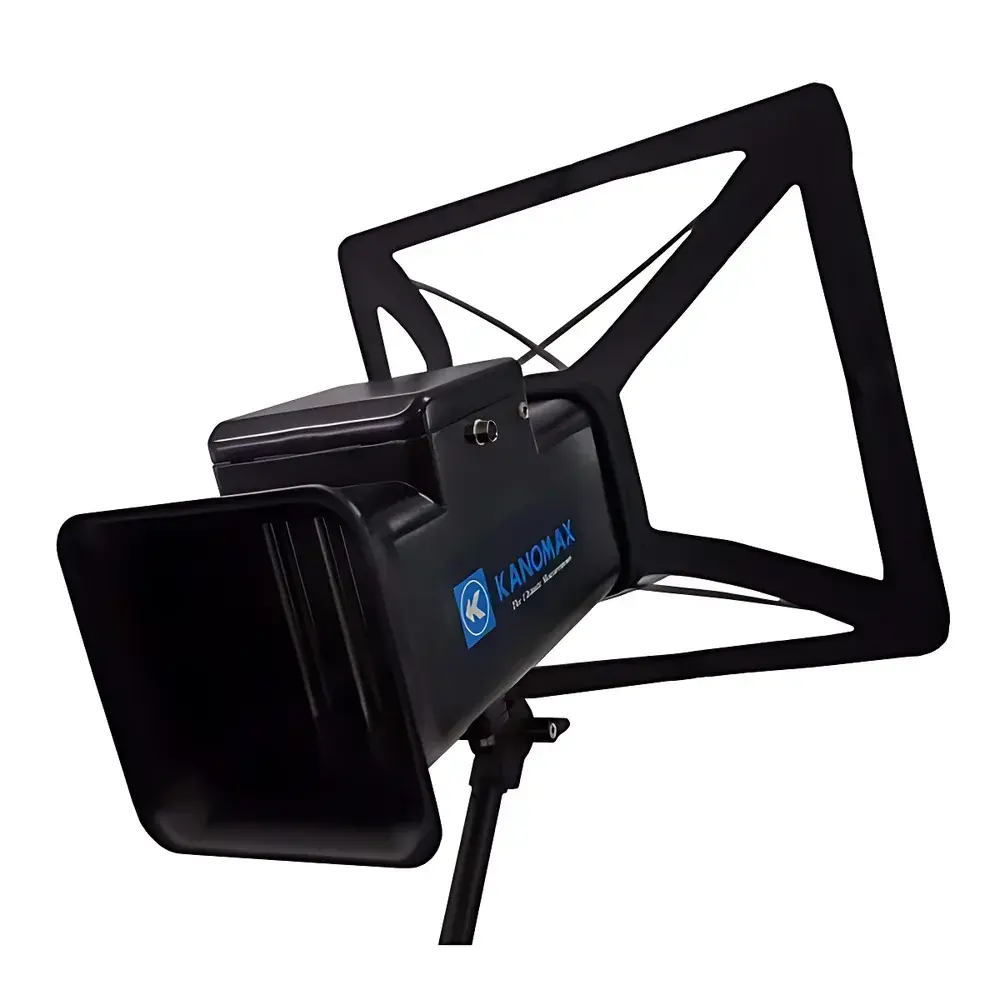
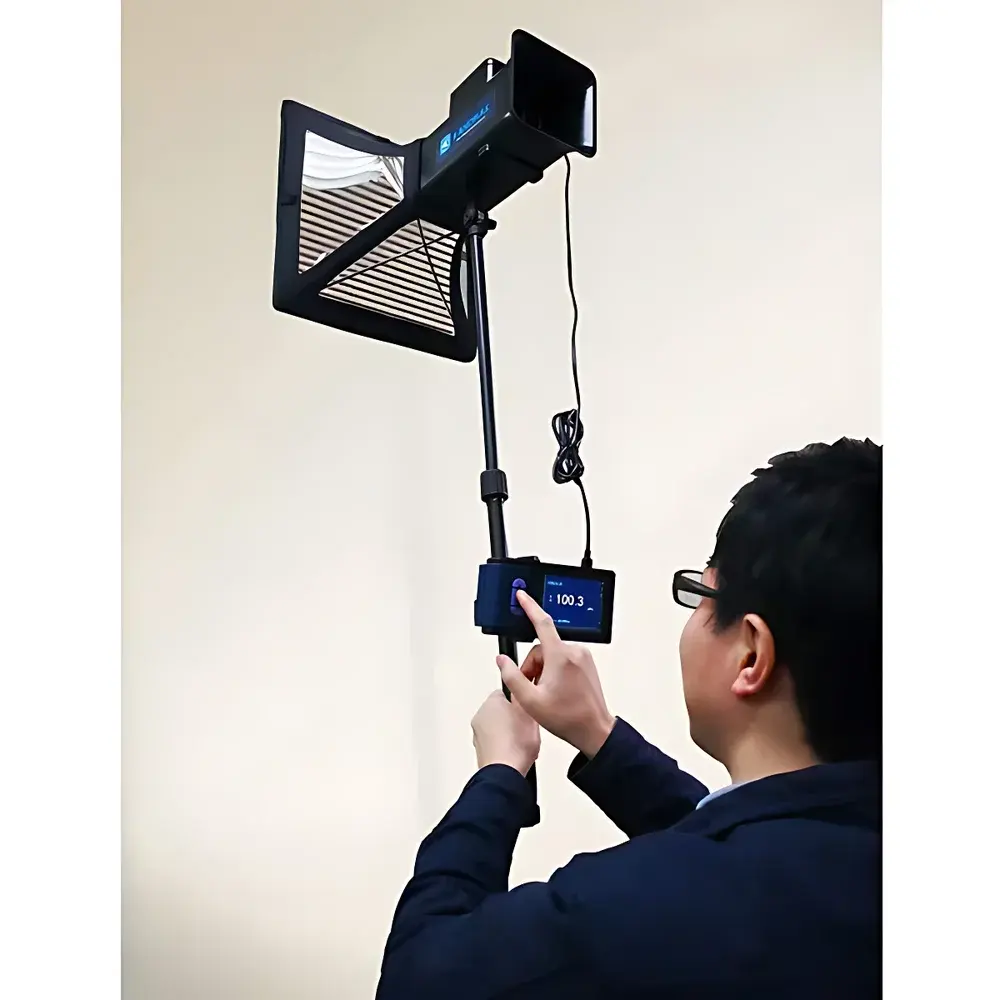
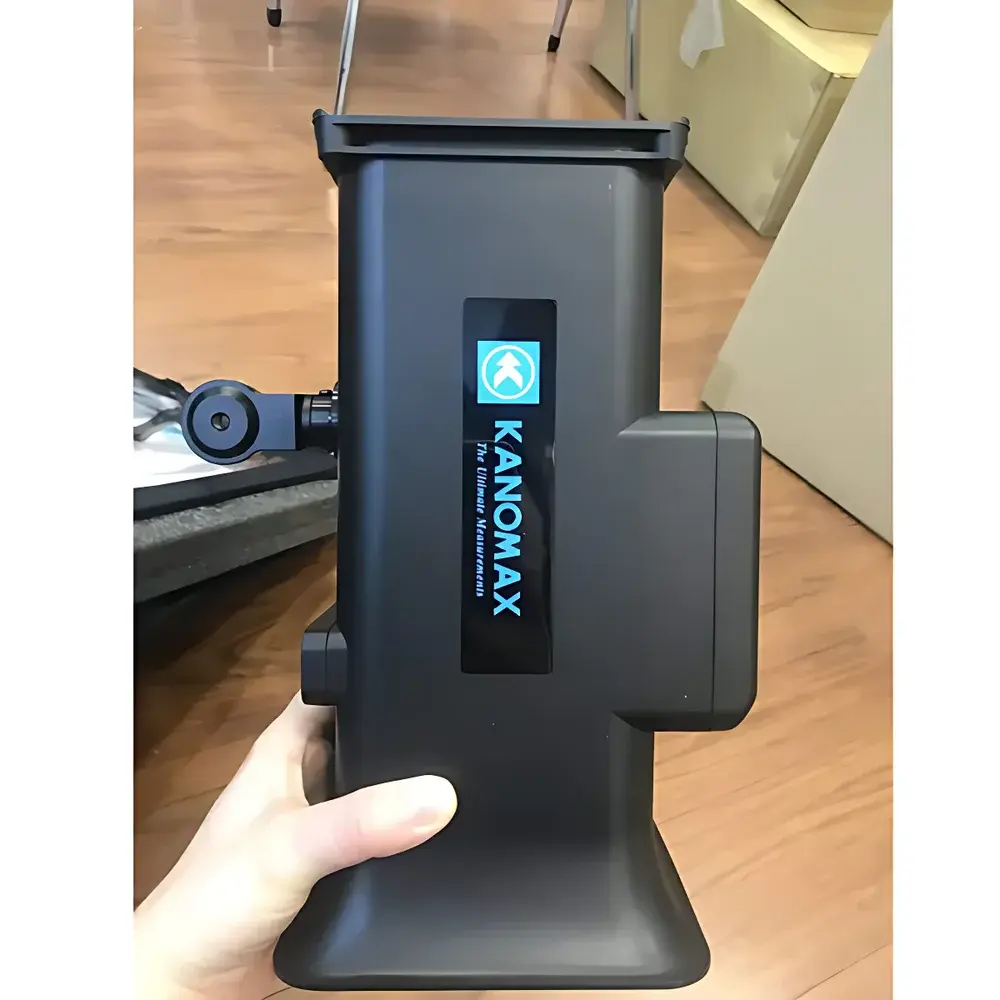
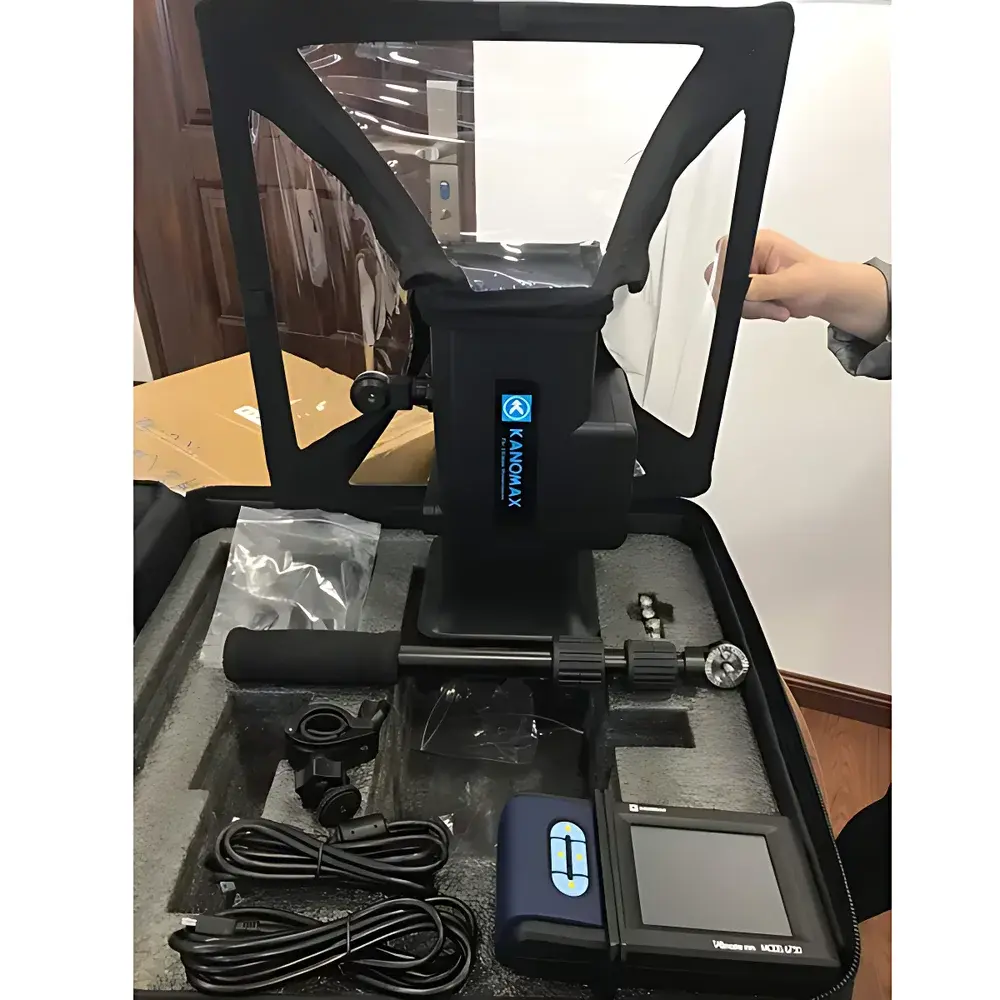
Kanomax Model 6750 Air Flow Hood for HVAC Outlet Testing
| Brand | Kanomax |
|---|---|
| Origin | Japan |
| Model | 6750 |
| Resolution | 1 m³/h |
| Measurement Range | ±8–600 m³/h |
| Accuracy | ±(3% of reading + 1 m³/h) for 8–350 m³/h |
| Operating Temperature | 0–50 °C |
| Operating Humidity | 0–100 %RH |
| Temperature Accuracy | ±0.5 °C |
| Display | Simultaneous real-time airflow and temperature readout |
| Units | m³/h, CFM, °C |
| Data Storage | Up to 6,000 records (internal memory) |
| Communication | Bluetooth 4.0, USB output |
| Power | 4 × AA batteries or AC adapter |
| Battery Life | Approx. 8 hours continuous operation |
| Dimensions (hood) | 355 × 355 × 450 mm (W×H×D) |
| Hood Aperture | 355 × 355 mm |
| Display Module | 160 × 80 × 45 mm |
| Weight | 1.5 kg |
| Construction | Fiberglass support frame, transparent viewing window for visual alignment verification |
Overview
The Kanomax Model 6750 Air Flow Hood is a precision-engineered instrument designed for quantitative, in-situ measurement of volumetric air flow at HVAC diffusers, grilles, registers, and exhaust outlets. It operates on the principle of integrated velocity-area measurement: an internal array of calibrated sensors captures spatially averaged air velocity across the hood’s capture area, while real-time temperature compensation ensures accurate density-corrected flow calculation (Q = A × v × ρcorr). Unlike handheld anemometers requiring multiple point measurements and manual integration, the 6750 delivers single-point, operator-independent readings—eliminating positional variability and human-induced parallax or alignment errors. Its compact form factor, lightweight construction (1.5 kg), and ergonomic design enable one-person operation in constrained ceiling plenums, mechanical rooms, or occupied spaces without scaffolding or auxiliary support.
Key Features
- Simultaneous dual-parameter display: Real-time concurrent readout of volumetric flow (m³/h or CFM) and ambient temperature (°C) on a high-contrast 3.5-inch color LCD with intuitive icon-based navigation.
- Optical alignment verification: Integrated transparent front window allows unobstructed visual confirmation of full-seal contact between hood perimeter and outlet surface—critical for minimizing leakage-induced underestimation.
- Modular hood compatibility: Designed for standardized 355 × 355 mm aperture; optional adapter kits (sold separately) support extension to non-standard duct geometries while maintaining ISO 16813-compliant capture efficiency.
- Robust mechanical architecture: Fiberglass-reinforced support frame ensures dimensional stability under repeated compression loading and resists thermal warping across 0–50 °C operational range.
- Traceable data acquisition: Internal storage retains up to 6,000 timestamped records with flow, temperature, date/time, and user-defined ID tags—fully exportable via Bluetooth 4.0 or USB 2.0 for post-processing in Excel or HVAC commissioning software.
- Regulatory-ready calibration infrastructure: Factory-calibrated per ISO/IEC 17025-accredited procedures; supports user-performed zero and span verification using NIST-traceable reference standards.
Sample Compatibility & Compliance
The Model 6750 is validated for use with low-velocity, turbulent, and mixed-flow regimes typical of terminal HVAC devices—including laminar flow hoods, VAV boxes, ceiling diffusers, and bathroom exhausts. It complies with ASHRAE Guideline 12-2020 (Commissioning of HVAC Systems), ISO 16813:2021 (HVAC performance testing), and EN 12599:2012 (Testing of ventilation systems). Its accuracy specification meets Class II requirements per ISO 5167-1 for in-situ flow instrumentation. The device is CE-marked and RoHS-compliant. While not intrinsically rated for hazardous locations, its battery-powered operation and non-sparking construction make it suitable for general laboratory, healthcare facility, cleanroom, and commercial building commissioning environments.
Software & Data Management
Data transfer utilizes standard Bluetooth SPP (Serial Port Profile) protocol, enabling direct pairing with Windows, macOS, and Android platforms. The included Kanomax Data Manager Lite software (Windows-compatible) provides automated report generation compliant with ASHRAE Forms 1–4, including pass/fail thresholds against design specifications, deviation heatmaps, and statistical summaries (mean, SD, CV%). All stored records include embedded audit trail metadata (operator ID, calibration status flag, measurement mode). For regulated environments, optional firmware upgrade enables 21 CFR Part 11-compliant electronic signatures, user access levels, and immutable audit logs—fully compatible with GLP and GMP documentation workflows.
Applications
- Pre- and post-balancing verification of supply/return/exhaust air volumes during HVAC system commissioning.
- Annual functional testing of critical environments (e.g., hospital operating rooms, pharmaceutical cleanrooms per ISO 14644-3).
- Troubleshooting airflow imbalances, duct leakage, or damper malfunctions in commercial buildings.
- Validation of demand-controlled ventilation (DCV) system response curves.
- Energy audits per ASHRAE Standard 111 and ISO 50002.
- Academic research on indoor air distribution patterns and thermal comfort indices (PMV/PPD).
FAQ
What is the recommended recalibration interval?
Annual recalibration is advised per ISO/IEC 17025 and manufacturer guidelines; however, field verification using a traceable reference anemometer is recommended before each major commissioning campaign.
Can the 6750 measure bidirectional flow?
Yes—the device measures signed volumetric flow (±m³/h), distinguishing supply (+) from exhaust (–) modes automatically based on pressure differential sensing across the hood membrane.
Is the unit suitable for outdoor use?
It is rated for 0–50 °C and 0–100 %RH, but prolonged exposure to direct sunlight or rain is not recommended. Use under sheltered conditions only.
Does it support custom unit conversion or engineering units?
Unit selection is limited to m³/h, CFM, and °C; no user-defined scaling or formula entry is available—ensuring metrological integrity and compliance with test protocol constraints.
How does temperature compensation affect flow accuracy?
Internal thermistor continuously corrects for air density changes using the ideal gas law; this reduces systematic error by up to 4.2% compared to uncompensated instruments at ±15 °C ambient deviation.
Related Products







