
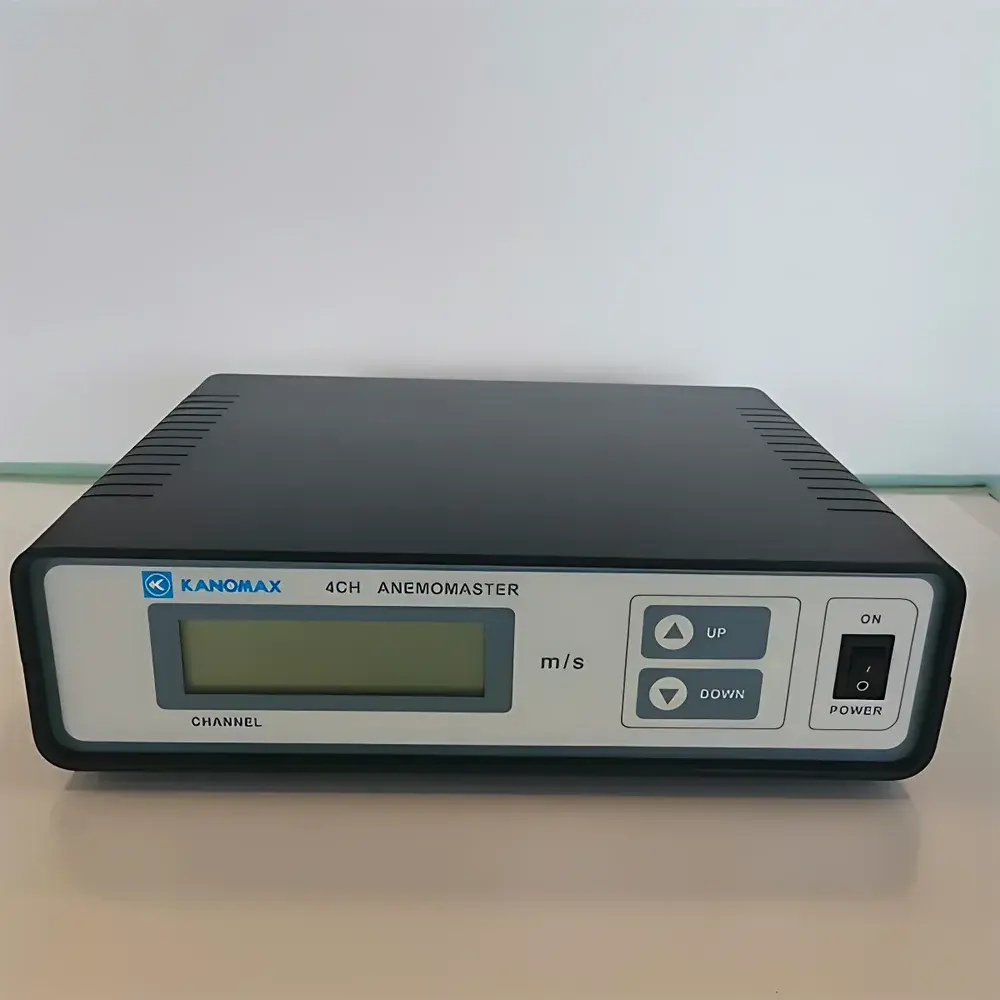
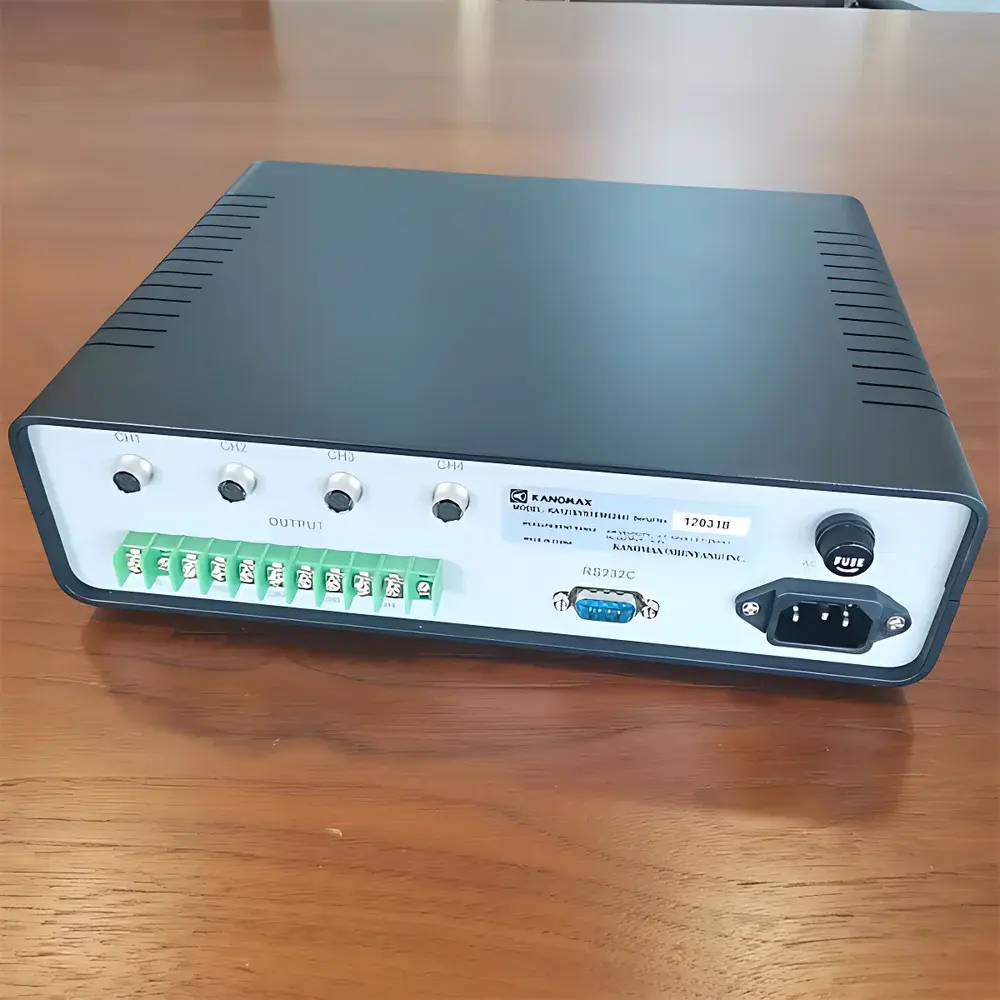
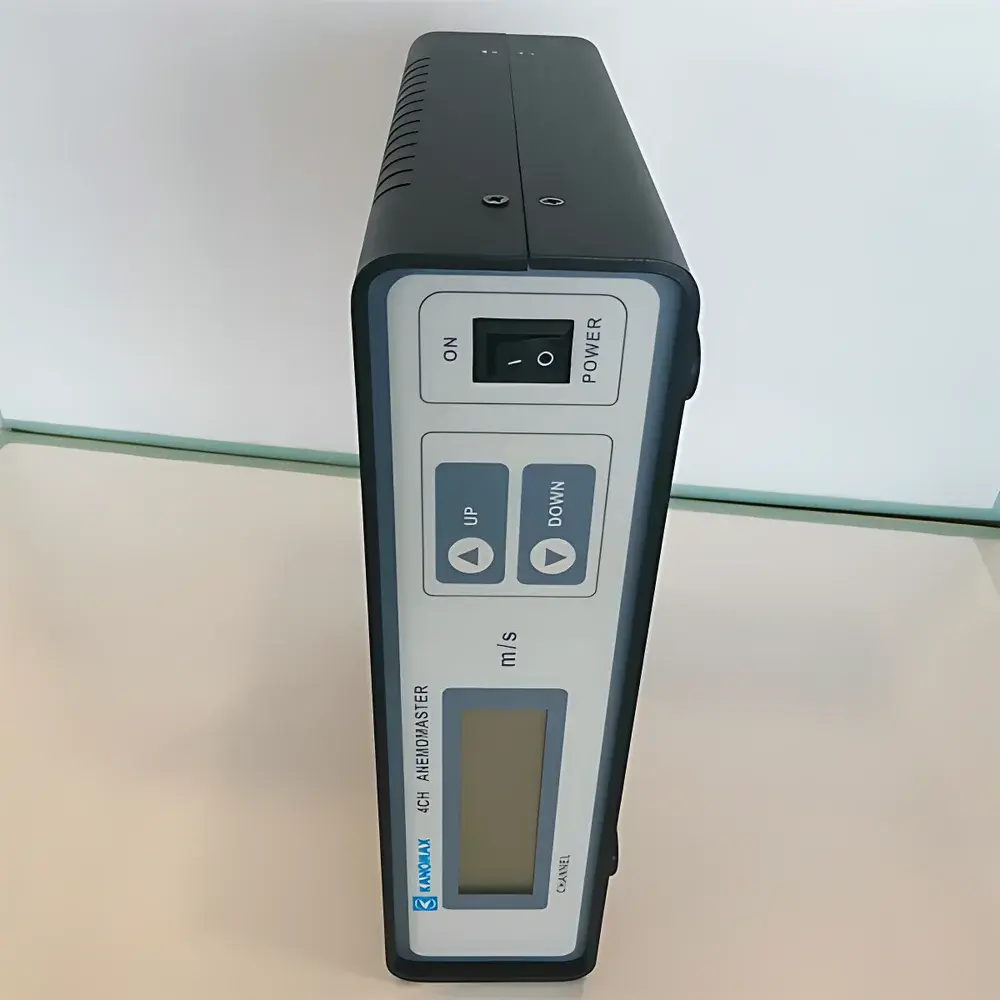
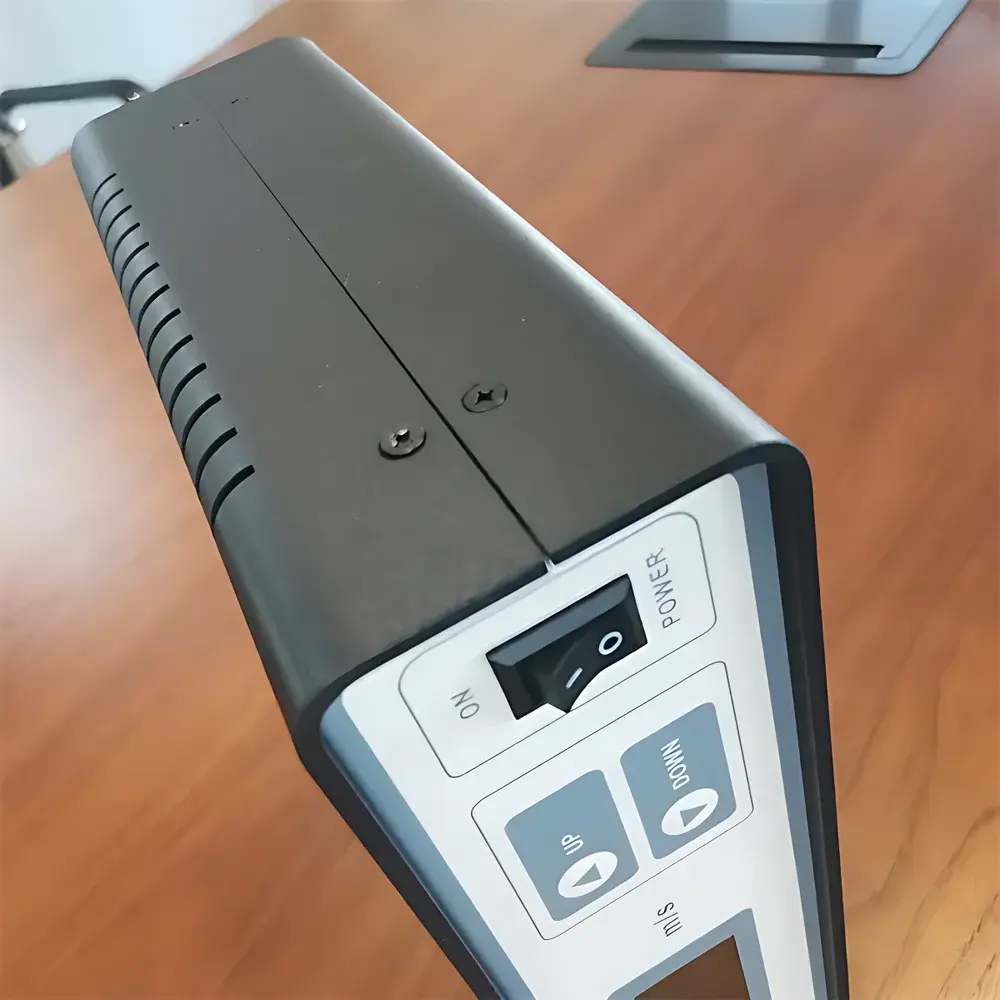
Kanomax KA12 Multi-Point Environmental Test System for ECU Thermal Management
| Brand | Kanomax |
|---|---|
| Origin | Japan |
| Manufacturer Type | Authorized Distributor |
| Product Category | Imported |
| Model | KA12 |
| Instrument Type | Thermal Anemometer |
| Resolution | 0.01 m/s |
| Measurement Range | Probe-Dependent (m/s) |
| Accuracy | ±3% of reading |
| Operating Temperature | 0–60 °C |
| Operating Humidity | 0–100% RH |
| Communication Interface | RS-232C |
| Analog Output | 0–5 V DC or 4–20 mA |
| Power Supply | AC 220 V |
| Dimensions | 200 × 260 × 70 mm |
| Weight | 2.6 kg |
Overview
The Kanomax KA12 Multi-Point Environmental Test System is a dedicated thermal anemometry platform engineered for precision air velocity monitoring in complex thermal management validation environments—particularly for automotive electronic control unit (ECU) cooling system development and verification. Unlike single-point handheld anemometers, the KA12 integrates four independent, synchronized measurement channels, enabling simultaneous acquisition of airflow dynamics across multiple spatial locations within an ECU test bench, heat sink array, or chassis ventilation duct network. Its core measurement principle relies on constant-temperature anemometry (CTA), where a heated sensing element’s thermal dissipation is correlated to local mass flow velocity with high temporal resolution and low thermal inertia. Designed for laboratory-grade repeatability and industrial robustness, the system supports traceable calibration per ISO/IEC 17025-accredited procedures and complies with relevant sections of ISO 5801 (fan testing) and ISO 16813 (indoor air quality assessment), making it suitable for R&D, pre-compliance thermal validation, and production line QA/QC protocols.
Key Features
- Four-channel synchronous acquisition with independent zeroing and scaling per channel
- Modular probe compatibility: supports 10 interchangeable thermal anemometer probes—including fine-wire, vane, and hot-film types—each with documented calibration coefficients stored in probe memory
- High-resolution velocity capture at 0.01 m/s, with real-time sampling up to 10 Hz per channel
- Dual analog output options (0–5 V DC or 4–20 mA) for integration into PLC-based environmental control loops or SCADA systems
- RS-232C serial interface for bidirectional communication, firmware updates, and remote configuration via ASCII command protocol
- Compact benchtop form factor (200 × 260 × 70 mm) with EMI-shielded enclosure and industrial-grade power supply (AC 220 V ±10%, 50/60 Hz)
Sample Compatibility & Compliance
The KA12 is optimized for non-intrusive, low-disturbance airflow characterization in constrained geometries typical of ECU enclosures, heatsink fins, and forced-convection cooling paths. Probe selection determines applicable velocity range—from low-flow applications (30 m/s) near blower outlets. All probes meet IP54 ingress protection when used with standard housings, and operate reliably across the full specified ambient range (0–60 °C, 0–100% RH). The system conforms to IEC 61000-4 electromagnetic compatibility standards and supports GLP-compliant data integrity through timestamped, audit-trail-enabled logging. While not FDA-regulated, its architecture aligns with 21 CFR Part 11 requirements for electronic records when paired with validated software configurations.
Software & Data Management
The KA12 is supplied with Kanomax’s proprietary KA-Link PC software, a Windows-based application supporting real-time multi-channel visualization, statistical analysis (mean, min/max, RMS, standard deviation), and time-series export in CSV, TXT, and Excel-compatible formats. The software implements configurable alarm thresholds, automatic report generation (PDF/HTML), and overlay-capable charting for comparative thermal mapping. Raw data files include embedded metadata: probe ID, calibration date, operator ID, and environmental conditions. Optional API integration (via DLL or COM interface) enables custom scripting for automated test sequences in MATLAB, LabVIEW, or Python-based validation frameworks.
Applications
- ECU thermal derating validation under dynamic load profiles
- Heat sink fin airflow uniformity assessment in prototype cooling modules
- CFD model correlation using experimental boundary condition data
- Automotive HVAC duct airflow balancing and leakage diagnostics
- Environmental chamber airflow homogeneity mapping for thermal stress testing
- Validation of fan performance curves per AMCA 210 standards
FAQ
What probe types are supported by the KA12 system?
The KA12 accepts 10 Kanomax-certified thermal anemometer probes—including 0.5 mm and 1.0 mm diameter hot-wire sensors, omnidirectional vane probes, and surface-mount hot-film arrays—each with plug-and-play recognition and auto-loaded calibration tables.
Can the KA12 be used in high-humidity environments without sensor drift?
Yes; all compatible probes feature hydrophobic coating and temperature-compensated electronics. Continuous operation at 100% RH is permitted provided condensation does not form directly on the sensing element.
Is the analog output isolated from the main power supply?
Yes—the 0–5 V and 4–20 mA outputs are galvanically isolated to prevent ground loop interference in mixed-signal test setups.
Does the system support external triggering or synchronization with other instruments?
The KA12 does not feature hardware trigger inputs, but software-based time-synchronized acquisition is achievable via NTP or PPS-referenced PC clock alignment when integrated with third-party DAQ systems.
How often should calibration be performed?
Annual recalibration is recommended for metrological traceability; however, field verification using a certified reference anemometer is advised before critical test campaigns or after mechanical shock events.







