
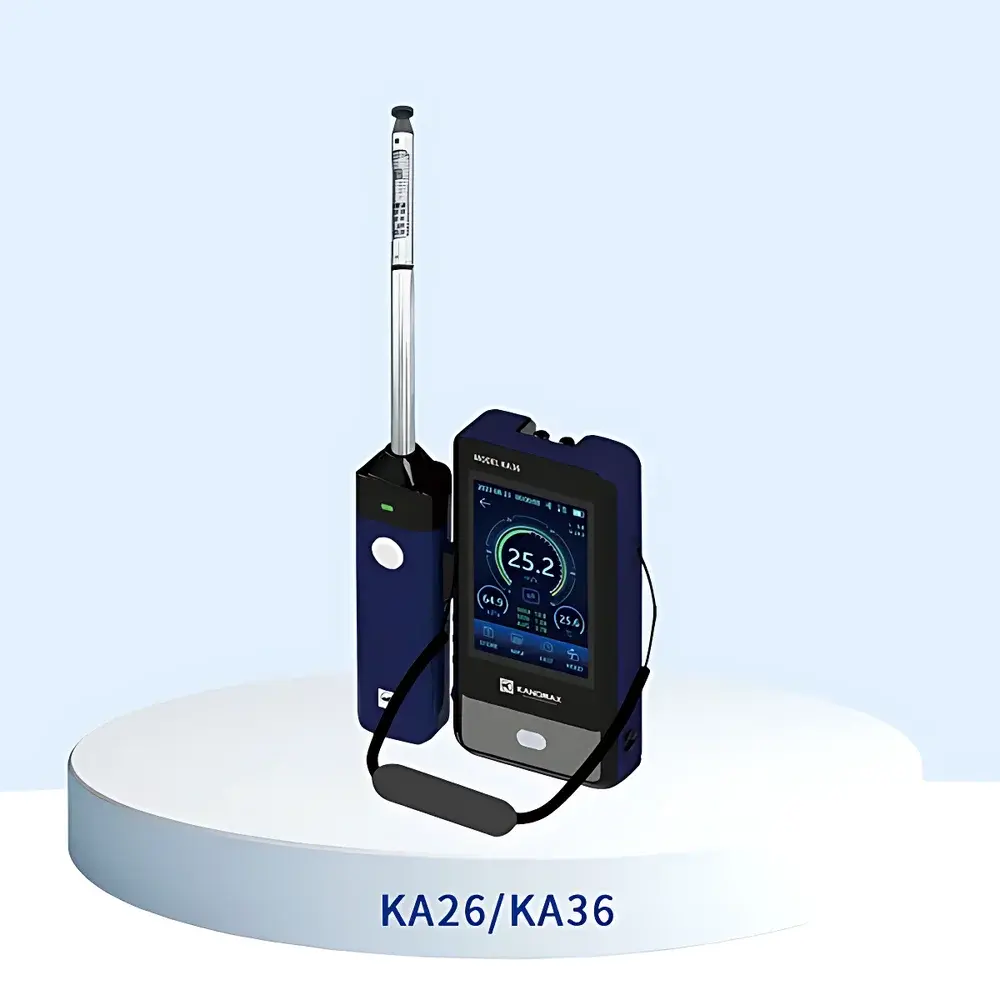
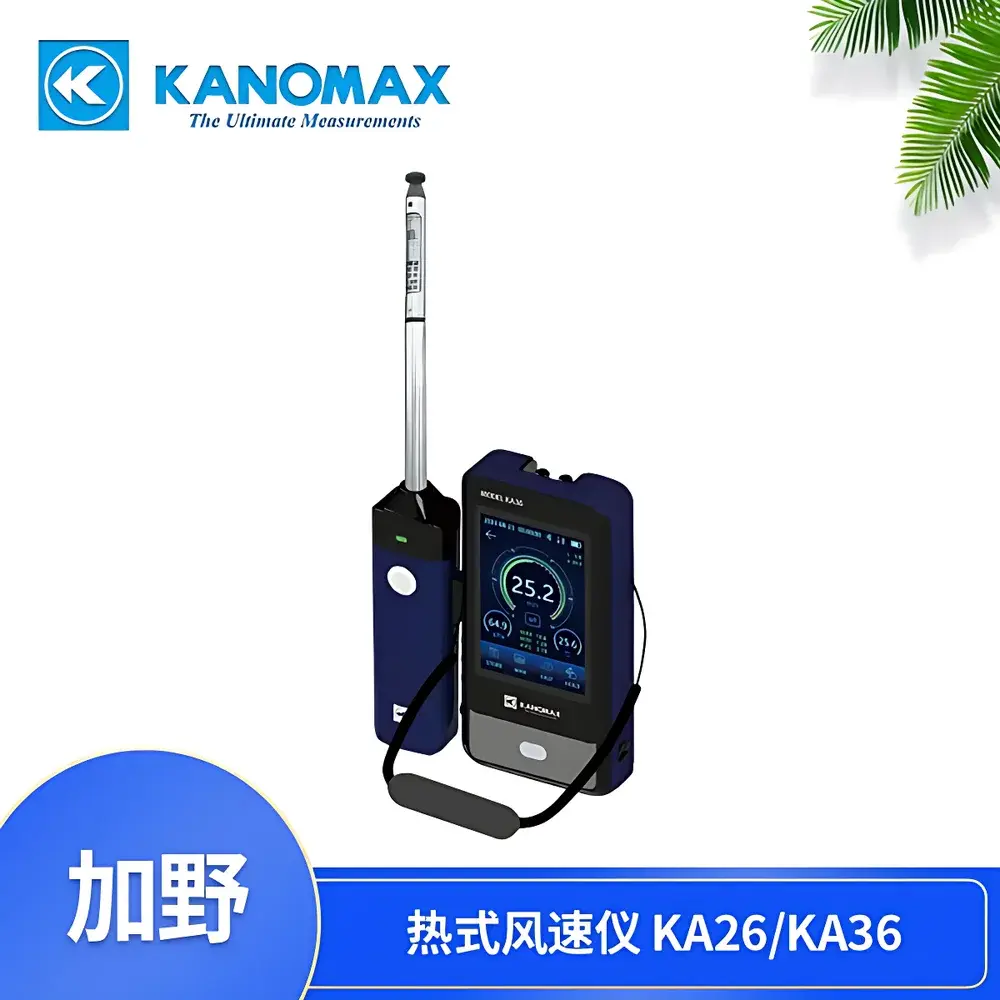
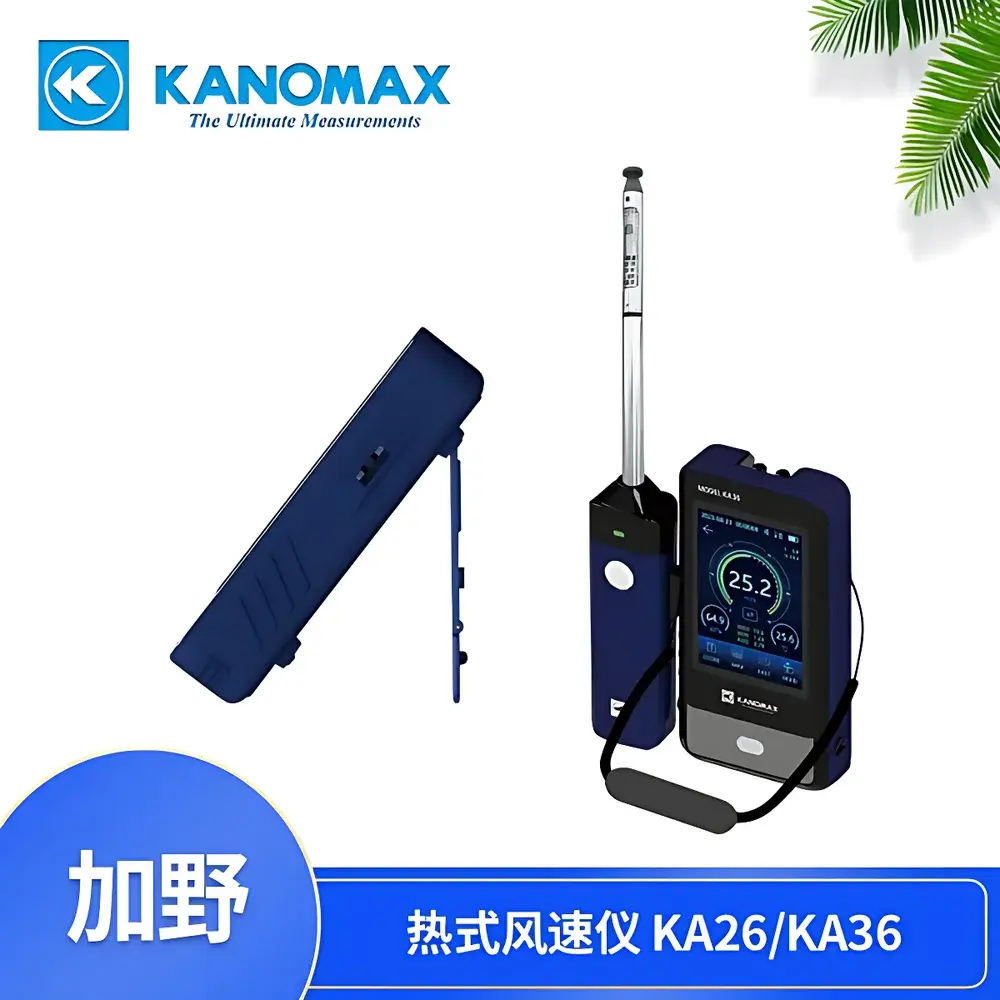
Kanomax KA26/KA36 Bluetooth-Enabled Thermal Anemometer
| Brand | Kanomax |
|---|---|
| Origin | Japan |
| Model | KA26 / KA36 |
| Instrument Type | Thermal Anemometer |
| Velocity Range | 0.00–50.0 m/s |
| Velocity Resolution | 0.01 m/s (0.00–9.99 m/s), 0.1 m/s (10.0–50.0 m/s) |
| Temperature Range | −20.0–100.0 °C |
| Temperature Resolution | 0.1 °C |
| Pressure Range | −5.00 to +5.00 kPa |
| Pressure Resolution | 0.01 kPa |
| Velocity Accuracy | ±3% of reading or ±0.015 m/s, whichever is greater |
| Temperature Accuracy | ±0.3 °C (−20.0–0.0 °C and 60.0–100.0 °C: ±0.5 °C) |
| Pressure Accuracy | ±0.1 kPa |
| Response Time (Velocity) | ~1 s |
| Response Time (Temperature) | ~30 s |
| Response Time (Pressure) | ~1 s |
| Display | 3.5-inch resistive touchscreen |
| Data Storage | 5,000 records |
| Communication | Bluetooth 5.0, USB-C |
| Battery Life | ~10 hours (at 5 m/s, 20 °C) |
| Operating Temperature (Body) | 5–40 °C |
| Operating Temperature (Probe) | −20–100 °C |
| Storage Temperature | −30–60 °C |
| Dimensions (Body) | 160 × 80 × 32 mm |
| Probe Dimensions | Ø10 mm sensor |
| handle | 40 × 27 × 125 mm |
| extendable length | 260–330 mm |
| Weight | ~600 g |
| Accessories | Probe extension rod (up to 1240 mm), pressure tubing (1.5 m), AC adapter (USB-C), carrying case, manual |
Overview
The Kanomax KA26 and KA36 are handheld thermal anemometers engineered for high-reliability air velocity, temperature, and differential pressure measurements in industrial, HVAC, cleanroom, and indoor air quality (IAQ) applications. Based on constant-temperature anemometry (CTA), these instruments measure convective heat loss from a heated sensor element immersed in airflow—enabling direct, real-time quantification of mass flow velocity without moving parts. Unlike cup or vane anemometers, thermal sensors respond rapidly (<1 s) to transient airflow changes and maintain accuracy across low-to-moderate velocity ranges (0.00–50.0 m/s), making them ideal for duct traverses, fume hood validation, laminar flow bench verification, and ventilation system commissioning per ISO 14644-3, ASHRAE Standard 110, and EU GMP Annex 1 requirements.
Key Features
- Bluetooth 5.0 wireless communication eliminates cable constraints—enabling remote probe placement up to 10 m from the main unit, critical for inaccessible ducts, ceiling diffusers, or high-bay environments.
- Interchangeable, flexible probe design with integrated telescoping extension rod (260–330 mm standard; up to 1240 mm with optional rods) allows precise positioning without auxiliary fixtures or clamps.
- 3.5-inch resistive touchscreen display supports dual-view mode: simultaneous numeric readouts and analog bar-graph visualization—facilitating rapid trend assessment during dynamic airflow events.
- Configurable alarm thresholds with audible alert and visual highlighting ensure immediate detection of out-of-spec conditions during continuous monitoring or qualification protocols.
- On-device statistical functions compute real-time min/max/average values over user-defined intervals—supporting ISO 14644-1 particle count correlation and ASHRAE 62.1 ventilation rate verification.
- Integrated lithium-ion battery (USB-C rechargeable) delivers ~10 hours of field operation; body-integrated stand and chest-mount strap enhance ergonomic usability during extended surveys.
Sample Compatibility & Compliance
The KA26/KA36 is calibrated for clean, dry air—suitable for non-corrosive, non-particulate-laden airstreams typical of HVAC supply/exhaust ducts, cleanroom supply terminals, laboratory fume hoods, and environmental chambers. It complies with IEC 61000-6-3 (EMC emission) and IEC 61000-6-2 (immunity). While not intrinsically safe, its operating range (−20–100 °C probe, −30–60 °C storage) aligns with EN 13725 (odor measurement) and ISO 16814 (IAQ investigation) ambient specifications. Calibration traceability follows JIS Z 8000-1 and NIST-traceable reference standards. Device firmware supports audit-ready logging required under GLP and ISO/IEC 17025-accredited laboratories.
Software & Data Management
Data is stored onboard (5,000 records) with timestamp, sensor ID, and measurement mode metadata. Bluetooth connectivity enables seamless transfer to Kanomax’s proprietary PC software (Kanomax Data Logger Suite), which exports CSV and PDF reports compliant with FDA 21 CFR Part 11 (electronic signatures, audit trail, user access control). The software supports batch export, multi-point traverse mapping, and automatic calculation of volumetric flow (m³/h) when cross-sectional area is entered. USB-C interface permits direct file transfer or power-only charging without data interruption.
Applications
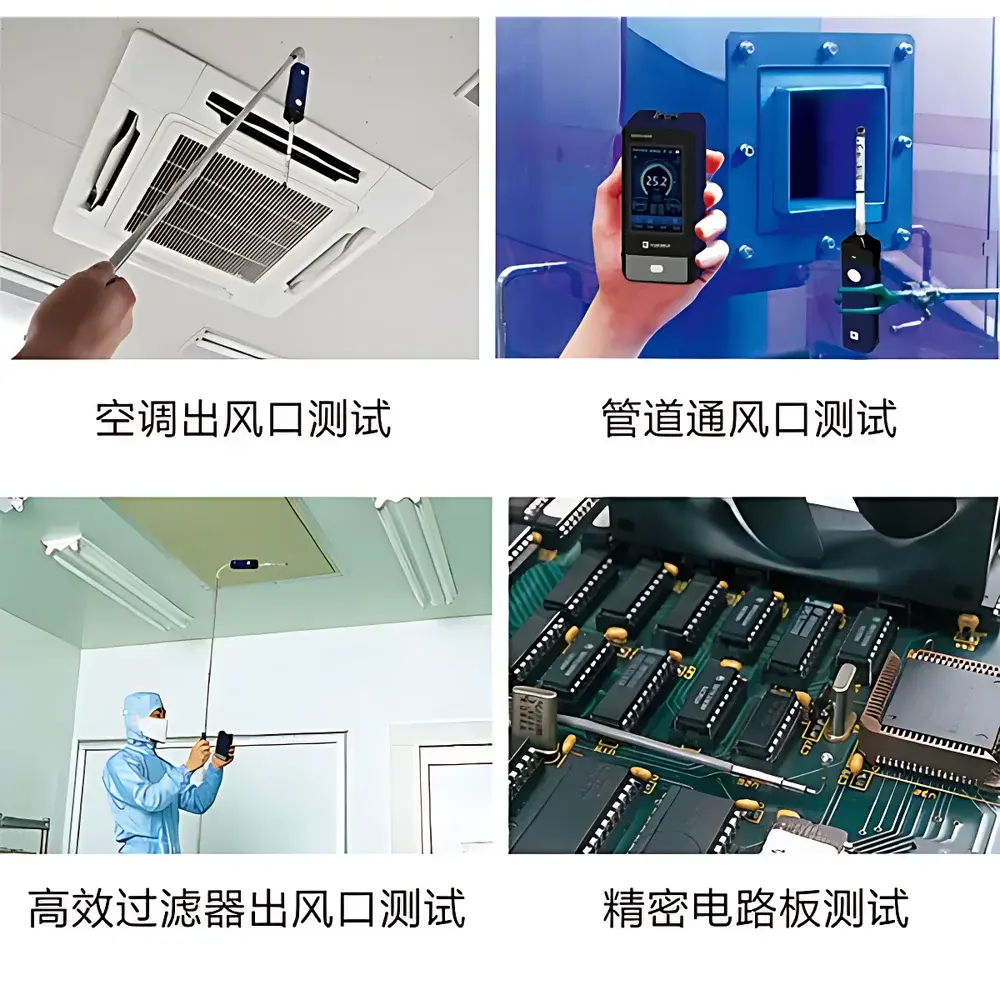
- HVAC system balancing and TAB (Testing, Adjusting, Balancing) per ASHRAE Guideline 1
- Cleanroom air change rate validation and uniformity assessment (ISO 14644-3)
- Fume hood face velocity and containment testing (ANSI/AIHA Z9.5)
- Indoor air quality (IAQ) baseline surveys and LEED EQ credit documentation
- Manufacturing process airflow verification (e.g., drying ovens, coating booths, conveyor cooling zones)
- Research-grade airflow characterization in wind tunnels, environmental chambers, and aerodynamic test rigs
FAQ
What is the difference between the KA26 and KA36 models?
The KA36 includes an integrated differential pressure sensor (±5.00 kPa) and pressure tubing kit; the KA26 measures only velocity and temperature.
Can the device be used in humid or condensing environments?
The probe is rated for operation up to 100 °C but is not sealed against liquid ingress—condensation or high RH (>95%) may affect thermal sensor stability and should be avoided per manufacturer guidelines.
Is calibration certificate included with purchase?
A factory calibration report (traceable to JCSS) is supplied; full ISO/IEC 17025 calibration with uncertainty budget is available as an optional service.
How is measurement uncertainty calculated for velocity readings?
Uncertainty combines type A (repeatability) and type B (calibration error, resolution, linearity) components per GUM (JCGM 100:2008); total expanded uncertainty (k=2) is ±3% of reading or ±0.015 m/s, whichever dominates.
Does the Bluetooth connection support concurrent multi-device pairing?
No—the device maintains a single active Bluetooth link at a time, ensuring secure, low-latency data transmission without interference in dense RF environments.







