
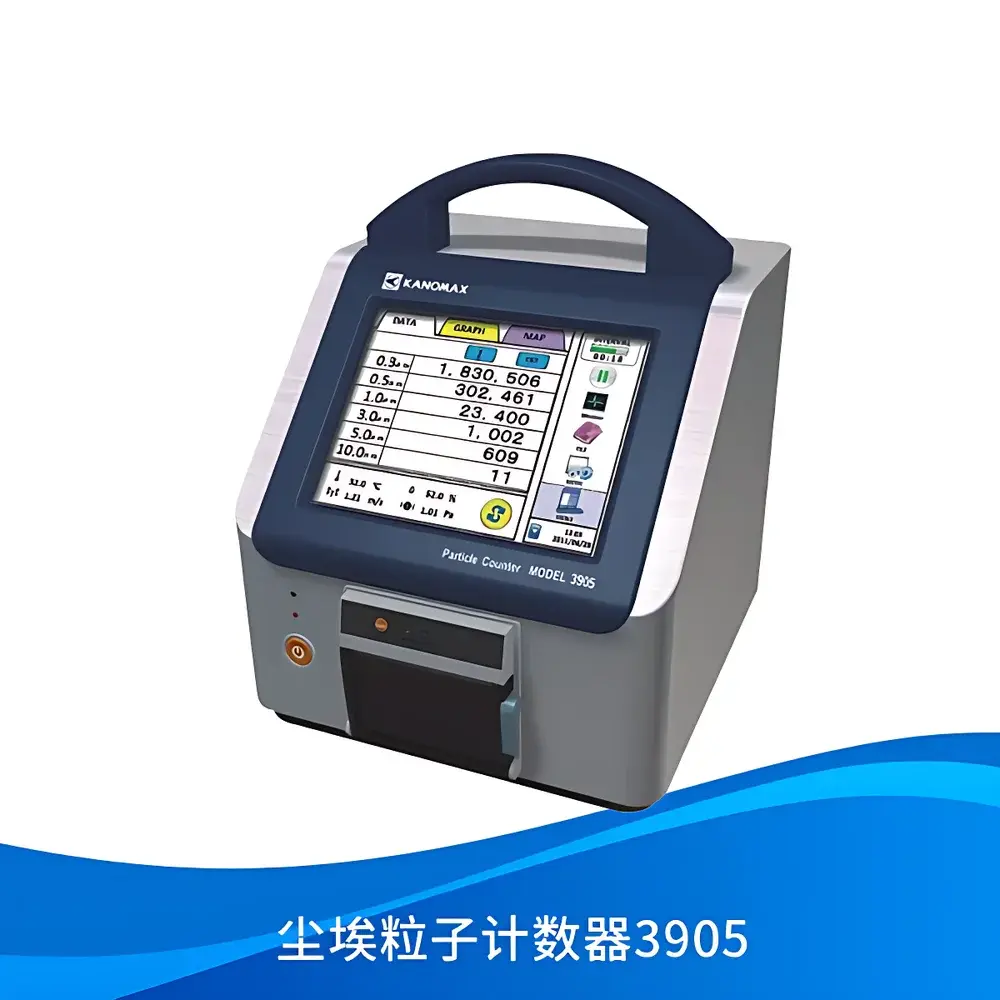
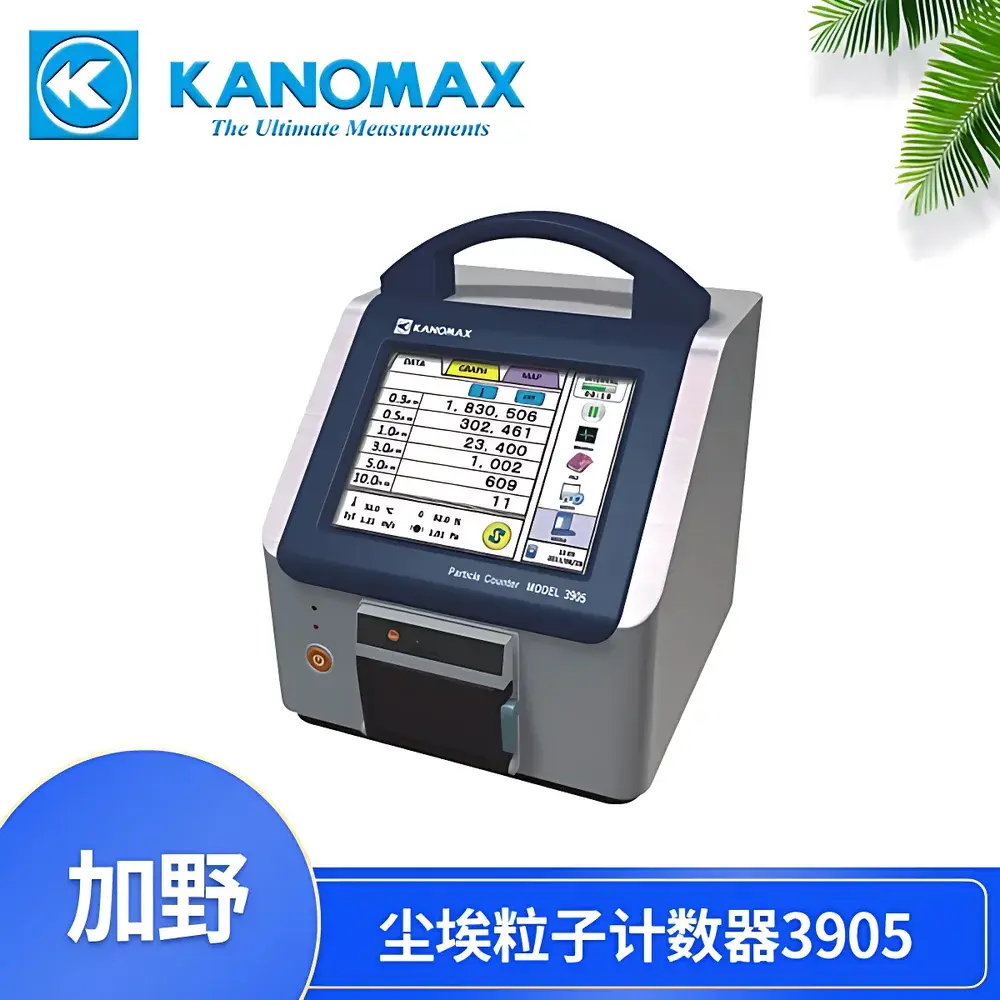
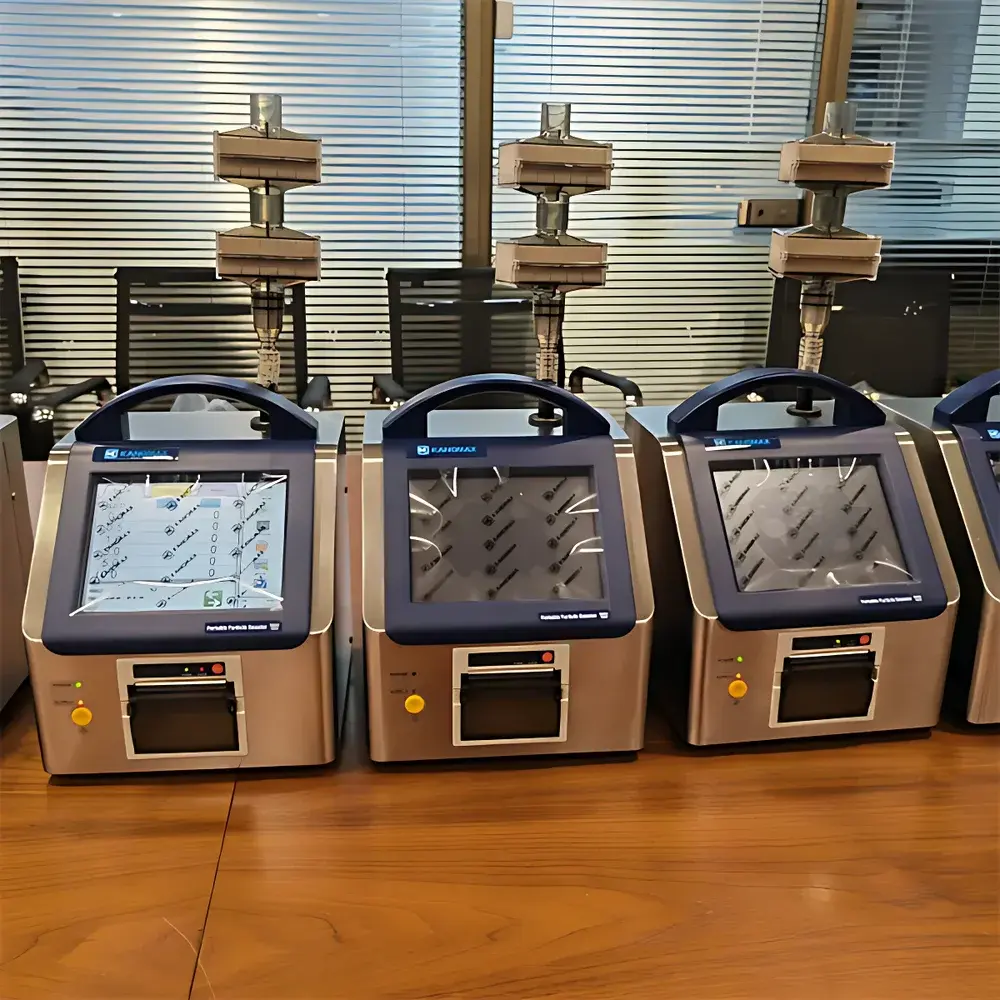
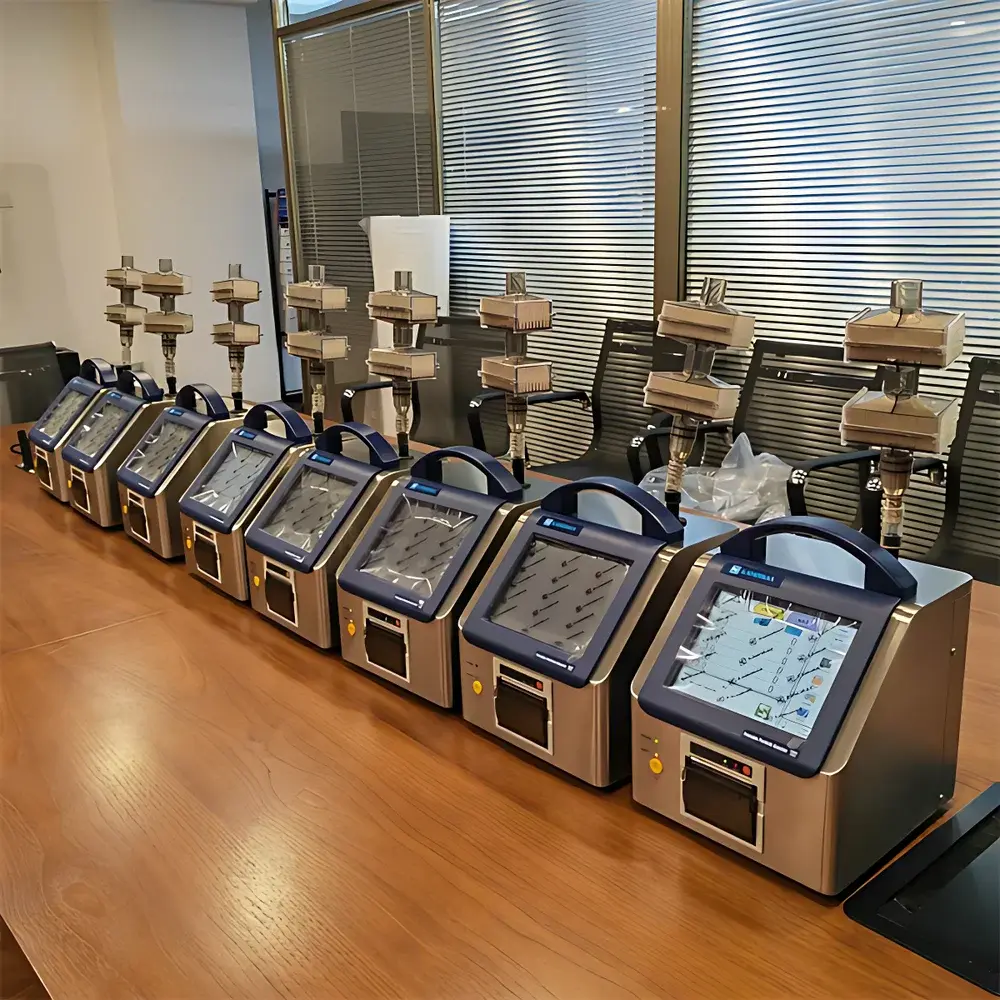
Kanomax Model 3905 High-Flow Cleanroom Particle Counter
| Brand | Kanomax |
|---|---|
| Origin | Japan |
| Model | 3905 |
| Flow Rate | 28.3 L/min |
| Particle Size Channels | 0.3, 0.5, 1.0, 3.0, 5.0, 10.0 µm |
| Counting Efficiency | ≥50% ±20% at 0.3 µm (ISO 21501-4 compliant) |
| Repeatability | ≤±10% FS |
| Size Resolution | <15% at 0.3 µm (ISO 21501-4) |
| Maximum Concentration | 500,000 particles/ft³ |
| Sampling Time Range | 6 sec – 23 h 59 min 59 sec |
| Data Storage | 10,000 sample records (internal), USB-expandable |
| Display | 6.4-inch full-color touchscreen |
| Compliance | ISO 14644-1:2015, ISO 14644-2:2015, GB/T 16292–2010, JJF 1190–2008, FDA 21 CFR Part 11 (audit trail enabled), EU GMP Annex 1, JIS B 9921 |
Overview
The Kanomax Model 3905 is a high-flow, portable airborne particle counter engineered for rigorous cleanroom certification and environmental monitoring in semiconductor fabrication, pharmaceutical manufacturing, medical device production, and advanced materials R&D. Operating on the principle of single-particle light scattering (SPLS) with a stabilized 650 nm laser diode source, the instrument detects and sizes individual particles suspended in air by measuring the intensity and angular distribution of scattered light. Its 28.3 L/min volumetric flow rate enables statistically robust sampling per ISO 14644-1:2015 Annex B—reducing required sampling time by up to 70% compared to standard 1 CFM (28.3 L/min) instruments—while maintaining traceable calibration against NIST-traceable polystyrene latex (PSL) standards. Designed for Class ISO 1–ISO 8 environments (equivalent to Federal Standard 209E Class 1–100,000), the Model 3905 delivers real-time, six-channel particle concentration data across user-selectable size thresholds from 0.3 µm to 10.0 µm, supporting both routine qualification and continuous monitoring protocols.
Key Features
- High-flow sampling at 28.3 L/min with flow accuracy < ±1% over 5-minute intervals, validated per ISO 21501-4 requirements
- Six simultaneous detection channels: factory-calibrated at 0.3, 0.5, 1.0, 3.0, 5.0, and 10.0 µm; optional user-defined sizing bins within 0.3–10.0 µm range
- Integrated 6.4-inch capacitive touchscreen interface with intuitive icon-driven navigation, multilingual UI (English & Chinese), and real-time graphical trend display
- Built-in thermal printer for immediate hardcopy reporting—including ISO 14644-1 classification pass/fail determination per sampling point
- Dual-rechargeable Li-ion battery system (hot-swappable) enabling >4 hours continuous operation; AC adapter (100–240 V, 50–60 Hz) included
- Comprehensive I/O: USB 2.0 host/device port, 10/100 Mbps Ethernet (RJ-45), analog sensor inputs for external temperature, RH, differential pressure, and air velocity probes
- Onboard data storage for 10,000 complete sample records (timestamped, location-tagged, and audit-trail logged); expandable via USB mass storage devices
Sample Compatibility & Compliance
The Model 3905 is validated for use in non-hazardous, non-corrosive indoor air environments typical of ISO-classified cleanrooms, isolators, laminar flow hoods, and controlled manufacturing suites. It meets or exceeds performance criteria defined in ISO 21501-4:2018 (calibration and testing of light-scattering airborne particle counters), ISO 14644-1:2015 (cleanroom classification), ISO 14644-2:2015 (monitoring requirements), and national standards including GB/T 16292–2010 (China), JJF 1190–2008 (Chinese metrological verification), and JIS B 9921 (Japan). For regulated pharmaceutical applications, firmware supports 21 CFR Part 11-compliant electronic records—including user authentication, audit trail with immutable timestamps, and electronic signature capability. All test reports generated comply with EU GMP Annex 1 (2022) and PIC/S guidance for environmental monitoring documentation.
Software & Data Management
Kanomax’s proprietary PC software (included) provides secure data import/export, customizable report templates (PDF/CSV/XLSX), spatial mapping of sampling points using user-defined floor plans (0–999 locations), and statistical analysis per ISO 14644-2:2015 Annex D. Raw data files include full metadata: operator ID, instrument serial number, calibration due date, environmental sensor readings (if connected), and instrument status flags (e.g., flow alarm, zero-count failure, laser power deviation). Audit trails record all configuration changes, report generation events, and user logins—retained for ≥36 months as required under GLP/GMP. Data encryption (AES-256) and role-based access control ensure compliance with data integrity frameworks.
Applications
- Certification and periodic requalification of semiconductor cleanrooms (Class ISO 1–ISO 5 per SEMI S23 guidelines)
- Environmental monitoring during aseptic processing and sterile product filling (EU GMP Annex 1, USP , )
- Filter integrity verification (HEPA/ULPA) and leak testing via upstream challenge and downstream scanning
- Investigation of contamination excursions through time-synchronized multi-point trending
- Validation of isolator and RABS performance under dynamic operational conditions
- Supporting risk-based monitoring (RBM) strategies through automated alerting on threshold exceedances
FAQ
Does the Model 3905 support remote data transmission via Ethernet?
Yes—it features a dedicated Ethernet interface enabling integration into facility-wide monitoring networks (BMS/EMS) using Modbus TCP or custom HTTP API protocols.
Is the instrument suitable for use in classified hazardous areas (e.g., ATEX Zone 2)?
No—the Model 3905 is rated for general-purpose indoor use only (IEC 61010-1:2010 CAT II) and is not intrinsically safe or explosion-proof.
Can the particle size channels be recalibrated in-house?
Calibration must be performed by an ISO/IEC 17025-accredited service laboratory using NIST-traceable PSL standards; field adjustment of sizing thresholds is disabled without authenticated service credentials.
What is the maximum allowable particle concentration before coincidence error invalidates measurements?
The stated upper limit is 500,000 particles/ft³ (17.7 × 10⁶ particles/m³); above this, coincidence loss exceeds 10%, triggering automatic concentration overflow warning per ISO 21501-4.
How is zero-count performance verified?
A certified zero-count filter (included) is used during startup self-test; compliance with JIS B 9921 requires ≤0.2 false counts/ft³ over 10 minutes, confirmed automatically prior to each sampling sequence.
Related Products







