
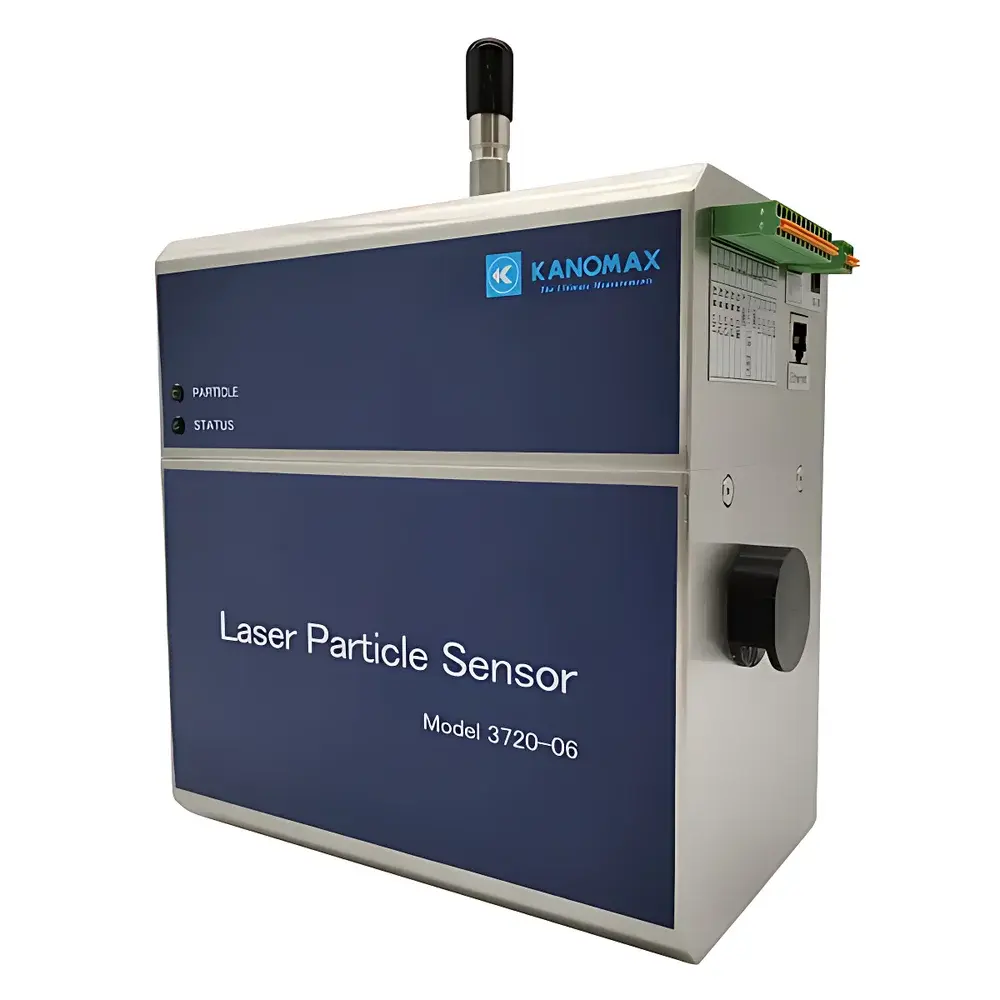
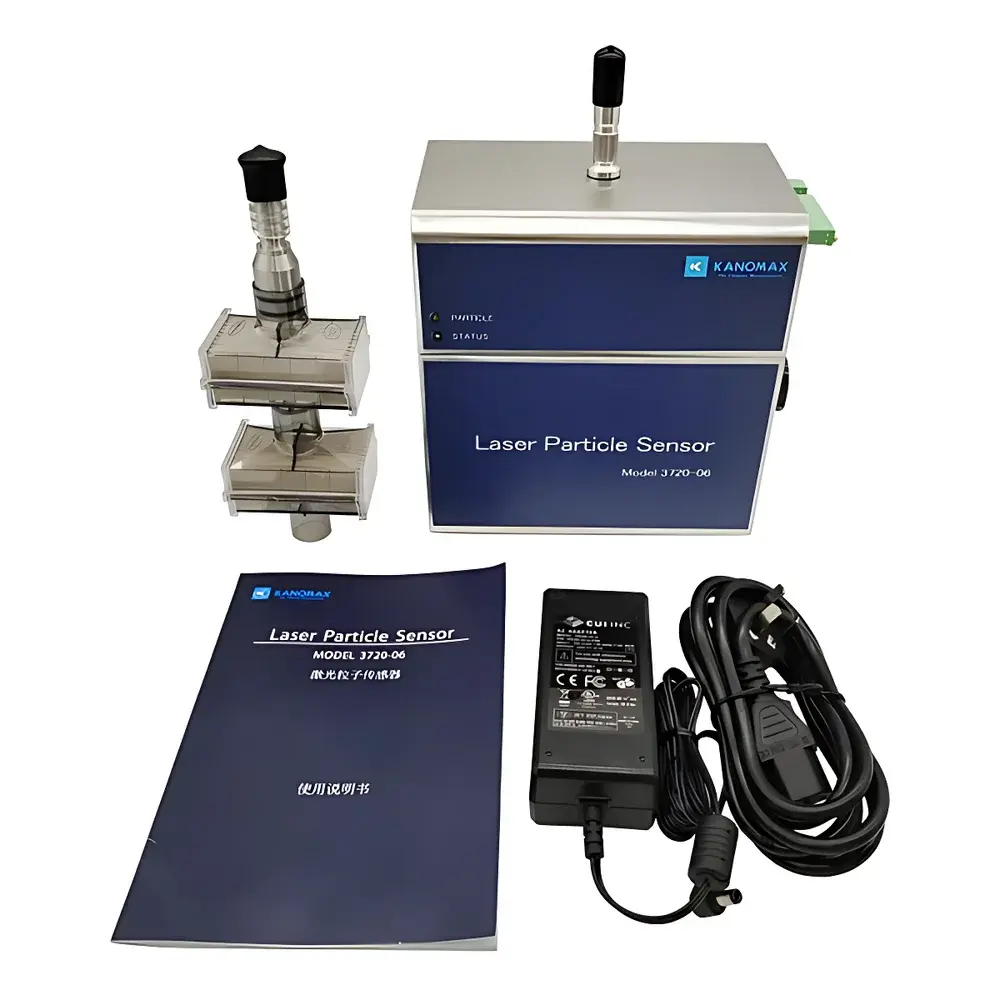
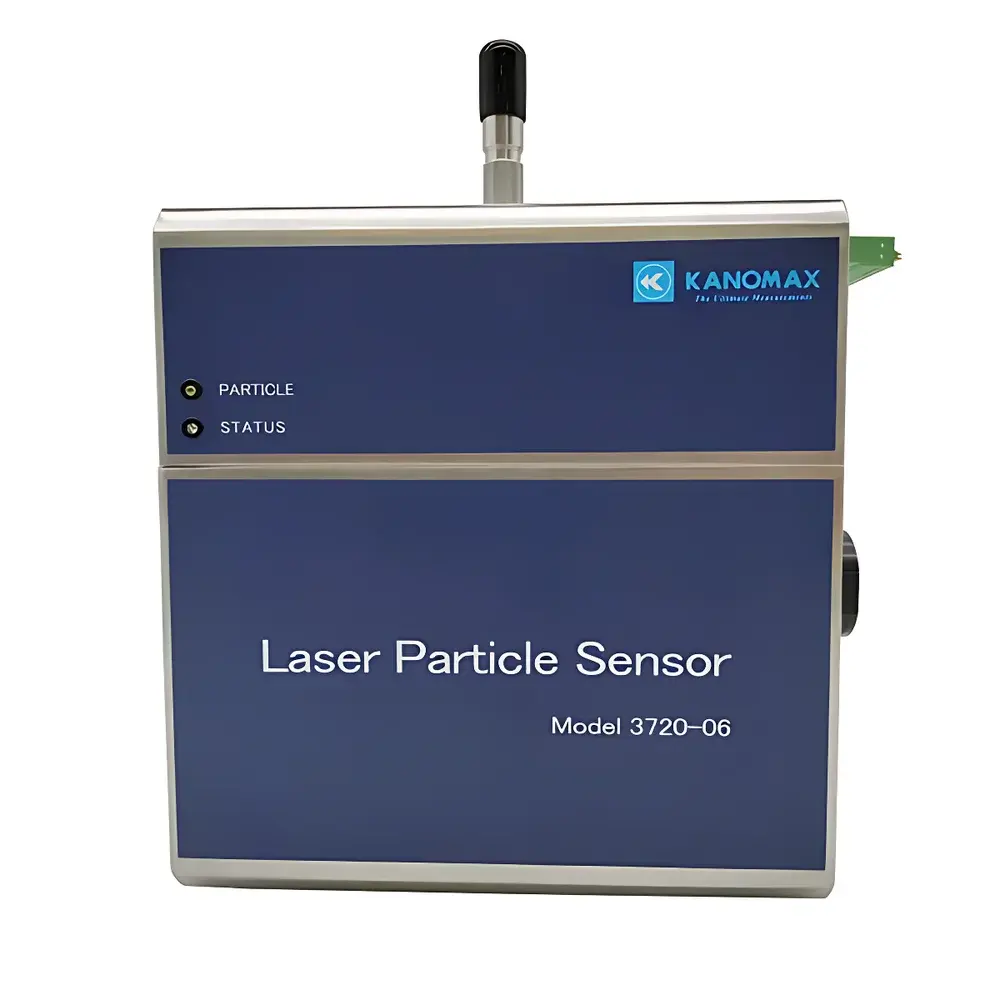
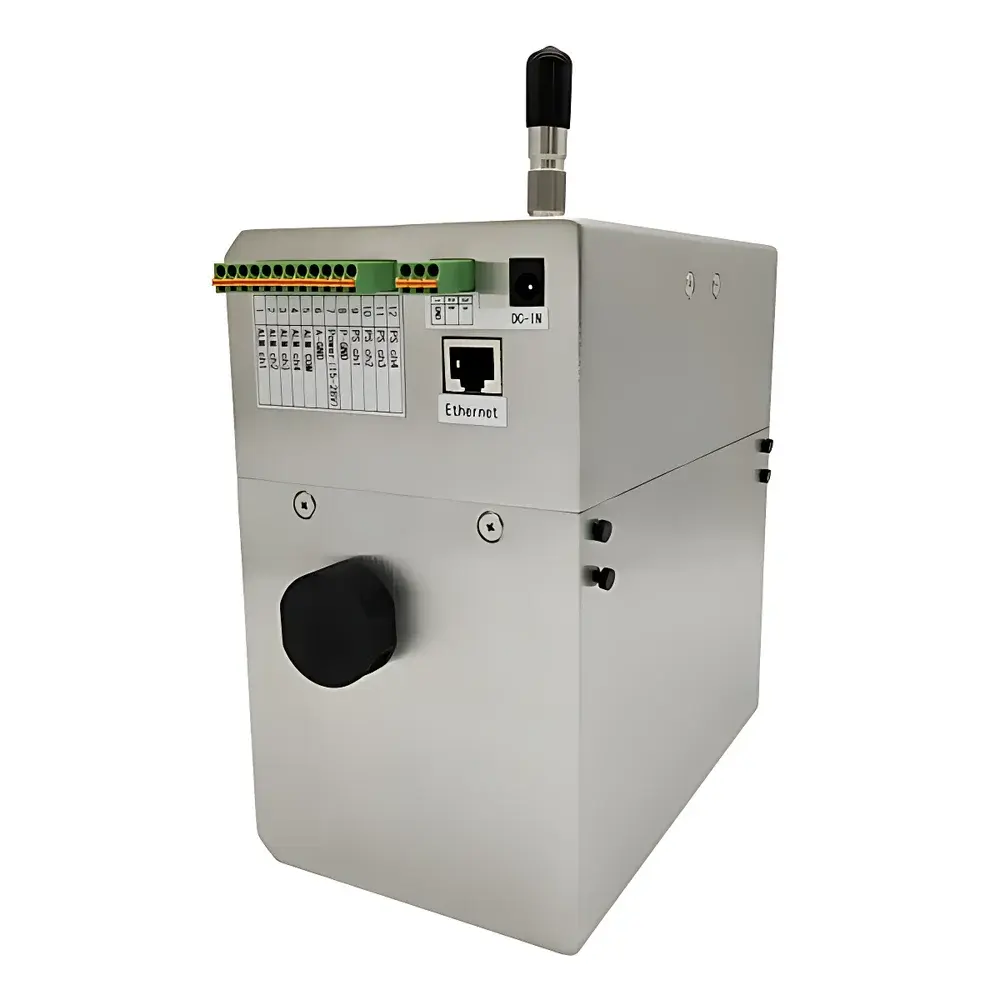
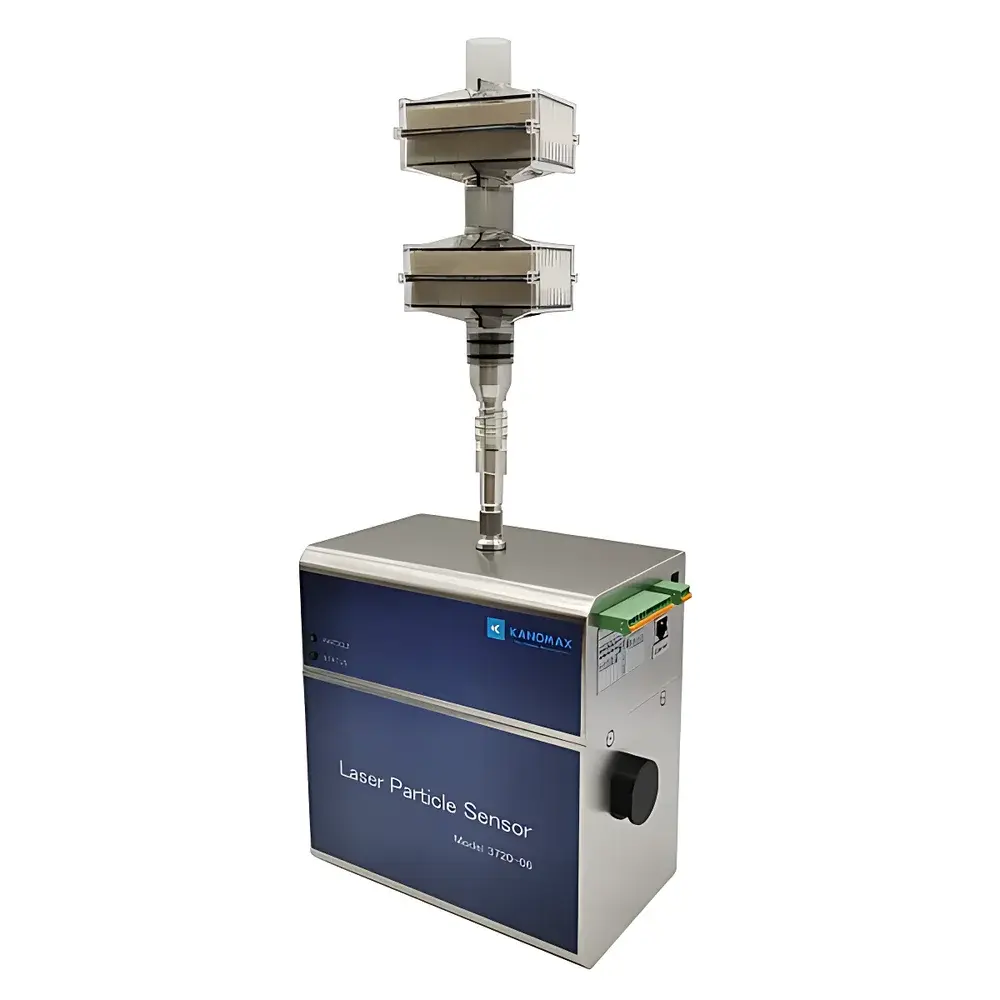
KANOMAX Remote Airborne Particle Counter Model 3720-06
| Brand | KANOMAX |
|---|---|
| Origin | Liaoning, China |
| Manufacturer Type | Authorized Distributor |
| Product Category | Domestic |
| Model | 3720-06 |
| Instrument Type | Online Particle Counter |
| Flow Rate | 28.3 L/min (1.0 CFM) |
| Detectable Particle Sizes | 0.3, 0.5, 0.7, 1.0, 3.0, 5.0, 10.0 µm (user-selectable 2–4 channels, factory-configured) |
| Light Source | Long-life laser diode |
| Counting Efficiency | Compliant with ISO 21501-4 and JIS B9921 |
| Max. Concentration | 1,000,000 particles/ft³ |
| Data Storage | 5,000 records (2,000-record buffer + redundancy backup) |
| Enclosure Material | 316 stainless steel with VHP- and ethanol vapor-resistant sealing |
| Vacuum Sampling Pump | Removable and serviceable |
| Power Supply | DC 15–28 V, PoE (IEEE 802.3af), or AC 100–240 V |
| Communication | Ethernet (Modbus TCP/IP), RS-485 (Modbus RTU), 4–20 mA analog output |
| Operating Environment | 10–30 °C, 20–85% RH (non-condensing) |
| Dimensions | 180 × 110 × 190 mm |
| Weight | 4.0 kg |
Overview
The KANOMAX Remote Airborne Particle Counter Model 3720-06 is an industrial-grade, online optical particle counter engineered for continuous, real-time monitoring of airborne particulate contamination in critical environments. It operates on the principle of light scattering—where particles drawn through a calibrated laminar airflow intersect a collimated laser beam, generating scattered photons detected by a high-sensitivity photodiode array. Signal amplitude and pulse width are analyzed to classify particles into user-defined size channels, enabling simultaneous quantification across up to four discrete size bins. Designed for integration into cleanroom monitoring systems, isolator validation protocols, and HVAC performance verification, the 3720-06 delivers traceable, repeatable measurements aligned with international standards for particle counting instrumentation.
Key Features
- Compliance with ISO 21501-4 and JIS B9921 for optical particle counter calibration and counting efficiency—ensuring metrological validity in regulated facilities.
- Dual power flexibility: Supports Power over Ethernet (PoE, IEEE 802.3af), wide-range DC input (15–28 V), and universal AC input (100–240 V), enabling deployment in diverse infrastructure environments without additional power conditioning.
- VHP- and alcohol vapor-resistant 316 stainless steel enclosure with IP65-rated hermetic sealing—validated for repeated exposure in sterilization cycles common in pharmaceutical aseptic processing suites.
- Modular vacuum sampling pump with tool-free disassembly—facilitating routine maintenance, filter replacement, and flow verification without system downtime.
- Embedded dual-layer data resilience: 5,000 permanent measurement records stored internally, plus a 2,000-entry volatile buffer with automatic redundancy backup to prevent data loss during network interruption or power fluctuation.
- Configurable alarm thresholds per channel (0–100% of set limit), with discrete relay output and Modbus-register-accessible status flags for SCADA-level integration.
Sample Compatibility & Compliance
The 3720-06 is validated for use with ambient air, compressed gases (N₂, CO₂, dry air), and filtered process air streams meeting ISO 8573-1 Class 2 or better. Its isokinetic sampling inlet ensures representative particle capture across variable duct velocities. The instrument meets electromagnetic compatibility requirements per IEC 61326-1 (industrial environment) and safety compliance per IEC 61010-1. While not FDA-cleared as a medical device, its architecture supports 21 CFR Part 11-compliant data integrity when deployed with validated software platforms that enforce electronic signatures, audit trails, and role-based access control—making it suitable for GMP and GLP environments under documented SOPs.
Software & Data Management
Data acquisition and configuration are managed via standard industrial protocols: Modbus TCP/IP over Ethernet and Modbus RTU over RS-485. The 4–20 mA analog outputs support legacy PLC integration with scalable range mapping (e.g., 0–10,000 particles/m³ = 4–20 mA). Raw count and concentration values are timestamped and stored with full metadata (channel ID, sampling duration, flow rate confirmation, temperature/humidity if external sensors are connected). No proprietary software is required; third-party SCADA, MES, or environmental monitoring systems (EMS) can poll registers directly. Internal memory retains time-stamped logs of configuration changes, calibration events, and error codes—supporting root cause analysis during quality investigations.
Applications
- Cleanroom classification and routine monitoring per ISO 14644-1 Class 5–8 environments.
- Aseptic processing line surveillance—including filling lines, RABS, and isolators—during media fills and process simulations.
- Filter integrity verification for HEPA/ULPA systems via upstream/downstream challenge testing.
- Environmental qualification of HVAC systems during commissioning, qualification (IQ/OQ/PQ), and periodic requalification.
- Continuous particulate trending in semiconductor fab mini-environments and battery dry rooms where nanoscale contamination affects yield.
- Pharmaceutical water-for-injection (WFI) and purified water distribution loop air handling unit (AHU) monitoring.
FAQ
What particle size channels are preconfigured in the 3720-06 model?
The 3720-06 is factory-set for 0.5 µm and 5.0 µm detection, but optional configurations supporting any two to four channels from the 0.3–10.0 µm range (0.3, 0.5, 0.7, 1.0, 3.0, 5.0, 10.0 µm) are available upon order.
Is the instrument suitable for VHP sterilization cycles?
Yes—the 316 stainless steel housing, fluorosilicone gaskets, and sealed optical chamber are rated for ≥100 cycles of vaporized hydrogen peroxide (VHP) at concentrations up to 1,200 ppm and ethanol vapor exposure typical in biopharma decontamination protocols.
Does the 3720-06 support audit trail and electronic signature functionality?
The hardware itself does not generate audit trails; however, its Modbus registers expose all operational parameters and event logs. When integrated with a validated EMS or LIMS platform compliant with 21 CFR Part 11, full audit trail, user authentication, and electronic signature capabilities are achievable.
What is the expected service life of the laser source?
The Class 1 laser diode is rated for ≥10 years of continuous operation under specified environmental conditions (10–30 °C, non-condensing), with mean time between failures (MTBF) exceeding 87,600 hours.
Can the flow rate be verified or adjusted onsite?
The fixed 28.3 L/min (1.0 CFM) flow path is factory-calibrated using NIST-traceable rotameters. While not user-adjustable, flow verification is supported via optional thermal mass flow sensor integration or periodic recalibration using a primary standard flow calibrator per ISO 21501-4 Annex C.







