
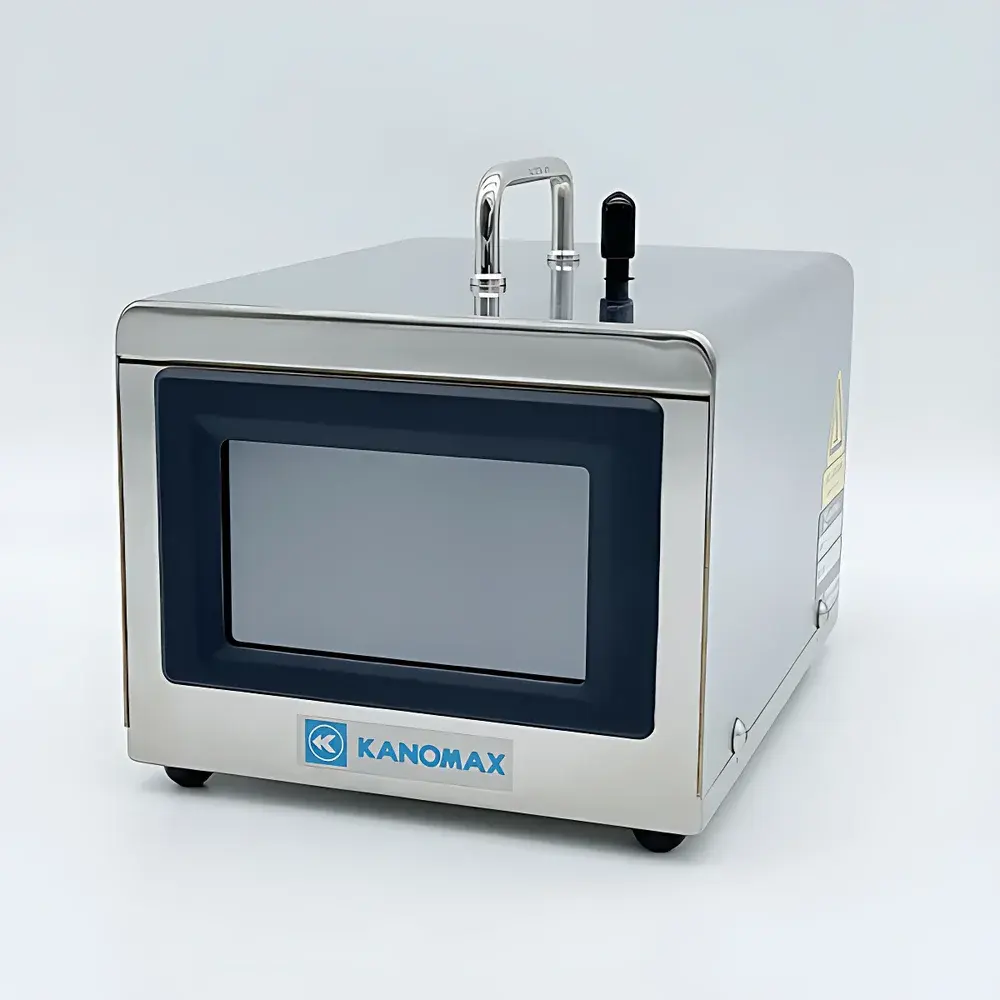
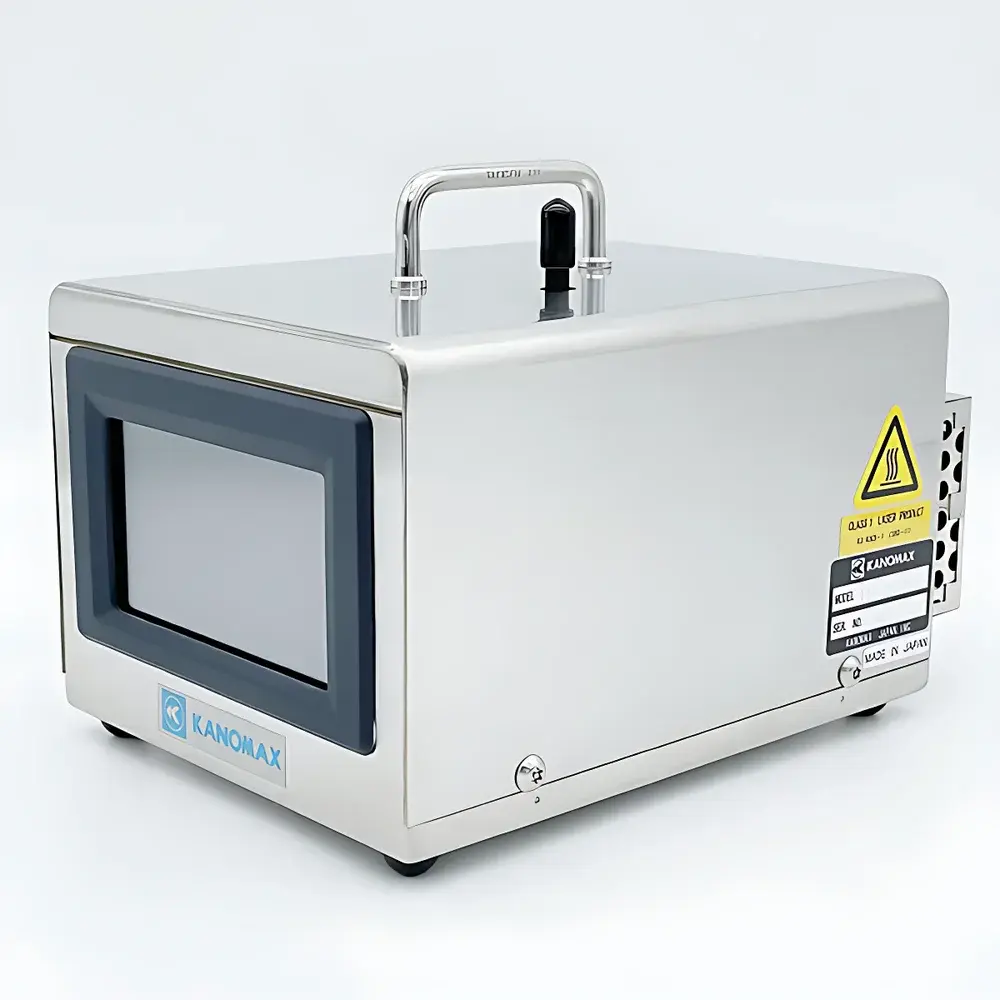
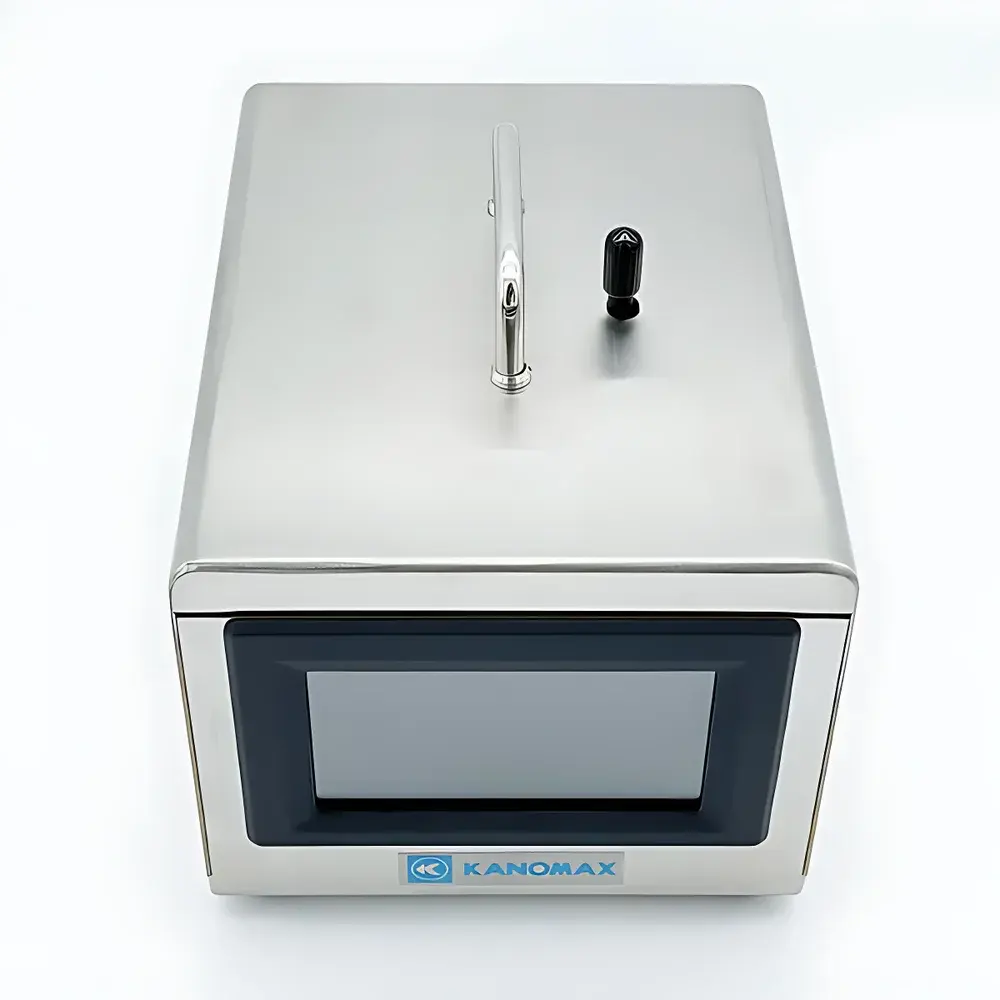
Kanomax 3950-00 Ultra-Compact 0.1 µm Online Airborne Particle Counter
| Brand | Kanomax |
|---|---|
| Model | 3950-00 |
| Detection Principle | Light Scattering |
| Particle Channels | 0.1 µm, 0.3 µm |
| Nominal Flow Rate | 2.83 L/min (0.1 CFM) |
| Accuracy | ±5% |
| Compliance | ISO 21501-4 & JIS B9921 |
| Display | 4.3" Color Touchscreen LCD |
| Communication | RS-458, Ethernet, USB (Host/Device) |
| Data Storage | Up to 10,000 records (CSV) |
| Operating Environment | 15–35 °C, 0–85% RH (non-condensing) |
| Dimensions | 150 × 163 × 228 mm |
| Weight | 3.4 kg |
| Max. Concentration | 10⁷ particles/m³ |
| Counting Efficiency | 50±20% at 0.1 µm (PSL), 100±10% at 0.15–0.2 µm (PSL) |
| False Count Rate | <1 count per 35 min |
| Size Resolution | ≤15% (at 0.3 µm PSL) |
Overview
The Kanomax 3950-00 is an ultra-compact, online airborne particle counter engineered for real-time monitoring of ultra-clean environments in pharmaceutical manufacturing, biotechnology facilities, and advanced semiconductor fabrication. Utilizing calibrated light scattering detection with dual optical channels, it delivers trace-level particulate quantification down to 0.1 µm—meeting the most stringent requirements for Grade A (ISO Class 5) and Grade B (ISO Class 7) cleanroom classification per ISO 14644-1 and EU GMP Annex 1. Its compact footprint (150 × 163 × 228 mm) and low mass (3.4 kg) enable seamless integration as an embedded sensor within HVAC ducts, isolators, RABS, or process equipment—eliminating external sampling lines and associated dead-volume artifacts. The instrument operates at a nominal flow rate of 2.83 L/min (0.1 CFM), ensuring representative sampling while maintaining laminar flow conditions compatible with ISO 21501-4 calibration traceability.
Key Features
- True 0.1 µm detection threshold validated against PSL standards per ISO 21501-4 and JIS B9921
- Dual-channel simultaneous counting at 0.1 µm and 0.3 µm for differential particle distribution analysis
- Integrated high-efficiency diaphragm pump with stable flow control across variable backpressure conditions
- 4.3-inch full-color resistive touchscreen interface supporting real-time visualization of cumulative (∑), differential (Δ), and histogram-based concentration trends
- Configurable measurement cycles (6 sec – 99 min 59 sec) and sampling intervals for flexible deployment in static or dynamic monitoring protocols
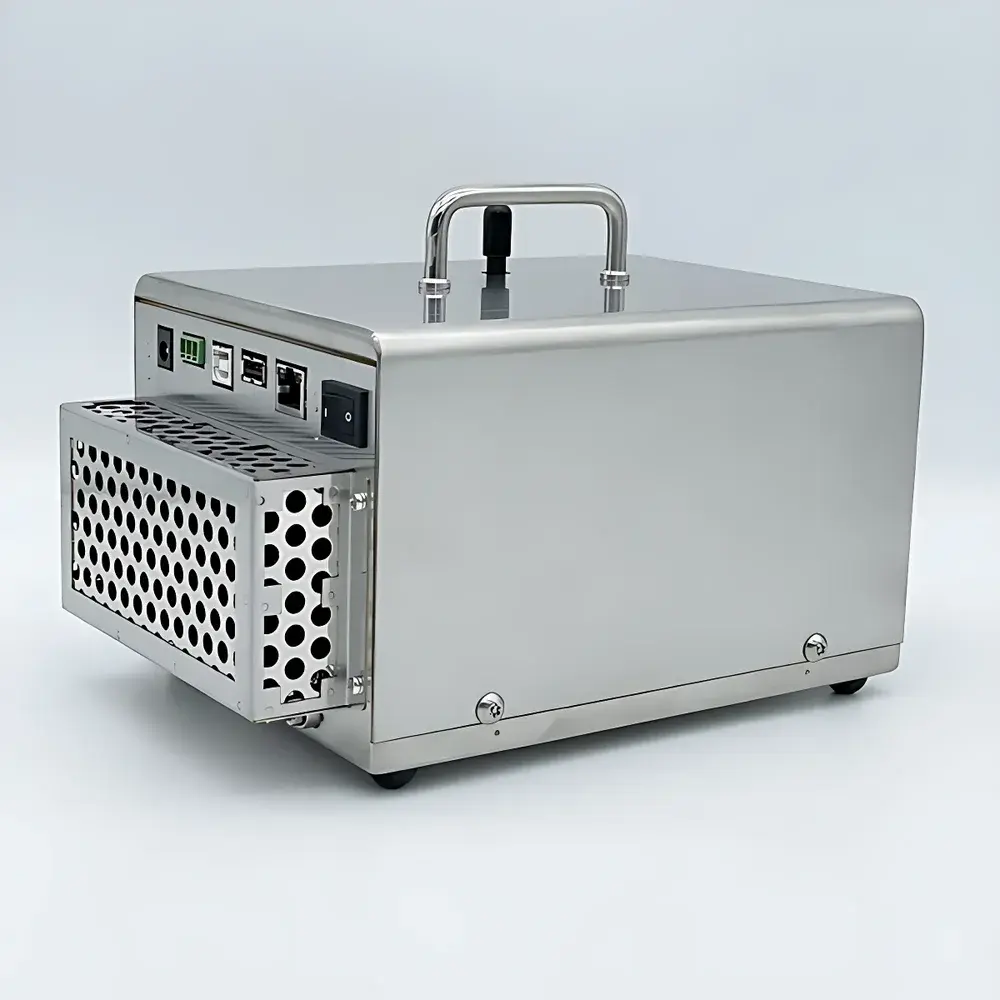
- Robust communication architecture: isolated RS-485 (Modbus RTU), 10/100 Mbps Ethernet (TCP/IP), and dual-role USB (device mode for PC connectivity; host mode for direct printing or USB flash storage)
- Onboard non-volatile memory storing up to 10,000 timestamped records in industry-standard CSV format for audit-ready data export
Sample Compatibility & Compliance
The 3950-00 is designed exclusively for ambient and conditioned compressed air streams in controlled environments. It complies with ISO 21501-4:2018 for light-scattering airborne particle counters, including verification of counting efficiency, false count rate (<1 count/35 min), and size resolution (≤15% at 0.3 µm PSL). Calibration is traceable to NIST-traceable PSL reference materials. The device supports validation under FDA 21 CFR Part 11-compliant workflows when paired with Kanomax’s optional validated software suite, providing electronic signatures, audit trails, and user-access controls. It meets the environmental operating specifications required for continuous operation in ISO Class 5–8 cleanrooms (15–35 °C, 0–85% RH, non-condensing).
Software & Data Management
Data acquisition and configuration are managed via Kanomax’s PC-based KAN-View software (Windows 10/11), which supports multi-device network topology mapping, alarm threshold definition (per location and channel), and automated report generation compliant with ISO 14644-2 surveillance requirements. Raw CSV logs include UTC timestamps, location ID (up to 99 predefined zones), channel-specific counts, and instrument status flags. For enterprise integration, Ethernet-enabled Modbus TCP and OPC UA gateways (via third-party middleware) allow direct ingestion into SCADA, MES, or LIMS platforms. All firmware updates and configuration backups are performed over secure USB or network connection—no proprietary dongles or cloud dependencies.
Applications
- Continuous Grade A zone monitoring in aseptic filling lines and isolator glove ports
- In-line particle surveillance of compressed medical air and nitrogen supply systems per ISO 8573-1
- Embedded sensing in lyophilizer chambers, vial washers, and depyrogenation tunnels
- Verification of HEPA filter integrity during periodic requalification (in conjunction with upstream challenge testing)
- Environmental monitoring program (EMP) execution aligned with ICH Q9 risk assessment frameworks
- Real-time trending for CAPA initiation in response to excursion events exceeding alert/action limits
FAQ
Is the 3950-00 suitable for ISO Class 3 (ISO 14644-1) environments?
Yes—its 0.1 µm sensitivity and ≤15% size resolution meet the metrological requirements for certification of ISO Class 3 cleanrooms, provided sampling methodology follows ISO 14644-2 Annex B.
Can it be used for compressed gas monitoring per ISO 8573-1?
It is qualified for compressed air and inert gases (N₂, Ar) at dew points ≥ −40 °C and oil content <0.01 mg/m³; a dedicated pressure regulator and coalescing pre-filter are required for non-ambient pressure applications.
Does it support 21 CFR Part 11 compliance out of the box?
The hardware provides necessary audit trail metadata (user ID, timestamp, action type); full Part 11 compliance requires validated KAN-View software with role-based access control and electronic signature modules.
What is the recommended recalibration interval?
Annual calibration against NIST-traceable PSL standards is recommended; field verification using zero-count air and reference aerosol challenges should be performed daily or per shift per EU GMP Annex 1 §8.42.
How is temperature/humidity compensation handled?
No active compensation is applied—the instrument reports raw scatter counts; environmental correction factors must be applied externally per ISO 21501-4 Annex D if operating outside 20–25 °C / 40–60% RH nominal conditions.
Related Products







