
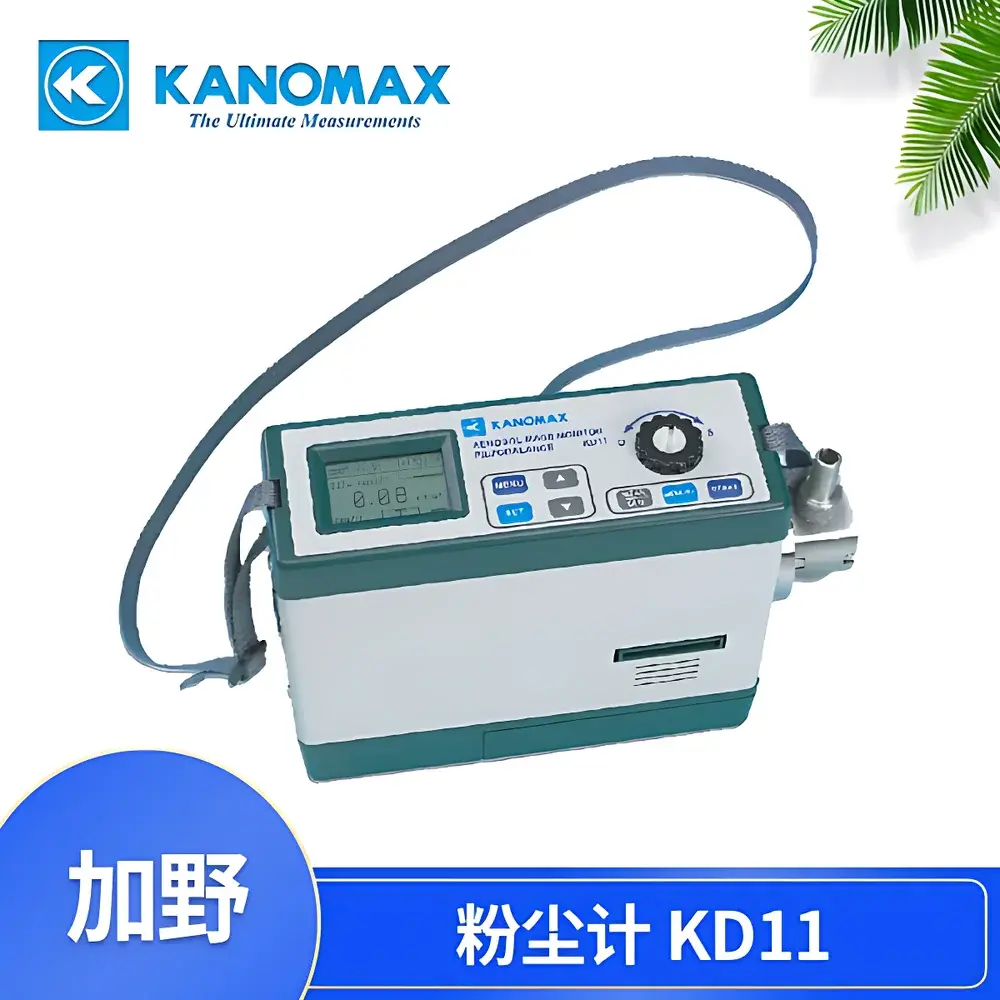
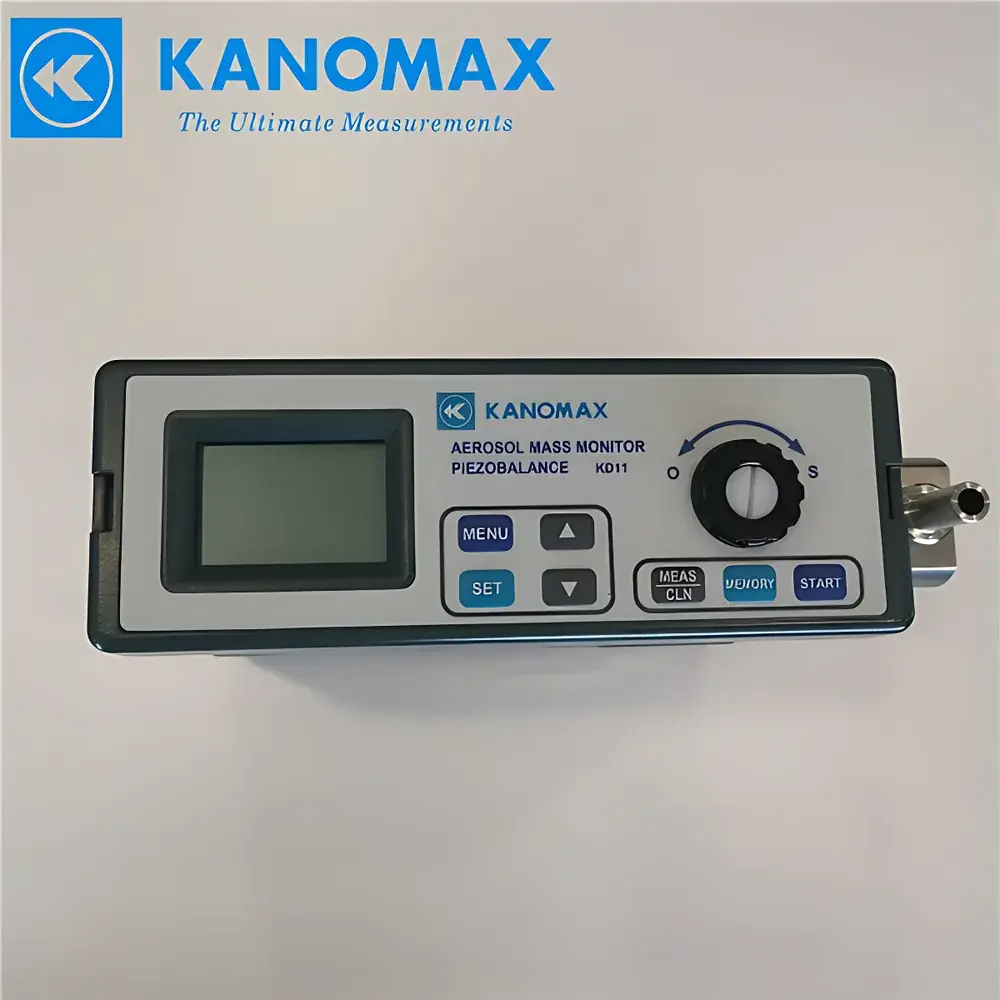
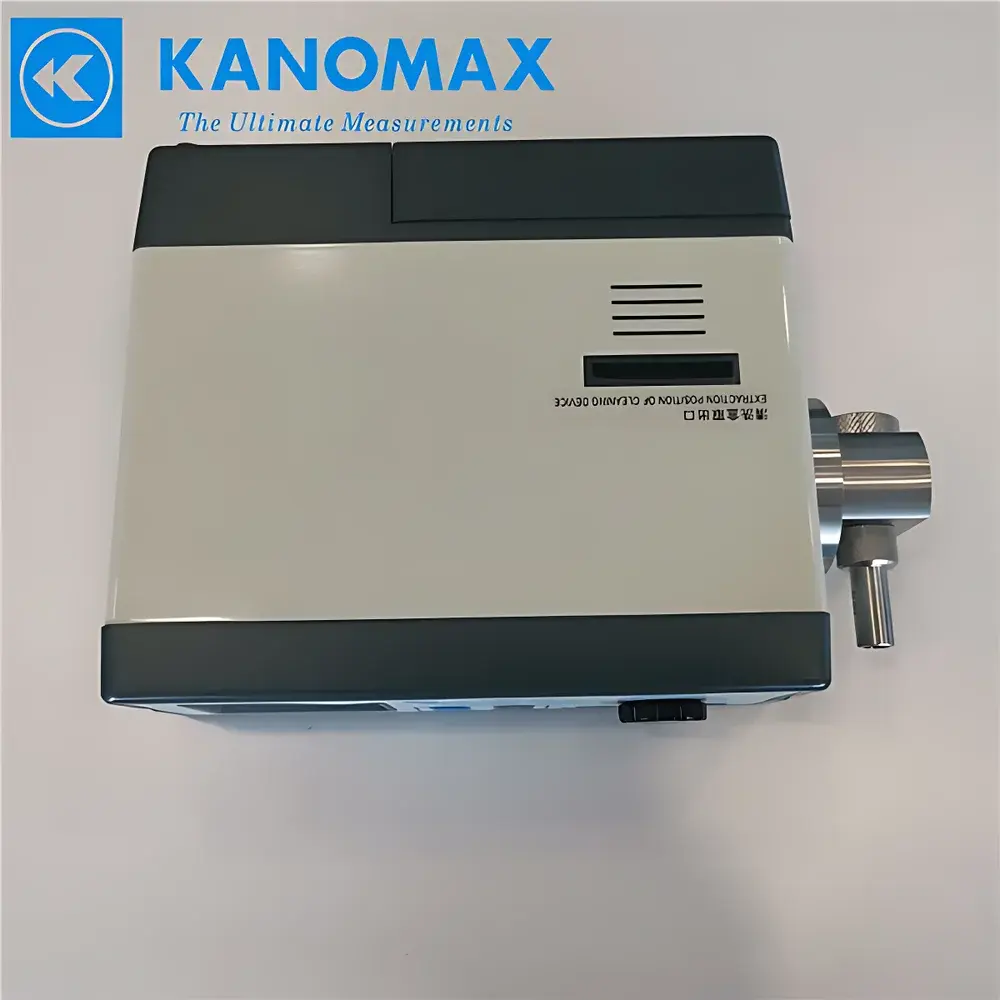
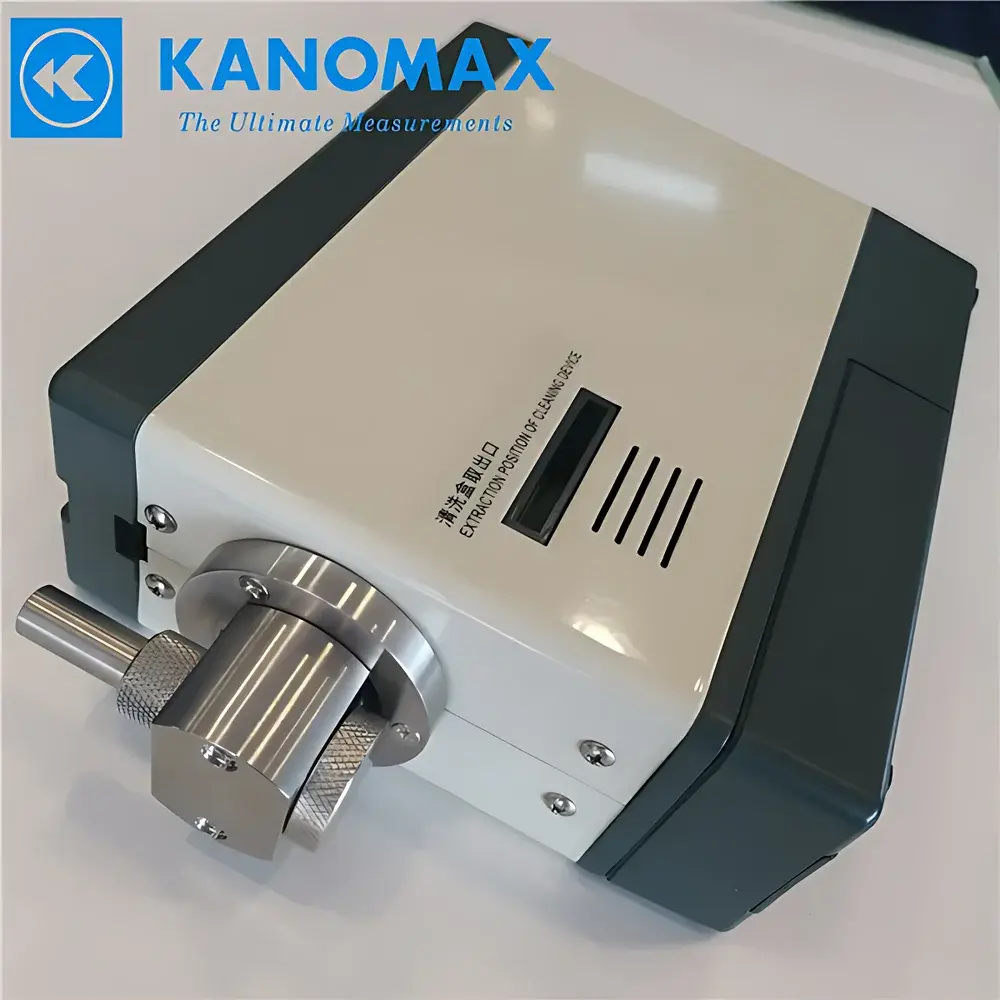
Kanomax KD11 Piezoelectric Microbalance Dust Monitor
| Brand | Kanomax |
|---|---|
| Origin | Japan |
| Model | KD11 |
| Measurement Principle | Piezoelectric Microbalance (PMB) |
| Particle Size Range | 0.1–10 µm (PM10), 0.1–2.5 µm (PM2.5) |
| Measurement Range | 0.01–10.00 mg/m³ |
| Sampling Flow Rate | 1.0 L/min |
| Data Storage Capacity | 500 measurement records |
| Communication Interface | RS-232C |
| Power Supply | Rechargeable Ni-MH battery / AC adapter (100–240 V AC) |
| Operating Time | ~4.5 h (fully charged) |
| Charging Time | 5–8 h |
| Dimensions | 65 × 182 × 150 mm (W × L × H) |
| Weight | ~1.75 kg |
| Safety Classification | Non-explosion-proof |
| Compliance | Designed for indoor/outdoor ambient air monitoring per ISO 7708, EN 481, and JIS Z 8901 dust classification frameworks |
Overview
The Kanomax KD11 Piezoelectric Microbalance Dust Monitor is a portable, real-time particulate mass concentration analyzer engineered for high-reproducibility gravimetric measurement of airborne dust in occupational and environmental settings. Unlike optical or beta-attenuation methods, the KD11 employs a resonant quartz crystal microbalance (QCM) principle: dust deposition on the oscillating piezoelectric crystal induces a measurable frequency shift proportional to mass accumulation—enabling direct, calibration-free quantification of total suspended particulates (TSP), PM10, and PM2.5-equivalent fractions. Its design adheres to fundamental aerosol science principles defined in ISO 7708 (particle size-selective sampling) and EN 481 (inhalable, thoracic, and respirable dust definitions), making it suitable for compliance-oriented monitoring where trace-level sensitivity (0.01 mg/m³ lower detection limit) and long-term stability are critical.
Key Features
- Piezoelectric microbalance sensor with integrated temperature-compensated quartz crystal oscillator for stable, drift-resistant mass sensing
- Selectable particle cut-off modes: switchable between 0.1–10 µm (PM10 mode) and 0.1–2.5 µm (PM2.5 mode) via internal impactor configuration
- Programmable sampling duration: fixed intervals (24 s or 120 s) or user-defined cycles from 10 s to 3600 s (1 h), supporting both spot checks and time-weighted average (TWA) exposure assessment
- On-device alert system triggers visual and audible notification when crystal loading exceeds pre-set mass threshold—indicating need for cleaning to maintain measurement fidelity
- Integrated rechargeable Ni-MH battery with 4.5-hour continuous operation; full charge achieved in 5–8 hours using universal AC adapter (100–240 V)
- Rugged, ergonomic housing (65 × 182 × 150 mm; 1.75 kg) optimized for handheld field use, with sealed front panel to minimize contamination during transport and deployment
Sample Compatibility & Compliance
The KD11 is validated for ambient and workplace air matrices containing non-volatile, non-hygroscopic particulates—including mineral dusts, metal oxides, carbonaceous soot, and industrial powders—within the defined aerodynamic diameter range. It is not intended for volatile organic aerosols, condensable vapors, or high-humidity environments (>85% RH) without external drying. The instrument complies with international inhalable dust sampling conventions (ISO 7708, EN 481) and supports documentation requirements under OSHA 29 CFR 1910.1200 (Hazard Communication) and EU Directive 2004/108/EC (EMC). While not certified for hazardous area use (non-explosion-proof), its electrical safety meets IEC 61010-1 for laboratory and general-purpose equipment.
Software & Data Management
Data acquisition and post-processing are supported via bundled Windows-compatible communication software accessible through the standard RS-232C serial interface. The software enables bidirectional data transfer: downloading stored measurement logs (500 records maximum), configuring sampling parameters remotely, generating time-stamped CSV reports, and exporting raw frequency-shift vs. time profiles for advanced gravimetric analysis. Audit-trail functionality includes timestamped operator ID entry (manual input), session start/stop markers, and automatic logging of cleaning events—facilitating GLP-aligned recordkeeping. No cloud connectivity or proprietary firmware updates are required; all operations remain fully offline and locally controlled.
Applications
- Occupational hygiene surveys: real-time TWA and STEL estimation for silica, coal dust, wood flour, and pharmaceutical powders per ACGIH TLV® guidelines
- Indoor air quality (IAQ) baseline studies in schools, offices, and healthcare facilities—particularly where filter efficiency validation or HVAC commissioning is performed
- Construction site perimeter monitoring for fugitive dust emissions compliance (e.g., EPA Method 201A equivalent protocols)
- Research-grade aerosol generation characterization in test chambers, cleanrooms, and filtration lab setups
- Educational demonstrations of mass-based aerosol metrology principles in university environmental engineering curricula
FAQ
What particle size fractions does the KD11 measure?
It measures mass concentration across two selectable aerodynamic cut-points: 0.1–10 µm (PM10 mode) and 0.1–2.5 µm (PM2.5 mode), achieved via interchangeable impactor stages calibrated per ISO 7708 specifications.
Is the KD11 suitable for outdoor ambient air monitoring?
Yes—provided environmental conditions remain within operating limits (5–40 °C, ≤85% RH non-condensing); extended outdoor deployment requires optional weatherproof enclosure and periodic crystal cleaning due to ambient humidity and wind-driven particle loading.
How often must the quartz crystal be cleaned?
Cleaning frequency depends on ambient dust load; the instrument alerts users automatically when accumulated mass exceeds 10 µg—typically corresponding to 2–8 hours of continuous operation in moderate-concentration environments (1–5 mg/m³).
Does the KD11 require annual recalibration?
No routine recalibration is mandated; however, verification against NIST-traceable reference aerosols (e.g., Arizona Test Dust ISO 12103-1, A1) is recommended semiannually for regulatory audit readiness.
Can the KD11 interface with SCADA or building management systems (BMS)?
Not natively—the RS-232C port supports point-to-point PC connection only; integration into industrial control networks requires third-party protocol converters (e.g., Modbus RTU gateways) and custom scripting for data parsing.
Related Products







